Sacraments and Liturgy
A Small Sign of a Great Mercy: Living Well with Holy Water and Sacramentals
How these humble gifts help Catholics remember baptism, resist temptation, and keep faith rooted in daily life.
Site Admin | September 30, 2025 | 97 views
Holy water and sacramentals are easy to overlook because they are so familiar. A small font at the church door. A blessed medal in a pocket. A rosary on a bedside table. A crucifix above a kitchen door. These signs can seem ordinary, but the Church gives them to us as real helps for a Christian life lived in the middle of ordinary days.
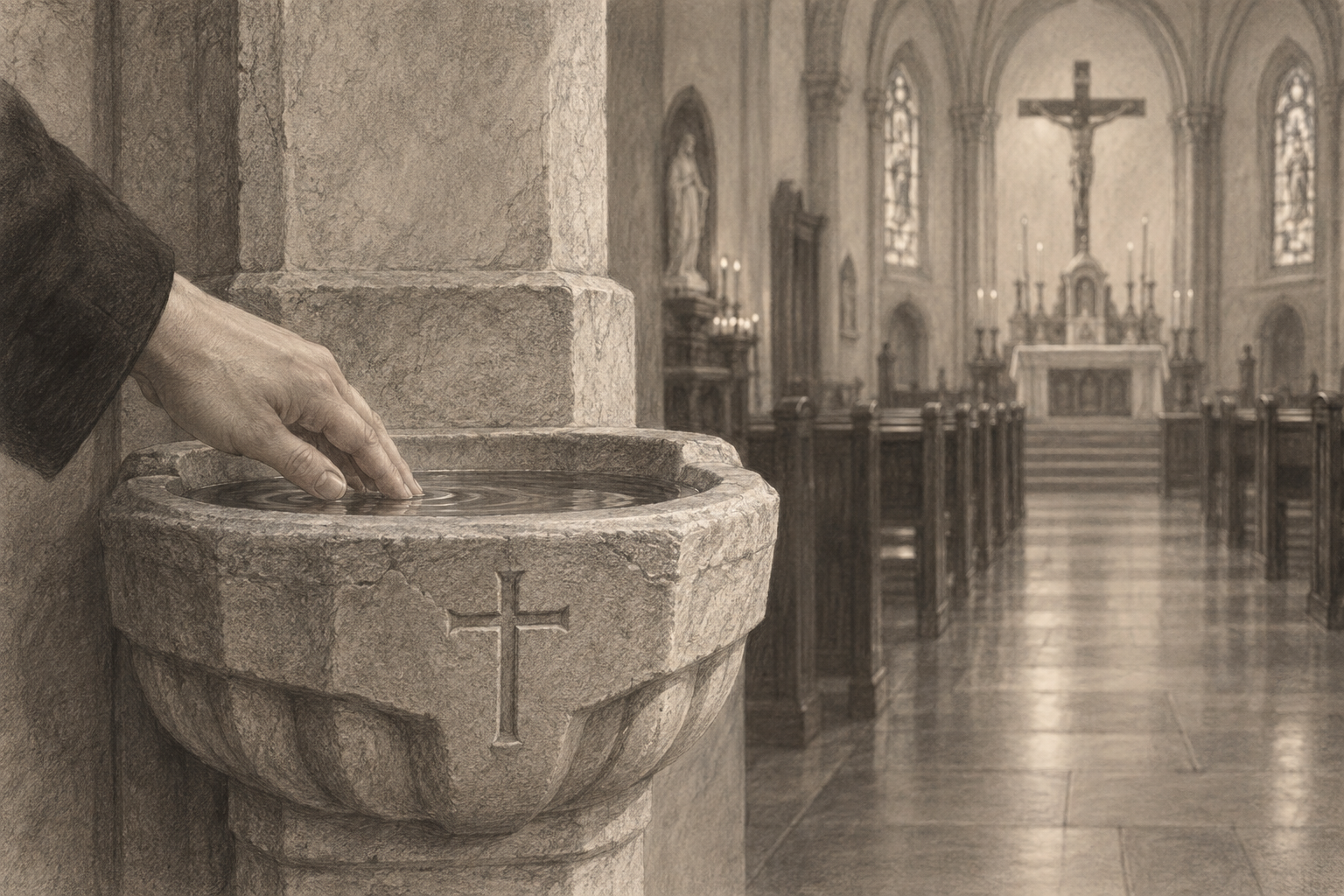
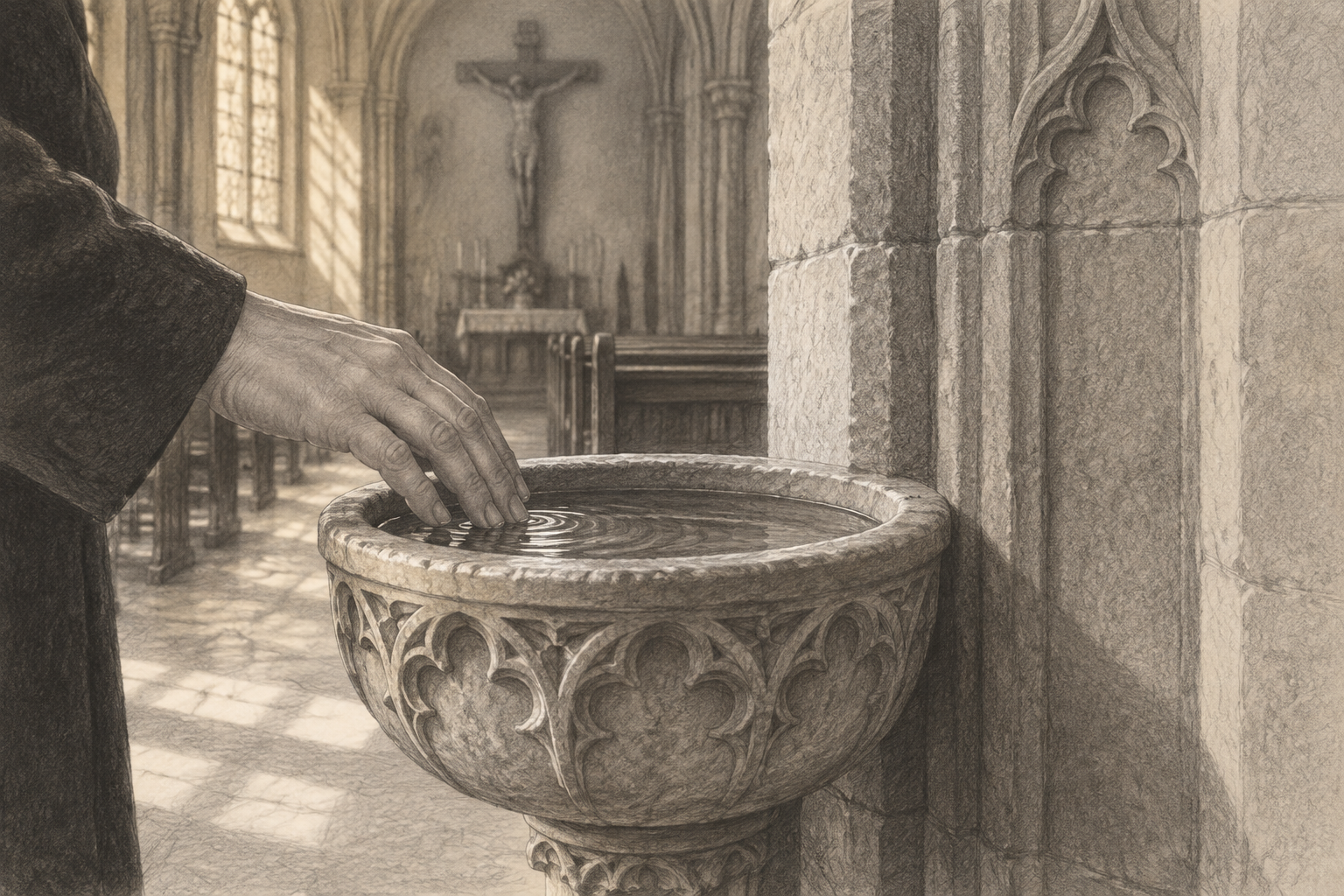
Many Catholics first meet holy water as children, when a parent or grandparent teaches them to bless themselves entering church. That simple gesture can become a lifelong habit of memory and devotion. It quietly says: I belong to Christ. I enter his house by his mercy, and I leave under his care. In that way, holy water and sacramentals Catholic guide us toward a faith that is not only believed but lived.
What holy water is, and why the Church blesses it
Holy water is ordinary water that has been blessed by a priest or deacon for sacred use. The Church uses it in blessing persons, places, and things, and especially in the liturgy and in devotional life. Water already carries deep biblical meaning. It cleanses, refreshes, gives life, and recalls God's saving action. From the beginning of Scripture, water is present where God acts with power and mercy.
In the Old Testament, water is tied to purification and renewal. In the New Testament, it comes to fullness in Christ. Jesus is baptized in the Jordan, and his baptism reveals his mission of saving humanity. He speaks of living water, and he turns water into wine at Cana. Most importantly, he gives the Church baptism, through which we are reborn by water and the Spirit. Holy water points back to all of this. It is not magic. It is a blessed sign that draws the mind and heart toward baptism and toward the grace Christ gives.
When Catholics use holy water, they are not trying to force spiritual effects by technique. They are praying with their bodies. The sign of the cross, made with holy water, joins touch, memory, and faith. It is a small act that can awaken a larger one: renewed trust in Christ, sorrow for sin, and confidence in God's protection.
The difference between sacraments and sacramentals
The Church makes an important distinction between the sacraments and sacramentals. The sacraments were instituted by Christ and confer grace in a direct and certain way when celebrated properly. Baptism, Confirmation, the Eucharist, Penance, Anointing of the Sick, Holy Orders, and Matrimony belong here.
Sacramentals are sacred signs instituted by the Church that prepare us to receive grace and help us cooperate with it. They do not work like the sacraments, and they should never be treated as if they automatically produce holiness. Instead, they dispose us toward grace by turning our attention to God, strengthening devotion, and shaping daily life in a Catholic way.
Examples include holy water, blessed ashes, medals, scapulars, rosaries, crucifixes, blessed candles, and religious images. These are not charms. They are reminders and aids. They help the baptized live in the light of what Christ has already done for them.
Through sacramentals, the Church seeks to sanctify many circumstances of life and to set believers apart for prayer, repentance, and trust in God.
That is why the Catholic approach to sacramentals is both deeply spiritual and delightfully practical. A sacramental can be held during prayer, worn quietly, placed in a home, or used at significant moments of the day. It becomes part of a Catholic pattern of life.
Where sacramentals come from in Catholic life
Sacramentals arose from the Church's prayerful life over time. Their roots are in Scripture, in the early Church, and in the instinct of the Christian people to set apart visible things for holy use. The Church, guided by the Holy Spirit, recognizes that human beings are not pure minds. We pray with our whole bodies. We remember through touch, sight, and gesture. Sacramentals help the faith to reach into those ordinary human faculties.
Consider how naturally Catholics use signs. A bowed head before the Blessed Sacrament. A candle lit for a loved one. A holy card tucked into a prayer book. These gestures are simple, but they train the heart. They teach reverence. They link personal prayer to the life of the Church. They also remind us that God's grace reaches into material creation, not only into interior feelings.
This matters because Catholic faith is never hostile to matter. The Incarnation itself shows that God took flesh. Christ did not save us from a distance. He entered the world of hands, bread, tears, oil, and touch. Sacramentals echo that pattern. They testify that God can use material things to lift the soul toward him.
How holy water helps daily Catholic life
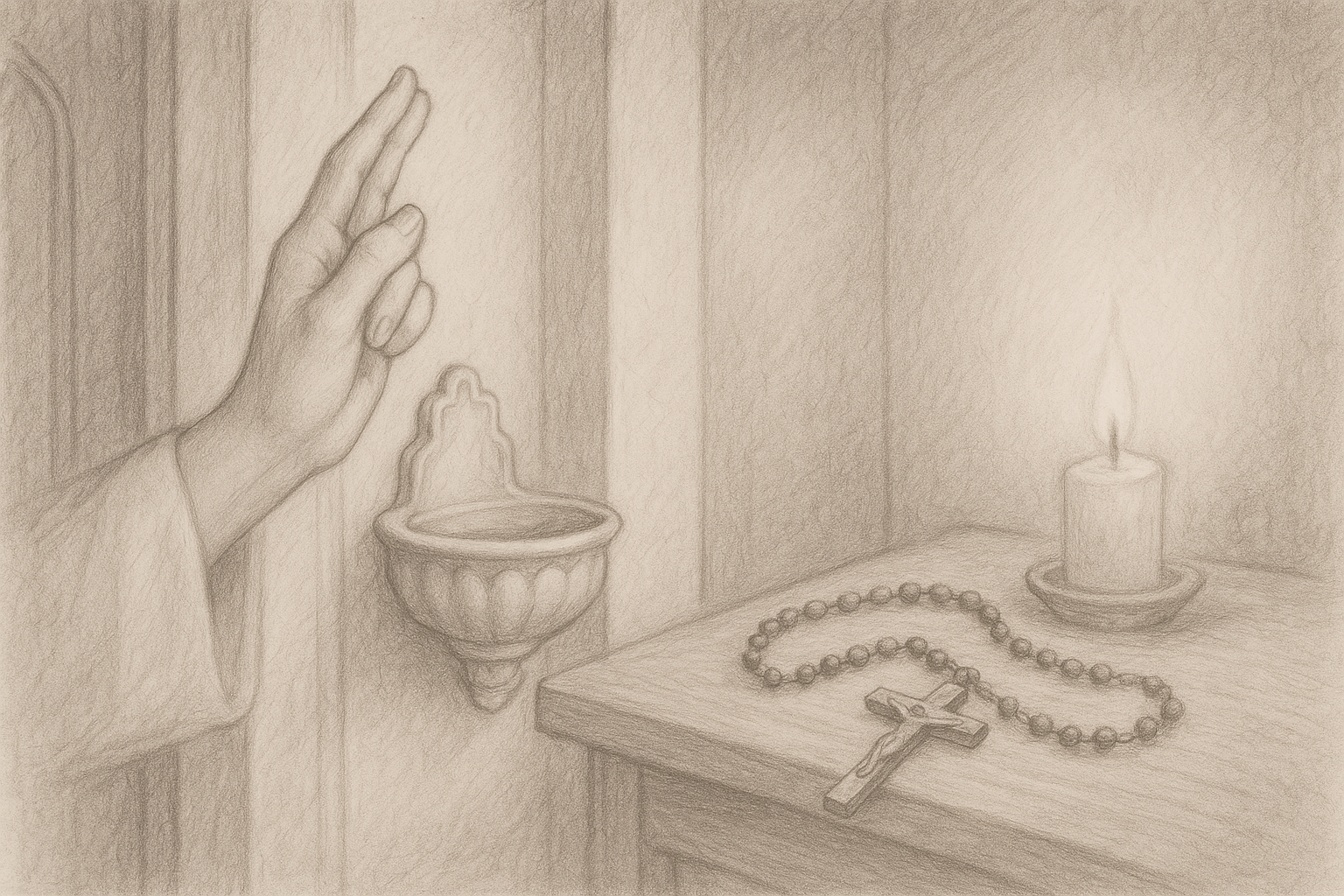
Holy water is often used when entering or leaving church, but its meaning is not limited to that moment. Many Catholics keep a small holy water font at home and use it in prayer. Some bless themselves in the morning to begin the day. Others do so at night as a final act of trust before sleep. Some use holy water when they are troubled, tempted, or fearful.
The gesture can be especially powerful when joined to a brief prayer. A Catholic might say:
In the name of the Father, and of the Son, and of the Holy Spirit. Lord, cleanse my heart and keep me faithful today.
Such a prayer is not complicated, but it is sincere. It places the day under God's care. It reminds us that our life belongs to the Trinity. It also gently returns our mind to baptism, where our deepest identity was given to us by grace.
Holy water can also be used in the home when someone is ill, anxious, or preparing for a difficult conversation. A family may pray together before a journey or before bedtime. In each case, the point is not to create a superstition, but to invite God into what is real and present.
Common sacramentals and their spiritual purpose
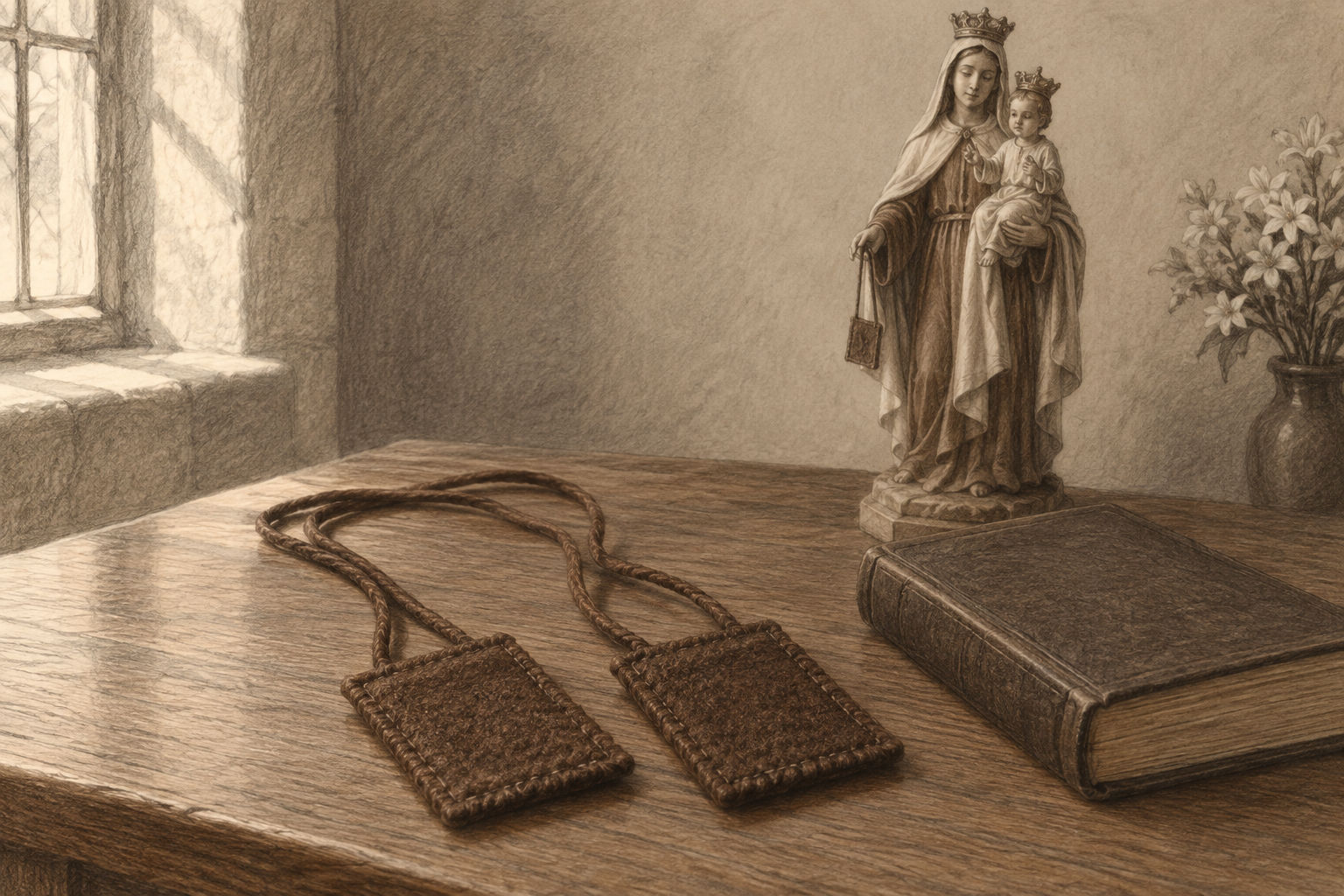
Many Catholics own one or more sacramentals without fully reflecting on their meaning. A rosary is perhaps the most familiar. It is a tool for meditating on the mysteries of Christ with Mary. A scapular reminds the wearer of belonging to Our Lady and of living in fidelity to Christ. A crucifix keeps the Passion before our eyes. A blessed medal can recall a saint's witness and intercession. Blessed candles can accompany prayer and signify Christ as the light of the world.
Each of these sacramentals has its own place, but all share a common purpose: they are meant to direct us beyond themselves. A rosary is not merely an object to possess. It is a way to pray. A crucifix is not decorative only. It calls us to contemplate the love of Christ crucified. A medal is not a protective token by itself. It is a reminder of the communion of saints and a prompt to imitate holiness.
That is why sacramentals should be chosen with faith and used with reverence. A Catholic may ask: Does this help me pray? Does it draw me toward Christ? Does it encourage repentance, gratitude, or charity? If so, it is serving its true purpose.
The home as a small domestic church
One of the most beautiful uses of sacramentals is in the home. A blessed crucifix on the wall, a small icon, a holy water font near the door, or a prayer corner in a bedroom can all help a household remember that the Christian life is lived not only in church but also at the dinner table, in the hallway, and beside a child's bed.
Parents especially have a gentle and important role here. They do not need to create a museum of religious objects. Even one or two sacramentals used with prayer can shape the spiritual atmosphere of a home. Children learn not only by instruction, but by seeing what adults touch, bless, and honor. A home that prays with sacramentals becomes a home that remembers God.
How to avoid superstition and grow in reverence
The Church is clear that sacramentals are not magical. That warning is important because Catholics can sometimes fall into a casual kind of superstition without meaning to. We may imagine that a medal will protect us regardless of our choices, or that holy water will work like a charm if we use it a certain way. That is not the Church's mind.
Instead, sacramentals invite conversion. They are fruitful when used with faith, prayer, and a desire to live rightly. If we wear a scapular, we should also seek chastity, humility, and prayer. If we keep holy water in the home, we should also forgive others, avoid sin, and attend Mass faithfully. The visible sign and the interior life should belong together.
Reverence also matters in the way sacramentals are handled. Holy water should be treated respectfully. Old blessed items should not be thrown away carelessly. Many Catholics prefer to burn or bury certain sacramentals when they are no longer usable, following a traditional instinct to honor what has been blessed for sacred use. Even this small detail reflects a larger truth: what is set apart for God should be treated with care.
Simple ways to live this devotion more deeply
For many Catholics, the best way to grow is not by adding more devotional items, but by using the ones already present more attentively. A few simple habits can make a real difference.
- Use holy water deliberately when entering church, not as a rush but as a brief prayer of faith.
- Keep a small holy water font at home and bless yourself at the beginning and end of the day.
- Pray one decade of the rosary slowly, paying attention to the mysteries of Christ.
- Place a crucifix where it can be seen often, especially in a prayer corner or bedroom.
- Ask a priest to bless devotional items, and then use them with gratitude rather than routine.
- Teach children the meaning of the sign of the cross and the purpose of holy water.
These habits are small, but Catholic life often grows through small fidelities. A sacramental used with faith can become a daily reminder that the Lord is near. It can help us begin again after distraction, temptation, or fatigue.
In that sense, holy water and sacramentals are not extras added onto the Christian life. They are quiet supports for a life already claimed by grace. They teach the body to pray, the home to remember, and the soul to trust. When used well, they lead us not to themselves, but to Christ, who blesses, heals, and saves.
Keep Reading on Lets Read The Bible
Frequently Asked Questions
Is holy water itself sacred, or is it only a symbol?
Holy water is an ordinary material reality that has been blessed by the Church for sacred use. It is a sacramental, so it is more than a mere reminder, but it is not a sacrament. Its power comes from God's grace and the Church's prayer, not from any magical quality in the water itself.
Can Catholics keep holy water at home?
Yes. Many Catholics keep a small font or bottle of holy water at home and use it prayerfully. It is especially helpful for beginning and ending the day, for praying with children, and for marking moments of temptation, fear, or gratitude.
What should I do with old or damaged sacramentals?
Sacramentals should be treated respectfully because they have been blessed for sacred use. When they are no longer usable, many Catholics prefer to bury or burn them rather than discard them casually. If you are unsure, ask a priest or parish office for guidance.