Sacraments and Liturgy
Praying the Nine Days Well: A Catholic Way to Enter Novenas
A practical look at the Church's beloved nine day prayer, from its biblical roots to the habits that help it become more than a religious checklist.
Site Admin | September 24, 2025 | 94 views
What a novena is, and why Catholics keep returning to it
A novena is a prayer offered over nine days, usually for a particular intention, feast, grace, or spiritual need. It can be as simple as a daily prayer said in the morning or evening, or it can include Scripture, the Rosary, the liturgy of the hours, adoration, or a specific set of prayers tied to a saint or devotion. At its heart, a novena is not a magical formula. It is an act of persevering prayer.
That matters because Catholic devotion is meant to deepen our life with God, not replace it. A novena is best understood as a small school of trust. The person praying returns day after day, not because God needs to be persuaded by repetition, but because the human heart often needs to be steadied by it. Repetition can become a way of staying open.
The practice has a special place in Catholic life because it reflects a deep biblical instinct: the people of God wait, watch, and ask together. The apostles remained in prayer after the Ascension, gathered with Mary in the upper room before Pentecost, when the Spirit came upon the Church Acts 1:14 and Acts 2:1. That atmosphere of expectant prayer helps explain why nine days of prayer have long felt natural to Christians.
Where novenas come from
The word novena comes from the Latin for nine. In the Christian tradition, nine days of prayer became associated with waiting in faith and preparing for a feast or grace. One of the clearest biblical patterns is the Church's first great period of prayer between the Ascension and Pentecost. The apostles and the Blessed Virgin Mary were united in prayer, awaiting the promise of the Father Acts 1:4.
Over time, Catholics developed novenas in many forms. Some were linked to solemn feasts, such as Pentecost. Others were made in honor of saints, asking their intercession or imitating their virtues. Still others arose in times of need, when a parish, family, or individual needed focused prayer for healing, conversion, guidance, or peace.
The Church does not treat every novena the same way. Some are public and liturgical in tone, while others are more private and devotional. Yet the best novenas share the same spiritual shape: a steady return to God, a concrete intention, and a willingness to pray with hope. This is one reason the novenas Catholic guide matters so much to ordinary believers. It helps keep the devotion anchored in the life of the Church rather than in sentiment alone.
Why nine days became such a meaningful pattern
There is something humble about a nine day prayer. It asks for endurance, but not forever. It gives a beginning and an end. That structure helps many Catholics pray more faithfully than they might if left to a vague intention with no shape at all.
In spiritual life, time matters. Waiting can purify desire. Repetition can reveal whether we are praying for God himself or only for a result. Nine days can bring both discipline and mercy. They are long enough to call us beyond impulse, yet short enough to fit ordinary life.
The number nine is also associated in Christian tradition with the nine days between Ascension and Pentecost, which became a model for prayerful anticipation of the Spirit's coming. That connection gives novenas a distinctly ecclesial character. They are not simply personal exercises. They are a way of praying with the Church's memory and hope.
At their best, novenas teach patience without passivity. They are active prayer. One gives attention to God each day, often with a specific request, but also with thanksgiving, repentance, and surrender. The soul learns to say, in effect, Lord, I am still here, and I trust you are still at work.
How a novena should be prayed
Many Catholics ask what makes a novena valid or effective. The simplest answer is that a novena is prayed well when it is prayed faithfully, reverently, and with an open heart. There is no need to make it complicated. A daily routine is often enough.
A practical novena might include:
- a short invocation of the Holy Spirit
- the sign of the cross
- the day of the novena prayer or a Scripture passage
- a personal intention spoken plainly before God
- a moment of silence
- a closing prayer of trust, such as the Our Father, Hail Mary, or Glory Be
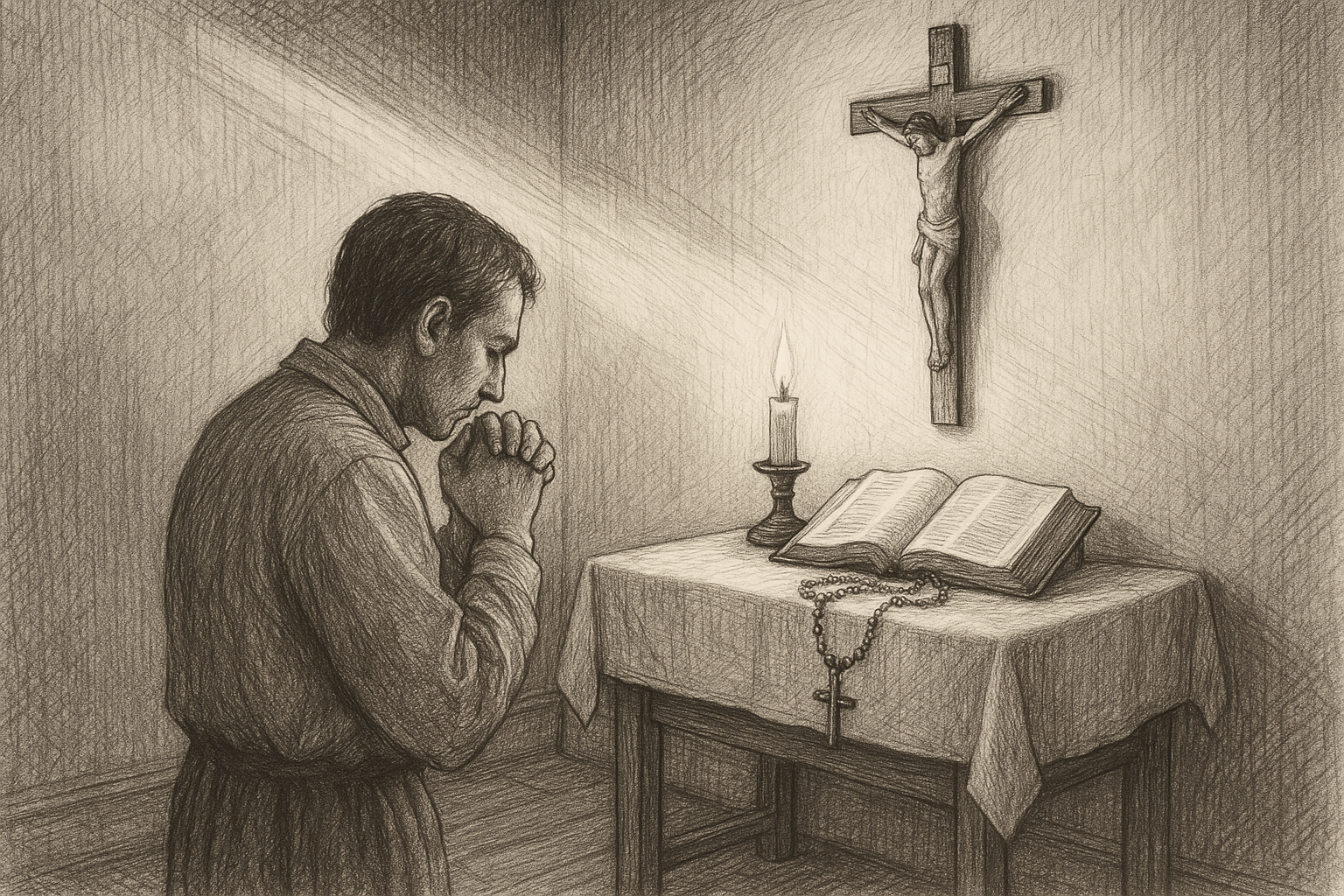
Some novenas are prayed after Mass, others before bed, others with a family at the dinner table. The exact time is less important than consistency. If possible, choose a quiet moment and keep the same rhythm for all nine days. Small acts of faith become easier to sustain when they are given a place in the day.
It can also help to pray with a specific posture of heart. A novena is not only about asking. It is also about listening. If the prayer is for healing, one may ask for healing and also ask for peace if the healing comes in a form not expected. If it is for discernment, one may ask not only for clarity but for the grace to accept God's timing. This gives the novena a deeper spiritual honesty.
Practical habits that help a novena take root
For many Catholics, the hardest part is not beginning a novena but finishing it. A few simple habits can help.
- Write the intention down somewhere visible.
- Set a daily reminder on a phone or use a prayer card.
- Choose one stable prayer time.
- Keep the prayer modest enough to be sustainable.
- Pray with someone else when possible.
It is also wise to avoid judging the novena by emotions alone. Some days feel warm and focused; others feel distracted or dry. That does not mean the prayer has failed. Fidelity is itself a grace. The Lord receives our prayer not only in moments of intensity, but also in ordinary perseverance.
Novenas and the sacramental life of the Church
Because this article belongs to the Church's life of sacraments and liturgy, it is worth saying clearly that a novena is a devotion, not a sacrament. It does not replace the Mass, Confession, or the other sacramental means by which Christ gives grace to his Church. Rather, it can support them.
For example, a novena for healing may lead a Catholic to the Anointing of the Sick, or to more frequent Confession and Communion. A novena for vocations may deepen devotion to the Eucharist. A novena for the dead may be united to the offering of Mass for a loved one. In these ways, novenas often act like a bridge between personal need and the Church's sacramental life.
That is one reason Catholics have always valued them. They give language and rhythm to prayer between the sacraments, while keeping the heart pointed toward them. A novena can prepare the soul to receive grace more docilely. It can also help a person remain prayerful after receiving grace, instead of treating prayer as a one-time request.
When used well, a novena becomes a gentle reminder that Christian life is not built on isolated experiences. It is built on communion, patience, and worship. The Church prays together, suffers together, waits together, and hopes together.
Common mistakes to avoid
Because novenas are so familiar, it is easy to misunderstand them. A few common errors are worth naming.
Do not treat a novena like a bargain. The goal is not to make a deal with God. Catholic prayer is filial, not transactional.
Do not think the wording is magic. The power of prayer comes from God, not from a technique. A set formula can be beautiful and helpful, but it is not an incantation.
Do not abandon the sacramental life. If a prayer intention is serious, the Catholic response should include the Mass, Confession when needed, Eucharistic adoration, and works of charity.
Do not despair if the request is not granted as hoped. A novena may be answered in ways that are hidden, delayed, or very different from what was imagined. God is never indifferent to prayer, even when his answer is mysterious.
Do not turn a novena into performance. The point is not to prove devotion to yourself or others. The point is to seek God with simplicity.
How an ordinary Catholic can live a novena more deeply
To live a novena more deeply, begin by choosing one intention and one reason for praying it. Is it for healing, conversion, gratitude, discernment, peace, or the needs of someone you love? Clarity helps the prayer stay focused.
Then bring the intention before God honestly. Some Catholics are used to polished language, but the Lord can receive plain words. Tell him what you hope for. Tell him what you fear. Tell him where you need help believing. A novena is not weakened by sincerity. It is strengthened by it.
It is also helpful to connect the novena to Scripture. Even a short verse prayed each day can deepen the experience. For example, one might meditate on the apostles' prayerful waiting in the upper room Acts 1:14 or on the Lord's promise that the Holy Spirit will come upon the Church Acts 1:8. Scripture keeps the devotion from becoming inward-looking. It opens the prayer to God's own words.
If the novena has a saintly intercession, read a little about that saint's life before you begin. A martyr, a doctor of the Church, a humble religious, or a holy parent can all teach the believer something about asking with faith. The saints do not distract from Christ. They show what Christ's grace can do in a human life.
Finally, let the novena change your daily conduct. If you are praying for patience, practice patience. If you are praying for peace, guard your speech. If you are praying for a loved one, show love in concrete ways. Devotion becomes stronger when it reaches into ordinary behavior.
The most fruitful novenas often leave a quiet trace. The answer may be a grace to endure, a peace that was not there before, a clearer conscience, or a renewed desire for God. Sometimes the gift is not the thing requested but a deeper friendship with the One who hears the request.
That is the enduring beauty of novenas Catholic guide teaching in the life of the Church: nine days can become a small, faithful path into trust, and trust is often where grace begins to mature.
Keep Reading on Lets Read The Bible
Frequently Asked Questions
What is the main purpose of a novena in Catholic prayer?
A novena is a nine day prayer of persevering intercession or thanksgiving. Its purpose is to help Catholics pray with faith, patience, and trust for a particular intention while staying rooted in the Church's life of prayer.
Do novenas have to be prayed exactly the same way every day?
No. Many novenas follow a set text, but the essential point is faithful prayer over nine days. A Catholic may pray a formal novena, add Scripture, or keep a simple daily routine, as long as the prayer remains reverent and consistent.
Should a Catholic go to Mass or Confession during a novena?
A novena does not replace the sacraments, but it can lead a person closer to them. For serious intentions, especially those involving healing, conversion, or grief, attending Mass, receiving the Eucharist worthily, and going to Confession when needed can deepen the prayer.