Sacraments and Liturgy
At the Table of the Word: Meeting Christ in the Scriptures at Mass
The Liturgy of the Word is not a warm-up to the Eucharist. It is Christ speaking to his Church, forming us to listen, believe, and respond.
Site Admin | September 4, 2025 | 85 views
The Liturgy of the Word is one of the most familiar movements in the Mass, and that is part of the challenge. Because it is familiar, it can become routine. We hear the readings, the psalm, the Gospel, and perhaps a few familiar phrases in the homily, then move on to the Creed and the Eucharist. Yet the Church gives this part of the Mass a dignity that deserves more than passive attendance. It is not filler before the altar is prepared. It is an encounter with the living voice of God.
If we are looking for a the Liturgy of the Word Catholic guide that is practical and faithful, the first thing to recover is this simple truth: at Mass, God speaks first. The Church gathers not to create her own message but to receive the Word already given, proclaimed in the Scriptures and fulfilled in Christ. The faithful do not merely listen to ancient texts. They listen for the voice of the Shepherd who still addresses his people.
What the Liturgy of the Word is
The Liturgy of the Word is the part of the Mass in which Scripture is proclaimed and explained. It normally includes the first reading, the responsorial psalm, the second reading on Sundays and solemnities, the Gospel, the homily, the Profession of Faith, and the Prayer of the Faithful. These elements are not accidental additions. Together they form a single liturgical action in which God speaks and his people respond.
The structure itself teaches a spiritual rhythm. First comes listening. Then praise. Then proclamation of the Gospel. Then reflection and assent. Finally, intercession. In other words, the Church does not treat Scripture as a private devotional text only. She places it in a liturgical setting where the whole assembly hears it as the Word addressed to the Body of Christ.
This matters because Christian faith is not self-generated. We do not begin with our own ideas about God and then look for verses to support them. We begin by receiving revelation. The Word is given to us in the Church, under the guidance of the Holy Spirit, so that we may believe more deeply and live more faithfully.
Where this part of Mass comes from
The Liturgy of the Word has deep roots in Israel and in the life of the early Church. In the synagogue, the people of God gathered to hear the Law and the Prophets read aloud. Jesus himself entered that pattern when he read from Isaiah in the synagogue at Nazareth and declared the Scripture fulfilled in their hearing 18|Luke 4:16-18. That scene is not simply a teaching moment. It reveals that Christ stands at the center of the Scriptures and brings them to completion.
The apostles continued this pattern in the early Christian communities. Acts describes believers gathering for the apostles' teaching, fellowship, the breaking of the bread, and prayers Acts 2:42. The shape is recognizable. The Church listened together, prayed together, and celebrated the mysteries of Christ together. The Mass did not come from nowhere. It developed organically from the worship of Israel, transformed and fulfilled in Christ.
There is also a profound link between Word and sacrament. The same Lord who speaks in the Scriptures gives himself in the Eucharist. The Church therefore does not separate hearing from receiving, or teaching from worship. The Word prepares the heart for the Sacrament, and the Sacrament confirms the Word. What is proclaimed is the same Christ who is made present on the altar.
Why the Church puts Scripture in the heart of Mass
The Church knows that human beings forget. We need repetition, but not empty repetition. We need repeated contact with the truth. The readings at Mass are not chosen to entertain or to match the mood of the day. They are arranged to open the whole mystery of salvation across the liturgical year, so that the faithful are gradually shaped by the story of God with his people.
In that sense, the Liturgy of the Word is an act of formation. It teaches us how to hear. It trains our attention away from distraction and toward reverence. It reminds us that faith comes through hearing Romans 10:17. It also reminds us that hearing is not the same as understanding everything instantly. Some texts console, some challenge, some confuse at first hearing. But all can work on the soul when received with humility.
The liturgy also protects us from a thin view of Scripture. If we only read the Bible as private inspiration, we may reduce it to something useful for our preferences. In the Mass, however, Scripture is proclaimed within the prayer of the Church. It is heard by a people formed by Creed, sacrament, and communion. The readings are not isolated quotations. They are part of a living, worshipping whole.
When the Church proclaims Scripture at Mass, she is not simply reading about Christ. She is making room for Christ to address his people here and now.
How to listen with greater fruitfulness
Most Catholics want to pay attention at Mass, but attention can be difficult. The answer is not guilt. The answer is preparation and a few steady habits. A fruitful hearing of the Word begins before Sunday morning.
1. Read the readings ahead of time
If possible, look up the Sunday readings before Mass. Reading them ahead of time is not a way of spoiling the surprise. It is a way of making space for the Word to sink in. Familiarity helps the ear catch what it may miss in a single hearing. Even a few quiet minutes on Saturday evening can change how the readings land on Sunday.
2. Listen for the central movement of the text
Not every detail will stand out, and that is fine. Ask simple questions: What is God revealing here? What is he asking of his people? How does this reading point to Christ? What word or phrase remains with me? These questions keep the heart open without forcing the passage into a quick moral lesson.
3. Notice the response of the Church
The responsorial psalm, the acclamation before the Gospel, the Creed, and the Prayer of the Faithful are not interruptions. They are responses. The liturgy teaches us that listening is meant to become prayer. We hear, then we answer. We proclaim, then we assent. We receive, then we intercede.
4. Stay close to the homily with patience
The homily should arise from the Scriptures and lead the assembly toward faithful living. At its best, it helps the congregation hear what the readings are saying in the light of Christ. It is not meant to replace the readings, but to open them. If a homily is brief or uneven, do not let that determine the value of the Word just proclaimed. The strength of Scripture does not depend on a perfect sermon.
What the assembly is doing when it says Amen
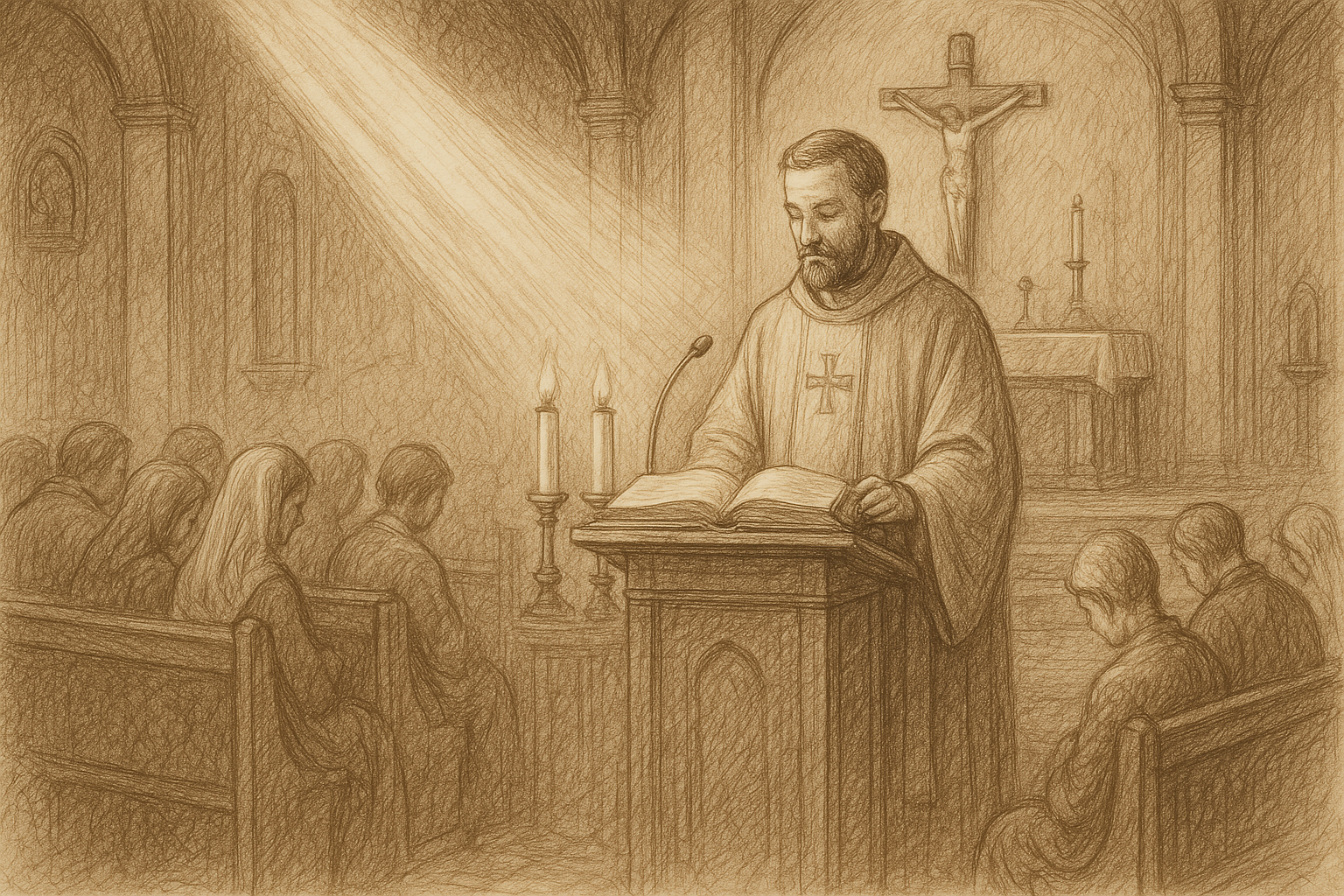
The Liturgy of the Word is not a performance watched by a passive crowd. It is the prayer of the Church. Even when only one lector reads, the whole assembly hears in faith. This is why the ambo matters, why reverence matters, and why the silence between readings matters. Silence gives room for the Word to echo inwardly.
At the end of the readings, the Church responds in a variety of ways. The Gospel is greeted with praise. The Creed follows on Sundays and solemnities because the Word leads to profession of faith. The Prayer of the Faithful places our needs within the hearing we have just received. The assembly is not merely informed. It is drawn into assent, praise, and petition.
This is one reason the liturgy guards against a casual attitude toward the Scriptures. A person may be able to quote verses and still miss the posture the Church asks of us. The right posture is receptivity. We come to be addressed. We come as learners. We come as the baptized, who belong to a people taught by God.
How the Liturgy of the Word shapes daily Catholic life
What happens at Mass should not stay at Mass in the narrow sense. The readings are meant to echo through the week. A Catholic who listens well on Sunday will often begin to notice Scripture differently on Monday, in prayer, in conversation, and in decisions. The Word heard in church can become the lens through which ordinary life is seen.
That does not mean every reading produces an immediate insight or a dramatic emotional response. Often the fruit is quieter. A phrase returns during the week. A verse sharpens conscience. A Gospel scene helps someone endure a trial. A psalm gives words to gratitude or sorrow. Over time, the repeated hearing of Scripture at Mass builds memory, and memory becomes a kind of spiritual shelter.
The Church asks this because she knows that discipleship is formed by hearing, remembering, and obeying. Mary herself is the model of this receptive faith. She hears the word of God and keeps it in her heart Luke 2:19. Catholics who listen to the Liturgy of the Word with Mary learn to let the Word dwell within them instead of passing quickly through.
There is also a missionary dimension. A parish that listens well to Scripture becomes a parish better able to speak truthfully, forgive generously, and act with courage. The Word received in worship should bear fruit in charity, patience, and clarity of conscience. The Mass is not an escape from the world. It is the place where the Church is re-formed so she can return to the world as Christ's witness.
A simple way to enter more deeply next Sunday
If you want one practical place to begin, make a small commitment before the next Mass. Read the readings, arrive a little early, and choose one phrase to carry with you through the liturgy. During the readings, listen for that phrase without forcing it. After Mass, spend a few minutes thanking God for what you heard. That practice is modest, but it can open a real path of renewal.
The Liturgy of the Word is not meant to be rushed past on the way to the Eucharist. It is part of the same great act of worship, and it deserves our full attention. When Catholics hear Scripture as the living address of Christ, Mass becomes less routine and more real. The Lord is still speaking, and the Church is still learning how to listen.
Keep Reading on Lets Read The Bible
Frequently Asked Questions
What is included in the Liturgy of the Word at Mass?
The Liturgy of the Word usually includes the first reading, responsorial psalm, second reading on Sundays and solemnities, Gospel, homily, Creed, and Prayer of the Faithful. Together these elements form the Church's prayerful hearing and response to Scripture.
Is the Liturgy of the Word less important than the Liturgy of the Eucharist?
No. The two parts of the Mass belong together. The Liturgy of the Word prepares us to recognize Christ, and the Eucharist gives us the same Lord whom the Scriptures proclaim. Each part serves the one mystery of worship.
How can I pay better attention to the readings at Mass?
Read the Sunday readings beforehand, arrive a little early, and listen for one phrase or theme rather than every detail. After Mass, spend a few minutes in quiet prayer with what you heard so the Word can continue working in your heart.