Sacraments and Liturgy
Small Signs, Great Mercy: Holy Water and the Catholic Life of Grace
How holy water and sacramentals help Catholics remember baptism, resist temptation, and live with reverence in ordinary moments.
Site Admin | October 1, 2025 | 99 views
Holy water is one of the simplest signs in Catholic life, and yet it often carries a quiet depth that is easy to miss. A small touch at the church door, a sign of the cross before prayer, a blessing over a home, or a medal worn with devotion can become a steady reminder that God meets His people through visible signs. In the Church, these signs are called sacramentals, and they help dispose us to receive grace and to live more attentively before the Lord.
When Catholics speak of holy water and sacramentals explained, they are really speaking about a way of life shaped by reverence. These are not charms, and they do not work like spiritual shortcuts. They belong to a Catholic imagination formed by the Incarnation, where God uses created things to draw us toward Himself. Water, oil, ashes, candles, rosaries, medals, scapulars, crucifixes, and blessed palms can all become instruments of prayer when received in faith.
What holy water is, and what it is not
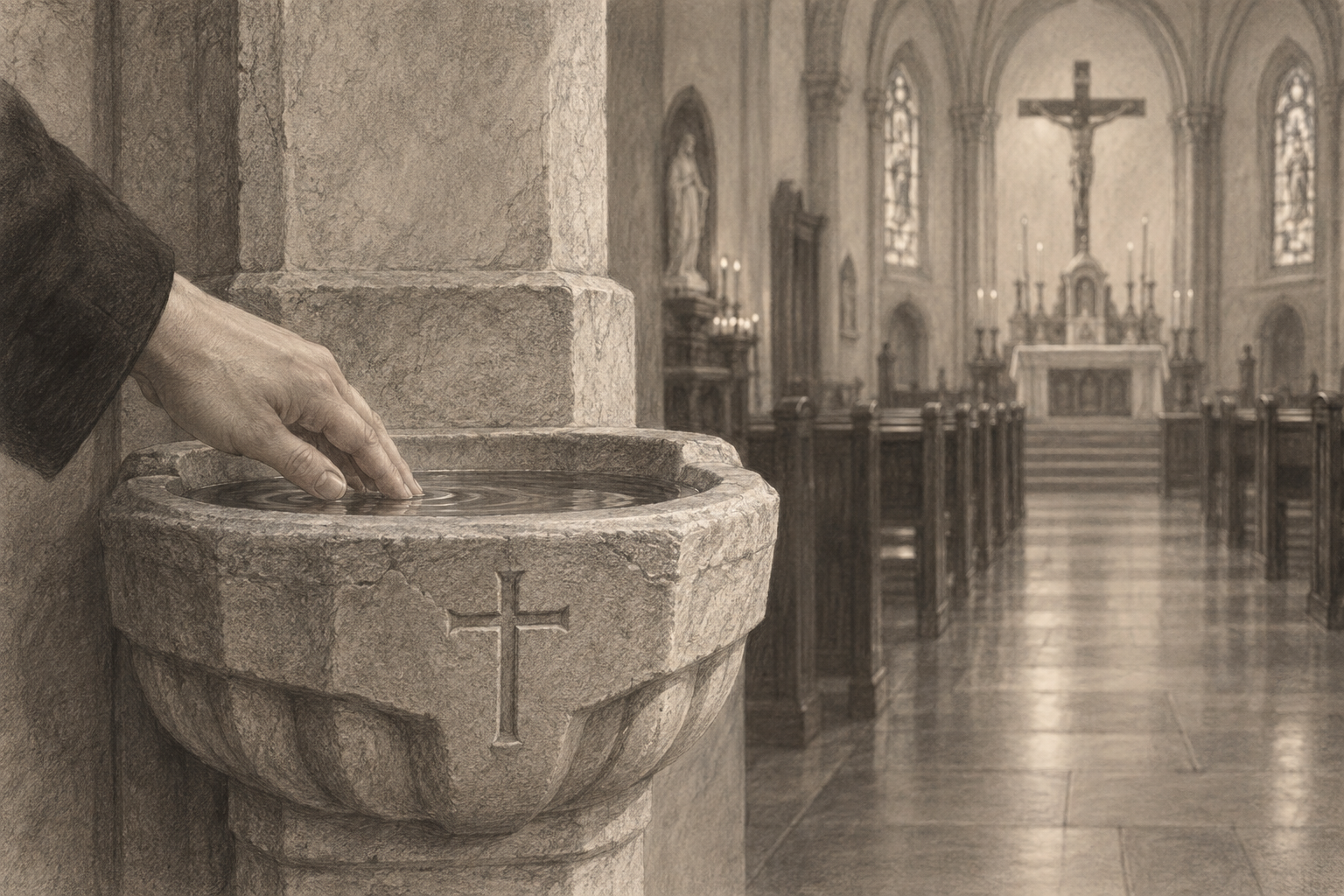
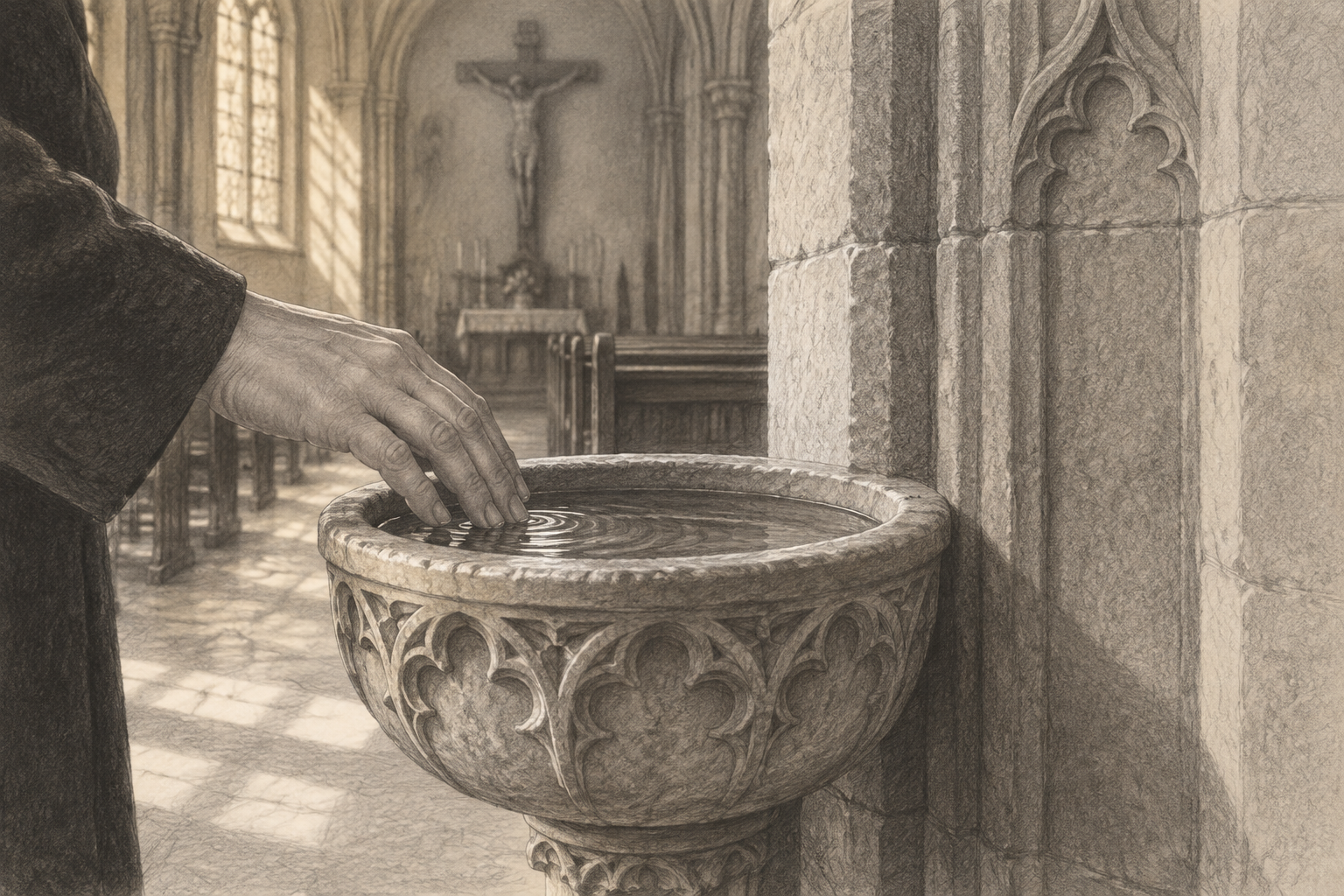
Holy water is ordinary water blessed by a priest or deacon for sacred use. The blessing asks God to set it apart and to use it as a sign of cleansing, protection, and renewal. Catholics usually encounter it in the stoups at the entrance of a church, where the faithful bless themselves upon entering or leaving. That small gesture is more than a habit. It is a prayer in bodily form.
Holy water is not magic. It does not force God to act, and it does not replace repentance, confession, or faith. The Church teaches that sacramentals prepare us to receive grace and sanctify different moments of life. Their power comes from the prayer of the Church and from the disposition of the one who uses them. When a Catholic signs himself with holy water, he is asking to be cleansed, protected, and remembered as one who belongs to Christ.
As you approach the church door, the gesture of holy water quietly says what the heart must always remember: I belong to the Lord, and I enter His house as a child who needs mercy.
Scripture and the meaning of water
Water appears throughout Scripture as a sign of life, purification, and God's saving action. At creation, the Spirit hovers over the waters Genesis 1:2. In the flood, water both judges and preserves Noah and his family Genesis 7:17 and Genesis 8:1. Israel passes through the Red Sea into freedom Exodus 14:21-22. Elijah's servant looks to the sea for the sign of God's coming rain 1 Kings 18:44.
Most importantly, water is gathered up in the life of Christ. At His baptism in the Jordan, Jesus enters the waters not because He needs cleansing, but because He has come to sanctify the waters for our sake Matthew 3:13-17. Later, He speaks of the new birth from water and the Spirit John 3:5, and the Church sees in baptism the foundational sacrament of Christian life.
Holy water points back to this baptismal reality. Each time a Catholic uses it, he is invited to remember the grace of his baptism and to renew his desire to live as a disciple. The Church does not ask us to treat holy water as a substitute for the sacraments. Rather, it helps us live the sacramental life more consciously.
What sacramentals are
The Catechism teaches that sacramentals are sacred signs instituted by the Church that bear a resemblance to the sacraments. They signify effects, particularly spiritual effects, which are obtained through the intercession of the Church. That means sacramentals are not sacraments, but they belong to the Church's prayerful life and can dispose a person to receive grace more fruitfully.
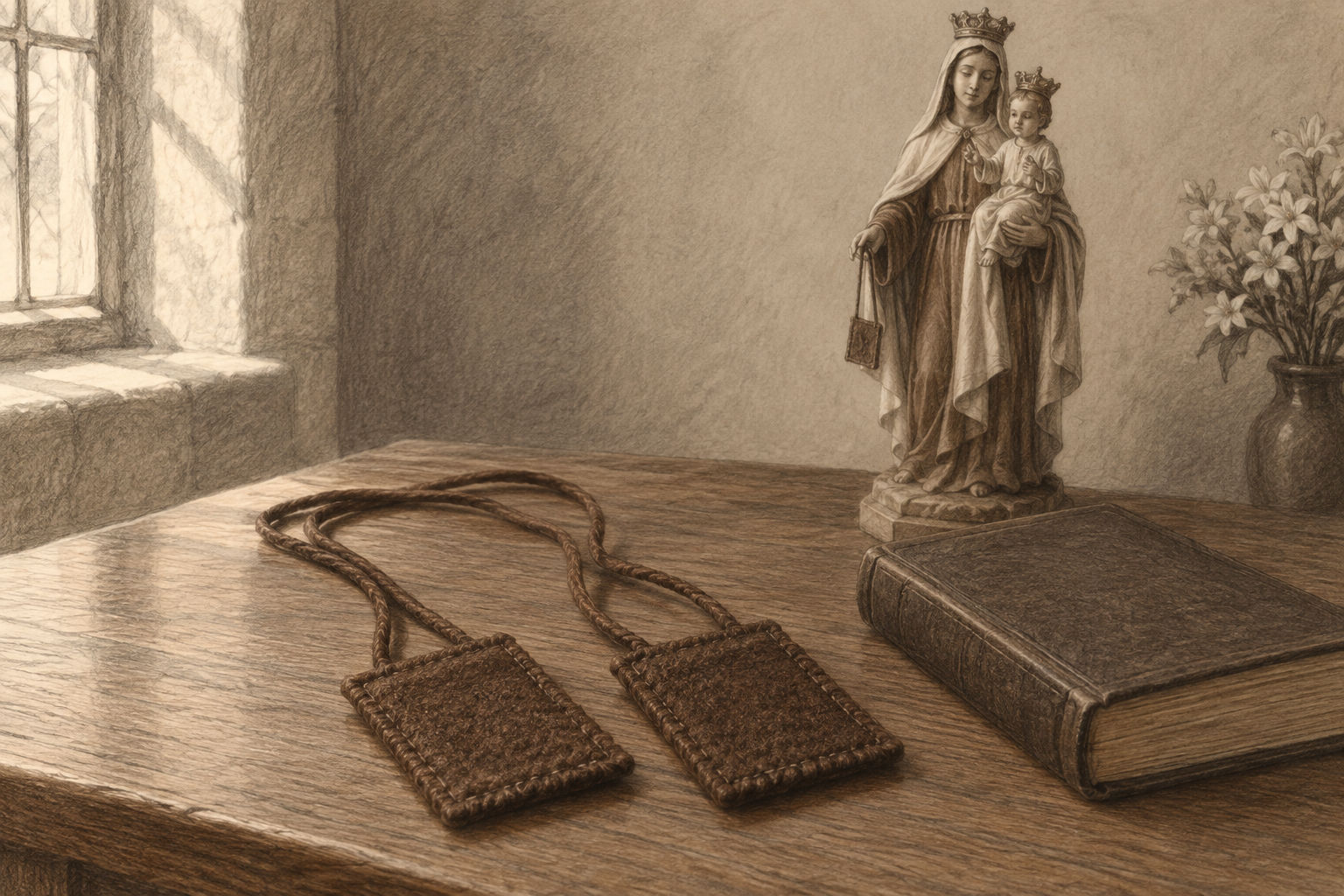
Examples include blessed water, rosaries, scapulars, medals, crosses, images, candles, ashes, palms, and blessings given for people, places, or objects. Their meaning is not in the material object alone, but in the prayer of blessing and in the faith with which they are used. A rosary is not simply a string of beads. It is a way of entering contemplation with Mary. A crucifix is not merely decoration. It is a proclamation of the Lord's saving Passion.
It is helpful to remember that sacramentals work in a humble way. They do not guarantee a feeling, and they do not make holiness automatic. Instead, they educate the senses, steady the memory, and direct the soul toward prayer. In a distracted age, this gentle discipline matters.
The Church's long memory
From the earliest centuries, Christians blessed what they used for prayer and daily life. The Church's liturgy has always recognized that the material world can serve worship. This is not because matter is divine, but because creation is good and can be offered back to God. The faithful have long blessed their homes, carried sacred medals, prayed with beads, and used holy water as a reminder that their whole lives belong to Christ.
The Church's blessing of objects also reflects a deeply biblical instinct. The Lord commanded sacred use for vessels, garments, oil, and incense in Israel's worship. In the New Testament, physical things become channels of mercy in Christ's hands. A woman is healed by touching His garment Mark 5:27-29. People lay the sick in places where Peter's shadow might fall Acts 5:15. Handkerchiefs that had touched Paul are carried to the afflicted Acts 19:11-12. These texts do not turn objects into talismans. They show that God often chooses to work through material signs.
How holy water helps in ordinary Catholic life
For many Catholics, holy water becomes most meaningful when it is tied to simple habits. A parent may bless a child before bedtime. A person may use holy water while praying for protection against temptation. A family may bless a home. A Catholic may pray with holy water before reading Scripture or before making an important decision. These are quiet acts, but they help make the day more prayerful.
Here are some practical ways to use holy water with greater faith:
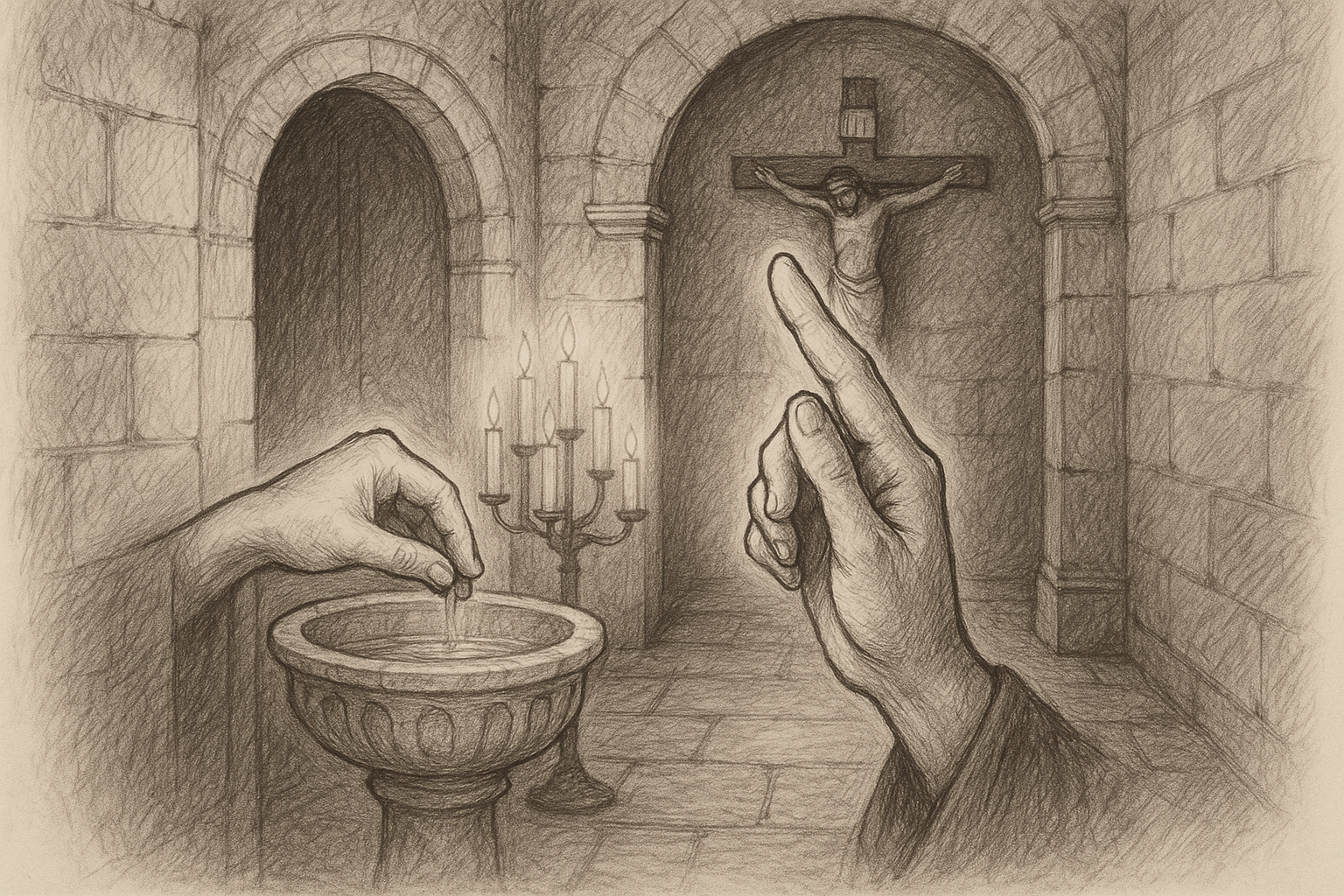
- Make the sign of the cross slowly and deliberately, recalling your baptism.
- Use holy water when entering a church to prepare your mind and heart for prayer.
- Keep blessed water at home in a reverent container, and use it for brief household blessings.
- Teach children that holy water is a reminder of God's cleansing mercy, not a magical substance.
- When tempted or anxious, pause, bless yourself, and pray quietly for purity of heart.
These actions do not need to be dramatic. In fact, they are often most fruitful when they are simple and sincere. The goal is not to create a feeling of spiritual performance, but to live with greater recollection before God.
How to approach other sacramentals with reverence
Because sacramentals are so common, they can easily become familiar in a way that dulls the heart. A rosary may be left unused. A medal may be worn as an accessory rather than a sign of devotion. A blessed candle may be treated as a decorative item. The answer is not to reject these gifts, but to recover their meaning.
When using a sacramental, ask three simple questions: What does this sign point to? How does it lead me toward Christ? Am I using it with faith and prayer? If a sacramental is detached from prayer, it can become empty habit. But if it is united to the life of grace, it can become a steady aid in sanctification.
It is also wise to receive sacramentals through the Church whenever possible. Have items blessed by a priest or deacon. Learn the proper use of a scapular or medal. Bring blessed objects into the rhythm of family prayer, not as substitutes for it, but as supports for it. The Church gives these signs generously because she knows that human beings remember with their bodies as well as their minds.
Holy water and the sacramental life
Holy water is most fruitful when it is understood within the larger sacramental life of the Church. Baptism is the foundation. Confession restores us when we fall. The Eucharist sustains us with the Body and Blood of Christ. Holy water does not compete with these gifts. It points back to them.
That is why a Catholic who uses sacramentals well will also want to pray, go to Mass, receive the sacraments worthily, and confess serious sin. Sacramentals are not a spiritual loophole. They are a school of reverence. They teach us to approach God with awe, trust, and humility.
For this reason, holy water can be especially helpful in homes where prayer feels fragile or distracted. A blessing at the door, a crucifix in a bedroom, a blessed candle on a prayer table, or a rosary kept near a Bible can create a household atmosphere that gently resists spiritual forgetfulness. The point is not to fill a house with objects. The point is to let visible signs serve invisible faith.
Living with the humility of signs
There is something beautiful about the fact that God meets us through small things. A drop of water, a simple cross, a humble medal, a prayer of blessing. These do not belong to a faith of superstition, but to a faith of incarnation. The Son of God took flesh, and in that flesh He healed, taught, suffered, died, and rose again. Catholic sacramentals honor that mystery by helping us find grace in material signs.
Holy water and sacramentals explained in this way are not complicated at all. They are reminders that the Christian life is both invisible and embodied. Grace touches the soul, but it also shapes gestures, homes, habits, and time. The more attentively we receive these signs, the more naturally they lead us to prayer.
So the next time you bless yourself with holy water, do it slowly. Remember your baptism. Remember the mercy of Christ. Let the sign lead you to gratitude, purity, and trust. In a world that often rushes past holy things, the Church still hands us a little water and says, with maternal wisdom, come back to the Lord.
Keep Reading on Lets Read The Bible
Frequently Asked Questions
Is holy water the same as baptismal water?
No. Holy water is blessed for devotional use, while baptismal water is used in the sacrament of Baptism. Both point to cleansing and new life in Christ, but they are not the same thing.
Can Catholics use holy water at home?
Yes. Many Catholics keep holy water at home for personal prayer, blessings, and the sign of the cross. It should be handled reverently and used as a prayerful reminder of baptism and God's protection.
Do sacramentals forgive sins?
Sacramentals do not forgive sins in the way the sacrament of Reconciliation does. They dispose us to receive grace more fruitfully and help us pray with greater faith, but they do not replace the sacraments.