Sacraments and Liturgy
Holy Week in the Life of the Church: A Quiet Road Into the Paschal Mystery
How the Church leads us from palms to the Cross, from the altar to the empty tomb
Site Admin | September 17, 2025 | 80 views
Holy Week is the most solemn stretch of the liturgical year. It begins with the acclamation of Palm Sunday and moves, day by day, toward the Lord's Passion, the stillness of Holy Saturday, and the joy of Easter. The Church does not treat these days as a dramatic retelling from a distance. She lets us walk through them as participants, so that the saving work of Christ can shape our minds, our worship, and our lives.
For many Catholics, Holy Week can feel both familiar and hard to enter. The signs are beautiful, but the pace of ordinary life often makes it difficult to be present. Yet the liturgy keeps inviting us to slow down. It gathers us into the story of Jesus, who entered Jerusalem in humility, gave Himself in the Eucharist, suffered under Pontius Pilate, died for our sins, and rose in glory. To say Holy Week explained is not to flatten the mystery, but to notice how the Church leads us through it with reverence and patience.
What Holy Week Is and Why the Church Guards It So Carefully
Holy Week begins on Palm Sunday and includes the Sacred Triduum: Holy Thursday, Good Friday, and the Easter Vigil on Holy Saturday night. These are not isolated celebrations. They are a single, unfolding mystery of redemption. The Church marks them with distinctive liturgies because what we remember here is not merely historical information. It is the center of our faith.
Saint Paul wrote, For I delivered to you as of first importance what I also received 1 Corinthians 15:3. That confession sits at the heart of Holy Week. Christ died for our sins according to the Scriptures, was buried, and was raised on the third day. The liturgy does what the apostolic faith has always done: it keeps that saving work before us so that we may receive it with gratitude and live by it.
The Church also guards Holy Week carefully because she knows that the Passion cannot be separated from the Eucharist, the Cross, and the Resurrection. On Holy Thursday, we remember the Lord's institution of the Eucharist and the ministerial priesthood. On Good Friday, we adore the Cross and hear the Passion proclaimed. At the Easter Vigil, the Church keeps watch in the dark and bursts into praise when the light of Christ returns. These are not symbolic add-ons. They are the Church's way of entering the truth that Jesus Himself chose to reveal through His actions.
From Palm Sunday to the Upper Room
Palm Sunday begins with joy, but it is a fragile joy. The crowd shouts Hosanna as Jesus enters Jerusalem, yet the same city will soon witness His condemnation. The liturgy holds both realities together. It allows us to recognize how quickly human praise can turn to rejection, and how steady the Lord remains in offering Himself for our salvation.
The procession with palms recalls the kingly welcome given to Jesus as He approached the city. The Gospel shows Him not on a warhorse but on a colt, fulfilling the words of the prophet: See, your king comes to you; triumphant and victorious is he, humble and riding on an ass Zechariah 9:9. The humility of Christ is not weakness. It is the chosen path of divine love. He comes as the true King who conquers not by force, but by obedience and mercy.
In many parishes, Palm Sunday also includes the long Passion reading. That shift from procession to suffering can seem abrupt, but it is spiritually wise. The Church wants us to see that the path to glory passes through surrender. The same Lord who is greeted with branches will carry the wood of the Cross. The same lips that cry Hosanna will later cry out for His death. Holy Week does not let us sentimentalize discipleship. It asks whether we will remain with Christ when His way grows costly.
Holy Thursday and the Gift That Remains
Holy Thursday centers on the Mass of the Lord's Supper. Here the Church remembers the night Jesus was handed over, when He took bread and wine and gave them as His Body and Blood. The Last Supper is not a private farewell meal. It is the sacramental beginning of the Paschal mystery made present in the Church's worship.
At this Mass, the Church often hears the account of the washing of the feet. That act reveals the shape of Christ's love: He kneels to serve, and He commands His disciples to do likewise. The Eucharist and humble service belong together. The one who is fed at the altar is sent into the world as a servant.
Saint Paul preserved the Church's Eucharistic memory with striking clarity: This is my body that is for you. Do this in remembrance of me 1 Corinthians 11:24. The word remembrance here is richer than memory alone. In the biblical and liturgical sense, it is a making-present of God's saving act. Catholics believe that Christ is truly present in the Eucharist, and Holy Thursday makes that truth shine with special force.
The stripping of the altar after Mass and the quiet procession of the Blessed Sacrament to the place of repose create a mood of watchfulness. The Church enters the Lord's agony in Gethsemane and keeps vigil with Him. This is a good night for silence, for prayer before the tabernacle or repository, and for a sober gratitude that Christ remains with His Church in the sacrament He gave us.
Good Friday and the Love That Goes to the End
Good Friday is not a Mass, because the Church does not celebrate the Eucharistic sacrifice in the usual manner on the day Christ offered Himself on the Cross. Instead, she enters a liturgy of the Passion marked by the reading of Scripture, solemn intercessions, veneration of the Cross, and Holy Communion from hosts consecrated on Holy Thursday. The restraint of the liturgy matters. It teaches us to stand before the Cross without trying to manage it.
At the heart of the day is the mystery of redemptive suffering. Jesus does not merely endure pain. He offers His life in love. As Isaiah foretold, he was wounded for our transgressions, he was bruised for our iniquities Isaiah 53:5. The Church hears this prophecy on Good Friday because the Cross is where the prophecy becomes reality.
When the Cross is unveiled and kissed or reverenced, the gesture is not a sign of sadness alone. It is an act of faith. We honor the instrument of our salvation because it is inseparable from the love of Christ. The Cross exposes sin, but it also reveals mercy deeper than sin. There is no more honest place to bring our sorrow, shame, grief, or fear.
Good Friday also keeps us from imagining that holiness is easy. The world often prefers comfort, speed, and success. The Crucified Christ teaches another way. He shows us that obedience to the Father, fidelity in suffering, and love without calculation are never wasted. In Him, even death is drawn into the promise of resurrection.
The Silent Day of Holy Saturday
Holy Saturday has a particular stillness. Christ has died and been buried. The Church waits. The liturgy is sparse, and that is intentional. The silence gives space to wonder, grief, and hope. It is the day when the disciples may have felt only absence, yet heaven was already at work in a hidden way.
This silence is not emptiness. It is a form of prayer. It teaches us that God is active even when His work is not immediately visible. In personal life, this can be one of the hardest spiritual lessons. We want resolution, but Holy Saturday asks us to trust the Lord when the tomb seems sealed. The Church's waiting is not passive despair. It is hopeful watchfulness.
For Catholics, Holy Saturday also prepares the heart for baptismal renewal. The Easter Vigil will soon celebrate the Lord's victory with fire, water, and light. That transition from silence to joy is part of the wisdom of the liturgy. Christ did not rise in theory. He rose in history, and His Resurrection changes the meaning of every dark place we endure.
The Easter Vigil and the First Light of the New Creation
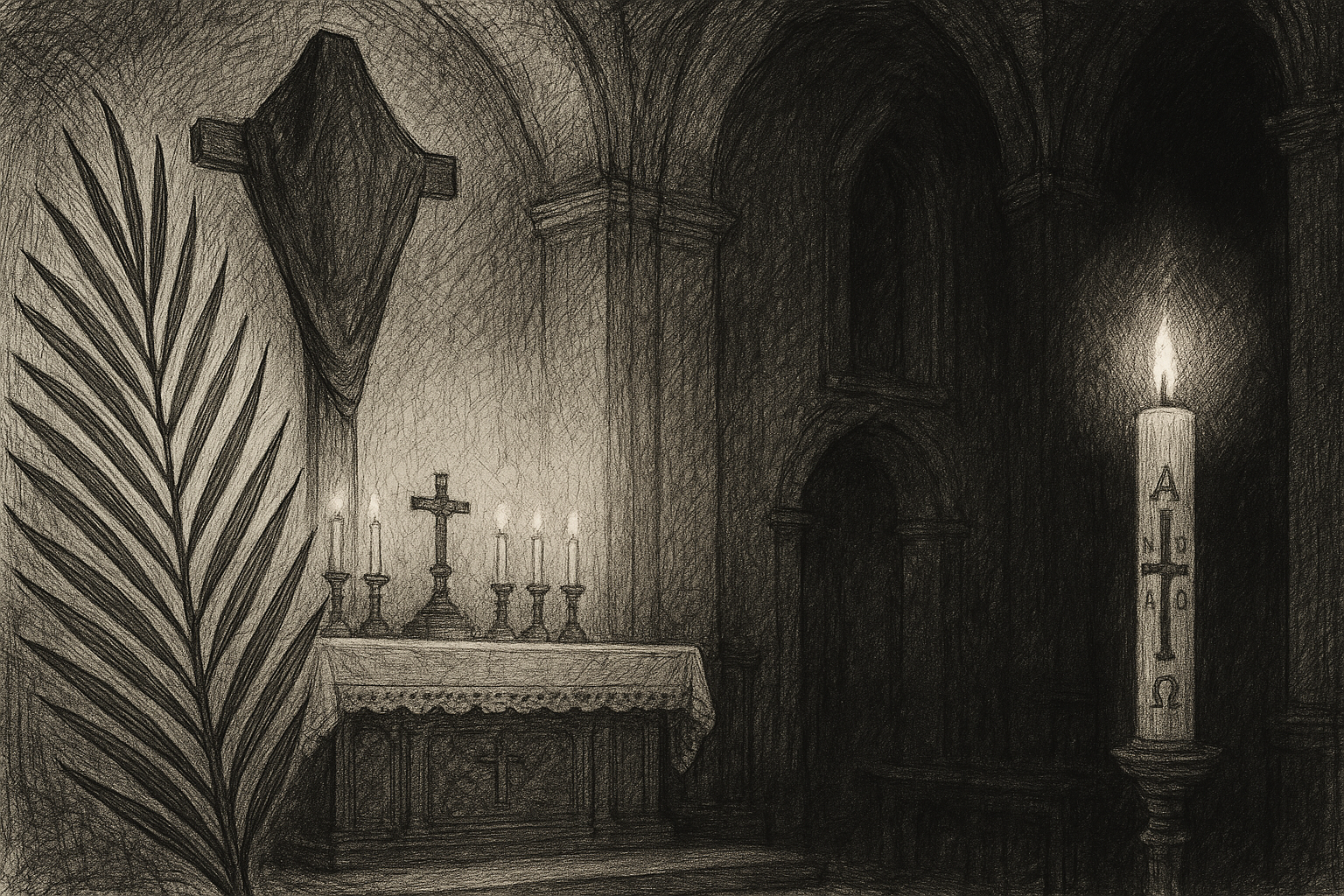
The Easter Vigil is the summit of the liturgical year. It begins in darkness and moves toward dazzling praise. The new fire, the Paschal candle, the Exsultet, the long arc of salvation history in the readings, the blessing of baptismal water, and the renewal of baptismal promises all unfold as one great proclamation: Christ is risen.
Scripture prepares us to understand why this night is so important. If Christ has not been raised, then our preaching is in vain and your faith is in vain 1 Corinthians 15:14. But He has been raised. The Church rejoices not because sorrow was denied, but because death was defeated. The Resurrection is not a metaphor for optimism. It is God's act in history, opening a future that human strength could never create.
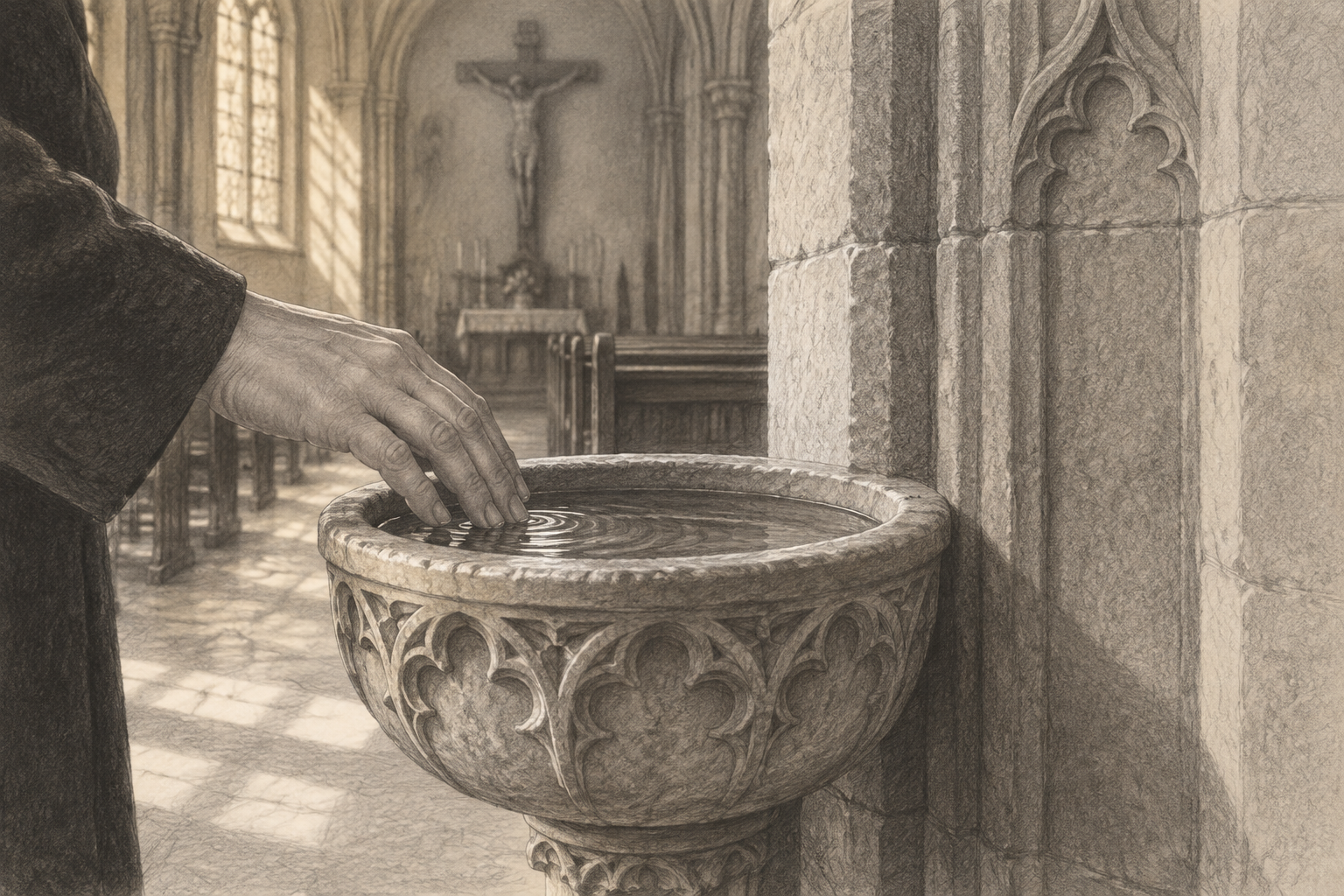
The baptismal character of the Vigil matters deeply. For those being received into the Church, it is the night of new life. For the already baptized, it is a renewal of the promises that claim us again and again. We renounce sin, profess the Creed, and receive the sprinkling of baptismal water as a reminder that we belong to Christ. Holy Week therefore does not end in mere emotion. It ends in covenant.
How to Participate More Faithfully
If you want Holy Week explained in a way that leads to action, begin with a simple goal: be present to the liturgy as much as your state in life allows. Not everyone can attend every celebration, but every Catholic can prepare the heart.
- Plan ahead for the Triduum. Mark the Holy Thursday, Good Friday, and Easter Vigil liturgies in advance if possible.
- Read the Gospel accounts of the Passion. The Passion narratives help the liturgy settle more deeply into the mind and memory.
- Make space for silence. Put aside unnecessary noise on Good Friday and Holy Saturday, even if only for short periods.
- Go to Confession before Holy Week if you can. Reconciliation helps us enter these mysteries with a clean and receptive heart.
- Fast and simplify meals. The Church's penitential spirit becomes more concrete when our habits reflect it.
- Pray with the Cross. A brief Stations of the Cross, a psalm, or a quiet crucifix in the home can anchor the week.
It can also help to approach Holy Week with realistic humility. Not every moment will feel intense. That is fine. The liturgy is doing more than stirring our emotions. It is forming us in the truth, whether we feel it immediately or not. Faithfulness often looks like showing up, listening carefully, and letting the Church pray on our behalf when our own words are few.
What Holy Week Asks of Us
Holy Week asks for reverence, but not performance. It asks for hearts willing to be taught by the liturgy. If we enter these days with attention, we begin to see that Christ is not distant from the pain, confusion, and longing of ordinary life. He has gone ahead of us into suffering. He has entered death. He has opened the way to life.
This is why Holy Week remains so important for Catholics. It gathers the whole Christian mystery into one luminous passage. In its readings, gestures, silences, and sacraments, the Church lets us stand close to the Lord who saves. We come with palms, tears, gratitude, and hope. We leave with the promise that the Crucified is risen, and that in Him our own life can be remade.
So as the days unfold, let the liturgy lead. Let the chants, readings, and rituals slow you down enough to notice the love of Christ. The Church is not asking you to observe a story from the outside. She is inviting you to walk with the Lord, to keep watch with Him, and to receive anew the gift that began in the upper room and reached its victory at the empty tomb.
Keep Reading on Lets Read The Bible
Frequently Asked Questions
What is the difference between Palm Sunday and the Triduum?
Palm Sunday opens Holy Week with the Lord's entry into Jerusalem and the Passion reading. The Triduum is the sacred three days that begin with the evening Mass of Holy Thursday and continue through Good Friday and the Easter Vigil.
Why is Good Friday not a Mass?
Good Friday is the day of the Lord's Passion and Death. The Church does not celebrate the Eucharistic sacrifice in the usual way because she is commemorating the hour when Christ offered Himself on the Cross. Holy Communion is still received from hosts consecrated on Holy Thursday.
How can a Catholic enter Holy Week more deeply if parish attendance is limited?
If work, family, or health make full attendance difficult, focus on the Triduum as much as possible, read the Passion accounts, pray briefly each day, and create quiet space for fasting, silence, and repentance. Even small acts of attention can prepare the soul for the liturgy.