Sacraments and Liturgy
Making Room for the King: A Catholic Path Through Advent
A faithful way to enter the Church's season of waiting, repentance, and hope
Site Admin | September 15, 2025 | 78 views
Advent arrives quietly, but it does not ask for quiet indifference. The Church gives us this season as a holy beginning, a time to wake up, to simplify, and to prepare our hearts for the coming of Christ. For Catholics, Advent is not only a countdown to Christmas. It is a liturgical season with its own rhythm, its own prayers, and its own spiritual discipline. It teaches us that waiting can be fruitful when it is filled with faith.
Advent preparation explained simply means learning to receive Christ more intentionally. We prepare not because God is distant, but because he comes to us in a way that deserves reverence. We look back to the long expectation of Israel, forward to Christ's glorious return, and inward to the work of grace in the soul. In that sense, Advent is both communal and personal. The Church waits together, and each believer is invited to make room in the heart.
Advent in the life of the Church
Advent is the season that begins the liturgical year in the Roman Rite. It has a dual focus: preparation for the celebration of the Lord's Nativity and expectation of his return at the end of time. The Church does not treat these as separate spiritual themes. They belong together because Christ came once in humility, comes now in grace, and will come again in glory.
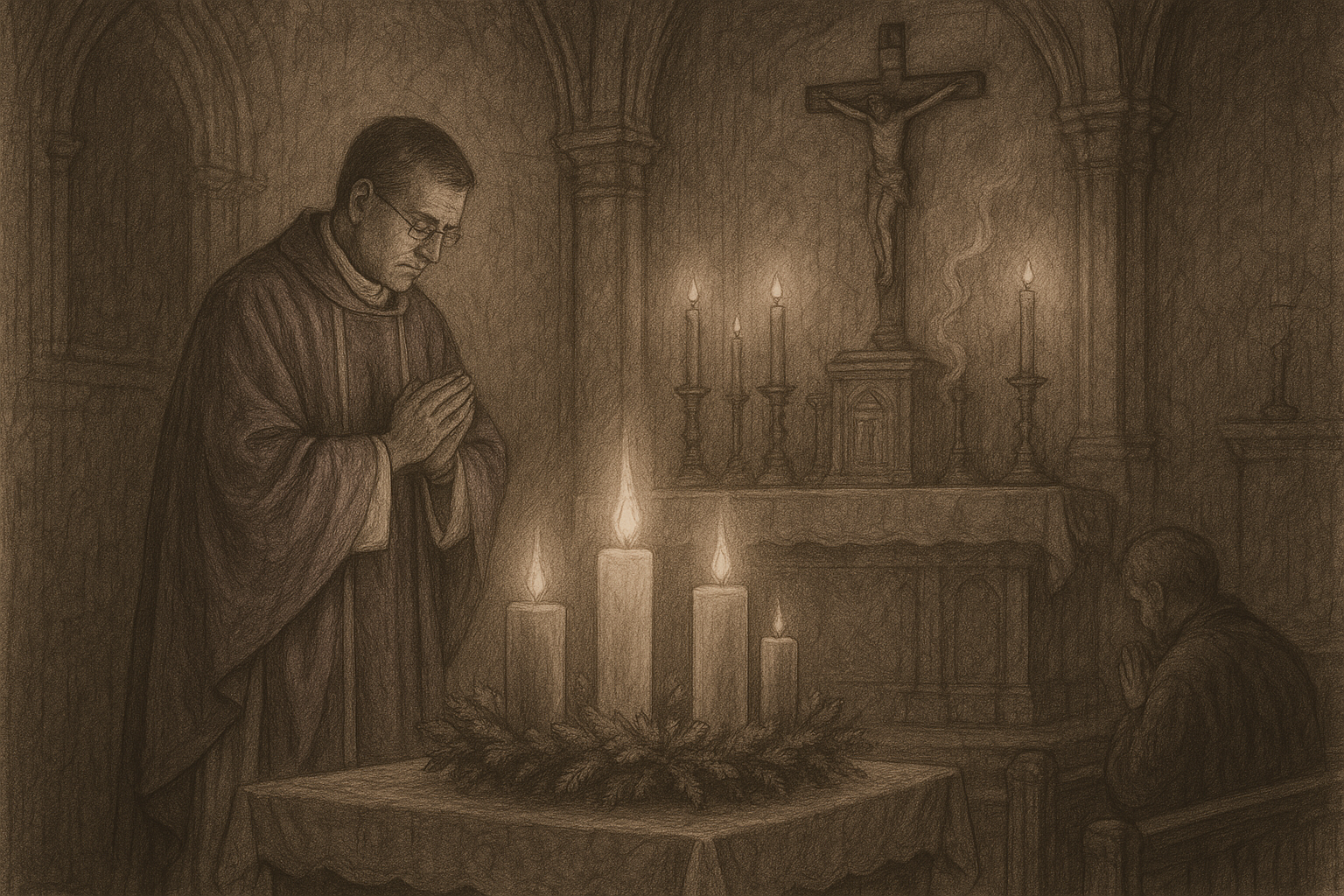
This is why Advent has a tone that is both hopeful and restrained. The liturgy does not rush to Christmas sentiment. The prayers and readings call us to vigilance, repentance, and longing. Even the visual character of the season often reflects this sobriety. Violet vestments, simpler floral arrangements, and the gradual lighting of the Advent wreath all remind the faithful that we are preparing, not consuming.
The prophets heard the promise before they saw its fulfillment. One of the most beloved Advent texts comes from Isaiah: The people who walked in darkness have seen a great light. The Church reads such passages not as distant history alone, but as living words that speak to our own need for salvation. Advent reminds us that darkness is real, but it is not final.
The biblical shape of waiting
Scripture is full of waiting. Abraham waits for descendants. Israel waits for deliverance. The psalmist waits for the Lord more than watchmen for the dawn. The Virgin Mary waits in faith, and the whole Church now waits in hope. Advent gathers these threads into one spiritual posture.
Waiting in the biblical sense is not passive. It is attentive trust. It means staying ready for God's action rather than trying to control every outcome. The Lord often works slowly by human standards, but never carelessly. Saint Paul captures this well when he urges believers to remain awake: It is now the hour for you to awake from sleep.
That awakening is not only moral. It is sacramental. Catholics prepare for Christ by receiving his grace through the Church's life. Advent is therefore a fitting time for confession, Eucharistic devotion, and renewed participation in the Sunday Mass. The season trains us to notice how God comes quietly and faithfully, often through ordinary means.
The historical roots of Advent
Advent developed over time in the Church's liturgical tradition. Its exact form varied in different places, but the season emerged as a period of prayerful preparation for the Lord's coming. In the Latin West, Advent eventually became a clearly marked season with its own readings, prayers, and penitential tone. The Church did not invent Advent as a mere custom. She received and shaped it as a way of helping the faithful enter more deeply into the mystery of Christ.
Because of that history, Advent is not identical to Lent, though it shares some penitential elements. It is lighter in severity, yet it still calls for discipline. The faithful are invited to prepare with seriousness without losing joy. This balance is important. Advent is a season of hope, not gloom. It is also a season of conversion, not complacency.
The Church's liturgical memory matters because it keeps Christian life rooted in something larger than personal preference. Advent belongs to the Church before it belongs to the individual. To observe it well is to join one's life to the wisdom of generations of believers who have learned to wait for Christ together.
What Advent asks of the heart
Many people feel spiritually scattered as the year draws to a close. Work intensifies, family plans multiply, and cultural noise grows louder. Advent quietly resists all of that. It asks for a different pace. It asks us to make interior space for the Lord.
That begins with honesty. If the soul is cluttered, Advent is a good time to name it. If habits have grown lax, this is a season to return to prayer. If relationships need peace, this is a season for reconciliation. If fear or fatigue has taken hold, Advent invites trust. The coming of Christ is good news precisely because we need a Savior, not merely a reminder to improve ourselves.
Advent does not ask us to decorate over our need. It asks us to bring that need before God and let grace meet it.
The liturgy itself helps form this attitude. The Advent antiphons, readings, and prayers all build a sense of expectation. They do not flatter us. They awaken us. They remind us that holiness is not achieved by holiday sentiment, but received through conversion and perseverance.
Practical ways to prepare faithfully
Good Advent preparation is simple enough to be practiced by ordinary families, busy workers, students, and the elderly alike. It is not about building an elaborate program. It is about choosing a few steady acts of devotion and keeping them with love.
1. Return to Sunday Mass with attention
Advent begins in the liturgy. The Sunday Masses of the season give the Church's voice, Scripture, and sacramental life their proper place. Make a point of arriving a little early, reading the Mass texts if possible, and listening carefully to the prayers and readings. Advent is a season to receive, not to perform.
When the liturgy is approached with attention, it shapes the interior life more deeply than any self-designed plan can do. The readings often speak of watchfulness, repentance, and hope. Let them correct the imagination.
2. Go to Confession
Few practices prepare the soul for Christmas more fruitfully than the Sacrament of Reconciliation. Advent is a natural time to examine the conscience, confess sins honestly, and begin again. Confession clears away the clutter that hides Christ's face from us. It is not a seasonal extra. It is a powerful encounter with mercy.
For many Catholics, the week before Christmas becomes rushed and crowded. Preparing for confession earlier in Advent can prevent that rush from turning into spiritual forgetfulness. The goal is not merely to avoid sin for a moment. It is to live in grace.
3. Keep a small daily prayer rule
Advent preparation is strengthened by a simple daily pattern. A few minutes of silence, one psalm, a short Gospel reading, or the recitation of the Rosary can anchor the day. The point is consistency. Even brief prayer, offered faithfully, can reshape the heart over time.
Families can pray together before meals or at the Advent wreath. Individuals may choose morning prayer or evening examen. The form matters less than the fidelity. In a noisy season, daily prayer becomes a form of holy resistance.
4. Practice one concrete act of charity
The waiting of Advent is never self-absorbed. Love of God opens naturally into love of neighbor. A small act of mercy, done intentionally, can give the season a real bodily shape. Visit someone lonely. Donate to a parish effort. Forgive a slight. Write a note to someone who needs encouragement.
Such acts matter because they imitate the generosity of Christ, who comes to save us by entering our poverty. If Advent is truly preparing us for the Lord, then it should make us more charitable, not more inwardly sealed.
5. Simplify what distracts
There is wisdom in making less room for clutter so that Christ has more room in the heart. That may mean reducing unnecessary spending, limiting constant entertainment, or resisting the urge to fill every evening with noise. Simplification is not an end in itself. It serves attention, gratitude, and peace.
Advent is a season of desire rightly ordered. When less is demanded of us by habit, more becomes available to God. The soul can then hear the quiet promise of the Lord more clearly.
The Advent wreath and the domestic church
Many Catholic families use the Advent wreath as a visible sign of the season. Its candles mark the passing weeks and invite prayer in the home. For children, especially, the wreath can make the season tangible. For adults, it can serve as a weekly reminder that time itself is being offered back to God.
Symbols matter because the Christian faith is incarnational. God does not save us by abstract ideas alone. He comes in flesh, in time, in history, and through signs. A candle lit in prayer can become a small but meaningful proclamation that Christ is the light coming into the world.
The home is not separate from the liturgical year. It is one of the places where the year is lived. A family that prays the wreath, reads Scripture together, and keeps a modest Advent rhythm is learning how to make the household a school of hope.
Joy without hurry
One of the most difficult things about Advent is resisting the pressure to act as if Christmas has already arrived. The Church does not deny joy in Advent. She purifies it. She teaches us that joy grows deeper when it is allowed to ripen in longing.
That is why Advent preparation explained in Catholic terms is not about forcing cheerfulness. It is about allowing hope to mature. The world often confuses excitement with joy. Advent points to something steadier. Christian joy rests in the certainty that God keeps his promises.
So the faithful prepare by listening, waiting, confessing, praying, and loving. They do so in the presence of a God who has already come, who is still coming in grace, and who will come again in glory. Advent asks for openness to all three. When we enter it well, the feast of Christmas becomes brighter, not because we hurried toward it, but because we learned how to receive it.
In the end, the season is a gift of mercy. The Church gives us Advent so that our hearts can become a little less crowded and a little more ready for Christ.
Keep Reading on Lets Read The Bible
- Listening at Mass: The Liturgy of the Word and the Church's Living Voice
- Entering the Mystery: The Introductory Rites of Mass and the Art of Beginning Well
- At the Table of the Word: Meeting Christ in the Scriptures at Mass
- At the Heart of the Mass: Living the Liturgy of the Eucharist with Attention and Faith
Frequently Asked Questions
What is the main purpose of Advent in the Catholic Church?
Advent prepares Catholics to celebrate the Lord's Nativity and to live in expectation of Christ's return. It is a season of hope, repentance, and watchful prayer.
Is Advent supposed to be penitential?
Yes, but in a moderated way. Advent includes a penitential tone marked by violet vestments, simpler decor, and calls to conversion, yet it remains a hopeful and joyful season rather than a second Lent.
What are the best Catholic practices for Advent preparation?
The most fruitful practices are attending Mass with attention, going to Confession, keeping a simple daily prayer rule, reading Scripture, practicing charity, and simplifying distractions so the season has room to shape the heart.