Sacraments and Liturgy
Listening at Mass: The Liturgy of the Word and the Church's Living Voice
A closer look at the readings, psalms, and homily that open the faithful to Christ speaking in his Church
Site Admin | September 5, 2025 | 82 views
For many Catholics, the Liturgy of the Word can feel familiar enough to pass by almost unnoticed. The readings are heard, the psalm is sung or recited, the Gospel is proclaimed, and the homily follows. Then, before long, the liturgy moves toward the altar. Yet the Church does not treat these moments as mere preparation or as a lecture before the sacred action begins. They belong to the Mass itself. In the Liturgy of the Word, God speaks to his people, and the people learn again how to listen.
The phrase the Liturgy of the Word explained points us toward more than structure. It invites us to see how Scripture, proclamation, prayer, and response form one act of worship. The Church gathers not simply to hear information, but to encounter the living voice of Christ, who still teaches, corrects, consoles, and summons his disciples. As the Letter to the Hebrews says, the word of God is living and active Hebrews 4:12.
What the Church means by the Liturgy of the Word
The Mass has two principal parts: the Liturgy of the Word and the Liturgy of the Eucharist. Together they are one act of worship, not two separate services joined by convenience. The Word prepares us to recognize the Lord, and the Eucharist gives us the Lord whom the Word announces. In the first part of Mass, we listen to passages from Sacred Scripture, answer with prayer, and receive the homily and creeds that help us receive what we have heard.
This structure reflects a deeply Catholic conviction: God reveals himself through words and deeds, and his revelation is entrusted to the Church. Scripture is not a private text to be interpreted in isolation from the worshiping body. It is proclaimed within the liturgy, where the same Spirit who inspired it opens hearts to receive it. The Church hears in these readings not only ancient words, but a present address from the Lord to his people.
The Scriptures themselves show this pattern. In the synagogue at Nazareth, Jesus read from Isaiah and then declared the passage fulfilled in him Luke 4:16. After his Resurrection, he opened the minds of the disciples on the road to Emmaus, explaining the Scriptures and then making himself known in the breaking of the bread Luke 24:27 Luke 24:35. The Church sees the same movement in every Mass: Christ speaks in the Word and reveals himself in the sacrament.
A brief history of this part of the Mass
The roots of the Liturgy of the Word reach back into Jewish worship. The people of Israel gathered to hear the Law and the Prophets read aloud, then responded in prayer and praise. Jesus himself participated in this pattern, and the earliest Christian communities continued it, now fulfilled in Christ. The Acts of the Apostles describes believers gathering for the apostles' teaching, fellowship, the breaking of bread, and prayers Acts 2:42. That outline already suggests the shape of Christian liturgy.
Over time, the Church formed a more stable pattern for the Sunday Eucharist: readings from Scripture, a psalm, a Gospel, a homily, and common prayer. The exact number of readings has varied by time and place, but the basic rhythm remained clear. Vatican II later emphasized more abundant use of Scripture at Mass, so that the faithful might hear a richer portion of the Bible across the liturgical year. This was not a novelty imposed from outside. It was a renewed insistence that the Church should be nourished more fully from the table of the Word.
That phrase, table of the Word, is deliberate. The Church speaks of both the table of the Word and the table of the Eucharist because both are places of divine nourishment. One feeds the mind and heart through hearing, the other feeds the whole person through sacramental communion. The same Lord provides both.
How the Liturgy of the Word unfolds at Mass
Though details may vary on Sundays, weekdays, and special feasts, the shape is consistent. The lectionary appoints readings in advance, and the Church prays them in a particular order. Each element has a purpose.
- First Reading: Usually from the Old Testament on Sundays and solemnities, it proclaims God's saving work before Christ and prepares for the Gospel.
- Responsorial Psalm: The psalm is the congregation's prayerful answer to the first reading. It is not filler. It gives voice to praise, lament, trust, and hope.
- Second Reading: On Sundays and major feasts, this reading is often from the letters of the apostles or another New Testament book. It applies the faith to the life of the Church.
- Gospel Acclamation: A brief acclamation, often Alleluia, prepares the assembly to hear Christ's own words.
- Holy Gospel: The Gospel is proclaimed with special honor, for here the Lord speaks in a unique way through the evangelists' testimony.
- Homily: The ordained minister helps the faithful understand the readings and apply them to Christian life.
- Profession of Faith and Prayer of the Faithful: The assembly responds with belief and intercession, carrying the Word into prayer and mission.
Even this outward order teaches us something. The Liturgy of the Word is not passive. It is dialogical. God speaks, the Church responds. The readings are not isolated texts but part of a liturgical conversation. We listen, we answer, and we are shaped by what we hear.
Why the readings are arranged this way
The Catholic Church does not simply choose readings at random. The lectionary is arranged so that the Church hears Scripture in a liturgical and pastoral pattern. On Sundays, the Gospel is usually paired with other readings that illuminate it. The Old Testament reading often foreshadows or prepares for the Gospel, while the second reading may open another spiritual or doctrinal horizon. This arrangement helps the faithful hear Scripture canonically, as one coherent story of salvation.
That story reaches its center in Jesus Christ. Every reading, in some way, moves toward him. The Old Testament points forward through promise, type, and prophecy. The New Testament witnesses to his life, death, resurrection, and ongoing work in the Church. The psalm gives prayerful expression to the human heart in every age. Together, they invite us to see our own lives within God's larger design.
For this reason, it is helpful to resist the temptation to treat one reading as more important only because it feels more immediately applicable. Sometimes the first reading will challenge us. Sometimes the psalm will carry the emotional weight of the day. Sometimes the second reading will sharpen our moral imagination. And always the Gospel stands at the center because there we hear the words and deeds of Christ himself.
The spiritual meaning of hearing before receiving
There is a profound wisdom in the fact that Mass begins with listening. Before we receive bread and wine transformed, we receive instruction, rebuke, encouragement, and promise. This order reminds us that faith comes by hearing Romans 10:17. We do not invent revelation. We receive it.
Listening at Mass also forms humility. In a distracted world, it can be difficult to remain still long enough to hear what does not originate in us. The Liturgy of the Word asks us to surrender that habit. It invites us to let another voice take priority. If we listen well, we may hear not only what comforts us, but also what converts us. The Word can expose hidden sins, console grief, and redirect ambition. It can also strengthen the weary Christian who comes to Mass with little energy left for anything.
There is a quiet mercy in that. The Lord does not speak only to the disciplined or the spiritually polished. He speaks to the imperfect, the distracted, and the slow of heart. Indeed, the disciples on the road to Emmaus were confused and disappointed before Christ opened the Scriptures to them Luke 24:25. Their hearts burned only after they listened. So too with us. The Word often works before we fully realize it has worked.
The liturgy teaches us that hearing is a form of discipleship. To listen in faith is already to begin obeying.
How to participate more faithfully
Many Catholics want to pay better attention at Mass but are unsure how to begin. The answer is usually simple, though not easy: prepare before you arrive, listen with intention, and pray with what you hear.
Before Mass, read the Sunday readings if you can. This does not replace the liturgy. It disposes you to receive it. A brief look at the passages can help the ears and mind stay awake. Even if you are not able to prepare in advance, arriving a few minutes early and setting aside distractions can make a real difference. Silence is not empty in the liturgy. It is a doorway.
During the readings, follow along in a missal or worship aid if available. Pay special attention to repeated words, contrasts, commands, and promises. Ask simple questions: What does this reveal about God? What does this reveal about humanity? What is the Church asking me to believe, trust, or change?
When the psalm is sung, try to enter it as prayer rather than performance. The psalm gives language to worship that is often older and deeper than our immediate moods. If the refrain is repeated, let it settle in your mind. The Church often teaches through repetition because the heart learns slowly.
When the Gospel is proclaimed, stand with a deliberate sense of reverence. This is not a theatrical gesture. It is bodily prayer. The Church honors Christ speaking through the Gospel, and our posture should reflect that honor. Make the sign of the cross on the forehead, lips, and heart if that is the local custom, asking that the Word may be in your mind, on your lips, and in your heart.
After the homily, avoid measuring it only by style or polish. A good homily is not a religious lecture or a moral scolding. It should illuminate the readings and help the faithful live them. Sometimes the preacher will be especially clear; sometimes the fruit comes later, in quiet reflection. Either way, ask the Holy Spirit to show you one thing to remember and one thing to do.
Finally, do not rush past the silence that follows. If your parish keeps a pause after the readings or the homily, welcome it. Silence can be one of the most important parts of the Liturgy of the Word because it allows the Word to descend from the ear into the heart.
The Liturgy of the Word and the shape of Christian life
At its best, the Liturgy of the Word does more than inform Catholics about Scripture. It teaches us how to live as people under the Word. We become a Church that listens together, prays together, confesses one faith together, and intercedes for the world together. In a sense, Mass retrains the soul. It reminds us that discipleship begins not with self-expression, but with receptive faith.
This is one reason the liturgy matters so much in Catholic life. It protects us from reducing religion to private feeling or moral self-improvement. The Word of God is not a mirror for our preferences. It is a voice that judges and heals, disturbs and strengthens. To hear it within the Church is to be placed under a mercy that is larger than our own opinions.
That mercy is personal. Christ still meets his people in the proclaimed Word. He still calls, warns, invites, and sends. The believer who listens at Mass with patience and humility may discover, week by week, that the readings are not only about the past. They are about the present work of God in the Church and in the soul. And when the Liturgy of the Word leads us toward the Eucharist, it has done its deepest work: it has made us ready to receive the One whom the Scriptures announce.
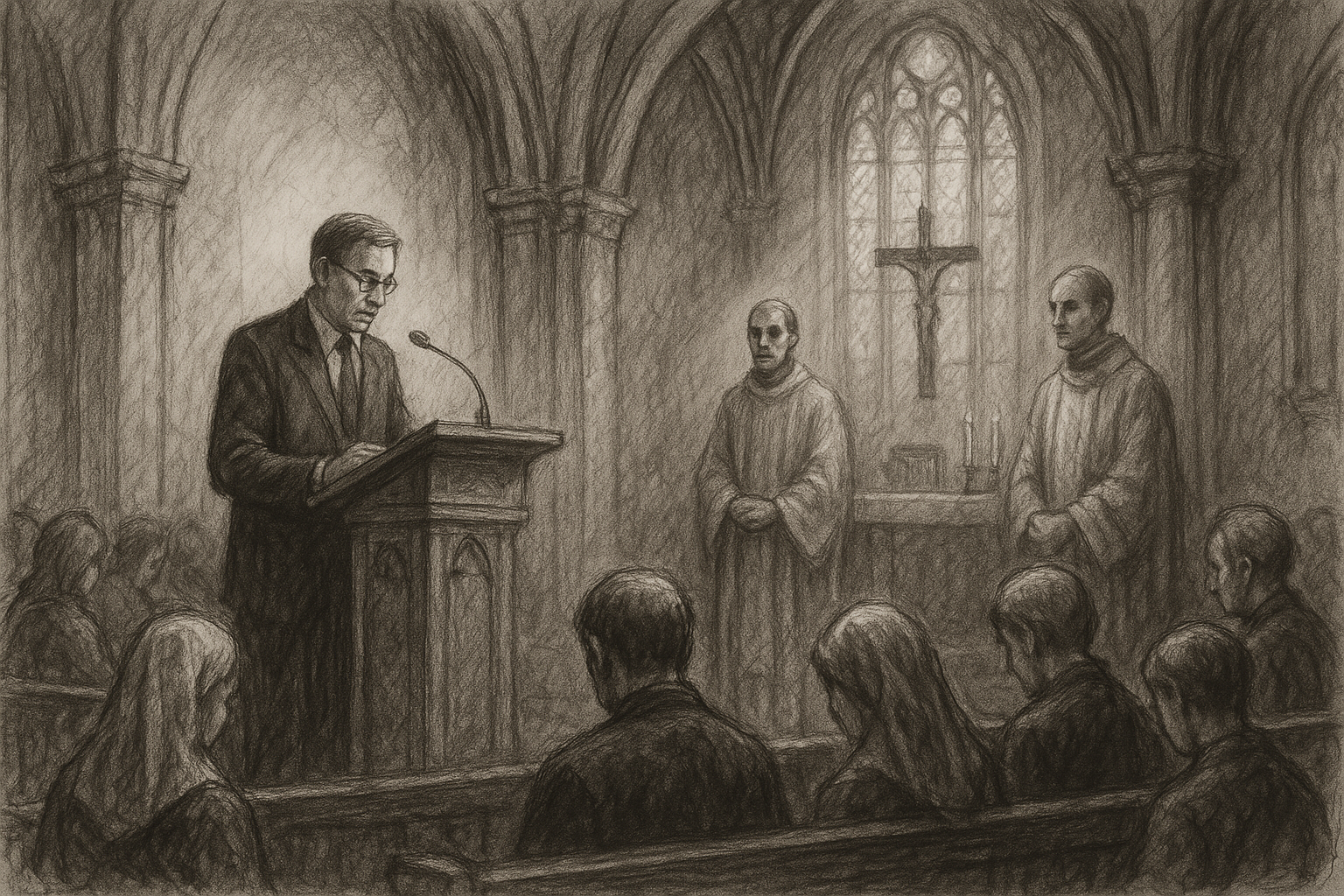
So when the lector approaches the ambo, when the psalm begins, when the Gospel is lifted up, and when the homily asks for your attention, stay close. Christ is not absent from these moments. He is speaking, and the Church is learning again how to listen.
Keep Reading on Lets Read The Bible
Frequently Asked Questions
Is the Liturgy of the Word separate from the Mass itself?
No. It is one of the two major parts of the Mass and belongs to the same act of worship as the Liturgy of the Eucharist. The Word and the sacrament belong together.
Why does the Gospel have a special place in the Liturgy of the Word?
The Gospel is proclaimed with special reverence because it presents Christ's own words and deeds through the evangelists' testimony. The Church stands to hear it as a sign of honor and readiness.
How can I follow the readings better at Mass?
Read them beforehand if possible, listen for repeated themes, and make a simple prayer from what you hear. It also helps to remain silent before Mass and avoid distractions during the proclamation.