Sacraments and Liturgy
A Small Garment, a Large Promise: Living the Brown Scapular with Faith
A clear Catholic look at the history, meaning, and daily practice of the brown scapular
Site Admin | September 29, 2025 | 88 views
The brown scapular has long held a quiet place in Catholic life. It is small, plain, and easy to miss, yet for many believers it is a daily reminder that faith is meant to be worn close to the heart. People often ask what it is, where it came from, and whether it is a kind of charm or lucky token. The answer is simpler and more demanding than superstition: the brown scapular is a devotional sign that points to consecration, discipleship, and the maternal care of the Blessed Virgin Mary.
When people search for the brown scapular explained, they are usually looking for more than historical facts. They want to know how a small piece of wool can fit into a serious Catholic life. The short answer is that it does not replace prayer, the sacraments, or conversion. It supports them. Like many sacramentals in the Church, it is meant to turn the mind and heart toward God, not toward itself.
What the brown scapular is
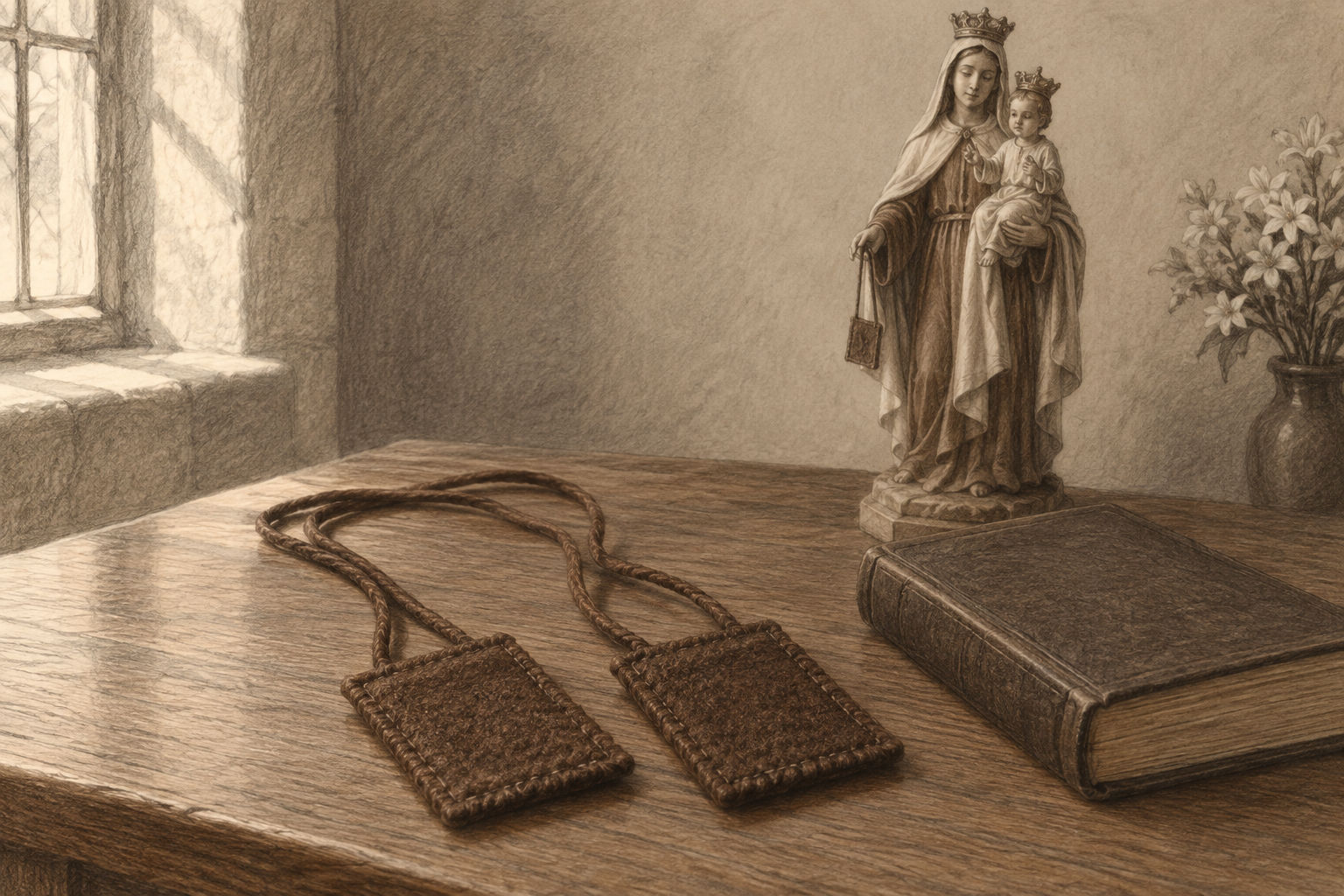
The brown scapular is usually made of two small pieces of brown wool connected by cords and worn over the shoulders, one panel resting on the chest and the other on the back. It is associated with the Carmelite tradition and with devotion to Our Lady of Mount Carmel. In its most common form today, it is simple enough to wear under ordinary clothing, though its value does not come from hiddenness or visibility. Its value comes from the prayer and commitment that accompany it.
The scapular has roots in the habit worn by religious communities. In the Carmelite tradition, the scapular was part of the clothing of religious men and women, a practical garment that later came to carry spiritual meaning for lay people as well. Over time, the Church recognized that many who lived in the world wanted to share in the Carmelite spirit of prayer, penance, and devotion to Mary. The small brown scapular became a sign of that share in the Carmelite family.
It is important to remember that the Church distinguishes between sacraments and sacramentals. The brown scapular is a sacramental, not a sacrament. It does not work by itself like a magic object. Rather, it disposes a person to receive grace and to live more attentively before God. Its purpose is pastoral and spiritual: to help a Catholic live as a disciple more steadily, more prayerfully, and more humbly.
The Carmelite roots of the devotion
The Carmelites look to Mount Carmel in the Holy Land, a place linked to the prophet Elijah. Scripture presents Elijah as zealous for the living God and faithful in prayer amid a rebellious age. On Mount Carmel, he calls the people back to the Lord and witnesses God's power in a dramatic way [[VERSE|1-kings|18|36-39|1 Kings 18:36-39]]. That biblical memory helped shape a tradition centered on fervor, silence, and fidelity.
Later, the Carmelite order developed in the West as a community devoted to contemplation and Marian trust. The habit and scapular became signs of belonging to that way of life. Popular Catholic devotion eventually extended the scapular's meaning to lay faithful who wished to unite themselves to the Carmelite family spiritually. The Church has long welcomed such devotions when they are ordered toward deeper conversion and not treated as substitutes for sacramental life.
One reason the brown scapular has remained so beloved is that it holds together two Catholic instincts that belong together: reverence for Mary and seriousness about holiness. Mary does not point away from her Son. She forms disciples who listen to Christ and do what he says John 2:5. The scapular is meaningful only when it leads there.
What the promises mean
Many Catholics first hear about the scapular through the traditional promise associated with it. The language can be misunderstood if it is treated as a mechanical guarantee. The Church does not teach that wearing the scapular is a shortcut to heaven apart from repentance, charity, and perseverance in grace. Rather, the promise is best understood within a life of faith: it expresses Mary's maternal help, especially for those who wear the scapular devotionally and seek to live in friendship with her Son.
That is why the scapular should never be approached as if it were an amulet. It is not there to control God or manipulate outcomes. The proper attitude is trust. A Catholic who wears the scapular should do so with a spirit of prayer, confession, and sacramental participation. In other words, the exterior sign should correspond to an interior life.
The healthiest way to think about the brown scapular is not as a holy object that does the work for you, but as a quiet reminder that you belong to Christ and want to live under Mary's care.
That perspective protects the devotion from two common errors. One error is superstition, which treats a sacred object as if it had power apart from God. The other is indifference, which reduces devotional signs to harmless accessories. The Catholic way is more demanding. It asks for faith, humility, and a willingness to let outward signs shape inward habits.
How to enroll and begin wearing it
For those who wish to take up the brown scapular seriously, the first step is to speak with a priest, deacon, or knowledgeable parish minister who can help with enrollment. The Church has a recognized blessing and enrollment rite for the scapular. This is not merely a private choice to put on an object. It is an ecclesial act, a way of being received into a devotional practice that belongs to the life of the Church.
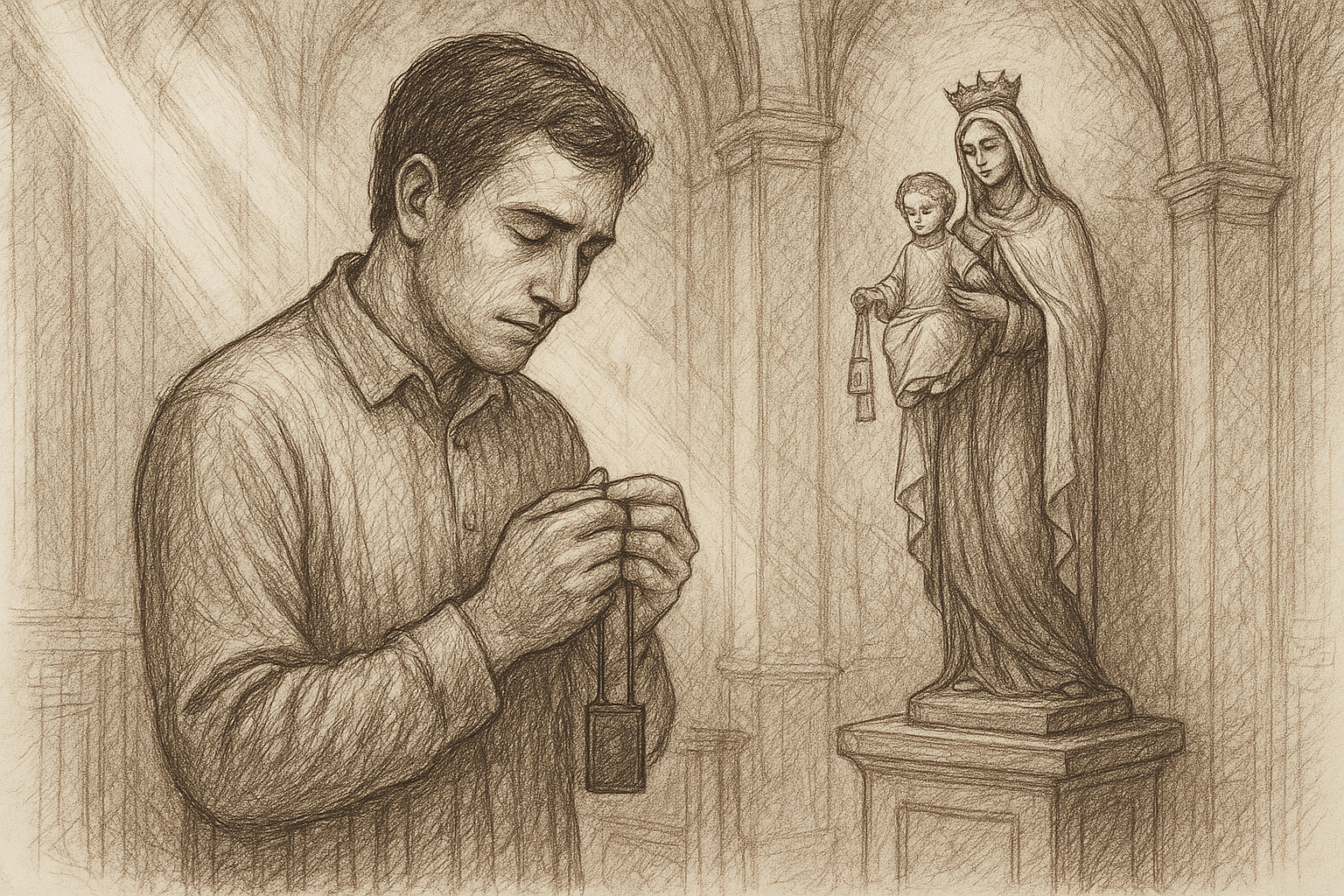
After enrollment, the scapular is typically worn continuously, unless it must be removed for a practical reason. The point is steady remembrance. Christians need ordinary signs to recall sacred things, because the heart is easily distracted. A scapular near the body can become a prompt to pray, to avoid sin, or to recollect oneself before making a decision.
Some people wonder whether the scapular must be a specific material or style. In practice, the devotion is simple and accessible. The essential point is not luxury but fidelity. A well made, plain wool scapular is more than sufficient. If a person later replaces a worn scapular, that does not mean the devotion has failed. It simply means the garment has done the work of an ordinary object and now needs to be renewed.
What living the devotion actually asks of you
The scapular is not merely something to wear. It is a call to live in a Marian way. That means a life marked by prayer, purity of heart, and daily conversion. The exact obligations attached to scapular devotion can vary depending on the form of enrollment and the guidance given by a priest, but the larger spiritual pattern is consistent: prayer should become more regular, sin should be resisted more seriously, and devotion to Mary should be joined to devotion to Christ.
It is helpful to think of the scapular as a school of remembrance. Every time a person feels its presence, it can serve as a reminder of baptismal identity. A Catholic belongs to Christ first. The scapular then becomes one more sign of that belonging, much like the sign of the cross, holy water, or a crucifix on the wall. These devotions do not compete with one another. They reinforce the habits of a Christian life.
The scapular also invites a renewed relationship with the Blessed Virgin Mary. Not a sentimental relationship, but a real one. Mary hears the Church's prayers and intercedes for her children. At Cana, she notices the need and directs the servants to obey her Son [[VERSE|john|2|1-11|John 2:1-11]]. That posture remains the pattern for Marian devotion in every age: noticing, entrusting, obeying.
Simple practices that fit the devotion
- Attend Mass faithfully and receive the sacraments with reverence.
- Pray daily, even if briefly, with a set time for silence or Scripture.
- Make regular confession and examine your conscience honestly.
- Keep a Marian prayer, such as the Rosary, in your routine.
- Wear the scapular as a reminder of baptismal commitment, not as decoration.
- Ask Our Lady to help you grow in purity, charity, and perseverance.
How the scapular relates to Mary and the Church
The brown scapular is not an isolated devotion. It belongs to the larger life of the Church, where Mary is honored precisely because she leads us to Jesus. Catholic devotion to Mary is never meant to lessen Christ's unique role as Savior. Rather, it acknowledges the Lord's gift of a mother to his disciples. At the Cross, Jesus entrusts the beloved disciple to Mary and Mary to the beloved disciple [[VERSE|john|19|26-27|John 19:26-27]]. Catholics have long seen in that scene a spiritual household that includes the faithful.
In that sense, the scapular can be a beautiful expression of belonging. It says, in a quiet and bodily way, that a Christian wants to live in the company of Mary and under the lordship of Christ. That is why the devotion can be fruitful for people in every state of life, provided it is joined to genuine discipline. A parent, student, worker, or retiree can all wear the scapular. The sign is simple enough for ordinary life, but the call behind it is serious.
The Church is wise in preserving both the simplicity and the depth of this devotion. Simplicity keeps it from becoming elitist or complicated. Depth keeps it from becoming shallow or superstitious. The brown scapular is at its best when it functions as a quiet daily summons: remember who you are, whom you belong to, and how you are called to live.
Practical cautions for a healthy devotion
It is worth naming a few cautions. First, do not use the scapular to avoid the hard work of holiness. No devotional object excuses persistent sin. Second, do not judge other Catholics who do not wear it. Devotions differ, and the Church allows for legitimate variety. Third, do not treat the scapular as an end in itself. If it does not draw a person toward prayer and obedience, it has been misunderstood.
At the same time, do not be embarrassed by its simplicity. Catholic life often advances through humble means. Water, oil, bread, wine, ashes, candles, and cords all become signs of grace when received in faith. The brown scapular belongs to that sacramental imagination. It teaches that the body can pray, memory can be trained, and daily life can be consecrated.
For someone beginning the devotion, the best approach is steady and unforced. Learn what the Church asks. Be enrolled properly. Wear the scapular reverently. Pray. Go to Mass. Confess sins. Ask Mary to form your heart. If the devotion is sincere, it will not remain merely external. It will gradually shape the way you think, choose, and endure.
That is perhaps the most honest way to speak about the brown scapular explained: it is a small garment that asks for a large answer. Not anxiety, not magic, but trust. Not spectacle, but fidelity. And for the Catholic who wears it in faith, it can become a quiet companion on the road toward Christ, under the gentle care of his Mother.
Keep Reading on Lets Read The Bible
Frequently Asked Questions
Is the brown scapular a sacrament or a sacramental?
The brown scapular is a sacramental, not a sacrament. It does not confer grace the way the sacraments do, but it helps dispose a person to receive grace and live with greater devotion.
Do I need to be enrolled in the brown scapular to wear it?
Enrollment is the proper Church rite for beginning the devotion in a formal way. A priest or deacon can help with this, and it gives the scapular its liturgical and ecclesial context.
Can the brown scapular bring automatic salvation?
No. The Church does not teach that wearing the scapular guarantees salvation apart from faith, repentance, and a life of grace. It is a sign of trust and devotion, not a substitute for conversion.