Sacraments and Liturgy
Novenas as a School of Prayer: Waiting, Asking, and Trusting with the Church
A Catholic look at the history, meaning, and simple practice of praying a novena with faith.
Site Admin | September 25, 2025 | 82 views
Novenas have a special place in Catholic life because they teach the heart how to wait before God. At a time when people often want immediate answers, a novena invites something slower and more prayerful: nine days of asking, listening, and trusting. For many Catholics, the phrase novenas explained means more than a definition. It means learning how a simple pattern of prayer can become a genuine school of hope.
The Church does not treat novenas as magic formulas. They are not ways of forcing God to grant a request on our timetable. Rather, they are acts of devotion shaped by faith in God's providence. A novena can be offered for a personal need, for a family member, for the Church, for a vocation, or for a grace that takes time to understand. It can also be prayed in thanksgiving. In every case, the value of the novena lies not only in the petition itself but in the person who is changed by praying it.
Where novenas come from
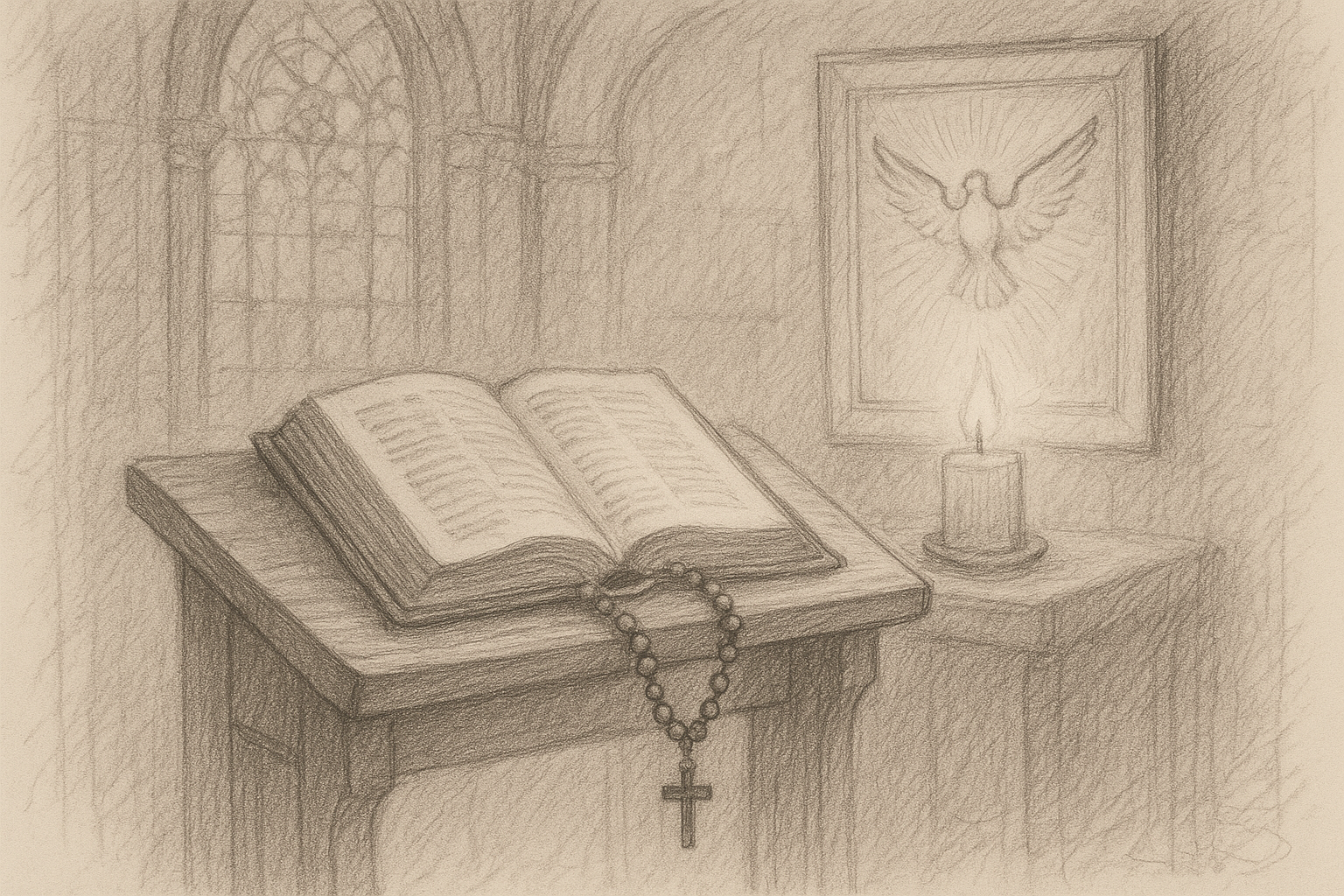
The word novena comes from the Latin word for nine. In Catholic tradition, the number nine is most often linked to the nine days between the Ascension of the Lord and Pentecost, when the apostles and Mary were gathered in prayer as they waited for the promised gift of the Holy Spirit. Scripture gives us that picture clearly: the disciples were together in prayer after the Lord's Ascension, and then the Spirit came upon the Church with power Acts 1:14, [[VERSE|acts|2|1-4|Acts 2:1-4]].
That scene stands at the heart of novena spirituality. The disciples were not idle. They were not panicked. They were united in prayer, holding fast to the Lord's promise and waiting with expectation. In a very real sense, every novena echoes that first waiting of the Church. It reminds Catholics that God's timing is not empty delay. It is often the space in which faith becomes steadier and more obedient.
Over time, Catholics began to pray nine day devotions for particular intentions, often in connection with feasts, saints, or great mysteries of salvation. While the forms have varied across regions and centuries, the basic instinct has remained the same: to pray persistently, to keep company with the Church, and to bring a need before God with reverence. That makes novenas one of the most accessible and enduring devotional practices in Catholic life.
What a novena is meant to do
A novena is not mainly about collecting prayers on a checklist. It is about forming the soul to remain with God. The very repetition that can seem simple at first is part of its strength. By returning to the same prayer over nine days, a Catholic learns steadiness. The mind may wander, but the intention is renewed. The heart may grow impatient, but it is gently brought back to trust.
In that way, novenas help to purify desire. Many people begin a novena with a specific request. That is good and natural. Yet as the days pass, the prayer often grows broader. One begins asking not only for a particular outcome, but for the grace to accept God's will, whatever that may be. This is not resignation in a worldly sense. It is Christian surrender, rooted in the confidence that the Father knows what His children need before they ask Matthew 6:8.
Novenas also keep alive the Catholic habit of praying with the saints. When a novena is dedicated to Our Lady, a saint, or a particular feast, it does not replace prayer to God. Instead, it places the believer within the communion of saints, where the faithful on earth are joined to those already perfected in charity. Asking for the intercession of the saints is one more expression of the Church's family life in Christ.
How to pray a novena faithfully
Many people are surprised by how simple a novena can be. There is no single universal format, and that is part of the beauty of the devotion. Some novenas use a fixed prayer each day. Others combine Scripture, litany, or a short meditation with a concluding prayer. Some are prayed in church, some at home, and some in a group. What matters most is not complexity, but fidelity.
Here is a straightforward way to pray a novena well:
- Choose a clear intention. It may be personal, familial, communal, or spiritual. Be specific, but do not narrow the prayer so tightly that you cannot receive God's answer in a wider form.
- Set a daily time. Praying at roughly the same hour helps the novena become a real discipline, not an afterthought.
- Begin with recollection. Spend a brief moment in silence, making the Sign of the Cross and placing yourself consciously before God.
- Pray the prescribed novena prayer or sequence. If your novena includes Scripture, take time to read it slowly.
- End with trust. Offer the intention to the Lord, and add a simple act of surrender, such as asking for the grace to accept His holy will.
This structure is useful because it keeps the prayer from becoming rushed. A novena is not meant to be squeezed into a distracted moment if that can be avoided. Even five or ten minutes of focused prayer can carry real spiritual fruit when given consistently and with reverence.
A few practical habits that help
It can also help to keep a small record of the novena days. Some Catholics like to write the intention in a notebook and note one sentence each day about what arose in prayer. This is not necessary, but it can reveal patterns of grace. For example, the first days may be filled with urgency, while later days bring peace, or perhaps the opposite. In either case, the act of noticing helps a person pray more honestly.
Another helpful habit is to link the novena with a sacramental life. A novena gains strength when it is joined to Mass, confession, Communion, Scripture reading, or a concrete work of mercy. These are not decorations added afterward. They belong to the ordinary rhythm of Catholic holiness. A novena that draws a person toward the sacraments is moving in the right direction.
It is also wise to avoid spiritual bargaining. A novena is not a contract in which we promise God something in exchange for a favor. We may make a good resolution, of course, but the center of the prayer must remain grace, not transaction. Faith matures when we stop trying to manage God and begin to trust Him.
The saints and the living tradition of novenas
Many beloved Catholic novenas grew around particular saints or feast days because the faithful wanted to prepare hearts with focused prayer. A novena to the Holy Spirit before Pentecost is especially ancient in spirit, since it mirrors the prayer of the apostles and Mary. Other novenas mark major solemnities, ask the intercession of saints known for specific needs, or help the faithful prepare for a feast with greater recollection.
What these devotions share is a kind of loving expectancy. The Church does not rush past time. She sanctifies it. A novena turns nine ordinary days into a small pilgrimage. Each day becomes a step toward the Lord, and each repetition becomes an act of hope. This is one reason novenas remain so appealing. They fit the human need for rhythm. They make prayer concrete without making it mechanical.
The saints also show that perseverance in prayer is not a luxury for the spiritually advanced. It is a Christian habit. The Lord praises persistent prayer in the Gospel, teaching His disciples to ask, seek, and knock [[VERSE|matthew|7|7-8|Matthew 7:7-8]]. He also tells a parable about the need to pray always and not lose heart Luke 18:1. Novenas give ordinary Catholics a practical way to live those words. They translate perseverance into a finite act that can be carried through faithfully.
When a novena feels difficult
Not every novena feels inspiring. Some days are dry. Some prayers feel repetitive. Some intentions remain unresolved. That is normal. In fact, those moments often reveal the deeper purpose of the devotion. If a novena only matters when emotions are strong, then it is not yet teaching perseverance. The gift of the practice is often hidden in the very experience of dryness.
When this happens, it helps to remember that prayer is not measured by sensation. A person can pray well while feeling little. The Church has always known that fidelity counts. To return to prayer on day six when the heart is tired is already an act of love. To continue on day eight without visible reassurance is an offering of trust. God sees that offering, even when the person praying does not feel it.
It is also healthy to remember that God's answer may be different from what was asked. Sometimes He grants what we requested. Sometimes He delays. Sometimes He redirects. Sometimes He gives a deeper grace that only later becomes clear. A novena is successful not because it gets a particular result on demand, but because it places the soul more fully in God's hands.
The most fruitful novena is often the one that teaches us to say, with sincerity, not my will but yours be done.
Novenas in daily Catholic life
Because novenas are flexible, they can be woven into family life, parish life, and personal devotion. Parents may pray one together with children in preparation for a feast. Friends may take turns leading the prayer for a common intention. A parish may hold a novena before a patronal celebration or special feast. An individual may pray quietly at home, using a simple prayer card or Scripture passage each day.
What should guide all these forms is a spirit of reverence. A novena does not need to be elaborate to be meaningful. It needs to be prayed with attention. If possible, remove distractions. If several people are involved, let the prayer be calm rather than hurried. If children are present, keep the language simple and give them a real intention to carry. The goal is not performance. The goal is communion with God.
For Catholics who want to participate more faithfully, novenas can become a gentle doorway into a steadier life of prayer. They are especially helpful for people who struggle to maintain a daily routine, because they offer a manageable span of commitment. Nine days is long enough to require discipline, but short enough to feel possible. That balance is part of their pastoral wisdom.
Praying with patience and hope
To have novenas explained well is to see that they are not a special trick for getting results, but a form of Christian waiting. They teach us that prayer can be both specific and surrendered, both persistent and peaceful. They bring Scripture, tradition, the saints, and ordinary Catholic life together in a pattern that is simple enough for anyone and deep enough to last a lifetime.
If you are starting a novena, begin humbly. Choose your intention. Keep the days. Pray with attention. Do not be discouraged if you do not feel much. Offer the prayer anyway. In time, you may discover that the novena has been doing more in you than you first asked for, shaping your hope to rest more completely in the heart of God.
Keep Reading on Lets Read The Bible
Frequently Asked Questions
What is the main purpose of a novena in Catholic life?
A novena is a nine day prayer devotion that helps Catholics pray persistently, bring a specific intention before God, and grow in trust while waiting for His will.
Do I have to pray a novena in a church for it to count?
No. A novena may be prayed at home, in a parish, with a group, or in quiet personal prayer. What matters most is faithful, reverent prayer.
Is a novena the same thing as asking God for a favor?
Not exactly. A novena can include a petition, but it is more than that. It is a way of deepening prayer, surrendering the outcome to God, and often growing in patience and peace.