Catholic Living
A Catholic Moral Clarity on Abortion and a Path Toward Mercy
The Church speaks with firmness about the dignity of unborn life and with compassion for everyone touched by abortion.
Site Admin | August 11, 2025 | 70 views
The Church speaks clearly because human life is precious
Few moral questions are as emotionally charged as abortion. Many people approach the topic through fear, grief, pressure, confusion, or past experience. The Catholic Church does not ignore those realities. At the same time, abortion Catholic teaching begins with a simple conviction: every human life is a gift from God and must be protected from the first moment of existence.
That belief is not merely a rule about one issue. It grows from the Christian understanding of the human person. We are not accidents. We are not disposable. Each person bears the image of God and is loved into being by the Creator. Scripture gives that vision in striking language: You formed my inmost being. The unborn child is not outside that reverence. The Church therefore teaches that direct abortion, meaning the deliberate ending of an unborn human life, is a grave moral wrong.
This teaching can sound severe in a culture where abortion is often presented as private, ordinary, or even compassionate. But Catholic morality asks a deeper question: what is truly good for the human person, and what honors the dignity of the weakest among us?
What the Catholic Church actually teaches
Mainstream Catholic teaching is consistent and longstanding. Human life must be respected and protected absolutely from conception. Because the unborn child is already a distinct human life, direct abortion is morally unacceptable in every circumstance. This is taught in the Catechism of the Catholic Church and in the Church's broader moral tradition.
It helps to distinguish a few things clearly. Catholic teaching does not say that every tragic pregnancy is easy, safe, or emotionally simple. It does not pretend that danger, trauma, poverty, isolation, or family pressure are unreal. But the Church also does not allow the deliberate killing of an unborn child as a solution to suffering. The dignity of one life cannot be built on the destruction of another.
In cases where a pregnant woman faces a serious medical crisis, Catholic moral reasoning looks carefully at the intention of the act. A treatment aimed at saving the mother's life, which is not intended to kill the child even if the child's death is foreseen as an unintended side effect, can be morally distinct from abortion. These situations are often complex and require prudent medical and pastoral guidance. The Church encourages doctors and families to seek life-affirming care whenever possible.
The moral difference matters because Catholic ethics does not justify evil means for good ends. The command not to kill is not suspended by hardship. At the same time, the Church remains close to women and families who are trying to make painful decisions under pressure. Moral truth and pastoral mercy belong together.
Why the unborn matter in Catholic moral thought
Catholics do not defend unborn life because of sentiment alone. We defend it because reason and faith both point to the same truth: every human being has inherent worth. The unborn child is small, hidden, and dependent, but dependence does not lessen dignity. In fact, vulnerability often calls forth a deeper duty of care.
Throughout Scripture, God reveals a special tenderness toward the weak, the poor, the threatened, and the voiceless. Speak for those who cannot speak for themselves captures that instinct. The unborn child cannot ask for protection, but the Church believes the rest of us can and must.
This also means the pro-life witness is not only about opposing abortion. It is about making space for mothers, children, fathers, and families to choose life in concrete ways. If a society says yes to unborn life, it must also say yes to practical help, honest support, safe housing, medical care, financial assistance, and community.
Pastoral care matters as much as moral clarity
Many people hear the Church's teaching on abortion through the lens of pain. Some have had abortions. Some encouraged one. Some were abandoned, manipulated, or ashamed. Others carry grief after a miscarriage and wonder why this topic still wounds so deeply. Still others feel trapped in a pregnancy crisis and do not know where to turn.
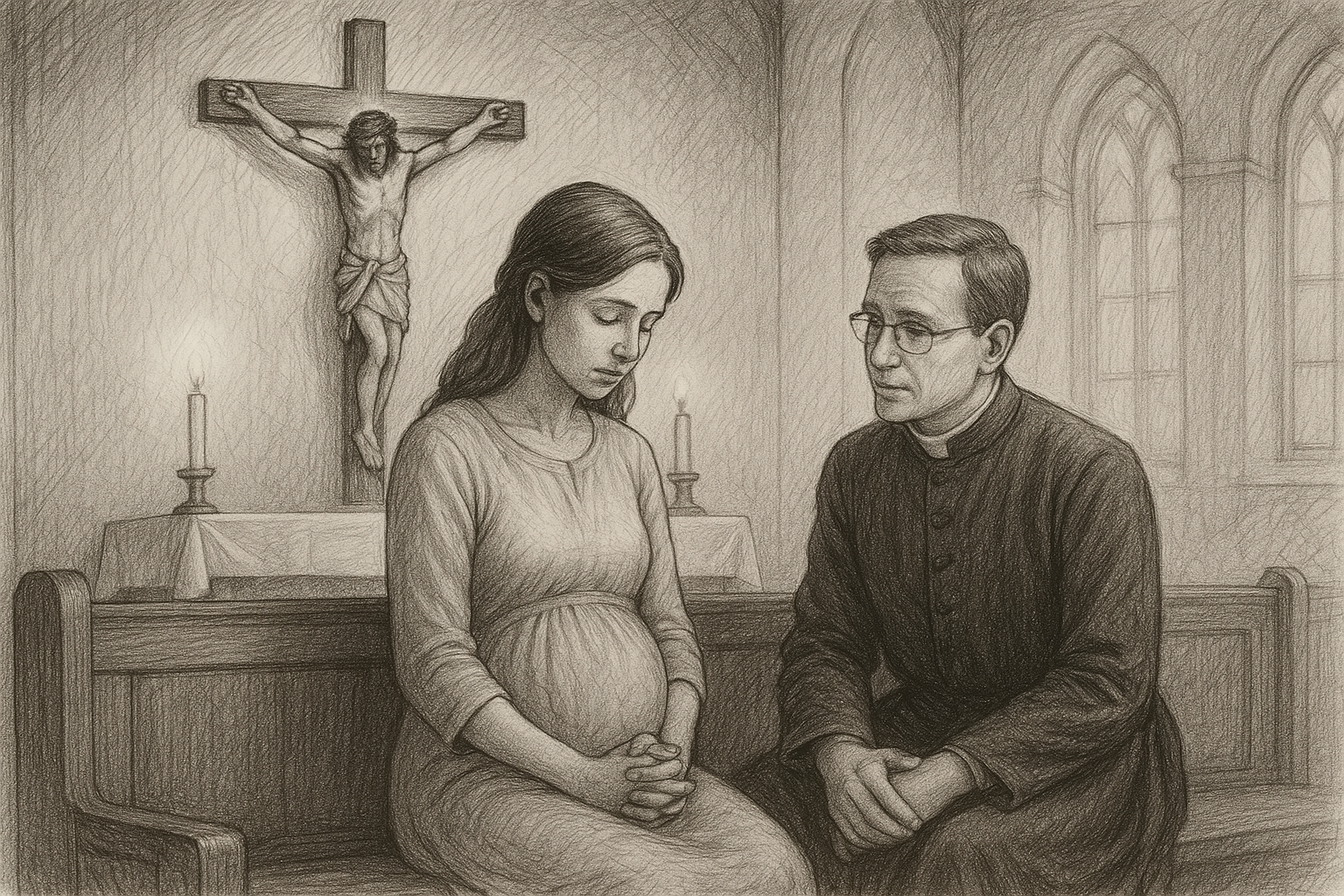
The Church is not best served by harshness. The right response is truth spoken with tenderness. Catholic pastoral care begins with listening. It names sin honestly, but it also names sorrow honestly. A person who has participated in abortion is not beyond mercy. No one is beyond the reach of Christ.
The Gospel shows that Jesus does not excuse sin, but He does not crush the sinner either. He calls people to conversion and gives them a way forward. For those burdened by abortion, the path toward healing may include prayer, confession, counseling, spiritual direction, support groups, and patient accompaniment. In the sacrament of reconciliation, the Lord meets the repentant sinner with real forgiveness.
When the Church speaks about abortion, she is not speaking to win an argument. She is speaking to guard life, heal wounds, and call hearts back to the mercy of Christ.
What about fear, pressure, and difficult circumstances?
One reason abortion remains so difficult to discuss is that many people imagine only abstract cases. Real life is messier. A woman may be under pressure from a partner or parent. She may be poor, frightened, undocumented, young, or alone. She may have received a devastating prenatal diagnosis. She may feel that she has no good options at all.
The Church takes those burdens seriously. Catholic teaching never asks people to pretend that suffering is small. Instead, it insists that suffering must be met with solidarity, not with the death of the child. This is where communities can do better. A pro-life culture is not credible if it merely condemns and then walks away.
Practical help matters. So does patience. A woman in crisis needs real support, not slogans. She may need immediate shelter, medical care, legal advice, help reaching a clinic that values both mother and child, or someone who can sit with her through the night. Parishes, families, and Catholic ministries can be part of that answer when they choose to be present.
Can Catholics disagree about abortion Catholic teaching?
On the central moral issue, no. Catholics are not free to treat direct abortion as morally acceptable. The Church's teaching is not a personal preference or a political mood. It is part of the moral law as the Church understands it through Scripture, reason, and tradition.
At the same time, Catholics may differ in prudential judgments about legislation, social support, medical policy, and the most effective ways to defend life. One person may emphasize crisis pregnancy centers. Another may focus on adoption support. Another may work on maternal health, paid leave, or housing. These are not the same as disagreement about whether unborn life matters. They are different ways of trying to serve life well.
For Catholics, the right public witness is not anger for its own sake. It is clarity joined to charity. That means speaking honestly about abortion while also working for conditions that make choosing life more possible and less lonely.
Hope is real even when the wound is deep
It is easy to speak about abortion as a public debate and forget that many people carry private sorrow. Yet Christian hope begins exactly there. God knows what is hidden. He knows the young woman who felt powerless. He knows the father who disappeared. He knows the grandmother who was afraid. He knows the doctor, counselor, and friend who did not know what to say. Nothing is concealed from His mercy.
The Church's defense of life is not meant to close doors. It is meant to open them. If abortion has touched your life, the next step need not be public. It can be simple and quiet: speak to a priest, make an appointment for confession, contact a Catholic counselor, or reach out to a ministry that helps people heal after abortion. A wounded heart often needs only one faithful person to begin again.
For those who have not experienced abortion personally, the call is still clear. Pray for mothers in crisis. Support families in need. Learn how your parish or diocese helps pregnant women. Give to life-affirming efforts. Speak with dignity when the topic comes up. Refuse the lie that compassion requires surrendering truth.
The Church believes that every child matters, every mother matters, and every life can be received with mercy. That is why abortion Catholic teaching is not only a prohibition. It is also an invitation to protect life, to serve the vulnerable, and to trust that Christ can heal what seems beyond repair.
Keep Reading on Lets Read The Bible
Frequently Asked Questions
What does the Catholic Church teach about abortion?
The Catholic Church teaches that direct abortion, the deliberate ending of an unborn human life, is gravely wrong. Human life must be respected and protected from conception, and the dignity of the unborn child must be upheld.
Does Catholic teaching allow any medical treatment during a dangerous pregnancy?
Catholic moral teaching allows medical treatment aimed at saving the mother's life when the death of the unborn child is not intended, even if it is foreseen as an unintended side effect. These cases are complex and should be handled with careful medical and pastoral guidance.
What should someone do if they feel guilt or grief after an abortion?
The Church encourages prayer, confession, counseling, and pastoral support. No one is beyond God's mercy, and healing often begins with a simple, honest step toward Christ and the sacrament of reconciliation.