Doctrine and Questions
Did Adam and Eve Populate the Earth? A Catholic Reading of Genesis and Human Origins
A careful look at Scripture, tradition, and the question that often follows Genesis 1 and 2.
Site Admin | July 2, 2025 | 66 views
Few questions about Genesis are asked more often than this one: if Adam and Eve were the first human parents, how did the human family grow from them alone? The question is simple, but the answer touches Scripture, Catholic teaching, and the way we read the early chapters of Genesis. It also asks for patience, because the Bible speaks with theological depth rather than as a modern science textbook.
The Church teaches that Adam and Eve were real and important first parents in the history of salvation. At the same time, the Church does not require us to imagine that Genesis gives a laboratory report of the first days of humanity. Catholics are free to recognize the symbolic and theological language of Genesis while still affirming that the human race has a common origin and that sin entered human history through our first parents. When we ask how Adam and Eve populated the earth Catholic teaching invites us to begin there, with both reverence and clarity.
What Genesis actually tells us
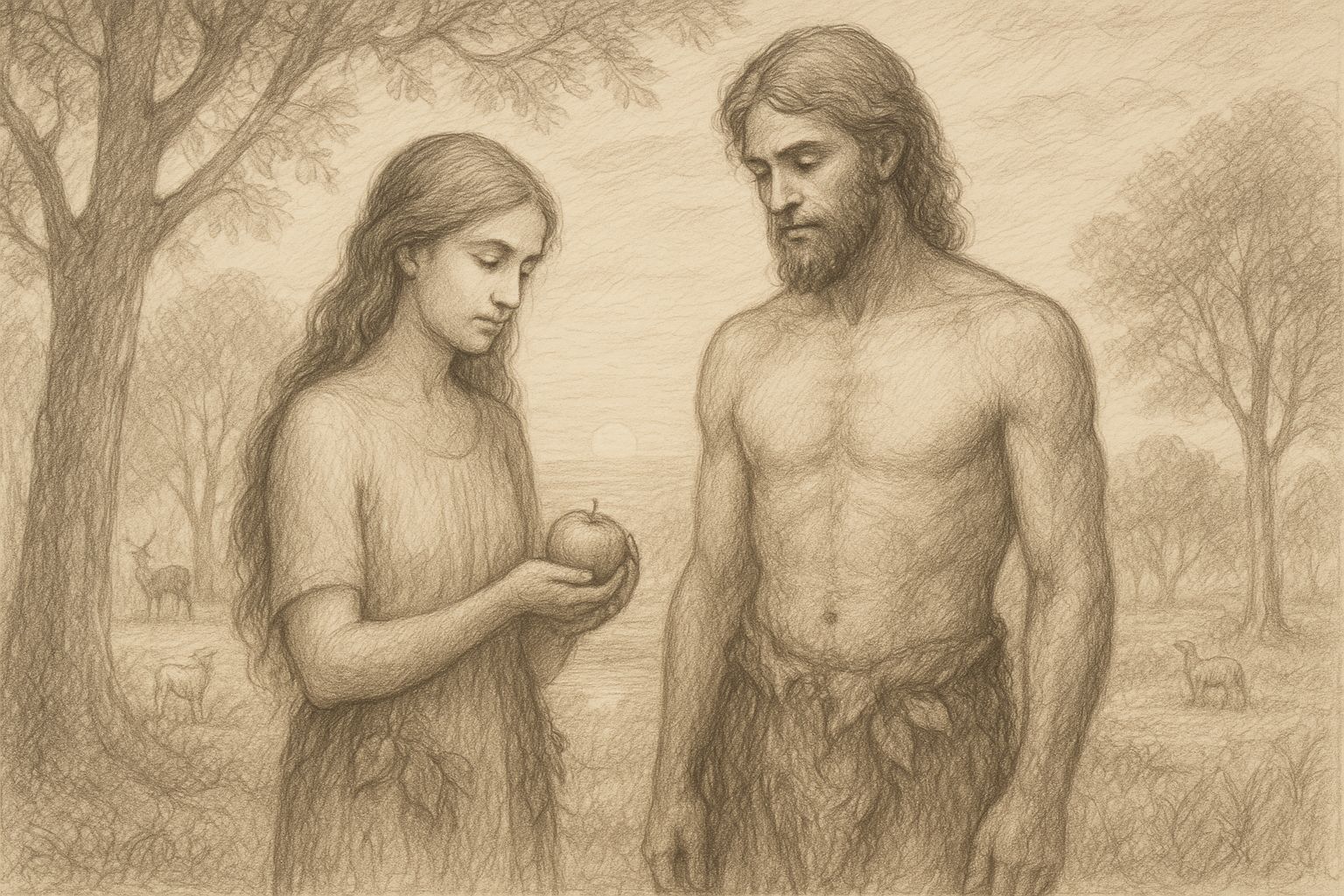
Genesis presents Adam and Eve as the first human pair in a garden set apart by God. Adam receives life from the breath of God, and Eve is formed as a companion suited to him. The text emphasizes their dignity, their vocation, and their relationship with the Lord. It also shows that human life was meant to be fruitful. God blesses the man and the woman and says, Be fruitful and multiply, and fill the earth (Be fruitful and multiply).
That command is important. It shows that human multiplication is not an afterthought but part of the original blessing. Genesis does not linger over biological mechanics, but it does establish that the first man and woman were called to become the beginning of a family and, in time, of a people. Later, after the fall, Eve is named the mother of all the living (Mother of all the living), a title that expresses her role in the human family as Scripture presents it.
Some readers assume that if Adam and Eve were the first humans, then the rest is impossible without divine intervention beyond ordinary marriage. But Scripture does not suggest such a problem. The basic biblical answer is straightforward: God created human beings with the capacity to generate life, and he blessed their union so that new life would come from it. The mystery is not that children could be born, but that all human life is held within God s providence from the beginning.
What the Church asks Catholics to believe
Catholic teaching holds that the whole human race descends from one original pair in a real and meaningful way. The Church has consistently rejected the idea that the soul is a product of matter alone or that human beings are merely a higher animal with no spiritual origin. Every human person is created in the image of God, with a rational soul directly created by him.
At the same time, the Church has been careful not to force a narrow interpretation of the literary form of Genesis. The Catechism teaches that the creation accounts use symbolic language, but they communicate real truths about creation, humanity, sin, and the need for redemption. In other words, Catholics should not flatten Genesis into a modern chronology, but neither should we dismiss it as mere myth. The Church reads Genesis as sacred history, meaning history told in a theological key.
That matters for this question because it keeps us from two errors. The first error is to imagine that Adam and Eve are only literary figures with no historical foundation. The second is to read Genesis so literally that we miss its purpose and become trapped in details the text never intended to settle. Catholic faith walks between those extremes.
So how did their family grow
The most direct answer is this: Adam and Eve had children, and their children had children. Genesis itself names several of their sons and daughters in broad terms. It tells us that Adam became the father of sons and daughters (Sons and daughters). Scripture does not provide a complete family tree, but it makes clear that the human family expanded through ordinary generation.
Readers sometimes ask the harder follow up: if all other people came from Adam and Eve, would not close family unions have been necessary at the beginning? The Bible does not spell out every detail, but the basic answer is that the earliest generations of humanity would have been far closer to one another than later generations. Catholic teaching does not require us to map every marriage in Genesis, and it is wise not to speculate beyond what is written. What matters is that the population of the earth could begin through the fecundity God gave the first human couple and their descendants.
In this sense, the story is not about God needing a large population instantly. It is about God establishing a human family that would unfold across generations. The earth was to be filled gradually. Genesis gives the seed, not the census.
Why this question matters for sin and salvation
The question of human origins is not only about biology or ancient history. It is also about the doctrine of original sin. Saint Paul teaches that sin entered the world through one man and that death came through sin (Sin entered the world). He also contrasts Adam with Christ, calling Jesus the new Adam whose obedience brings grace and life.
This is why the Church takes Adam and Eve seriously. If the fall is only a symbol, then the need for redemption risks becoming only a symbol as well. But if our first parents really stood at the dawn of human history and really turned from God, then the whole sweep of salvation history makes sense. We are not merely talking about ancient stories. We are talking about the wounds carried by the human family and the mercy God offers in Christ.
At the same time, Catholics should be careful not to reduce original sin to inherited guilt in a crude sense. The Church teaches that original sin is a deprivation of original holiness and justice, not a personal fault chosen by each individual. Every human being is born into a world already marked by this wound, and every human being needs grace. Adam and Eve matter because their story explains why the human family needs a Savior.
What about science and human origins
Many Catholics also wonder how this teaching fits with what we know from science. Here prudence is essential. The Church does not ask Catholics to deny genuine scientific inquiry. She also does not ask us to decide questions that the faith has not definitively settled in a highly technical way. Catholic thinkers have proposed different ways to understand the development of the human population while preserving the truth that all people share one human family and one need for redemption.
Some theories attempt to explain how the descendants of a first couple could have spread and intermarried within the earliest human community. Others explore how a specially created first pair could stand at the origin of true human persons, even within a broader created order. These are not simple questions, and lay Catholics do well to approach them humbly. The Church s concern is not to settle every scientific model but to defend the truths that belong to revelation: God created human beings, humanity is one, sin is real, and Christ redeems what Adam damaged.
So when someone asks how Adam and Eve populated the earth Catholic teaching encourages a thoughtful answer rather than a forced one. We do not need to mock science, and we do not need to surrender Scripture. We can simply say that God, who created life, also directed the beginning and growth of the human family in a way that fully served his plan.
What Catholics can say with confidence
There are several things Catholics can affirm without hesitation.
- Adam and Eve were not decorative symbols only. They belong to real salvation history.
- Humanity has a shared origin and a shared dignity as creatures made in God s image.
- God blessed human life from the beginning with the call to fruitfulness.
- Genesis teaches theological truth, even when it does not answer every modern question.
- Original sin and redemption in Christ are central to the meaning of the human story.
These truths are enough to keep us grounded. They remind us that the first pages of the Bible are not trying to satisfy our curiosity in every detail. They are teaching us who God is, who we are, why the world is wounded, and why grace is necessary.
Reading the first family with humility
There is also a spiritual lesson in this question. We often want origins to be neat, tidy, and fully traceable. But Genesis invites us into a more reverent posture. It tells us that life is gift, that marriage is ordered toward fruitfulness, and that the human family begins in communion, not isolation.
That is already a profound answer to the problem of human beginnings. The earth was not populated by accident. It was populated through God s blessing, human love, and the unfolding of generations under divine providence. Even after sin entered the world, God did not abandon the family he had begun. He continued to guide history toward the coming of Christ, in whom every family finds its true home.
When Catholics ask how Adam and Eve populated the earth, the safest and most faithful answer is not to force Genesis into modern categories. It is to read Genesis as the Church does, with confidence that God speaks truly through sacred Scripture. Adam and Eve had children, the human family grew, and all of us remain part of that great story of creation, fall, and redemption.
Keep Reading on Lets Read The Bible
Frequently Asked Questions
Did the Catholic Church teach that Adam and Eve were the only humans alive at the start?
The Church teaches that humanity has one origin in an original pair, but it does not define every scientific detail about the earliest population of the earth. Catholics should affirm the truth of Adam and Eve as real first parents while avoiding speculation beyond what the Church has actually taught.
Does Catholic teaching allow evolution and Adam and Eve?
Yes, Catholics may explore scientific accounts of human development, provided they do not deny that God created the spiritual soul, that humanity is one family, and that sin entered human history through our first parents. The Church leaves room for study, but not for denying core doctrines.
Why does it matter whether Adam and Eve were historical?
It matters because Scripture links Adam to the reality of sin and Christ to the reality of redemption. If Adam is only symbolic, the New Testament teaching about original sin and the saving work of Jesus becomes much harder to understand in its full force.