Social Teaching
The Doorway Test: Making Room for Vulnerable Neighbors
Christian hospitality begins with the dignity of the person before us and grows through mercy, prudence, and faithful action.
Site Admin | September 24, 2026 | 3 views
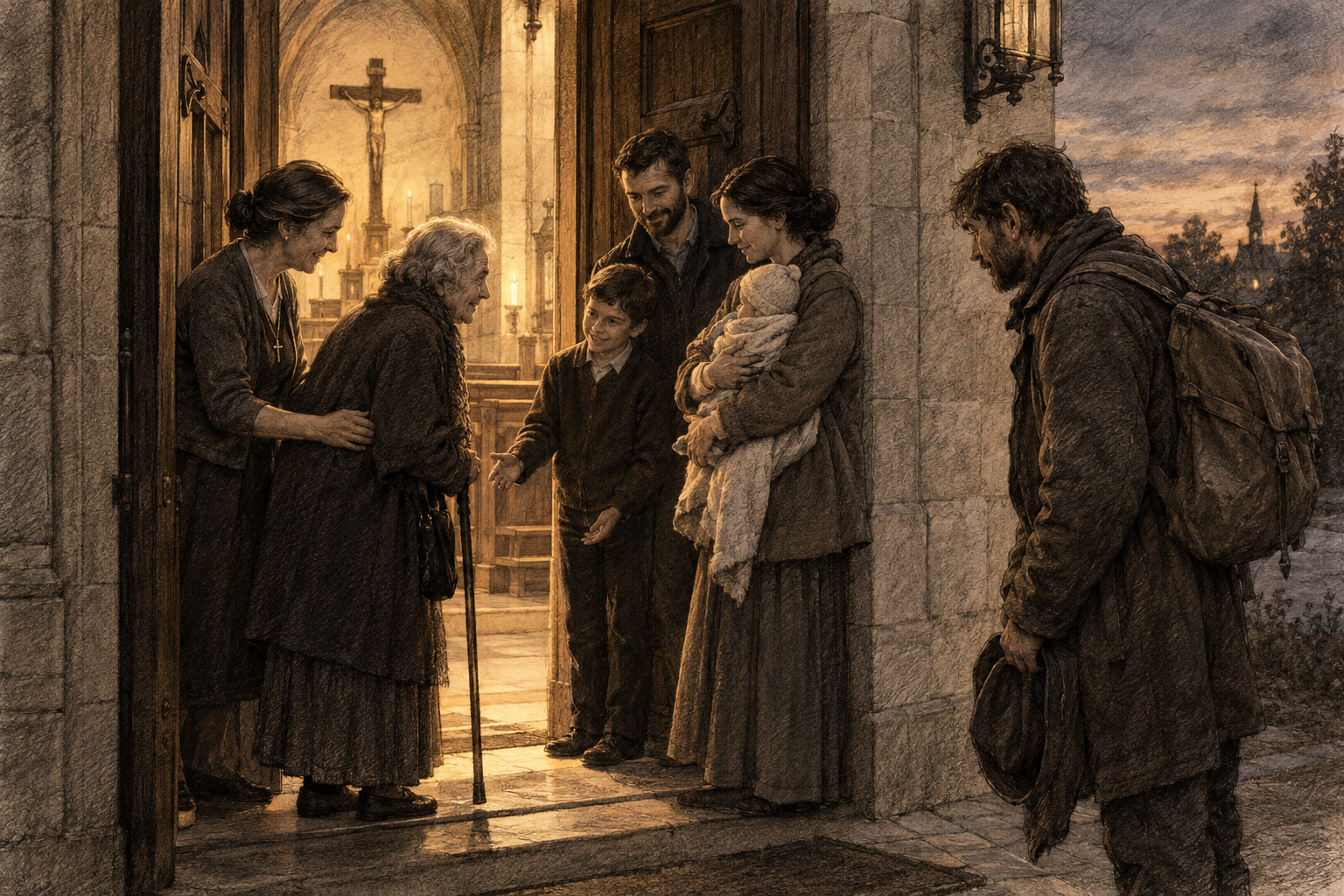
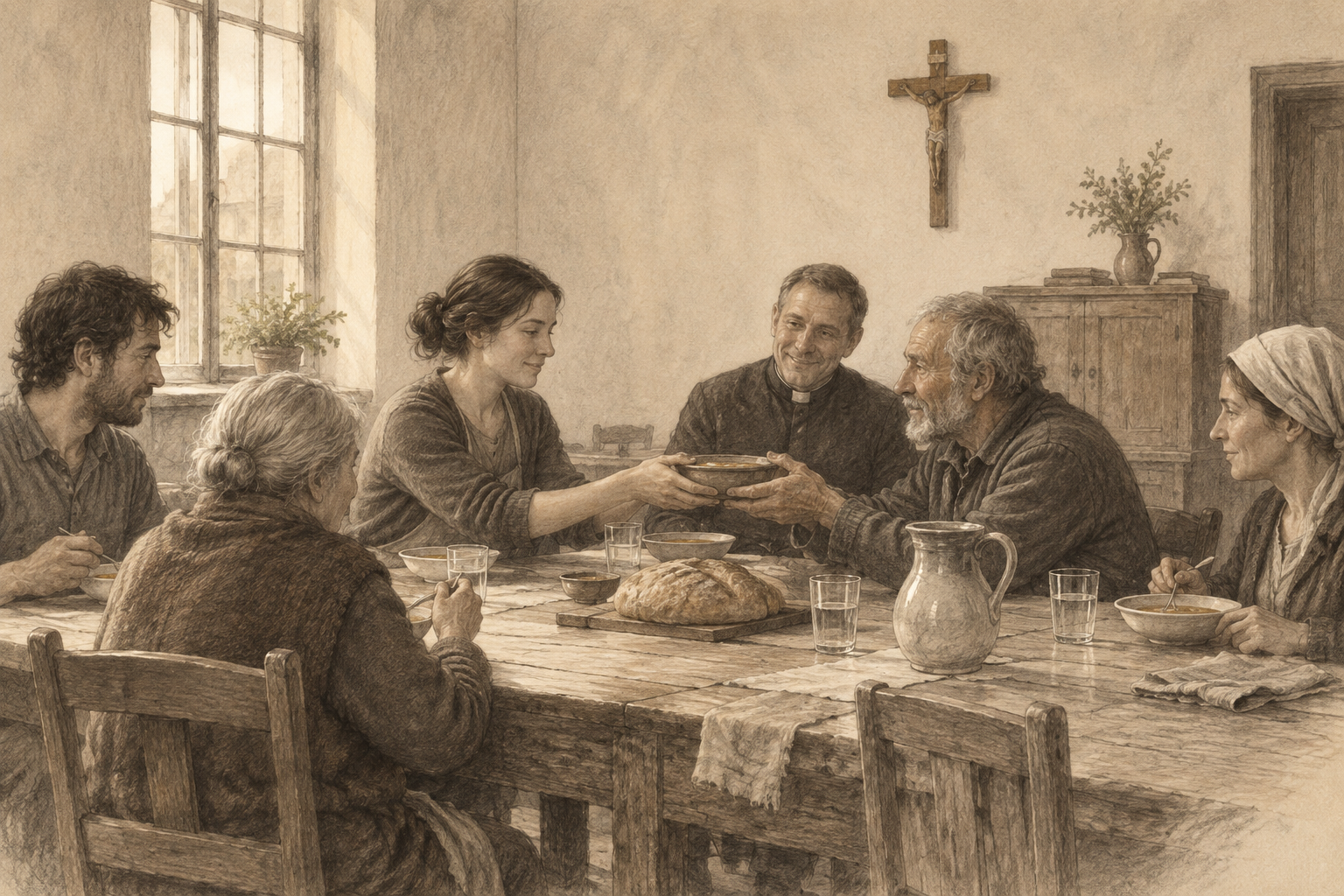
Hospitality often brings to mind a comfortable table, a prepared meal, and familiar guests. Christian hospitality reaches further. It begins when another person's need interrupts our plans and asks whether there is room in our attention, our parish, our community, or our home.
For Catholics, hospitality is not simply a matter of personality. Some people are naturally outgoing, while others are quiet or cautious. The Christian duty to welcome does not require everyone to become a cheerful host of large gatherings. It asks something deeper: that we recognize the God given dignity of the person before us and respond with charity shaped by truth.
This is why hospitality toward the vulnerable and Catholic life belong together. The Church's concern for people who are poor, displaced, elderly, unborn, disabled, imprisoned, lonely, or otherwise at risk is not an optional interest added to the Gospel. It flows from the truth about the human person and from Christ's identification with those in need.
Hospitality begins with human dignity
The first foundation of Catholic hospitality is creation. Every human person is made in the image of God, as Genesis 1:27 teaches. Human worth does not depend on health, citizenship, wealth, independence, usefulness, education, or social standing. It is not earned by good behavior and cannot be erased by weakness.
This conviction changes the way Christians see vulnerability. A person in need is never merely a problem to solve, a cause to promote, or a lesson in generosity. He or she is a neighbor with a history, responsibilities, wounds, hopes, and moral agency. Authentic hospitality respects that full personhood.
The Old Testament repeatedly joins love of God with care for the stranger, the widow, the orphan, and the poor. Israel is commanded to treat the resident alien with love, remembering its own experience of living as strangers in Egypt: Leviticus 19:34. Biblical hospitality therefore includes memory. Those who have received mercy are called to become merciful.
This does not mean that every need can be met by one person or family. Human dignity calls for love, but it also calls for honesty. We should not make promises we cannot keep, place dependents in danger, or pretend to possess skills that properly belong to medical, legal, or social service professionals. Respecting a vulnerable person includes helping responsibly rather than acting impulsively.
Christ waits among those who are easily overlooked
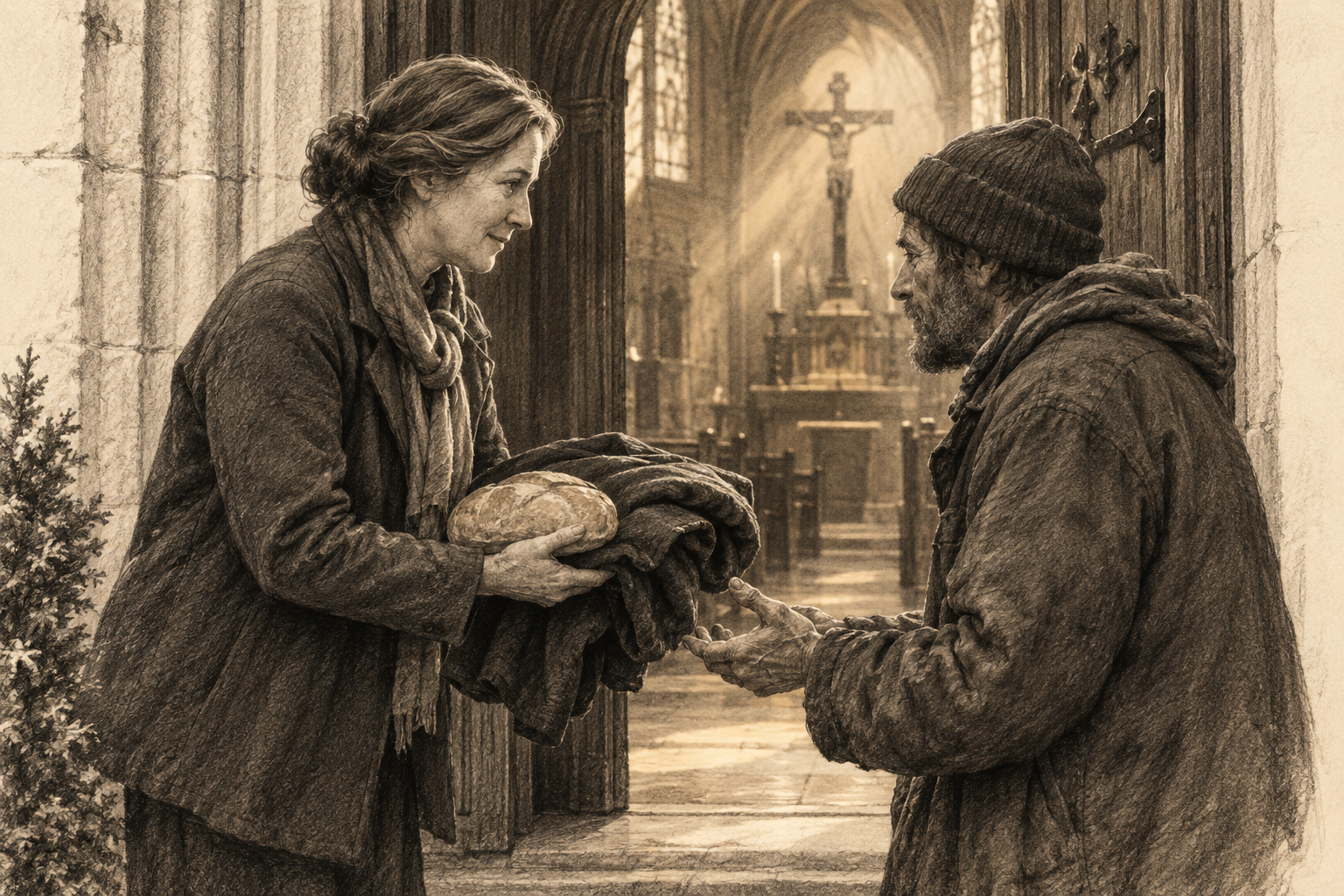
In the judgment scene of Matthew 25, Jesus names concrete acts of mercy: feeding the hungry, giving drink to the thirsty, welcoming the stranger, clothing the naked, visiting the sick, and going to the prisoner. His words are direct:
"I was a stranger and you welcomed me." Matthew 25:35
Christ does not say that every suffering person is virtuous or that every request must be granted exactly as it is made. He does say that our treatment of those in need is bound up with our response to him. This gives Christian hospitality both tenderness and seriousness.
The Good Samaritan offers a similar pattern. The Samaritan sees the wounded man, draws near, tends his injuries, transports him to safety, and pays for continued care: Luke 10:33. His mercy is compassionate, but it is also practical. He uses available resources and involves another person in the work. He does not merely feel concern and continue on his way.
The corporal works of mercy give Catholics a durable framework for such action. They direct us toward bodily needs, including food, shelter, clothing, care for the sick, and burial of the dead. The spiritual works of mercy remind us that vulnerability is not only material. People also need patient counsel, forgiveness, instruction, comfort, prayer, and loving correction.
Welcome is more than friendliness
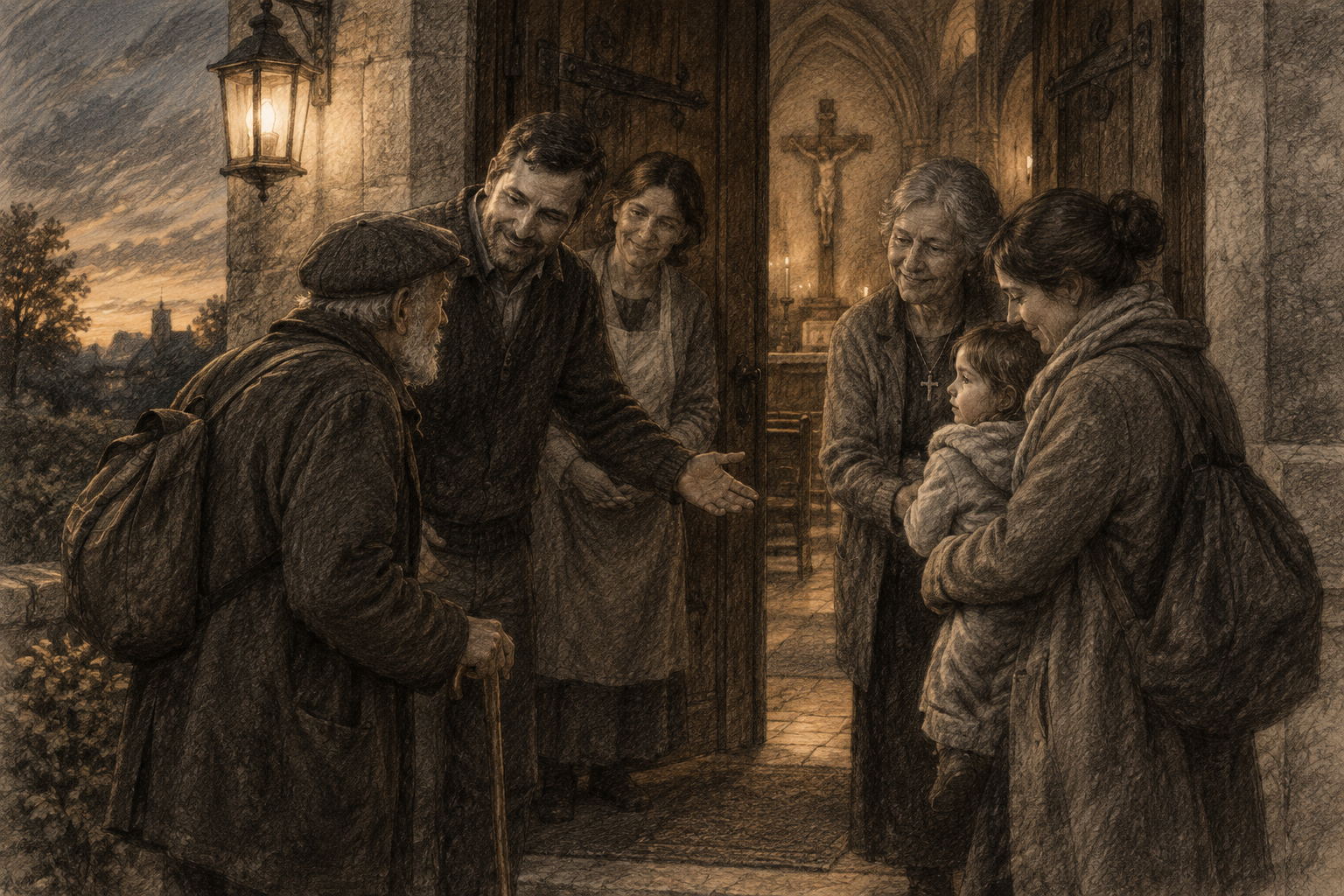
A friendly greeting matters, especially to someone accustomed to being ignored. Yet Christian welcome cannot stop at politeness. A parish may call itself welcoming while remaining difficult to enter for a person with a disability, a family with restless children, someone who does not speak the local language well, or a person who lacks suitable clothing.
Hospitality asks us to notice these barriers without turning people into categories. It may involve learning someone's name, explaining what happens during Mass, making parish facilities easier to access, offering transportation, or staying beside a person who is overwhelmed by forms and appointments. Small acts can restore a sense of belonging.
Scripture urges Christians to contribute to the needs of the saints and to practice hospitality: Romans 12:13. The Letter to the Hebrews adds that hospitality can carry a hidden grace, for some have entertained angels without knowing it: Hebrews 13:2. The point is not that every visitor is secretly an angel. It is that the person at the door may bear a significance we do not yet perceive.
Hospitality listens before deciding
One of the simplest forms of mercy is attentive listening. Vulnerable people are often spoken about rather than spoken with. Decisions may be made for them without understanding what they actually need or what responsibilities they are already carrying.
Listening does not require agreement with every claim. Catholic charity is never separated from truth. But truth is best served when we resist assumptions, ask respectful questions, and allow another person to speak without humiliation. Listening can reveal that a request for money is really a need for transportation, that anger is rooted in fear, or that a lonely person needs regular companionship more than a single generous gesture.
Hospitality protects as well as welcomes
Mercy and prudence are partners, not enemies. Families, parishes, and ministries should follow appropriate safeguarding practices, respect healthy boundaries, and seek trained assistance when a situation involves violence, addiction, severe mental distress, abuse, or exploitation.
It is not uncharitable to decline an unsafe request. Nor is it merciful to expose children, elderly relatives, volunteers, or the vulnerable person to avoidable harm. A responsible response might include contacting emergency services, referring someone to a reputable shelter, meeting in a public place, involving another volunteer, or providing food instead of cash.
Jesus tells his disciples to be wise as serpents and innocent as doves: Matthew 10:16. Christian innocence is not naivety. It is a heart free from malice, guided by wisdom toward what truly serves the good.
From private kindness to a culture of welcome
Personal acts of mercy are indispensable, but Catholic social teaching also asks us to consider the conditions that leave people exposed. A meal can help someone today, while stable employment, safe housing, access to care, and just laws can reduce vulnerability over time.
This is where solidarity and subsidiarity work together. Solidarity refuses to treat another person's suffering as irrelevant. Subsidiarity respects the proper responsibilities and capacities of families, local communities, parishes, charitable organizations, and civil authorities. Problems should be addressed close to the people affected whenever possible, while larger institutions should provide support when smaller communities cannot meet the need alone.
Catholics may disagree prudently about particular policies or programs. Such disagreements do not remove the obligation to protect human dignity and seek the common good. Charity must not become a slogan used to avoid difficult facts, and concern for order must not become an excuse for indifference.
James warns against offering kind words to a person who lacks food and clothing while doing nothing to meet the bodily need: James 2:15-16. Christian love must take visible form. As the First Letter of John teaches, believers are to love not only in word but in deed and truth: 1 John 3:18.
Practical ways to make room
Most Catholics will not found a shelter or lead a large ministry. Every Catholic can still help build a culture in which vulnerable people are seen, heard, and protected. The following practices offer realistic places to begin:
- Learn names. Greet the person who sits alone at Mass, the new family, the elderly neighbor, or the worker whose service usually goes unnoticed.
- Keep something to share. A small supply of food, hygiene items, transit cards, or information about trustworthy local services can make a spontaneous response more useful.
- Offer accompaniment. Drive someone to an appointment, sit with a grieving neighbor, help complete a form, or accompany a person who is nervous about approaching a parish ministry.
- Support established works of mercy. Give time or resources to reputable Catholic charities, pregnancy support ministries, food pantries, prison ministries, refugee services, nursing home outreach, and programs serving people with disabilities.
- Examine parish habits. Ask whether buildings, schedules, language, and social expectations create unnecessary barriers. Welcome should be visible in ordinary parish life, not reserved for special events.
- Set responsible boundaries. Decide in advance what your household can safely offer. Clear limits make sustained generosity more possible and reduce resentment or confusion.
- Pray with and for people. When appropriate, ask whether someone would like prayer. Do not use prayer as a substitute for practical help when practical help is possible.
These acts may appear modest, but mercy grows through fidelity. Bearing one another's burdens fulfills the law of Christ, as Galatians 6:2 reminds us. A parish or household becomes hospitable through repeated choices, not through a single dramatic gesture.
Receiving the gift hidden in hospitality
Hospitality is often described as something the strong offer the weak. That description is incomplete. The guest may also become a giver. A person who has suffered can reveal forms of courage, gratitude, faith, and endurance that comfortable people have never needed to learn. Someone who receives material help may offer friendship, wisdom, prayer, or a renewed awareness of what matters.
This mutuality protects hospitality from pride. Christians do not serve because they stand above those in need. They serve as people who have first received life, grace, forgiveness, and a place in God's household. At the Eucharist, Catholics approach the Lord with empty hands. Everything begins as gift.
The vulnerable neighbor at the edge of our attention presents a quiet spiritual test. Will we look away, reduce the person to a label, or draw near with mercy and prudence? We may not be able to open every door, but we can refuse to close our hearts. When charity becomes concrete, the stranger is seen as a neighbor, and the space between us can become a place where Christ is welcomed.
Keep Reading on Lets Read The Bible
Frequently Asked Questions
Does Catholic hospitality require inviting every person in need into my home?
No. Catholics are called to welcome and assist others, but hospitality must be guided by prudence, family responsibilities, and appropriate safety measures. Help can take many forms, including providing food, offering transportation, supporting a shelter, arranging professional assistance, or meeting in a safe public setting.
How is hospitality connected to the works of mercy?
Hospitality gives practical expression to both the corporal and spiritual works of mercy. Welcoming the stranger, feeding the hungry, caring for the sick, comforting the sorrowful, and accompanying the lonely all recognize the dignity of the person and respond to Christ's call to love our neighbor.
Can Catholics support vulnerable people while still maintaining boundaries?
Yes. Healthy boundaries can protect everyone involved and make generosity sustainable. Catholic charity seeks the true good of the person, so it should include honesty, safeguarding, responsible referrals, and trained assistance when needs involve danger, abuse, addiction, or serious illness.