Social Teaching
A Place at the Door: Hospitality as a Work of Mercy
Christian welcome begins by seeing the person before us and making room for love, truth, and practical care.
Site Admin | September 23, 2026 | 4 views
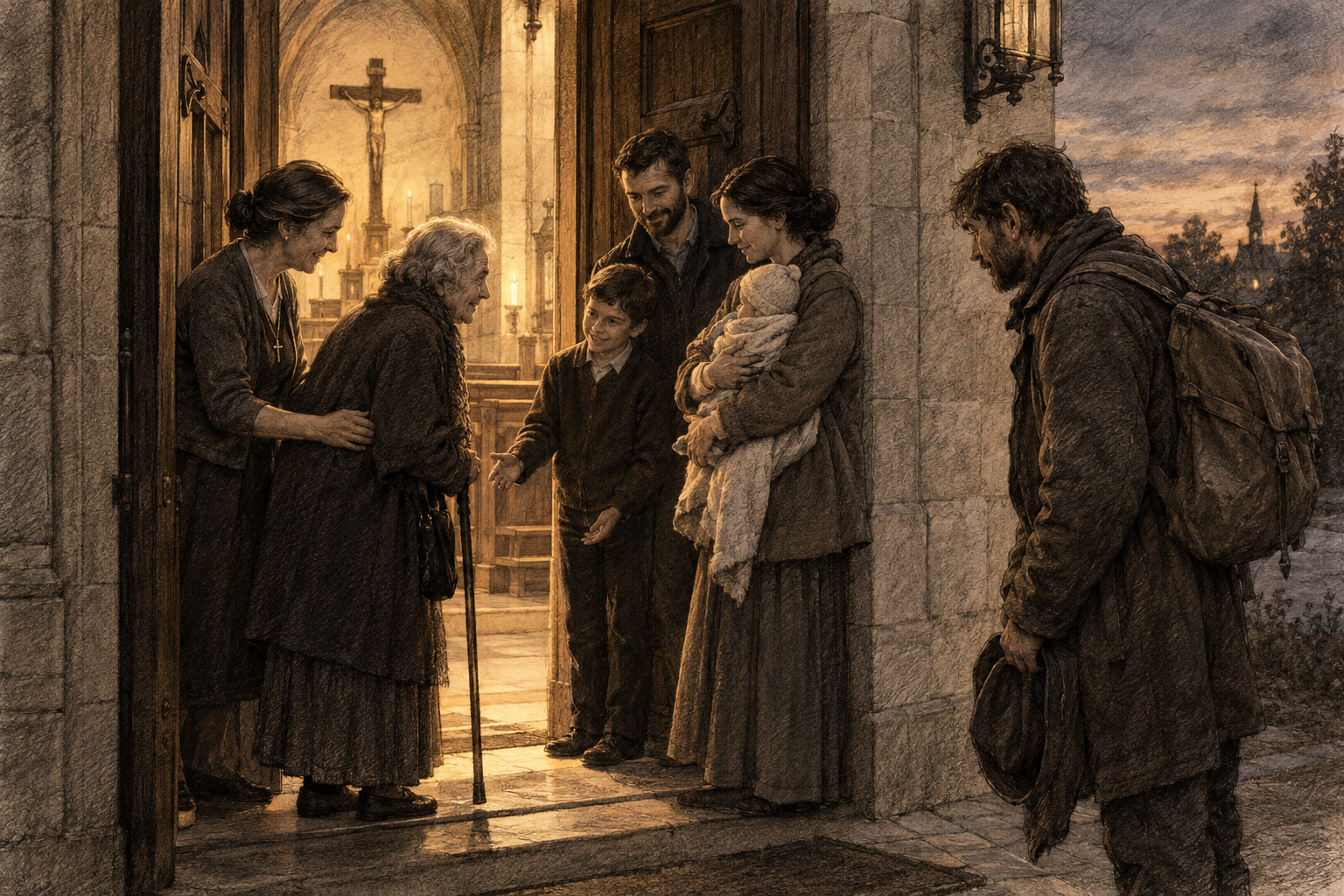
A door can reveal much about a Christian life. It may be the door of a home, parish hall, food pantry, hospital room, or apartment building. It may even be the less visible door of our attention: whether we notice the person who is frightened, poor, displaced, elderly, disabled, unborn, imprisoned, grieving, or alone.
Hospitality toward the vulnerable is not simply good manners. In Catholic teaching, it is one expression of charity, the love by which we seek the true good of another person. It begins with a conviction that cannot depend on usefulness, nationality, health, income, age, or social approval: every human person possesses an inviolable dignity because every person is created by God and called to communion with him.
This does not mean that every need can be met in the same way, or that individuals and communities should act without prudence. It means that no difficulty removes the vulnerable person from the reach of Christian concern. Before someone is a case, category, burden, or political question, he or she is a neighbor.
Welcome runs through the biblical story
Scripture repeatedly joins love of God to the reception of the stranger. Abraham welcomes unexpected visitors, offering water, rest, and food before he knows the full significance of their arrival in Genesis 18:2. The Law reminds Israel to love the stranger, remembering that Israel once lived as a stranger in Egypt in Deuteronomy 10:19. Hospitality is presented not as a decorative virtue, but as a response to grace and remembered dependence.
In the Gospel, Jesus brings this duty into direct relation with himself:
"I was a stranger and you welcomed me." Matthew 25:35
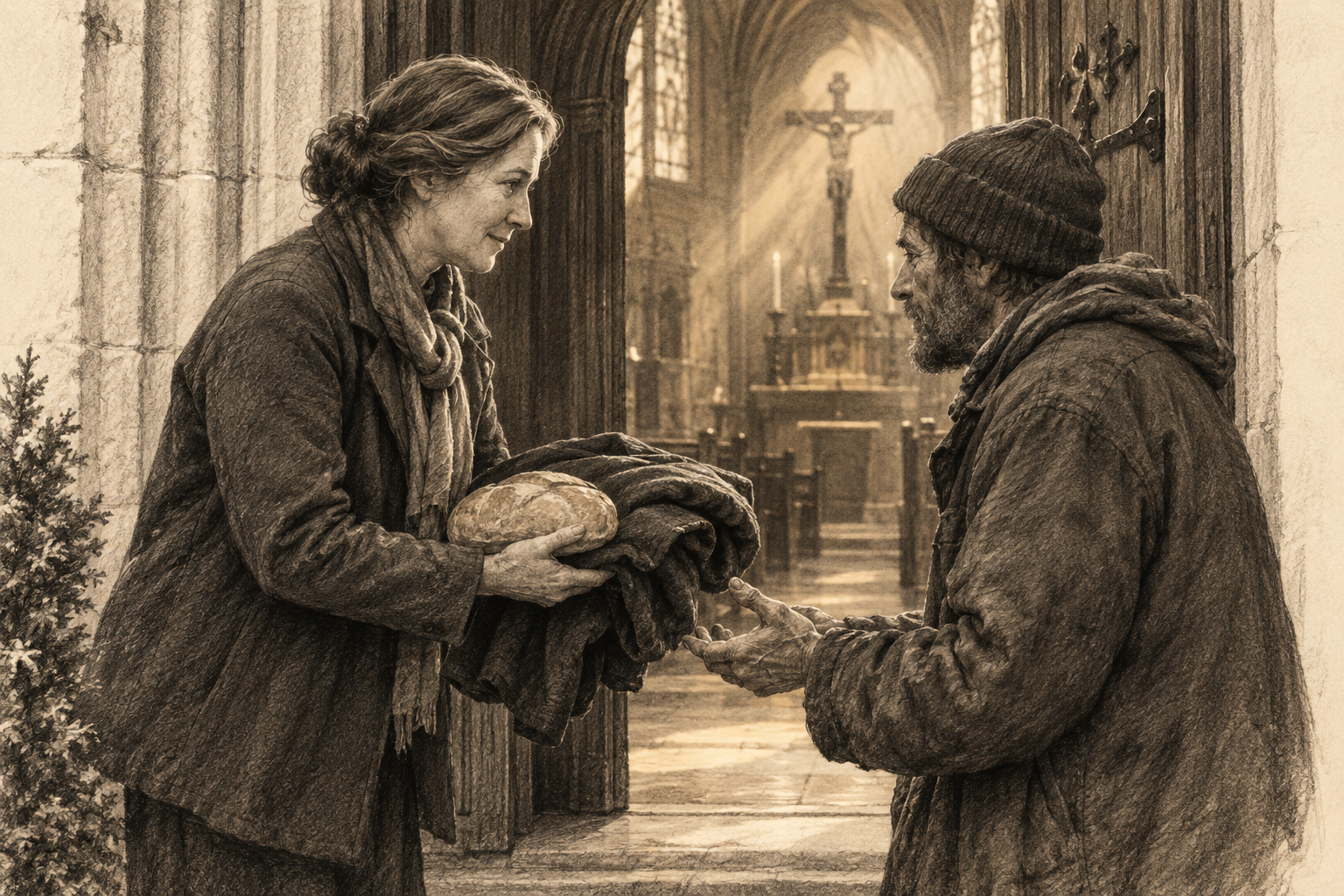
Christ does not speak of vulnerable people as distant objects of generosity. He identifies himself with those who are hungry, thirsty, poorly clothed, sick, imprisoned, and far from home. This identification gives Christian hospitality its reverence. The person who needs help is not an interruption standing between us and holiness. That person may be the place where Christ is waiting to be loved.
The parable of the Good Samaritan makes the same demand in another way. The wounded man cannot repay the Samaritan, explain himself, or prove that he deserves assistance. The Samaritan draws near, tends his wounds, transports him, and pays for his care in Luke 10:33. Mercy takes the form of time, inconvenience, personal risk, and material provision.
The Letter to the Hebrews urges believers not to neglect hospitality, recalling that some have welcomed angels without knowing it in Hebrews 13:2. Christian welcome therefore includes humility. We may think that we are only giving, yet God often meets, corrects, and blesses us through those whom we receive.
The principles beneath the practice
Catholic social teaching provides a moral framework for understanding why hospitality matters and how it should be practiced. Several principles belong together.
Human dignity
The foundation is the dignity of the human person. The Catechism of the Catholic Church teaches that respect for the person requires us to regard our neighbor as another self, taking particular care for life and the means necessary to live with dignity. This dignity is inherent. It is not awarded by the state, earned through productivity, or lost through dependence.
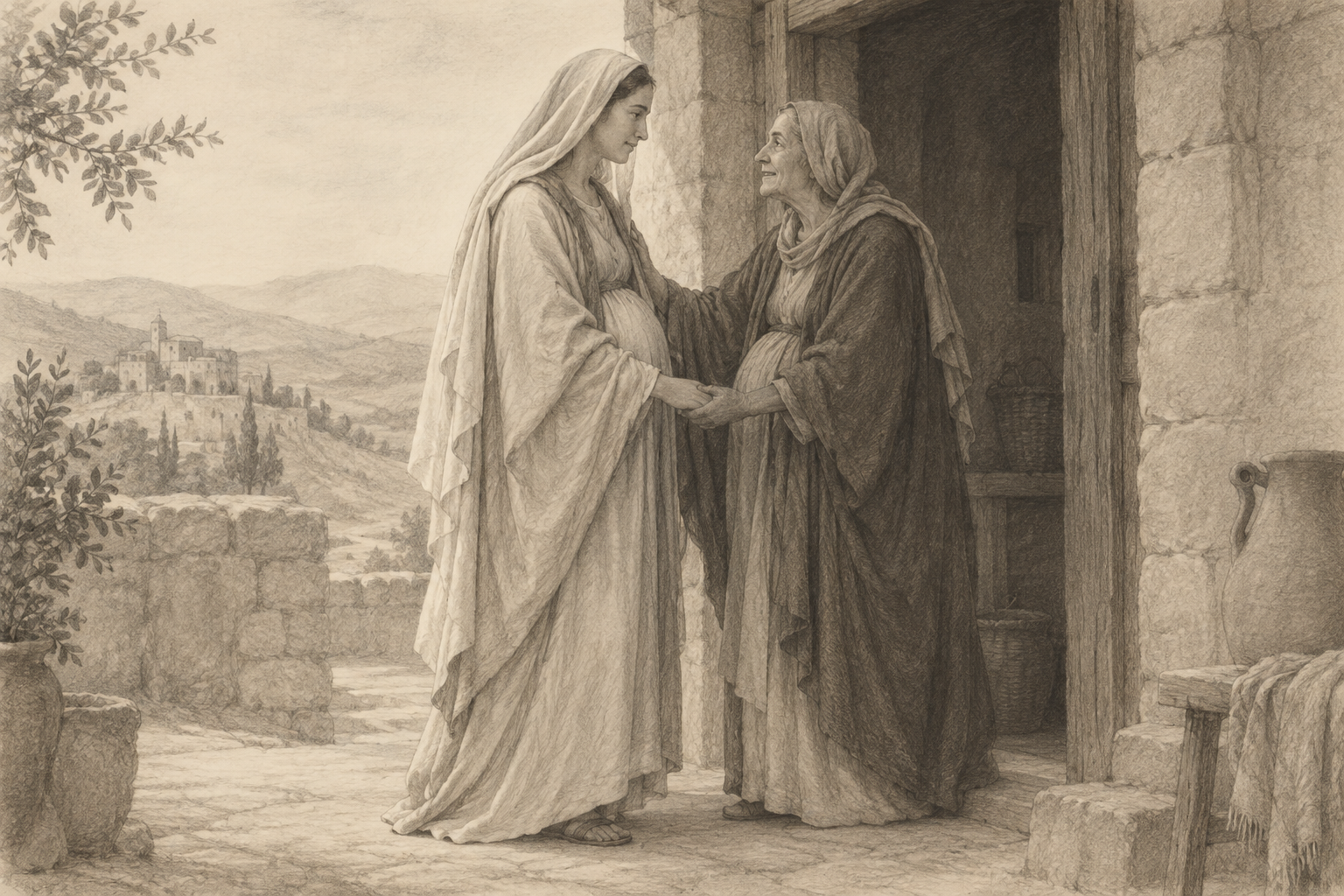
Hospitality becomes especially urgent when dignity is obscured. Poverty can cause a person to be treated as a problem. Disability can cause a life to be measured by independence or economic value. Old age can bring isolation. An unexpected pregnancy can leave a mother feeling that there is no room for both her and her child. Christian welcome answers these pressures by saying through word and action: your life is not disposable, and you should not face this need alone.
The preferential option for the poor
The Church speaks of a preferential love for the poor. This does not mean that vulnerable people are more human than others, or that love should become selective. It means that those whose dignity is most threatened deserve particular attention, just as a family gives special care to the member who is ill or endangered.
This preference is visible throughout the ministry of Jesus. He approaches people who are sick, excluded, burdened, and publicly shamed. He does not reduce them to their hardship. He restores them to relationship and calls them into the fullness of life.
Solidarity and the common good
Solidarity rejects the idea that another person's suffering is entirely someone else's concern. It recognizes a real bond among people and nations. Saint Paul describes the Church as a body in which the suffering of one member concerns all the members in 1 Corinthians 12:26.
The common good similarly directs society toward conditions in which individuals, families, and communities can flourish. Hospitality is not only a private feeling. It has social dimensions, including access to food, shelter, safety, family life, medical care, education, and meaningful participation in community.
At the same time, solidarity should not erase personal responsibility or the proper roles of families, parishes, local associations, and public authorities. The principle of subsidiarity encourages help at the most immediate competent level while allowing larger institutions to assist when needs exceed local capacity. Healthy hospitality does not make every person do everything. It helps each person and community discern the good that is actually theirs to do.
Mercy needs both generosity and prudence
Christian hospitality is generous, but it is not careless. Prudence is the virtue that helps us recognize the right means of doing good in concrete circumstances. A parent may need to protect children in the home. A parish must follow sound safeguarding practices. A volunteer should not attempt medical, legal, or psychological work for which he or she is unqualified. Someone facing violence, addiction, trafficking, or severe mental illness may need skilled professional assistance.
Boundaries do not necessarily contradict charity. At times, they make sustained charity possible. Offering a meal, arranging transportation, calling an appropriate service, helping with paperwork, or supporting a trusted ministry may be more responsible than making a promise that cannot be kept.
This balance is also present in Catholic teaching on migrants and refugees. The Catechism, in paragraph 2241, teaches that more prosperous nations should welcome foreigners seeking security and the means of life to the extent they are able. It also recognizes the responsibility of political authorities to regulate immigration for the sake of the common good and calls immigrants to respect the laws and civic life of the country receiving them. Catholic teaching therefore resists both indifference and simplistic answers. It asks that policy discussions never conceal the human beings whose lives are affected.
Ordinary forms of welcome
Few Catholics will operate a shelter or direct a large charitable organization. Every Catholic, however, can participate in a culture of welcome. Hospitality often begins with modest acts that become faithful through repetition.
- Notice who is absent or alone. An elderly neighbor, recently widowed parishioner, new family, caregiver, or person with limited mobility may need companionship as much as material help.
- Learn before assuming. Ask respectful questions and listen. The help we prefer to give is not always the help another person actually needs.
- Share concrete resources. Meals, rides, baby supplies, temporary assistance with bills, help locating housing, and accompaniment to appointments can relieve immediate pressure.
- Support mothers and children together. A consistent ethic of life welcomes the unborn child while also surrounding the mother with practical, emotional, and spiritual care.
- Make parish life accessible. Consider physical access, clear communication, transportation, sensory needs, and ways for people with disabilities to contribute their gifts.
- Serve through trustworthy ministries. Catholic Charities agencies, pregnancy help centers, St. Vincent de Paul conferences, prison ministries, refugee services, food pantries, and local shelters often provide training and accountability.
- Guard the dignity of those receiving help. Do not turn another person's hardship into gossip, entertainment, or self promotion. Ask permission before sharing a story or image.
Prayer belongs within this work, but prayer should not become an excuse to avoid action. The Letter of James warns against offering pious words to a person lacking food or clothing while refusing what the body needs in James 2:15. At the same time, action without prayer can become possessive or exhausted. Prayer reminds us that we are servants, not saviors, and that every person ultimately belongs to God.
A parish where people can be received
A welcoming parish is not merely a parish with friendly greeters. It is a community prepared to accompany people whose lives are complicated. That may require patient sacramental preparation, discreet financial assistance, listening without immediate judgment, and cooperation with local professionals. It also requires honesty. Welcoming a person never means pretending that destructive choices are harmless. Catholic charity holds truth and mercy together because both serve the person's genuine good.
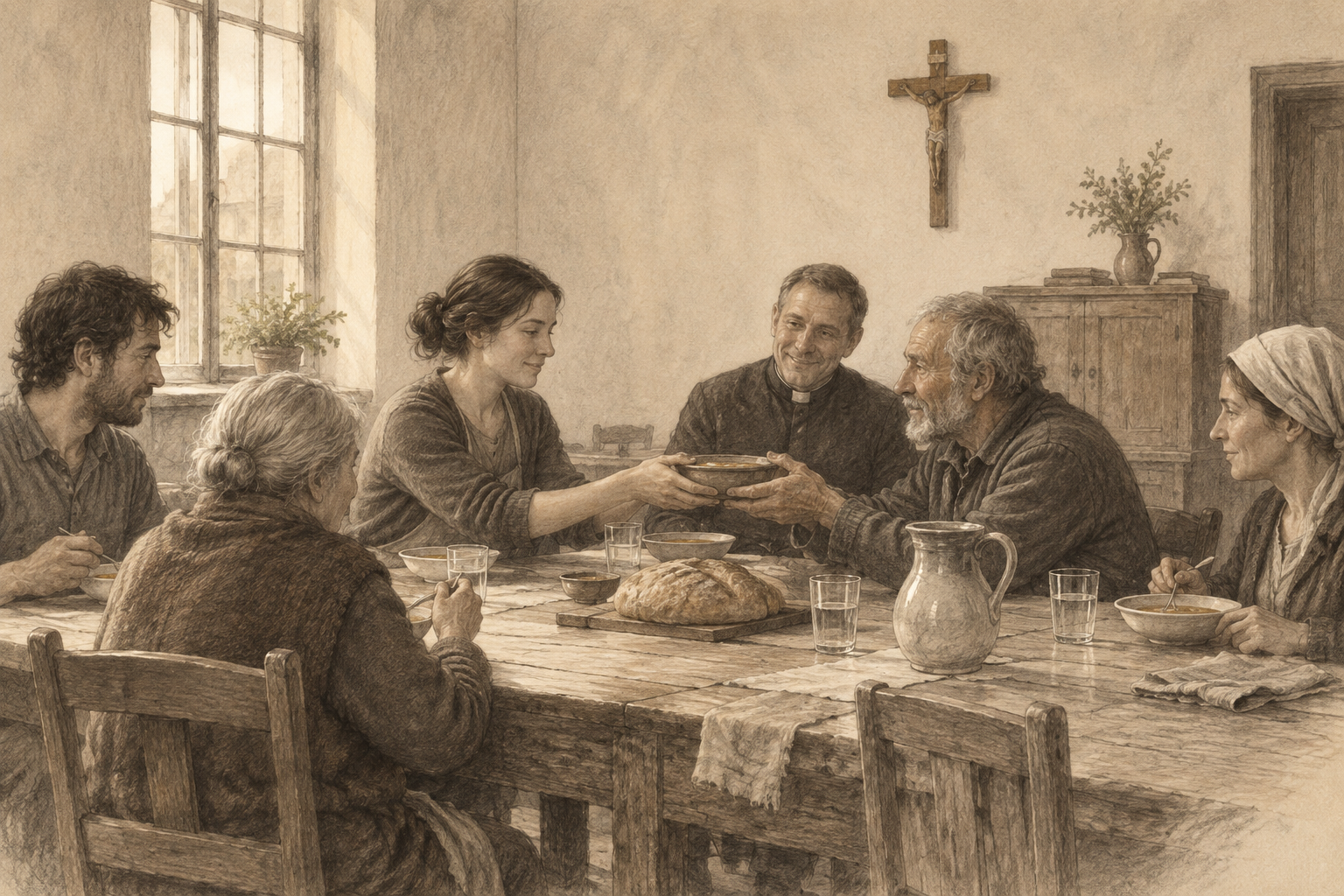
The Eucharist forms this kind of community. At Mass, Catholics receive a gift they could never earn. Christ welcomes sinners, feeds them with his own life, and gathers people of different ages, abilities, backgrounds, and circumstances into one body. The altar teaches us that Christian life is received before it is achieved. What we have been given then becomes the pattern of what we offer.
Hospitality will sometimes feel fruitful, and sometimes it will seem hidden. A meal may be forgotten. An invitation may be declined. A person helped today may need help again tomorrow. The value of mercy does not depend entirely on visible results. Faithfulness can be quiet: an open chair, a returned telephone call, a name remembered, a child protected, a stranger accompanied through a difficult hour.
Christ stands close to the vulnerable, and he teaches his disciples to stand there too. The Christian door is not opened by sentiment alone, but by a love trained in truth, prudence, sacrifice, and hope. Whenever we make responsible room for a neighbor, we bear witness that no human life is beneath notice and no person is outside the reach of God's mercy.
Keep Reading on Lets Read The Bible
Frequently Asked Questions
What does Catholic teaching mean by hospitality toward the vulnerable?
It means receiving and assisting people whose dignity, safety, or basic needs are threatened. This hospitality is rooted in the equal dignity of every human person and is expressed through charity, solidarity, the preferential option for the poor, and the corporal works of mercy.
Does Christian hospitality require inviting every person into one's home?
No. Hospitality must be guided by prudence, safety, family responsibilities, and personal capacity. Catholics can offer welcome through meals, transportation, financial assistance, companionship, referrals, parish ministries, and support for reputable charitable organizations.
How can a parish become more hospitable to vulnerable people?
A parish can train volunteers, maintain safe and confidential assistance practices, improve accessibility, cooperate with qualified local services, accompany families in crisis, and create ways for poor, elderly, disabled, displaced, or isolated people to participate fully in parish life.