Doctrine and Questions
Faith That Acts: How Catholics Read Salvation, Grace, and Human Response
A clear Catholic look at faith and works, and why the Church refuses to separate belief from obedience.
Site Admin | July 7, 2025 | 67 views
Few Christian topics create more confusion than faith and works. Some hear the phrase and imagine that Catholics believe people can earn heaven by good behavior. Others worry that if salvation is by grace, then human action must be irrelevant. The Church rejects both mistakes. Faith and works explained properly are not rivals, but inseparable parts of the Christian life. Grace comes first, and grace also changes a person so deeply that real faith begins to act.
In Catholic teaching, salvation is always a gift. No one can put God in his debt. We do not purchase mercy, and we do not force God to accept us because we have been impressive enough. At the same time, the grace that justifies also transforms. When Christ saves a person, he does not merely declare something on paper while leaving the heart unchanged. He makes the sinner new, and that new life bears visible fruit. That is why Scripture can speak so naturally about both faith and obedience, belief and holiness, grace and the works that spring from love.
Grace comes first, always
The Catholic starting point is not human effort, but God s initiative. We are saved because the Father sends the Son, and the Son gives himself for us while we are still sinners. Scripture is direct about this. Ephesians 2:8 says, For by grace you have been saved through faith. Even faith itself is a gift, not an achievement that makes us superior to others. The same passage continues, Ephesians 2:10: For we are his workmanship, created in Christ Jesus for good works, which God prepared beforehand, that we should walk in them.
That last verse is crucial. Catholics do not read grace as a permission slip to do nothing. We read it as the power of new creation. God prepares the works, and God enables us to walk in them. So when a Catholic speaks of good works, he is not talking about a self-made ladder to God. He is talking about the life that grace makes possible.
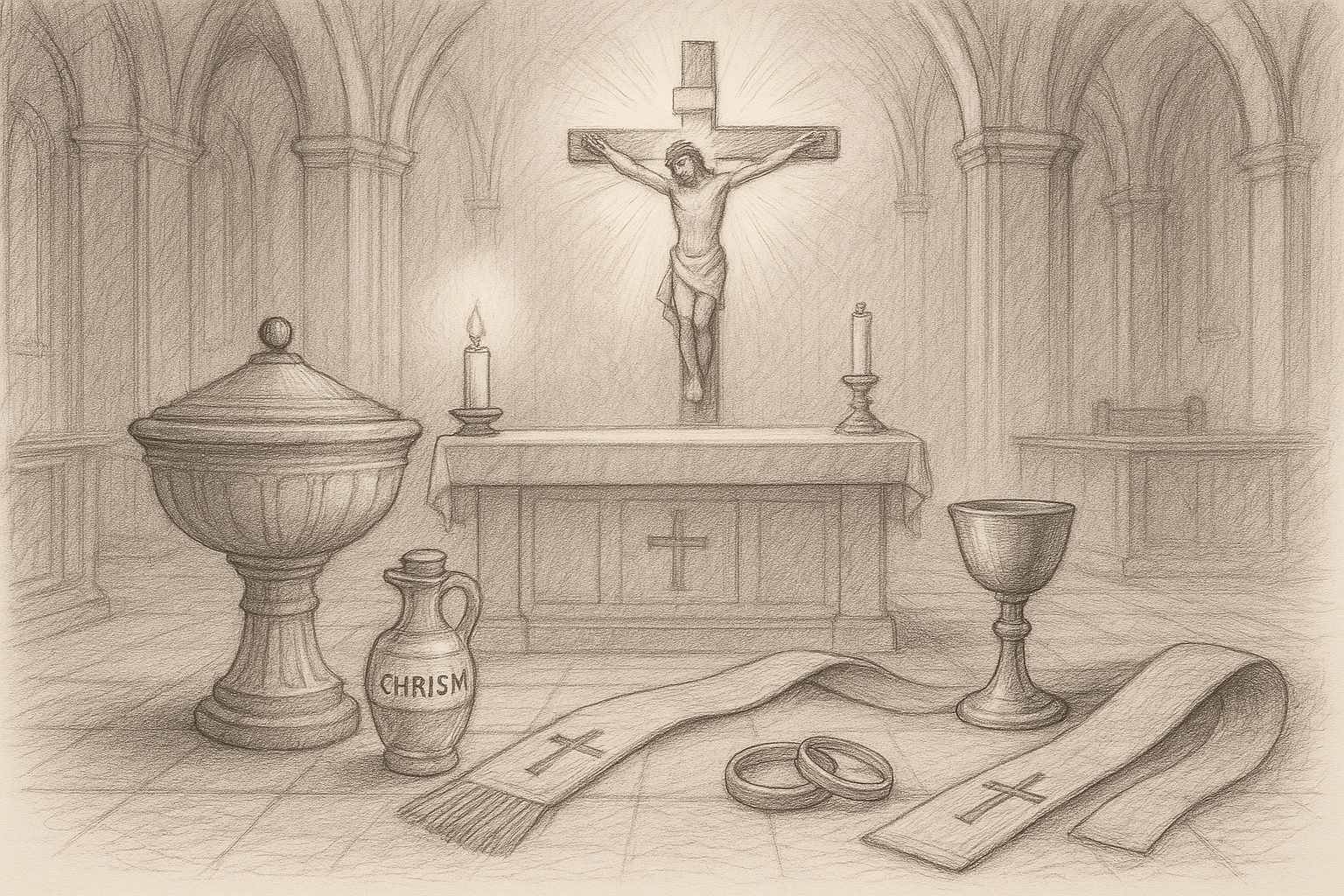
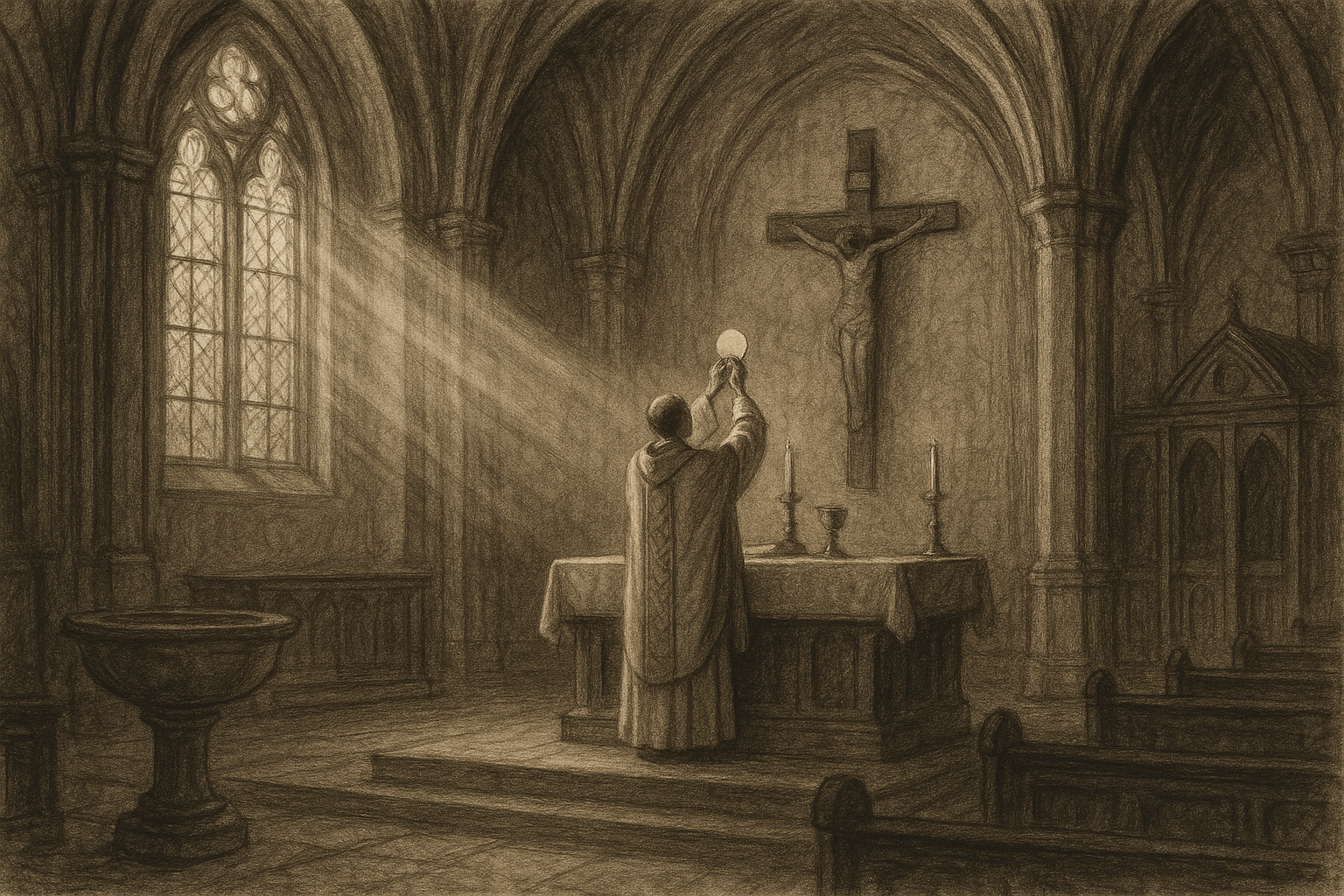
This is also why the sacraments matter so much. Baptism, confession, the Eucharist, and the rest are not human inventions added to the Gospel. They are ways Christ gives grace to heal, strengthen, and sanctify his people. Faith receives what God offers. Works then become the lived shape of that received gift.
Scripture refuses to separate belief from obedience
Some readings of the Bible treat faith as a purely interior act, as if saving belief could be detached from the life that follows. But the New Testament does not speak that way. Jesus himself ties love of him to obedience. John 14:15 says, If you love me, you will keep my commandments. That is not a harsh condition placed on believers. It is a description of what real love does.
Saint Paul also makes the connection clear. In Galatians 5:6, he writes, For in Christ Jesus neither circumcision nor uncircumcision is of any avail, but faith working through love. Notice the phrase: faith working through love. Faith is not inert. It acts. It moves outward in charity, mercy, patience, and courage. In the Christian life, love is not an optional extra attached to belief. Love is the form that living faith takes.
Saint James addresses the same issue even more directly. James 2:17 teaches, So faith by itself, if it has no works, is dead. A dead faith is not a weak faith trying hard to be strong. It is a faith that is empty, unfruitful, and disconnected from obedience. James is not opposing Saint Paul. He is correcting a false idea of faith, one that says a person can claim belief while refusing the visible demands of conversion.
James goes on to say, James 2:24, You see that a man is justified by works and not by faith alone. Catholics receive that verse in the full context of the Bible, where justification is God s saving action and also the real transformation of the person. The point is not that works replace faith, but that authentic faith cannot remain alone. It is never solitary. It is joined to love, repentance, and obedience.
What the Church means by justification
When Catholics talk about justification, they mean more than being declared not guilty. God certainly forgives sins, but he also makes the sinner righteous by grace. This matters because Christianity is not simply about a legal change while the inner life stays the same. It is about communion with God, a restored friendship that reshapes the whole person.
That is why the Church can say that we are saved by grace through faith, while also insisting that grace can be resisted or neglected. Human beings are not stones. We respond freely to God. The Lord moves first, but we are not passive objects. We can cooperate with grace or refuse it. We can persevere in charity or grow cold. This is not a denial of grace. It is the dignity grace gives to human freedom.
The saints show this pattern again and again. They do not become holy by self-reliance. They become holy by surrender. Yet their surrender is real. They pray, fast, forgive, serve, confess, receive the Eucharist, and endure suffering in union with Christ. Their works are not competition with grace. They are grace at work in a human life.
Faith is the root, but charity is the fruit. God plants the tree, and the tree must bear what it has received.
Why good works matter after conversion
Once a person has come to faith, why does anything else matter? The simplest answer is that love matters. If Christ has truly saved us, then we are no longer our own. We belong to him. A saved life cannot remain unchanged because salvation is not only rescue from punishment. It is adoption into a family and incorporation into the Body of Christ.
Good works matter because they are acts of love toward God and neighbor. Feeding the hungry, visiting the sick, forgiving injuries, honoring marriage, telling the truth, protecting the vulnerable, and praying for enemies are not side projects for especially serious Catholics. They are ordinary forms of Christian life. They are the visible outline of a heart turned toward God.
Good works also train us in holiness. Many people expect conversion to feel dramatic forever, but most sanctification is quiet and repetitive. A person learns to give generously before it feels easy. A parent learns patience through long practice. A worker learns integrity in small decisions nobody else sees. In this way, works do not buy salvation. They form the soul for heaven.
There is also a missionary dimension. A faith that never acts is not convincing. The world notices mercy, sacrifice, and steadiness. Jesus himself says, Matthew 5:16, Let your light so shine before men, that they may see your good works and give glory to your Father who is in heaven. Good works are not self-display. They are a way of pointing beyond ourselves to the Father.
Common misunderstandings Catholics should avoid
It is important not to turn this teaching into a slogan. Catholics do not believe that every good act automatically earns eternal life apart from grace. That would be impossible. Everything salvific begins in God. Nor do we believe that outward religious actions count if the heart is proud, resentful, or untouched by conversion. A person can perform religious duties and still refuse God inwardly.
At the same time, Catholics avoid the opposite error of treating the moral life as irrelevant once a person has said a prayer of acceptance. The New Testament never presents discipleship that way. It speaks of repentance, perseverance, and growth. It warns against grave sin. It calls believers to remain in Christ. Saving faith is not merely a moment of certainty. It is a living communion that continues.
This is why the Church speaks so often about cooperation with grace. That phrase does not mean that humans save themselves in partnership with God. It means that God does not save us as if we were lifeless objects. He restores our freedom so that we can truly say yes to him. The yes matters. Not because it originates grace, but because grace makes it possible.
How this teaching changes ordinary Catholic life
Faith and works explained in daily life means learning to stop dividing what God has joined together. A Catholic cannot sincerely say, I believe, while refusing to forgive. Nor can he assume that attending Mass and receiving the sacraments excuse him from honesty, mercy, and sacrifice. The Christian life is integrated. Prayer feeds action, and action returns to prayer.
For many Catholics, this teaching brings relief. It means that hidden acts of faithfulness are not wasted. The mother who patiently cares for her children, the young man who resists sin in private, the elderly woman who prays faithfully for her family, and the parishioner who gives quietly to the poor are not invisible to God. In Christ, nothing done in love is lost.
It also brings humility. If salvation is grace from first to last, then no one can boast. We can thank God for every good thing in us. We can repent where we have failed. We can begin again. And we can trust that the Lord who calls us is also the Lord who strengthens us to answer.
That is the heart of Catholic teaching: not faith instead of works, and not works instead of faith, but a living faith that receives grace and bears fruit in love. The Christian does not stand before God with empty hands or with hands full of trophies. He comes with open hands, asking for mercy, and then learns to use those same hands to serve.
Keep Reading on Lets Read The Bible
Frequently Asked Questions
Do Catholics believe good works save us apart from faith?
No. Catholics teach that salvation is by grace. Good works do not replace faith or earn salvation on their own. They are the fruit of grace and the evidence of living faith.
What does James mean when he says faith without works is dead?
Saint James is teaching that true faith cannot remain fruitless. A person may claim to believe, but if that belief never becomes obedient love, it is not living faith.
How do faith and works fit together in everyday Catholic life?
Faith receives God s grace in prayer, the sacraments, and trust in Christ. Works are the daily acts of love that follow, such as forgiveness, generosity, truthfulness, service, and perseverance in holiness.