Family and Vocation
How Christian Hope Changes the Way We Face Death
A Catholic meditation on mortality, grief, and the grace that keeps hope alive when earthly life comes to an end.
Site Admin | November 9, 2025 | 66 views
Death has a way of exposing what is most real. It strips away illusions, interrupts plans, and asks every person the same quiet question: what remains when earthly life is no longer in our hands? The Church does not pretend that this question is easy. Catholics bury loved ones, keep vigil at hospital beds, and stand in cemeteries with tears that are as honest as any prayer. Yet the Church also insists that death is not the final truth about a human person. Christ has entered death, and because of Him, death is no longer a sealed door but a passage marked by hope.
The death and Christian hope Catholic perspective begins with a simple but demanding confession: we are not made for the grave, but for communion with God. That truth does not remove sorrow. It gives sorrow a direction. It teaches the grieving heart to pray instead of despair, to remember instead of deny, and to trust that the mercy of God is greater than the failures and fragility of our mortal life.
Death is real, and the Bible never hides that fact
Scripture speaks about death with sobriety. Human beings are dust, and to dust they return. The Psalms name our days as brief, and the Wisdom books remind us that life passes quickly. The Bible never asks believers to fake peace or pretend that death is natural in the sense of being good. Death is an enemy. Saint Paul says so plainly: Christ will destroy the last enemy, death (1 Corinthians 15:26).
At the same time, Scripture never leaves death isolated from God. The Lord walks with His people through fear, exile, loss, and the shadow of the valley. The Psalmist can say, even though I walk through the valley of the shadow of death, I fear no evil, because the Lord is with him (Psalm 23:4). That is not a denial of danger. It is a confession that God's presence is stronger than danger.
In the Gospels, Jesus weeps at the tomb of Lazarus (John 11:35). Those tears matter. They show that Christian hope is never cold or detached. Christ does not scold grief. He enters it. He stands before the tomb and reveals that even the sorrow of death can become the place where the glory of God is shown.
The Cross teaches us what hope really means
Many people imagine hope as optimism, as if Christians simply decide to feel better about mortality. Catholic hope is deeper and more costly than that. Hope is a theological virtue, a gift from God that anchors the soul in His promises. We hope not because death is small, but because Christ is risen.
The Cross shows that God does not save from a distance. He saves by entering human suffering and bearing its weight. Jesus did not merely speak about death from the safety of heaven. He accepted a real human death, with pain, abandonment, and burial. Then, on the third day, the tomb could not hold Him. The Resurrection means that the final shape of reality is not decay, but life in God.
For Catholics, this is not an idea to admire from far away. It is the center of prayer, liturgy, and sacramental life. Every Mass is shaped by the Paschal Mystery. Every Eucharist is a participation in the sacrifice and victory of Christ. When we pray for the dead, we are not expressing vague sentiment. We are asking the mercy won by Christ to be applied to those who have died in His friendship and to those who still need purification before entering heaven.
For believers, death is not erased, but transformed. It becomes the place where human weakness meets divine mercy, and where the promises of Christ are no longer hoped for in darkness but seen in fulfillment.
Catholic hope is not denial of grief
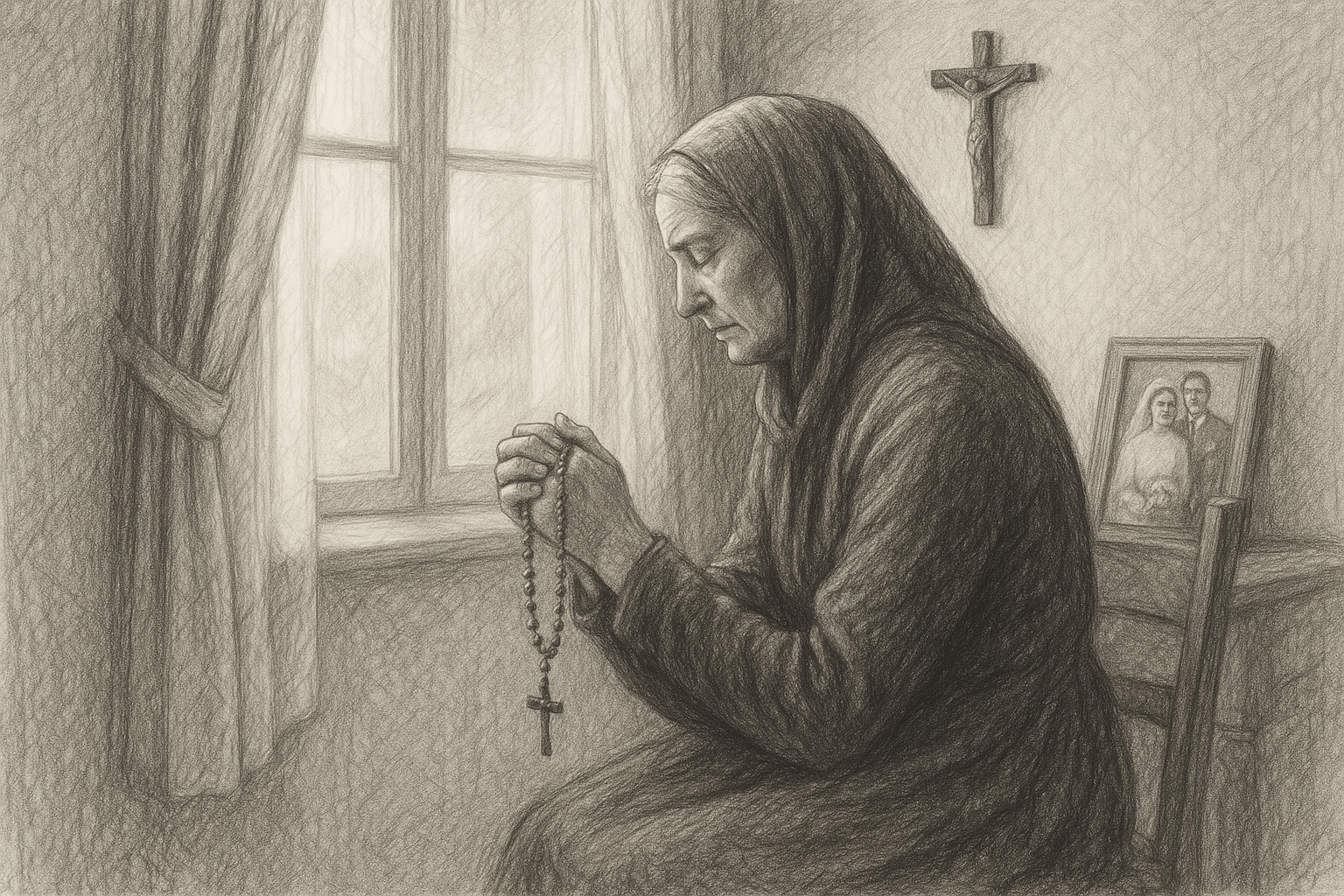
One of the hardest lessons for families is that faith does not cancel mourning. Even people who trust in eternal life still experience shock, loneliness, regret, and unanswered questions. A mother may grieve a child. A husband may sit at a kitchen table and feel the silence of his wife. A daughter may carry the memory of a father whose last days were confused or painful. Christian hope does not tell them to move on quickly. It tells them that love has not vanished, and that death has not made their love meaningless.
The Church gives us language for this kind of grief. We commend the dead to God's mercy. We pray for the soul of the departed. We ask that the Lord forgive what was sinful, heal what was wounded, and bring the person into the fullness of His kingdom. This practice is not a sentimental custom. It grows from the Church's teaching on purgatory, which reminds us that divine mercy is both tender and purifying. Many die in God's grace yet still need cleansing before the beatific vision.
That teaching can be misunderstood, but at heart it is profoundly hopeful. It means that death does not place a loved one beyond prayer. The bond of charity continues in Christ. We remember the dead at Mass, offer intentions, visit graves, and keep the departed present in our homes with reverence rather than denial. Catholic mourning is active love.
How grace changes the ordinary days of family life
Hope in death is not only for the moment of dying. It changes how Catholics live now. Families who remember eternity make different choices. They are more likely to forgive sooner, speak more honestly, and hold their time together as a gift rather than an entitlement. The awareness that life is brief can become a school of charity.
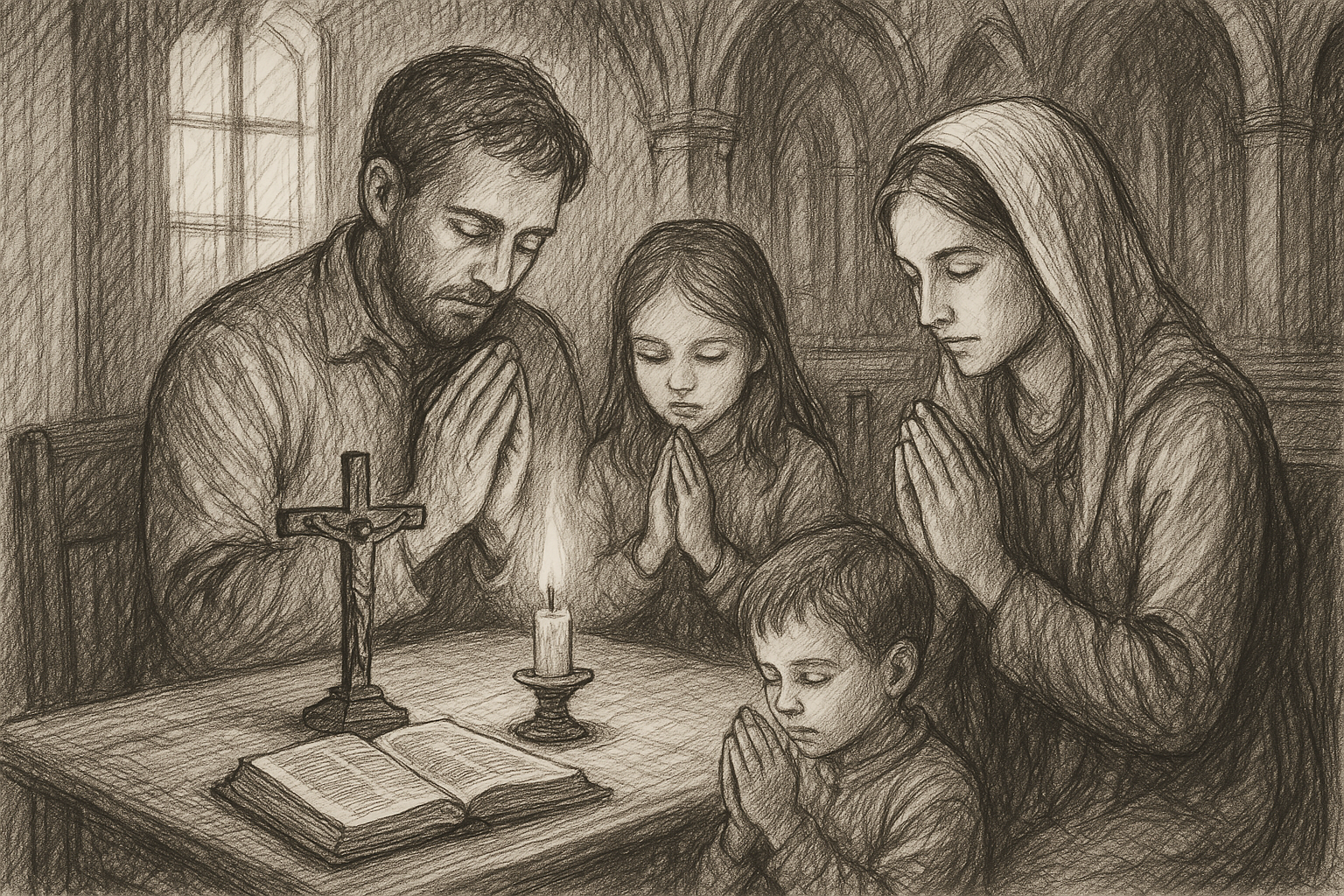
This is especially important in the home, where vocation is first lived. Parents teach children that death is real, but so is prayer. A Catholic family does not need to hide every funeral or soften every mention of heaven. Children can learn to light a candle, make the Sign of the Cross at a grave, and pray for grandparents and other loved ones who have died. Such practices teach them that the dead are not erased from Christian memory.
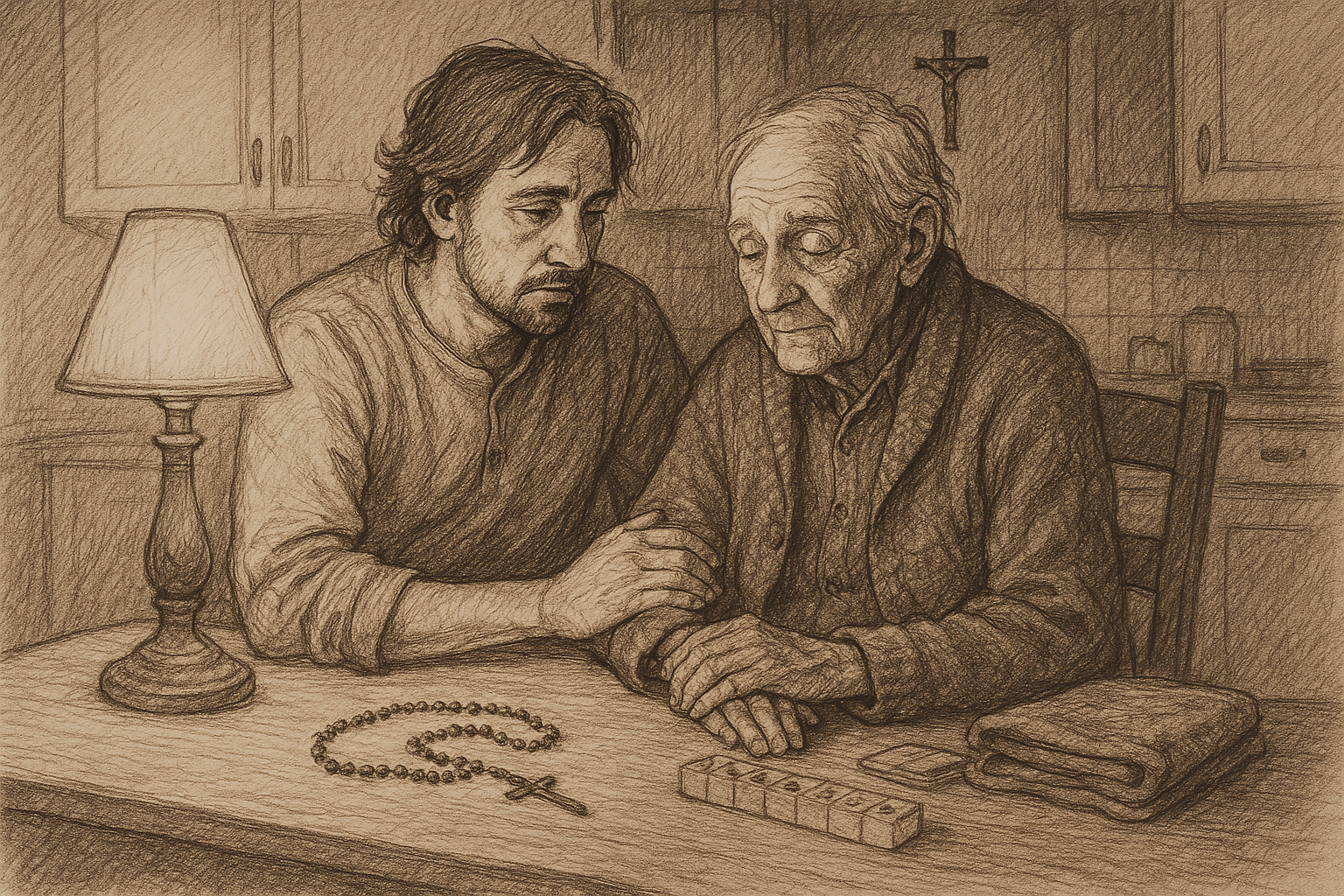
Grace also helps adults face practical burdens. There are decisions about medical care, end of life choices, funerals, finances, and the care of aging relatives. Faith does not remove responsibility. It gives responsibility a moral center. A Catholic conscience will want to protect life, respect the dignity of the dying, and avoid both panic and false control. When death approaches, the sacraments become especially precious, above all Reconciliation, Anointing of the Sick, and the Eucharist as viaticum, the food for the journey.
These gifts remind us that the Church accompanies her children not only in seasons of joy, but also in the final struggle. The person who is dying is not abandoned to medical charts or private fear. Christ remains near through prayer, sacrament, and the loving presence of family and the Church.
The saints teach us how to die by teaching us how to belong to God
The saints are not people who escaped mortality. They are people who learned to live in relation to eternity. Some met death in peace after long lives of fidelity. Others died in violence, illness, or hidden suffering. Their witness is not that death becomes easy, but that Christ remains faithful in every circumstance.
Saint Francis of Assisi called death sister, not because he loved pain, but because he had learned that nothing belongs to us absolutely except God. Saint Thérèse of Lisieux met death with the confidence of a child resting in a Father's arms. Saint Joseph, patron of a happy death, is often invoked by Catholics because he is believed to have died in the presence of Jesus and Mary. That is a beautiful image of the Christian end: not isolation, but accompaniment.
When families pray with the saints, they begin to see death differently. It is not a collapse into nothingness. It is a final surrender into God's mercy. The saints encourage us to prepare with humility, confession, prayer, and trust. They also teach that holiness is not a strange extra for a few heroic souls. It is the normal path of the baptized, the path that prepares a person to meet the Lord with peace.
Facing the fear of death with prayer and truth
Not everyone finds death easy to discuss. Some people are afraid of suffering. Others fear leaving family behind. Some worry about judgment. Still others are haunted by unresolved guilt. The Catholic faith does not mock these fears. It answers them with truth and mercy.
To fear judgment is not irrational. It is a sign that conscience matters. But the believer need not live in servile terror. Christ, the just Judge, is also the Savior who died for sinners. The same Lord who calls us to account is the Lord who offers mercy to the repentant heart. For this reason, regular confession is one of the best ways to prepare for death, because it trains the soul to return to God honestly and without delay.
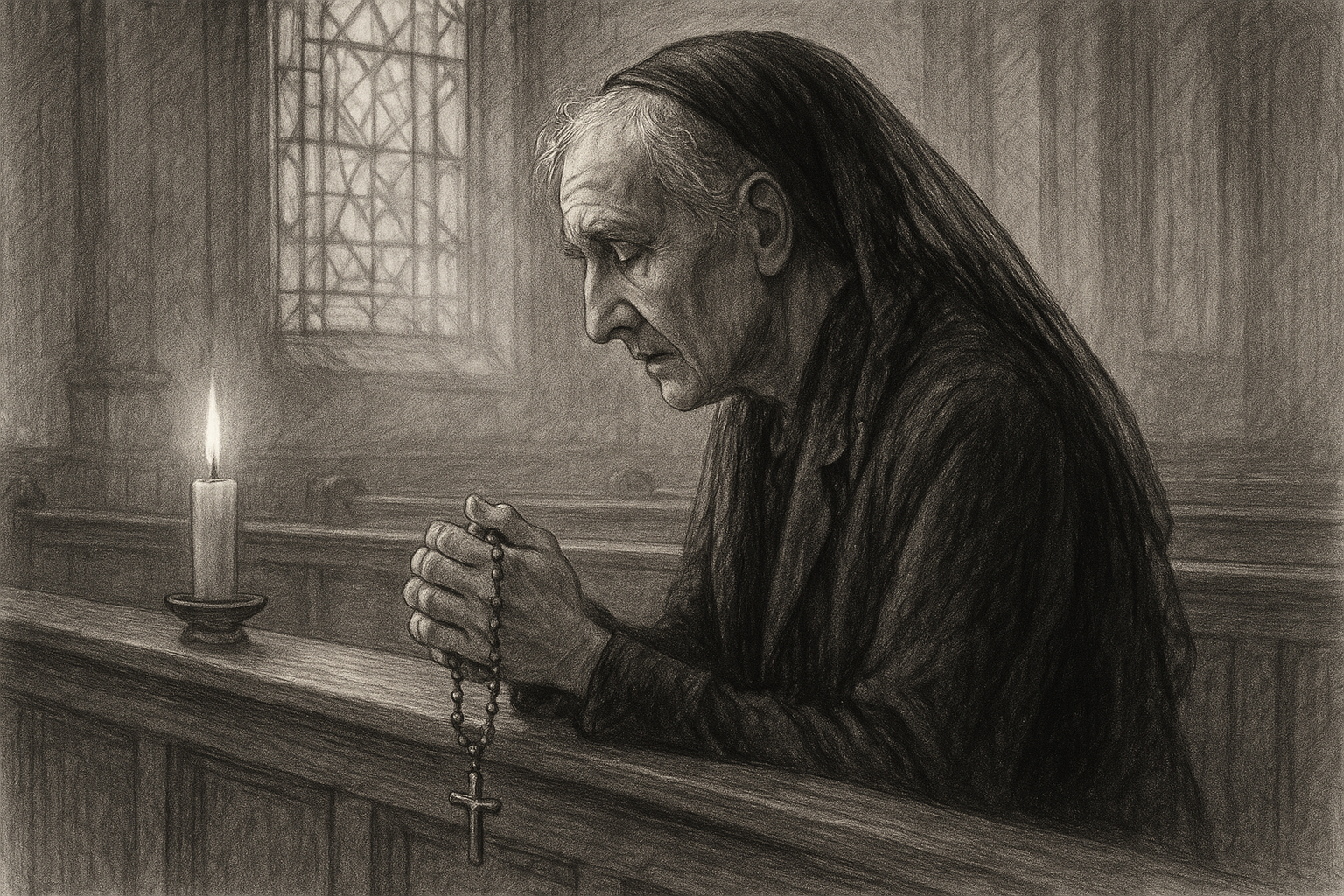
Prayer also steadies the heart. A simple practice such as praying for the dying, offering a decade of the Rosary for deceased family members, or making an act of contrition each night can reshape fear into trust. The more we belong to Christ in daily life, the less strange it becomes to place our death in His hands.
It can help to remember that Christian hope is not primarily confidence in our own strength. It is confidence in God's fidelity. We do not save ourselves by having all the right emotions at the end. We are saved by Christ. That is why the Church urges us to prepare, but also to rest in mercy.
What hope asks of us today
The death and Christian hope Catholic perspective is not abstract. It asks for a way of living that honors both the brevity of life and the promise of eternity. It asks us to treat time as precious, the sacraments as real, forgiveness as urgent, and prayer for the dead as an act of charity. It asks us to stand beside the dying without fear and to comfort the grieving without easy words.
Most of all, it asks us to look at Christ. He is the one who entered the tomb and came out alive. He is the one who promises, I am the resurrection and the life (John 11:25). That promise does not remove the ache of parting, but it changes its meaning. For the Christian, death is still a wound, but it is no longer a hopeless one. In Christ, the grave is not the end of the story. It is the place where mercy prepares to speak the last word.
Keep Reading on Lets Read The Bible
Frequently Asked Questions
What does the Catholic Church teach about death and Christian hope?
The Catholic Church teaches that death is a real enemy, but not the final word. Because Christ died and rose again, believers hope in resurrection, judgment, mercy, and eternal life with God. This hope also includes prayer for the dead and trust in God's saving grace.
Why do Catholics pray for the dead if they believe in heaven?
Catholics pray for the dead because love does not end at death, and because many who die in God's grace may still need purification before heaven. Praying for them is an act of charity and a sign of faith in God's mercy.
How can a family live Christian hope when a loved one is dying?
A family can live Christian hope through prayer, the sacraments, honest conversation, and loving presence. The Church encourages confession, Anointing of the Sick, and, when possible, receiving the Eucharist as viaticum. These help the dying person and comfort the family with the nearness of Christ.