Sacraments and Liturgy
Making Room for Mary on the First Saturday
A quiet monthly devotion that leads Catholics back to confession, the Eucharist, and a more attentive prayer life
Site Admin | September 22, 2025 | 78 views
The First Saturday devotion is one of those Catholic practices that can seem small at first glance, almost hidden in plain sight. It asks for a monthly rhythm of prayer, confession, Communion, and meditation. There is no drama in the shape of it. There is no special place to stand, no elaborate rite to memorize. And yet the devotion carries a serious spiritual purpose: to draw hearts back to Christ through the maternal care of the Blessed Virgin Mary.
For many Catholics, the appeal of the First Saturday devotion lies in its simplicity. In a hurried age, it offers a concrete way to slow down before God. It also belongs firmly to the sacramental life of the Church. The devotion is not a substitute for the Mass, confession, or ordinary Sunday worship. It is a way of entering those gifts more consciously, with reparation and love. That is why it remains so enduring. It speaks to common Catholic instincts: reverence, repentance, gratitude, and trust in Mary as a mother who leads her children to Jesus.
What the First Saturday devotion asks of a Catholic
The devotion traditionally includes five practices, to be fulfilled on the first Saturday of five consecutive months. The faithful are asked to:
- Go to confession, ideally within about eight days before or after the Saturday, with the intention of receiving the sacrament in a state of grace.
- Receive Holy Communion.
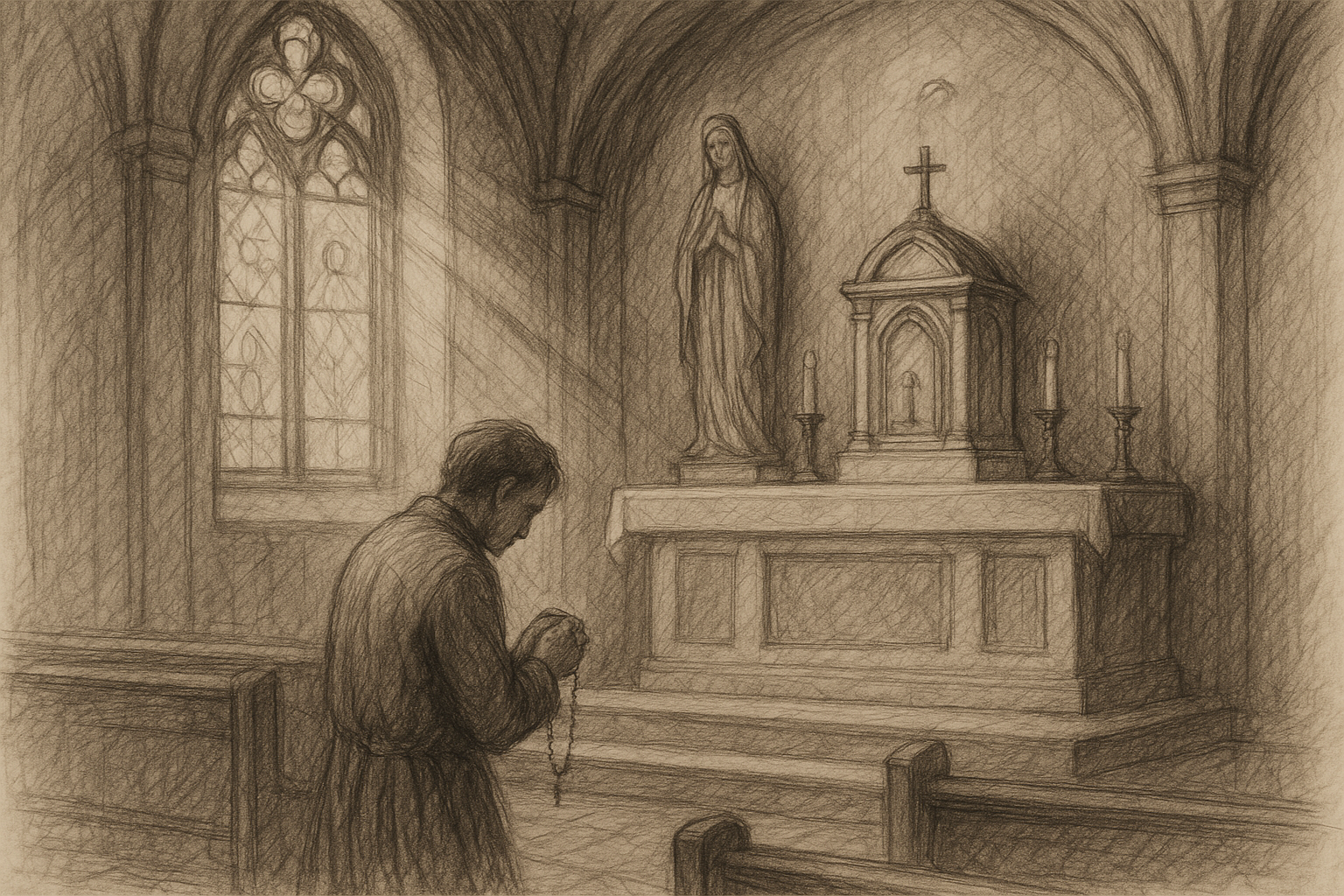
- Pray five decades of the Rosary.
- Keep Mary company for fifteen minutes while meditating on the mysteries of the Rosary.
- Offer all of this in reparation for offenses against the Immaculate Heart of Mary.
Those elements make the devotion feel both accessible and demanding. It is accessible because it does not require unusual talents or spiritual experiences. Any ordinary Catholic can learn to live it. It is demanding because it calls for intention. The devotional acts themselves are not magical. They matter because they are signs of a willing heart. A person is not merely checking off tasks but answering a request with humility and faith.
The phrase reparation can sound unfamiliar in contemporary speech, but the idea is deeply biblical and Catholic. When sin wounds love, love seeks to make amends. Scripture often shows this movement from offense to restoration. The psalmist cries out for mercy, not only to be forgiven, but to be renewed in a right relationship with God: Create in me a clean heart, Restore to me the joy of your salvation. The First Saturday devotion places that desire within Marian prayer and Eucharistic communion.
Where the devotion comes from
The First Saturday devotion is associated with the apparitions of the Blessed Virgin Mary at Fatima in 1917 and the later request she made known to Sister Lucia. The Church has recognized the message of Fatima as worthy of belief, and the devotion has been received widely in Catholic life. Its central emphasis is not novelty but conversion: prayer, sacrifice, penance, and fidelity to God.
What stands out in the Fatima message is how balanced it is. Mary does not point attention to herself in isolation. She leads toward repentance and the mercy of Christ. That pattern is consistent with the Gospel. At Cana she notices a human need and directs the servants to her Son: Do whatever he tells you. That single instruction captures the logic of Marian devotion at its best. Mary gathers, listens, and sends us onward toward obedience to Christ.
The First Saturday devotion also makes sense within the Church's long sacramental memory. Catholics do not pray as isolated individuals building private spirituality from scratch. We pray as members of a body, in a liturgical and sacramental world. Monthly confession, Eucharistic reception, and the Rosary all belong to a way of life shaped by grace. The devotion takes those familiar Catholic treasures and arranges them around a particular intention. In that way, it is less an extra burden than a focused expression of ordinary Catholic discipleship.
Why the devotion matters spiritually
The First Saturday devotion matters because it teaches attention. Much of modern life trains us to skim, react, and move on. The devotion slows the soul down and asks a different question: what am I offering to God, and with what heart?
It matters because it brings confession into a monthly pattern of renewal. Many Catholics approach the sacrament only when they feel they have reached a crisis point. The First Saturday practice gently encourages something steadier. Regular confession reminds us that grace is not only for emergencies. It is for ongoing conversion. The Church's sacramental life is not a burden to bear but a mercy to receive.
It matters because it brings the Eucharist into the center of a reparative prayer. Holy Communion is not simply a private moment of consolation. It is union with Christ and entry into His self-offering. When received with reverence and faith, it deepens the Christian desire to love as He loves. The Eucharist strengthens that line from Luke's Gospel where the disciple is called to remain with Jesus: Do this in memory of me.
It matters because it restores the place of Mary in a healthy Catholic imagination. Some Catholics hesitate before Marian devotion, fearing it might distract from Jesus. Properly understood, the opposite is true. Mary does not compete with Christ. She magnifies Him. Her own prayer says as much: My soul magnifies the Lord. The First Saturday devotion places us near her heart so that we may learn a more faithful response to her Son.
How to live the devotion without turning it into a routine
Any Catholic devotion can weaken if it becomes mechanical. The First Saturday devotion is no exception. The danger is not in the practice itself but in approaching it without reflection. To live it well, it helps to prepare in advance, not merely on the morning of the first Saturday.
One practical step is to choose the month deliberately. Mark the date early. If possible, plan confession ahead of time so there is no last-minute scramble. The sacrament of Penance should be entered with honesty and peace, not haste. A prepared confession often helps a person receive Communion with greater recollection and gratitude.
Another step is to connect the devotion to the Mass. If you can attend Mass on the first Saturday morning, or at another time that day, do so with intention. Arrive a little early. Read the Sunday or daily readings if possible. Make an act of contrition. After Communion, pause in thanksgiving. The point is not to fill the day with religious activity for its own sake, but to let the sacraments form the day from within.
The Rosary, too, can be prayed with greater depth when it is not rushed. The First Saturday devotion asks for five decades, but the heart of the matter is not speed. It is meditation. The mysteries of Christ are the place where the soul learns Mary's way of pondering. The Gospel says that Mary kept these things and reflected on them in her heart: Mary kept all these things. That interior movement can shape the Rosary itself. A bead prayed slowly is often more fruitful than a full chaplet recited distractedly.
The fifteen minutes of meditation may be the most overlooked part of the devotion, yet they can be among the most fruitful. This is not an empty pause. It is a deliberate keeping of Mary company. A Catholic might sit with one mystery, one Scripture passage, or one image from the life of Christ. The goal is not to produce feelings but to remain present. In a culture of constant noise, this kind of prayer is quietly radical.
What to do if the devotion feels hard to sustain
Many people begin devotions with good will and then struggle to continue. That is not a sign of failure. It is part of ordinary spiritual life. The First Saturday devotion should be approached with realism and patience.
If five consecutive months feel overwhelming, begin by learning the rhythm before worrying about perfection. Some Catholics find it helpful to attach the devotion to a parish schedule, while others build it around family routines. The important thing is to keep returning. If one month is missed, begin again without discouragement. Devotion grows through perseverance, not self-accusation.
It is also wise to remember that the devotion is meant to deepen ordinary Catholic life, not replace it. Sunday Mass remains central. Daily prayer remains essential. The sacramental and moral life of the Church is always the larger horizon. The First Saturday devotion becomes fruitful when it supports that larger pattern rather than standing apart from it.
There is also a good reason to speak of the devotion with family or friends, if that helps. Shared prayer can make the practice more stable. Parents may use the first Saturday to teach children that faith involves rhythms, memory, and love. In that sense, devotion is not only personal but ecclesial. It strengthens the home by turning the heart outward toward God and the Church.
A Marian devotion ordered to Christ
The deepest reason the First Saturday devotion matters is that it forms the Catholic heart in a Marian and Eucharistic shape. Mary leads to Jesus. The sacraments unite us to Jesus. Reparation seeks to restore what sin has damaged. Taken together, these elements form a coherent spiritual path. It is not flashy, but it is deeply Christian.
That path is especially helpful for Catholics who want a devotion that is both tender and serious. The First Saturday devotion is tender because it is wrapped in Mary's maternal care. It is serious because it asks for repentance, sacramental grace, and perseverance. It does not let a believer stay at the level of sentiment. It asks for a response.
And that response can be offered by the most ordinary Catholic. There is no need for remarkable expertise or public visibility. A parishioner in an ordinary pew, a parent with a crowded schedule, a student learning to pray more faithfully, an elderly believer with a rosary in hand, all can live this devotion. In that sense, it belongs to the quiet holiness the Church has always prized: faithfulness in small things, done with a whole heart, before God and with Mary.
Keep Reading on Lets Read The Bible
Frequently Asked Questions
What is the First Saturday devotion in the Catholic Church?
The First Saturday devotion is a Marian practice that traditionally includes confession, Holy Communion, praying five decades of the Rosary, and meditating for fifteen minutes on the mysteries of the Rosary, all offered in reparation to the Immaculate Heart of Mary.
Do I have to do the First Saturday devotion exactly on the first Saturday of the month?
Yes, the devotion is named for the first Saturday of the month, though confession may be received within a reasonable time before or after, according to the usual pastoral guidance. The other practices are meant to be completed on the Saturday itself.
Is the First Saturday devotion required of Catholics?
No, it is a private devotion, not a universal obligation. Still, it can be a powerful way to grow in sacramental life, love for Mary, and reparation for sin.