Social Teaching
Seeing Christ Clearly in Every Neighbor: Racism, Dignity, and Catholic Life
Catholic social teaching begins with a simple but demanding truth: every person bears the image of God, and no form of racism can be reconciled with that truth.
Site Admin | October 13, 2025 | 64 views
Racism harms more than public life. It wounds souls, distorts relationships, and contradicts the faith we profess at Mass. For Catholics, the question of racism and human dignity and Catholic life is not an optional concern or a passing political theme. It belongs to the heart of Christian discipleship, because the Gospel teaches that every person is made in the image and likeness of God.
That truth is simple, but it is also searching. If every human being is created by God, redeemed by Christ, and called to communion with Him, then no person may be reduced to skin color, ancestry, language, neighborhood, or social position. Catholic social teaching does not begin with slogans. It begins with the real human person, loved by God and destined for eternal life.
The biblical ground of human dignity
Scripture presents human dignity as a gift, not an achievement. The opening pages of Genesis say that God created man and woman in His own image: Genesis 1:27. That means every person has an inherent worth that cannot be earned, measured, or taken away by human opinion. The image of God is not reserved for the strong, the educated, the successful, or the socially favored. It belongs to all.
After the fall, human history became marked by fear, pride, division, and violence. Yet God did not abandon the human family. In Christ, the Father restores what sin damages and gathers the scattered into one people. Saint Paul teaches that in Christ there is no room for the old rivalries that divided humanity into hostile camps: Galatians 3:28. He is not denying the real differences among peoples. Rather, he is proclaiming that these differences can never justify contempt or exclusion.
Jesus Himself makes the command unmistakable. Love of God and love of neighbor stand at the center of the law: Matthew 22:37 Matthew 22:39. The neighbor is not only the familiar person who shares our customs. In the parable of the Good Samaritan, Christ overturns the instinct to ask who deserves compassion and instead shows that mercy must cross boundaries of hostility and prejudice: Luke 10:33 Luke 10:36.
Racism therefore cannot be treated as a mere misunderstanding. It is a moral disorder. It offends justice because it treats people as less than they are. It offends charity because it hardens the heart against love. It offends truth because it denies what God has made plain.
What the Church means when she speaks about dignity
Catholic teaching on dignity is not a social trend or a modern addition to the faith. It grows from creation, redemption, and the sacramental life of the Church. The Church has long taught that the human person is sacred. Human life is not a possession of the state, a product of biology alone, or a useful tool for group interests. Each person belongs first to God.
This matters because racism often begins where dignity is forgotten. When people are categorized primarily by race, fear and suspicion can enter the imagination. A neighbor becomes a label. A family becomes a stereotype. A whole community is judged by the worst examples or by selective memories. Catholic faith resists this way of seeing because it insists on the concrete person before us. Every face has a story. Every life has sacred value.
The Church also teaches that social sins can become embedded in institutions, habits, and cultural assumptions. That means racism is not only a private attitude of open hatred. It can live in indifference, in unequal treatment, in exclusion from opportunity, in mocking speech, and in the quiet willingness to overlook injustice when it does not affect us directly. Catholics should be alert to both the obvious and the subtle forms of racial prejudice.
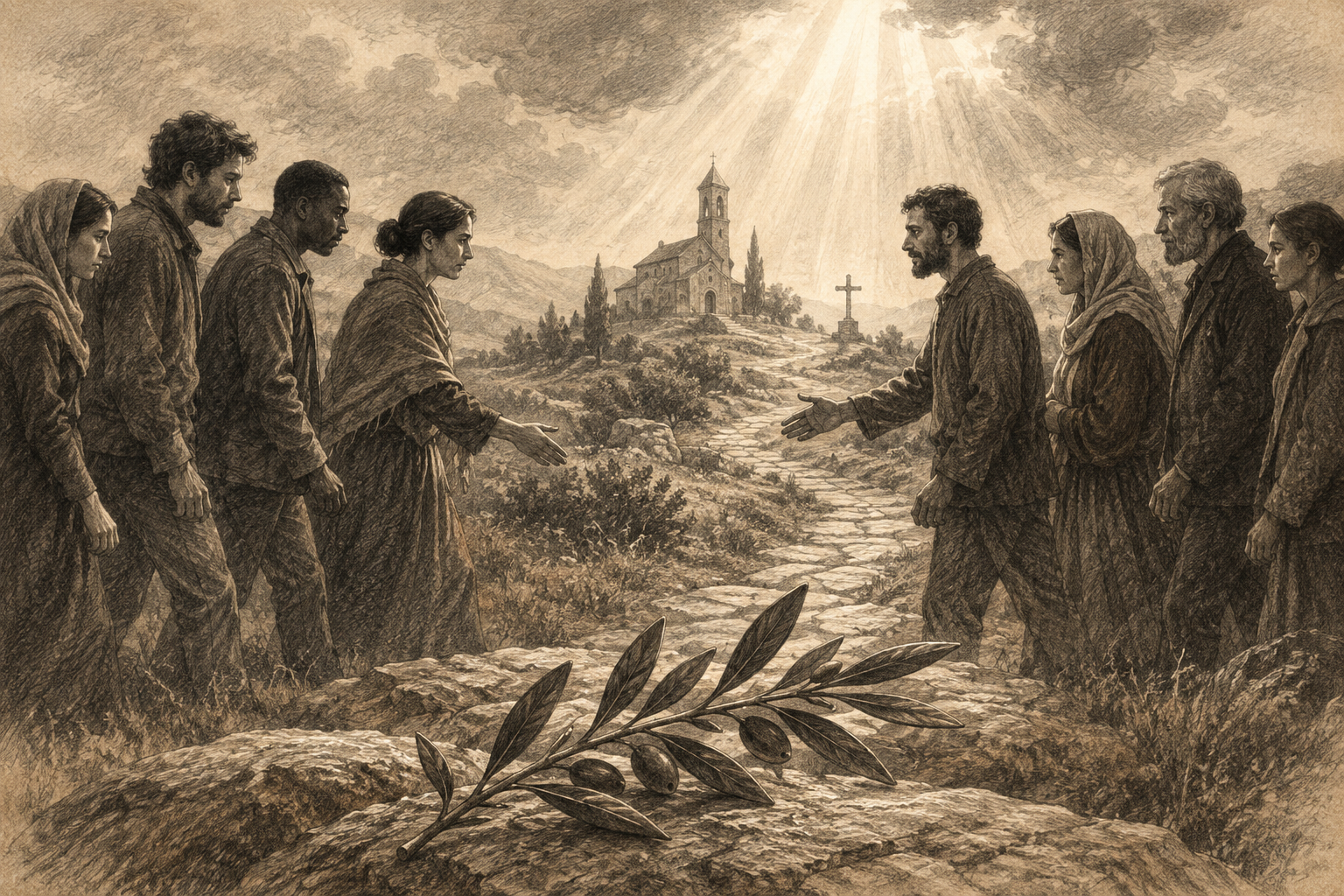
At the same time, Catholic teaching refuses to replace one injustice with another. The remedy for racism is not resentment, revenge, or the denial of truth. It is conversion of heart, purification of memory, and a renewed commitment to justice rooted in charity. Love does not excuse sin, but it does seek the good of the other and the healing of the common life.
Racism as a sin against neighbor and against God
To speak clearly, racism is sinful because it violates the commandment of love. It can show itself in slurs, cruel jokes, unfair assumptions, and exclusion. It can also appear in the quieter forms of neglect, where a person is ignored, mistrusted, or demeaned because of race. Even when no explicit insult is spoken, the sin remains real if dignity is denied.
Catholics should be careful not to reduce racism to only one type of behavior. Personal sin matters. So does the responsibility to examine structures and customs that may perpetuate injustice. A parish, school, family, or workplace should ask whether all people are welcomed with equal seriousness and respect. Charity is not vague sentiment. It is a habit of willing the true good of another person.
The prophets of Israel often linked right worship with justice toward the vulnerable. Isaiah's rebuke to empty religion reminds us that God will not be satisfied by outward ritual if hearts remain hardened toward the oppressed: Isaiah 1:17. That principle applies powerfully here. Catholics cannot receive the Eucharist while clinging to contempt for those whom Christ calls brothers and sisters.
It is a serious contradiction to honor the altar while ignoring the dignity of the neighbor standing beside us.
At the same time, the Church asks us to avoid false accusations and careless generalizations. Not every disagreement is racism. Not every failure is motivated by racial hatred. Prudence matters. Truth matters. Yet prudence is not an excuse for silence when real injustice is present.
How Catholic life forms a different response
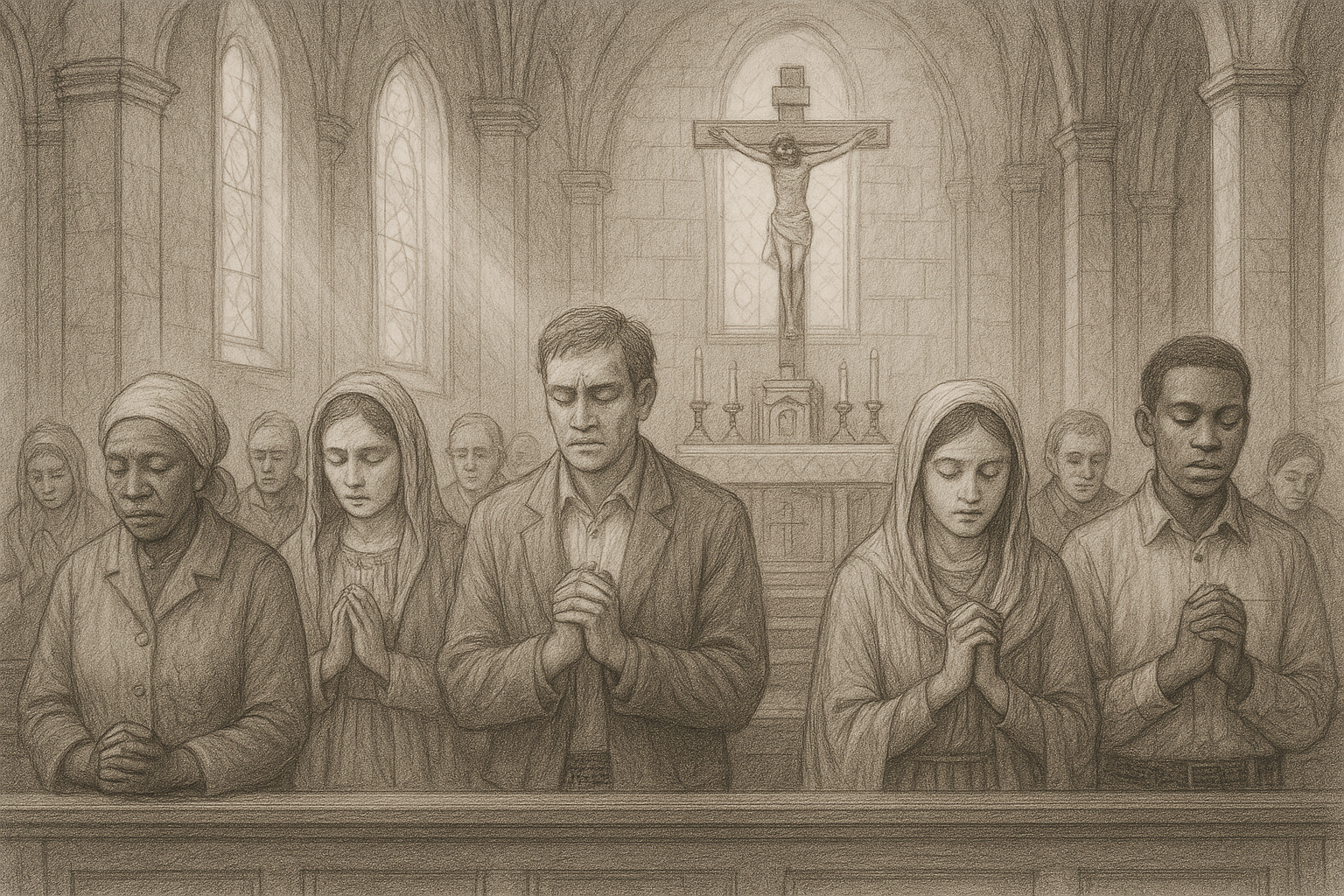
Faith changes the way a Catholic looks at the world. The Mass itself teaches us to see the human family differently. At the altar, people of many backgrounds kneel as one body before one Lord. The Eucharist does not erase human difference, but it sanctifies communion. It reminds us that the same Christ who is received by one believer is received by all who come in faith and repentance.
This is why racism and human dignity and Catholic life cannot be separated. A Catholic imagination should resist every habit that ranks people according to race or culture. It should instead learn reverence. Reverence begins in speech, but it does not end there. It shows itself in the way we listen, the way we welcome, the way we notice who is missing, and the way we refuse to laugh at degrading remarks.
Parishes can form this habit by taking ordinary steps seriously:
- teach children that every person is made in the image of God;
- examine parish life for patterns of exclusion or neglect;
- choose homilies and catechesis that speak honestly about human dignity;
- build friendships across social and ethnic lines;
- support works of justice that protect the vulnerable without partisan bitterness;
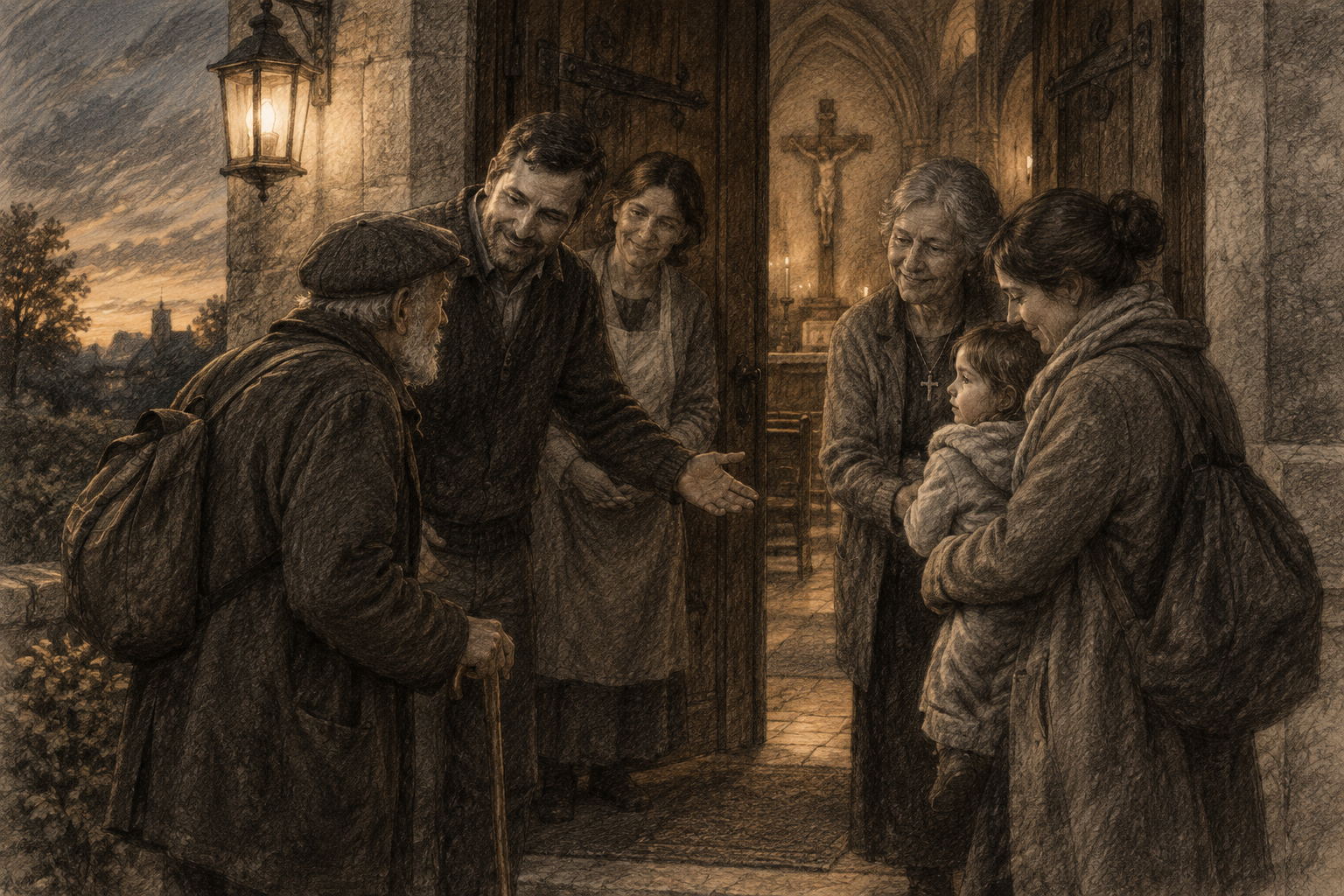
- practice hospitality that is genuine, not selective.
These are not dramatic gestures, but they are deeply Christian. A holy parish is not one that pretends division does not exist. It is one that meets division with truth, prayer, and patient charity.
The discipline of examining our hearts
Each Catholic should be willing to ask hard questions in the presence of God. Do I make assumptions about people before I know them? Do I feel more comfortable with some neighbors than others for reasons I would rather not name? Have I repeated stereotypes because they were common in my circle? Have I stayed quiet when I should have defended the dignity of another person?
These questions are not meant to produce shame for its own sake. They are meant to invite conversion. The examination of conscience is one of the Church's ordinary gifts. It helps us see where sin has settled into habit. If racism is present in the heart, sacramental confession offers mercy and a path forward. Grace does not merely pardon. It heals and strengthens.
Families have a special role here. Children learn moral instincts not only from lessons but from what they observe. If they hear ridicule at home, they may imitate it. If they see adults treat people with sincere respect, they learn that dignity is not theoretical. Parents and godparents can teach that every human being deserves respect because every human being belongs to God.
Justice without bitterness, charity without compromise
Some people fear that speaking against racism will lead to division. But silence usually deepens the wound. Christian courage does not mean harshness. It means saying what is true in a way that seeks conversion rather than victory. We do not need to choose between charity and justice. In Catholic life, they belong together.
Justice asks what is owed to each person. Charity goes further and seeks communion. Justice refuses discrimination. Charity refuses contempt. Justice demands fair treatment. Charity desires healing. When Catholics combine the two, they can speak firmly without becoming cruel and act compassionately without becoming vague.
This is especially important in public conversation. Modern speech can become fast, reactive, and suspicious. Catholics should be slower. We should listen before we judge. We should verify before we repeat. We should resist the temptation to turn every issue into a competition of outrage. The Lord calls us to something deeper: truth spoken in love, and love shaped by truth.
That path may seem ordinary, but it is spiritually demanding. It asks for humility. It asks for patience. It asks for prayer. Above all, it asks us to remember that the person in front of us is not an abstract case but a child of God.
Living this witness today
To oppose racism as a Catholic is not to deny the complexity of history or the pain many people carry. It is to begin from the certainty that Christ has already revealed what human beings are worth. He shed His blood for every person without exception. He calls His Church to reflect that universal love in word and deed.
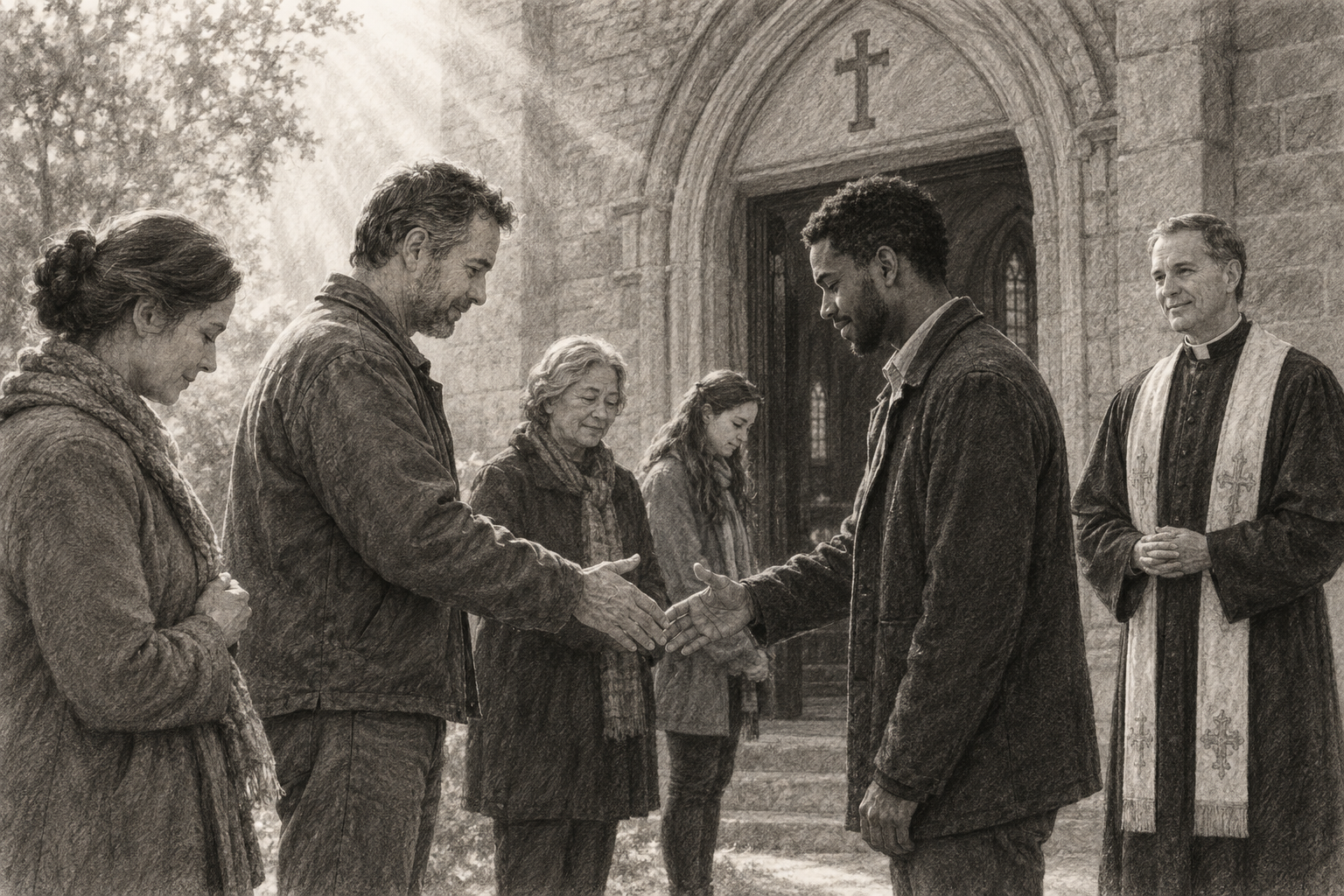
That witness becomes credible when it is visible in daily life. A Catholic who greets others with respect, refuses degrading speech, defends the marginalized, and seeks friendships across boundaries is already giving a quiet sermon. Such habits may not attract attention, but they help form a Christian culture where dignity is not merely praised but practiced.
And when failure occurs, as it often does, the Church does not despair. She returns to prayer, repentance, and grace. She returns to Christ, who sees every human heart with perfect justice and perfect mercy. In Him, we learn again that no person is disposable, no neighbor is beneath our concern, and no race is outside the reach of divine love.
The Catholic answer to racism is not an ideology. It is a way of seeing shaped by the Cross. When we look at one another through that lens, we begin to recognize what has been true all along: the Lord is present in every human life, calling each of us to reverence, repentance, and love.
Keep Reading on Lets Read The Bible
Frequently Asked Questions
Is racism always a mortal sin in Catholic teaching?
Racism is always sinful because it violates human dignity, but whether a particular act is mortal depends on full knowledge, deliberate consent, and grave matter. Open acts of racist hatred or serious discrimination can be gravely sinful.
Can Catholics speak about social justice without becoming partisan?
Yes. Catholic social teaching is rooted in the dignity of the human person, not in party slogans. Catholics should speak with clarity, prudence, and charity, always measured by the Gospel rather than by tribal loyalty.
What is a practical first step for a Catholic who wants to grow in this area?
Begin with prayer and an honest examination of conscience. Then look for concrete ways to listen, learn, and act with greater respect in family life, parish life, and everyday encounters.