Church History
Paul VI at the Helm of a Changing Church
How Pope St. Paul VI guided the Church through Council, crisis, and conscience
Site Admin | January 10, 2026 | 99 views
Pope St. Paul VI is often remembered for one document, one era, or one set of tensions. Yet the shape of his pontificate is larger and more revealing than any single controversy. He became pope in 1963, when the Church was still in the midst of the Second Vatican Council and the modern world was moving quickly into a new and unsettled phase. The years that followed placed him at the center of questions about worship, authority, conscience, evangelization, human dignity, and the meaning of Christian life in a rapidly changing age.
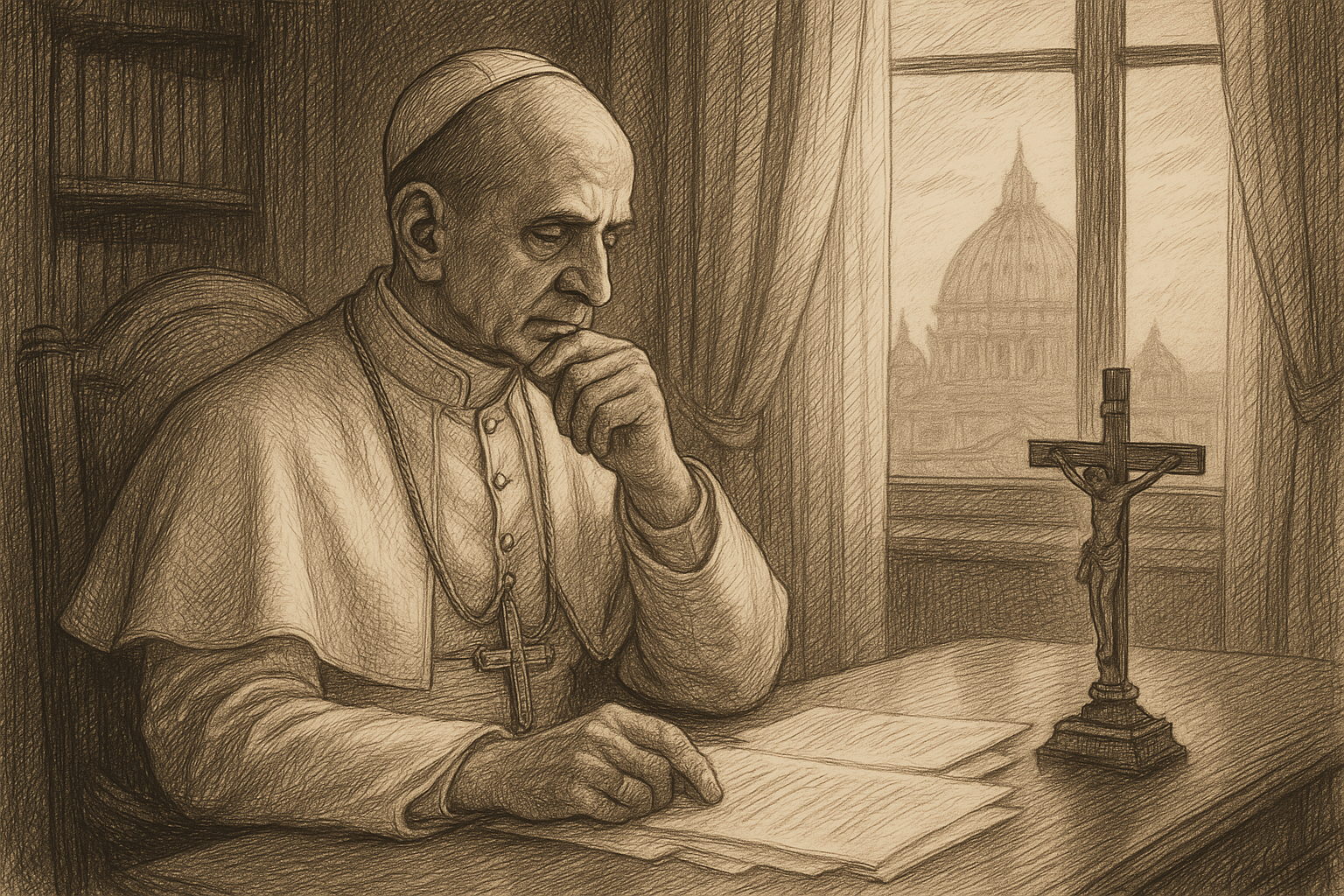
To read the history of Pope St. Paul VI history is to see a pastor who often carried weight that was not fully visible at the time. He was not a pope of simple slogans. He was a careful, reflective, and often lonely shepherd who tried to keep the Church united while helping it speak clearly to the modern world. His witness remains important because it shows how fidelity can be tested not only by open persecution, but also by confusion, disappointment, and the pressure to yield to the spirit of the age.
The church he inherited
Giovanni Battista Montini, who would become Pope St. Paul VI, came to the papacy after serving the Church in diplomacy and in the pastoral governance of Milan. He was elected after the death of Pope St. John XXIII, whose openhearted call for renewal had launched Vatican II. Paul VI inherited not a settled Church, but a Church in the middle of a great task. The council was still underway, and expectations were high.
The 1960s were also a time of broad social change. Confidence in institutions was weakening. New cultural assumptions about sexuality, authority, politics, and personal freedom were spreading through Europe and beyond. In many places, Catholics were hearing contradictory messages from the surrounding world, from theologians, and sometimes even from fellow believers. The pope's task was not only to complete the council, but also to help the Church interpret what renewal should mean without losing what Christ had entrusted to her.
This was not a comfortable moment for any pope. The pressure on Paul VI was immense because he had to speak to both hope and unrest. He had to encourage a new missionary openness while also guarding doctrine, sacramental life, and the unity of the faithful. That balancing act shaped the entire pontificate.
Finishing Vatican II
One of the defining acts of Paul VI was his decision to continue and bring to completion the Second Vatican Council. He presided over the remaining sessions and worked to ensure that the council's teaching would be received in continuity with the Church's tradition. This required patience and firmness. The council was a moment of genuine renewal, but it was also read by some as permission to break with the past. Paul VI consistently resisted that interpretation.
He wanted renewal, not rupture. He wanted the Church to speak more clearly to the modern world, but not to lose her own identity in the process. In that sense, his leadership at the council was not simply administrative. It was theological and pastoral. He had to help the Church understand that authentic reform comes from fidelity to Christ, not from surrendering the faith to cultural fashion.
After the council, one of his challenges was implementation. Documents on the liturgy, the Church, revelation, religious freedom, and the Church in the modern world needed to be received wisely. In practice, the postconciliar years became difficult. Some Catholics embraced the council's spirit in ways the council itself did not intend. Others became fearful and resistant. Paul VI remained convinced that the Church had to move forward with trust in the Holy Spirit, even when the path was costly.
A pontificate marked by mission and tension
Paul VI was a missionary pope in a broad and important sense. He traveled widely, visiting the Holy Land, India, Uganda, and later the United Nations in New York. These journeys were not publicity events. They were signs that the papacy had a global pastoral horizon. He wanted the Church to be visibly present among peoples and nations, not locked away from the concerns of the world.
At the same time, his years in office were marked by tension. Social unrest, political violence, and the aftermath of the 1960s created a climate in which many people were suspicious of authority. Within the Church, liturgical changes, theological disputes, and declining confidence among some clergy and laity made his office especially difficult. He often appeared restrained and sober because the weight of his responsibilities was so great.
One can read his pontificate as a study in endurance. He did not respond to confusion by abandoning clarity. Nor did he cling to authority for its own sake. He tried to speak as a father who knows that love must sometimes say no. For Catholics today, that is a difficult but necessary lesson.
Humanae Vitae and the trial of conscience
No discussion of Pope St. Paul VI history can avoid Humanae Vitae, the 1968 encyclical on the transmission of human life. The document reaffirmed the Church's longstanding teaching that the marital act must remain open to life and that artificial contraception is morally wrong. Paul VI issued it after a period of intense expectation, during which many hoped the Church would change her moral teaching.
The encyclical was received with disappointment by many and with relief by others. Its importance, however, goes beyond the immediate controversy. Paul VI was not making a narrow rule for a private area of life. He was defending a vision of marriage, human dignity, and the relationship between love and fertility. He feared that separating sex from its procreative meaning would lead to deeper harms, and history has shown that his warnings were not irrational.
What made the document especially painful was not only its content, but the surrounding climate. Some theologians and clergy publicly dissented. Many ordinary Catholics felt abandoned or confused. Yet Paul VI did not retreat. He accepted misunderstanding in order to remain faithful to the moral truth he believed the Church had received. His courage here was quiet, not theatrical. He stood where many did not want to stand.
The teaching of Humanae Vitae also reveals a larger principle: Catholic moral life is not built on convenience, but on truth ordered to love. That is hard to hear in any age, and perhaps especially in one that prizes autonomy above all else.
Other major marks of his papacy
While Humanae Vitae is the best known text associated with him, Paul VI's papacy included many other important acts. He promoted the Church's missionary identity and emphasized the evangelization of the modern world. His apostolic exhortation Evangelii Nuntiandi, published near the end of his pontificate, remains one of the most important modern reflections on evangelization. It presents the Church not as a museum of ideas, but as a living body sent to proclaim Christ.
He also advanced the international dimension of the episcopate through the Synod of Bishops, which he established as a regular means of consultation and communion. This was an attempt to strengthen collegiality without weakening the primacy of Peter. He sought practical ways to help bishops share responsibility for the Church's life while remaining united to the pope.
His liturgical reforms also shaped Catholic life profoundly. The revised Roman Missal and broader liturgical renewal were part of the postconciliar reception of Vatican II. Even where Catholics disagree about these developments today, it is worth remembering that Paul VI was trying to help the faithful pray more consciously and participate more fully in the Church's worship. His intentions were pastoral, even if the results were often uneven in practice.
Paul VI also wrote and spoke repeatedly about peace, development, justice, and the dignity of the human person. His 1967 social encyclical Populorum Progressio addressed the relationship between peoples, wealth, and human flourishing. He saw that the Church had to speak not only about private morality, but also about the moral shape of public life.
His personal style as pope
Paul VI was not naturally a dramatic figure. He was thoughtful, somewhat reserved, and often misunderstood. That reserve should not be mistaken for weakness. It reflected a man who knew that public words can wound or heal, and that the pope must answer before God for more than popularity. He carried pain deeply, and he was often keenly aware of the loneliness of his office.
His sanctity is seen less in spectacle than in perseverance. He remained at his post. He prayed, traveled, taught, and absorbed criticism. He loved the Church enough to endure being blamed by many who did not understand the burdens he bore. That is a form of witness modern people often overlook because it is not flashy.
He died in 1978, after serving the Church through one of the most challenging decades in recent memory. He was later canonized by Pope Francis in 2018, a recognition of the holiness of his life and the enduring value of his witness.
What modern Catholics can learn from him
Modern Catholics can learn from Paul VI that fidelity and peace are not the same thing. A Christian may do what is right and still be criticized, isolated, or misunderstood. That does not mean the truth has failed. It means the Cross remains part of the Church's life.
His pontificate also teaches that reform must remain rooted in continuity. Catholics are not free to reinvent the faith according to the preferences of the moment. Renewal is real, but it is organic. It grows from the apostolic faith rather than replacing it.
Finally, Paul VI reminds believers that the moral life cannot be reduced to sentiment. His witness in Humanae Vitae challenges Catholics to trust that God's wisdom is not a burden but a path to freedom. That trust is not always easy. It often requires patience, chastity, humility, and a willingness to be different from the surrounding culture.
His life points to a Church that speaks truth with gentleness, and mercy without surrender. In that combination, Catholics may still find a guide for our own unsettled age.
Keep Reading on Lets Read The Bible
Frequently Asked Questions
Why is Pope St. Paul VI so closely associated with Humanae Vitae?
Because he promulgated the 1968 encyclical that reaffirmed the Church's teaching against artificial contraception and defended the inseparable connection between marital love and openness to life.
What was the main challenge Pope St. Paul VI faced during his papacy?
He had to guide the Church through the completion and reception of Vatican II while also responding to rapid cultural change, internal confusion, and major moral disputes.
How can Catholics today learn from Pope St. Paul VI?
His witness teaches Catholics to remain faithful under pressure, to seek reform without rupture, and to trust that the Church's moral teaching is ordered to human dignity and freedom.