Catholic Living
Sobriety of Heart in a Culture That Normalizes Excess
Drunkenness and Catholic life touch far more than a single evening of poor judgment. They reveal what we love, how we govern desire, and whether grace is shaping our freedom.
Site Admin | August 22, 2025 | 78 views
In many parts of life, excess is treated as a joke. Drinking too much can be brushed off as harmless fun, a rite of passage, or a small weakness best ignored. But the Church looks at human life with greater seriousness and greater mercy. She knows that our choices shape our habits, our habits shape our loves, and our loves shape the whole direction of the soul. That is why drunkenness and Catholic life belong together in moral reflection. The issue is not only the drink itself, but the loss of self-command that can follow it.
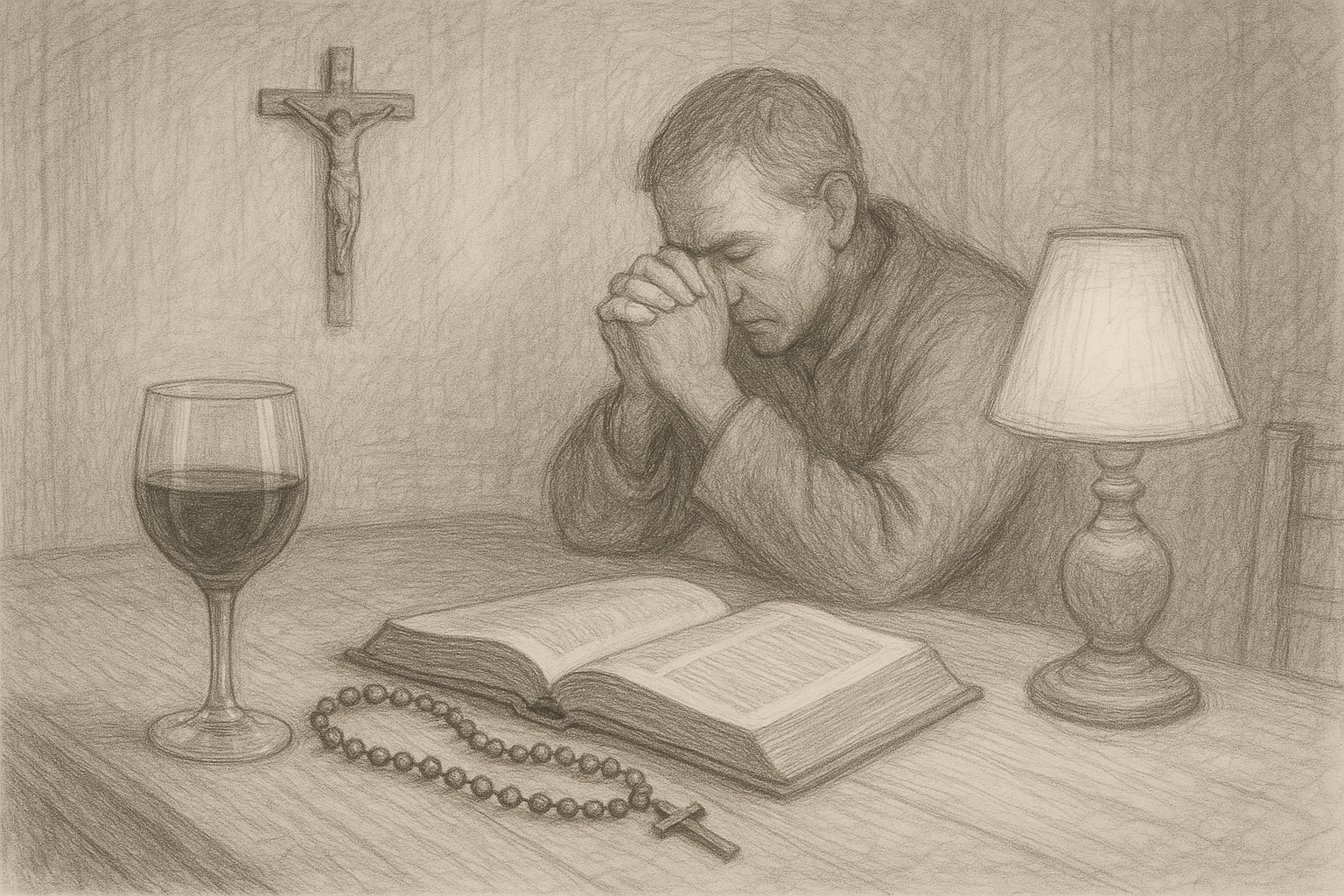
Catholic teaching does not ask every person to live in suspicion of wine or every celebration in fear of laughter. Scripture itself speaks of wine as a gift of God when used rightly. Yet the same faith that blesses the fruit of the vine also warns against surrendering reason and freedom to anything that distorts them. The moral question is simple, even when the circumstances are not: does this choice help me remain ordered toward God, or does it dull the very faculties by which I am meant to love Him?
Temperance is not gloom, but freedom
Temperance is the virtue that orders pleasures so that they serve the good. It does not abolish joy. It gives joy a stable shape. Without temperance, a person can begin to seek relief, escape, or emotional release in ways that become increasingly hard to govern. Alcohol then ceases to be a companion to the meal or the celebration and becomes a means of forgetting oneself. The problem is not only quantity, though quantity matters. The deeper issue is whether one remains free.
In Catholic moral life, freedom is never just the power to choose whatever is before us. It is the capacity to choose the good consistently, even when desire pulls in another direction. Drunkenness weakens that freedom. It reduces vigilance, clouds judgment, and can make a person reckless, careless, or even dangerous to others. It can also make someone less available to prayer, less attentive to family duties, and less able to exercise charity. These are not minor effects. They touch the way a person lives before God.
The Scriptures speak clearly about this. St. Paul warns the Galatians that those who live in a way dominated by the flesh will not inherit the kingdom of God, and he lists drunkenness among the works that turn the heart away from grace. He also tells the Ephesians, Do not get drunk with wine. The command is direct, but it is not arbitrary. It points to a truth about human nature: we are made for communion, not for self-erasure.
What the Church is really protecting
It is easy to hear the Church's warnings as restrictions imposed from outside. In reality, she is defending something precious inside us. The human person is not a bundle of impulses to be managed by mood. We are body and soul together, made for truth, relationship, responsibility, and worship. When drunkenness enters the moral picture, it can weaken all four.
First, it can damage truth. A person who chooses intoxication may tell himself he is still in control, even when he is not. Second, it can damage relationship. Friends, spouses, children, and strangers may bear the consequences of speech, anger, neglect, or accident. Third, it can damage responsibility. Duties do not disappear because someone wanted relief for an evening. Fourth, it can damage worship. Prayer becomes more difficult when the mind is clouded, and habits of excess often leave a residue of shame that makes spiritual life feel distant.
The Church therefore speaks not only about sin in the abstract, but about the dignity of the human person in daily life. We are not made to be ruled by appetites. We are made to be illuminated by grace. That is why the moral question surrounding drunkenness and Catholic life is not a narrow rule about alcohol. It is part of the larger question of whether we allow God to form our desires.
When drinking becomes spiritually dangerous
Not every use of alcohol is sinful, and not every failure to judge one's limits is the same. Moral responsibility can be shaped by habit, weakness, ignorance, pressure, or addiction. Still, there are clear moments when drinking crosses into grave matter. Deliberate intoxication, especially when one knows it leads to serious harm, is not something the Christian should treat lightly. A person may also sin through scandal, encouraging others toward excess, or through neglecting duties that require clear judgment.
The danger is not only in spectacular failure. Quiet repetition can also harden the heart. A person may begin by seeking relaxation and end by seeking numbness. That shift matters spiritually because numbness can become a way of avoiding the very interior honesty that repentance requires. If I constantly flee discomfort through drink, I may also flee conscience, memory, and the call to conversion.
At the same time, Catholic moral life always keeps mercy near the center. The Church distinguishes between a one-time lapse and a settled pattern, between weakness and willful refusal, between temptation and consent. Someone struggling with alcohol may need more than a reminder to do better. He may need accompaniment, medical help, support from family, and the patient friendship of the Church. Moral truth and compassion are not rivals. They belong together.
Grace does not excuse sin, but it does make change possible. The soul that turns honestly toward God can begin again, even after repeated failure.
Repentance that is honest and specific
When a person sees that drinking has become spiritually disordered, the first response should not be self-dramatizing despair. It should be truth. Name the sin plainly. If possible, identify the occasions where excess tends to happen. Is it at parties, after stress, during loneliness, while trying to fit in, or when old wounds surface? Specificity helps because sin often works through pattern rather than accident.
Then bring the matter to confession. The Sacrament of Penance is not a courtroom for the already worthy. It is medicine for sinners. If drunkenness has led to other sins, those too belong before the mercy of Christ. The confessional is a place where the Lord restores what sin has fragmented. A firm purpose of amendment does not require instant perfection, but it does require sincerity. It means deciding that God's will matters more than the next drink, the next impulse, or the next excuse.
For some, repentance may include apologizing to those harmed. A spouse may need reassurance. A child may need stability. A friend may need an honest acknowledgement that past behavior was not harmless. Such apologies should be simple and direct. They need not be theatrical. They should be truthful, humble, and free of self-pity.
Healing habits that support sobriety
Virtue grows through repeated, concrete acts. If drunkenness and Catholic life are to be addressed well, the response must go beyond regret. It should include habits that make sobriety more likely and excess less appealing.
- Set clear limits before social events. Decide in advance how much to drink, or whether to abstain entirely. A decision made ahead of time is often wiser than one made in the moment.
- Do not drink to manage pain. If alcohol has become a tool for anxiety, sadness, anger, or isolation, seek healthier forms of support.
- Choose companions wisely. Some settings normalize pressure, mock restraint, or reward excess. Seek friendships that respect virtue.
- Keep prayer near the habit. A brief examination of conscience, a morning offering, or an evening prayer can help reconnect daily choices to grace.
- Ask for help early. If drinking is becoming difficult to control, speak with a priest, a trusted counselor, or a support group.
These steps are not glamorous, but holiness is often built in plain sight. The ordinary discipline of saying no can become a very real form of freedom. So can the ordinary courage of asking for help. A Christian is not required to heal alone.
How families and parishes can respond with charity
The people around someone struggling with alcohol also have responsibilities. Silence can sometimes be a form of cowardice, but harshness can become another temptation. The better path is truthful love. Families should avoid pretending that destructive drinking is normal. At the same time, they should resist shame that drives the person deeper into secrecy. Clear boundaries and real compassion belong together.
Parishes can help by speaking about temperance without mockery. They can encourage sober fellowship, respect those who abstain, and remember that some people carry wounds that make alcohol a serious risk. Not everyone needs to know every detail of another's struggle, but everyone can practice discretion and patience. The Church is healthiest when she becomes a place where conversion is possible without humiliation.
It is also worth remembering that some Catholics must abstain completely, whether because of addiction, medical concerns, family history, or a desire to avoid scandal. Such abstinence is not a lesser path. It can be a luminous witness to the dignity of self-command. In a culture that often equates celebration with indulgence, calm restraint can itself be a sign of hope.
Virtue is learned one choice at a time
No one becomes temperate in a single evening. The soul is formed by repeated choices, small enough to seem insignificant and large enough to shape a life. The Christian who seeks sobriety of heart learns to ask not only, can I do this, but should I? Will this make me more attentive to God, more available to others, more truthful with myself?
That kind of discernment does not produce a joyless life. It produces a sober one, and sobriety is not sadness. It is clarity. It is the ability to receive a gift without being consumed by it. It is the freedom to stop before pleasure becomes mastery. It is the interior steadiness that lets a person worship, love, work, and rest without the fog of excess.
For Catholics, this is part of everyday discipleship. We bring our appetites to Christ. We ask Him to heal what is disordered and strengthen what is weak. We trust that His mercy does not merely forgive the past, but forms the future. And in that future, even the ordinary choices around food, drink, and celebration can become places where grace quietly teaches the heart how to live before God.
Keep Reading on Lets Read The Bible
Frequently Asked Questions
Is drunkenness always a mortal sin in Catholic teaching?
Catholic moral teaching distinguishes between serious and less serious matter, and culpability can vary with knowledge and consent. Deliberate intoxication that causes grave harm can be grave matter, but personal responsibility may be affected by factors such as addiction, pressure, or impaired freedom. A priest can help a person judge a concrete situation well.
Can Catholics drink alcohol at all?
Yes. The Church does not forbid alcohol in itself. Wine is even used sacramentally in the Mass. The moral issue is misuse, especially drunkenness, scandal, neglect of duty, or drinking that endangers oneself or others.
What should I do if I think I have a drinking problem?
Take it seriously and seek help early. Speak with a priest, a doctor, a counselor, or a support group. Go to confession if your drinking has involved sin, and make a practical plan for safety, accountability, and recovery. Asking for help is an act of courage, not weakness.