Jesus and the Gospels
The One Sheep the Shepherd Will Not Abandon
A Catholic reading of Jesus' parable that reveals the patience of God, the dignity of the lost, and the joy of mercy
Site Admin | February 21, 2026 | 91 views
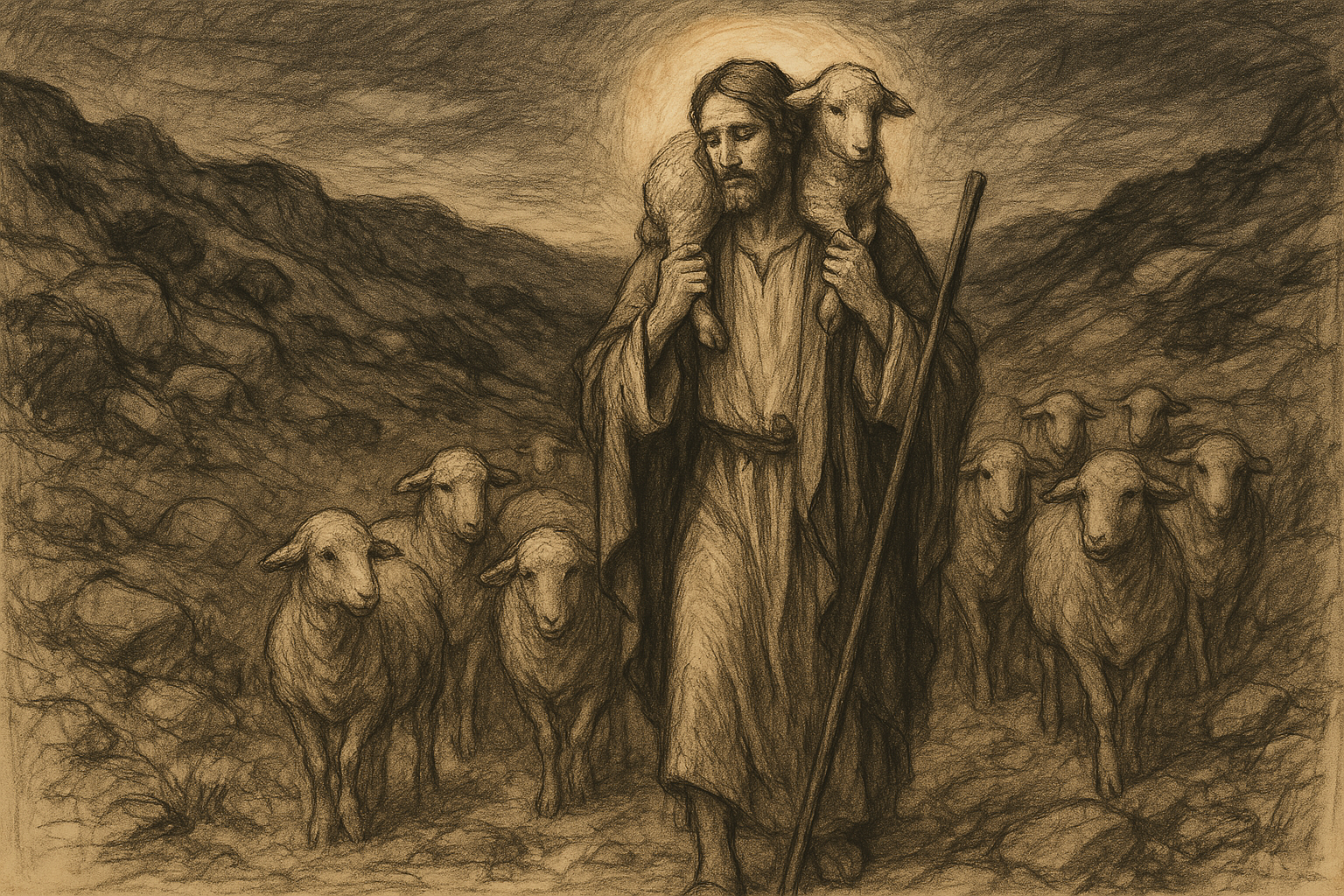
The shepherd's search begins with one lost sheep
The parable of the lost sheep is one of the most familiar images in the Gospels, but familiarity can make it easy to miss its force. Jesus does not tell a gentle farm story merely to decorate His teaching. He is revealing something about God, about sin, about repentance, and about the strange generosity of divine mercy. In the Gospel of Luke, the Lord says: What man among you, having a hundred sheep and losing one, leaves the ninety-nine in the wilderness and goes after the one until he finds it?
That question matters. Jesus is not asking whether this is ordinary business practice. He is asking His listeners to imagine the heart of the Father. The lost sheep Catholic meaning is not sentimental comfort alone. It is a summons to believe that God does not treat the sinner as disposable. The lost one is still sought, still named, still worth the trouble of rescue.
In Luke's Gospel, this parable is spoken in response to grumbling from the Pharisees and scribes who complain that Jesus welcomes sinners and eats with them. The setting matters because it shows the tension at the center of the story. Christ is defending mercy against suspicion. He is showing that God's holiness does not shrink from the sinner, but goes out to find him.
What the parable meant in Jesus' own setting
To hear the parable as Jesus first spoke it, we should remember that shepherding was common and that sheep were vulnerable. A flock was not an abstract symbol. It meant work, watchfulness, risk, and dependence. One sheep wandering off could be lost to rocks, predators, darkness, or exhaustion. The shepherd's search was not sentimental; it was necessary.
Jesus then gives the shocking detail that the shepherd seeks the one sheep until he finds it. The persistence is part of the lesson. God does not abandon the soul simply because it has wandered far. The search continues because divine mercy is active, not passive. It moves toward the lost.
Luke closes the parable with joy. When the shepherd finds the sheep, he carries it home rejoicing and calls friends and neighbors to share his gladness. Jesus then applies the image directly: There will be more joy in heaven over one sinner who repents than over ninety-nine righteous persons who need no repentance. The point is not that the ninety-nine are worthless, but that repentance is a cause of heavenly joy. Mercy is not a reluctant allowance. It is a celebration.
Matthew preserves a closely related saying of Jesus in a different context, where the Lord warns against despising little ones and speaks of the Father's care for the stray. There Jesus says: It is not the will of your Father that one of these little ones should perish. In Matthew's context, the accent falls on God's care for the vulnerable and on the value of each soul before the Father. Together, the Gospel accounts give a fuller view: the lost sheep is not a side note, but a sign of the Father's will to save.
The lost sheep and the mercy of Christ
The lost sheep Catholic meaning becomes clearer when we read the parable alongside the whole Gospel. Jesus is the Good Shepherd who goes out to seek what is lost. His compassion is not vague kindness. It is the saving love that takes flesh, enters human history, and bears the cost of bringing sinners home.
This is why the image reaches beyond moral advice. It points to the mission of Christ Himself. He does not merely instruct the lost to find their own way back. He comes after them. He speaks to them. He eats with them. He heals. He forgives. Ultimately, He lays down His life for the sheep, as the Gospel of John will say in another pastoral image of the Lord. The shepherd's search is fulfilled in the Cross.
Catholics can also see in this parable a pattern for the life of the Church. The Church does not exist to flatter the secure, but to announce mercy to sinners and to call them to conversion. Mercy and repentance belong together. Jesus rejoices over the sinner who repents because repentance is not humiliation for its own sake. It is the beginning of restored communion.
Mercy in Scripture is never indifferent to sin. It faces sin honestly and still moves toward the sinner with hope.
What the parable teaches about repentance
One reason this parable remains so powerful is that it respects the reality of being lost. The sheep is not described as merely delayed or temporarily distracted. It has gone astray. That detail speaks plainly to the human condition. Sin disorients. It leads the soul away from safety, away from the shepherd's voice, and away from the home it was made for.
At the same time, the sheep does not rescue itself. The shepherd takes the initiative. This is important for Catholic readers because it guards against two errors. On one side is despair, which says the lost are beyond recovery. On the other is pride, which imagines that return to God is entirely self-made. The Gospel rejects both. Grace seeks first, and grace enables the return.
Repentance, then, is not a bargaining chip. It is a response to being found. When the lost sheep is carried home, the image suggests both tenderness and dependence. The sheep is not congratulated for its navigation skills. It is rescued. That does not diminish the importance of repentance. It reveals its true place. Repentance is the turning of the heart that says yes to the Shepherd who has already come looking.
A Catholic way of reading the ninety-nine
Readers sometimes ask whether the ninety-nine are the faithful and whether the parable suggests they matter less. Catholic interpretation should be careful here. Jesus is not teaching that the faithful are ignored or that the Church should neglect those who remain steady. Rather, He uses numbers to highlight the astonishing care God has for the one who has gone astray.
The ninety-nine can remind us that life with God is communal. The flock belongs together. No sheep is meant to live as though it were self-sufficient. Yet the story places the spotlight on the one because that is where mercy is most visibly displayed. The faithful should not resent the search. They should share the shepherd's joy.
There is also a quiet warning here against spiritual pride. It is easy to think that being near the fold makes us superior to those who wander. Jesus does not permit that attitude. If we remain close to God, it is because we have been kept by grace, not because we are morally untouchable. The parable invites gratitude, humility, and compassion.
How Catholics can live the parable now
The lost sheep is not only a story about others. It is also a mirror. Most Catholics know, at some level, what it is to wander. Sometimes the drift is dramatic. Sometimes it is slow and nearly unnoticed. A heart can become distracted by resentment, spiritual laziness, secret habits of sin, or simple forgetfulness of prayer. The shepherd still sees.
To live this parable well, Catholics can begin with honest self-examination. Where have I drifted from the voice of Christ? Where have I grown cold toward confession, prayer, Scripture, or charity? The parable invites a return that is concrete, not vague. The Shepherd calls by name, and the response should be just as personal.
Here are a few practical ways the message can shape daily life:
- Receive the Sacrament of Reconciliation with sincerity and trust, especially when you have been away.
- Pray for those who have drifted from the Church, not with contempt, but with perseverance and hope.
- Refuse the habit of labeling others as hopeless cases, since the Lord does not treat them that way.
- Practice patient mercy in your home, parish, and workplace, especially when someone is slow to return.
- Keep close to the shepherd's voice through the Gospel, the liturgy, and regular prayer.
These are not small disciplines. They form a Catholic imagination shaped by mercy. They teach us to look for the lost, to welcome repentance, and to rejoice rather than resent when grace does its work.
The joy of heaven is part of the message
It is striking that Jesus ends with joy. He does not say only that the shepherd is relieved. He says there is rejoicing in heaven. This detail lifts the parable beyond moral concern and into the life of God. Heaven is not indifferent when a sinner turns back. The return of the lost is a cause of joy before God and among the angels.
That heavenly joy should affect the way Catholics speak, pray, and act. If heaven rejoices at repentance, then the Church should be a place where repentance is possible without shame and where forgiveness is received as a gift, not an embarrassment. The best communities do not deny sin. They answer it with truth and mercy, because they know the Shepherd is still at work.
For anyone who feels far from God, the parable speaks with special tenderness. You may have wandered longer than you intended. You may feel tired, ashamed, or unsure how to return. But the Gospel does not begin with your strength. It begins with the Shepherd who comes looking. The lost sheep Catholic meaning, at its heart, is that no sinner is beyond the reach of Christ, and no honest return is too small to move heaven with joy.
When the Lord tells this parable, He is not simply telling us what God is like. He is showing us what God is doing. He is searching, carrying, and restoring even now, and His mercy is still broad enough for the one who has strayed furthest.
Keep Reading on Lets Read The Bible
Frequently Asked Questions
What is the lost sheep Catholic meaning?
In Catholic reading, the lost sheep shows the Father's merciful search for sinners, the value of each soul, and the joy of repentance. It points to Christ who seeks, rescues, and restores those who have wandered.
Is the lost sheep parable mainly about sinners or the Church?
It is about both. Jesus speaks first about the sinner who is found, but the parable also teaches the Church how to think and act. The Church should share the Shepherd's mercy, welcome repentance, and avoid pride toward those who have strayed.
How can Catholics apply the lost sheep parable today?
Catholics can apply it by returning to prayer, going to Confession, praying for the lapsed, and practicing patient mercy with others. The parable asks believers to trust that Christ still goes after the lost and rejoices when they come home.