Jesus and the Gospels
When God Works in Silence: The Hidden Patience of the Seed
Jesus' brief parable teaches Catholics to trust grace, accept hidden growth, and hope in the Kingdom of God even when nothing seems to be happening.
Site Admin | March 17, 2026 | 100 views
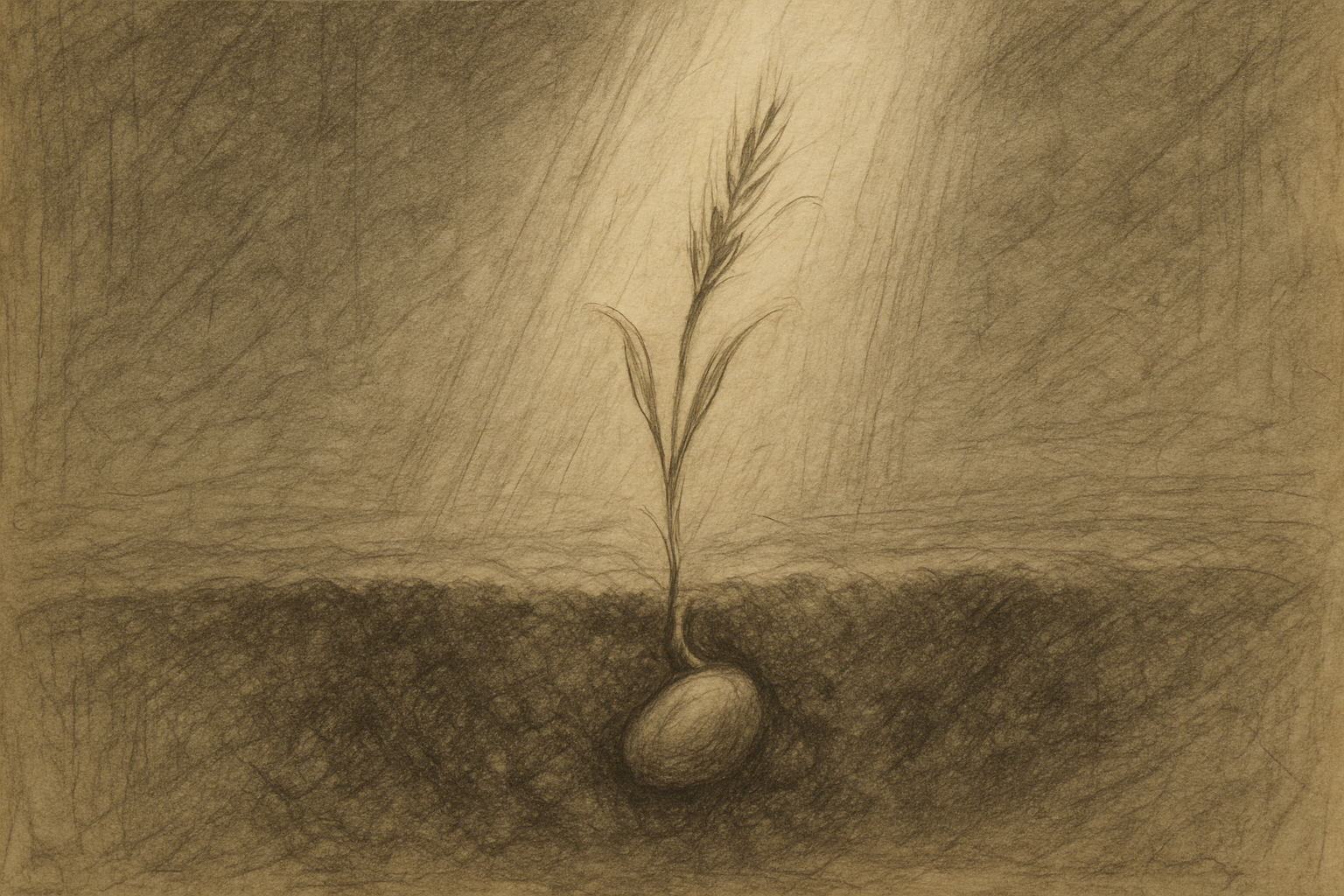
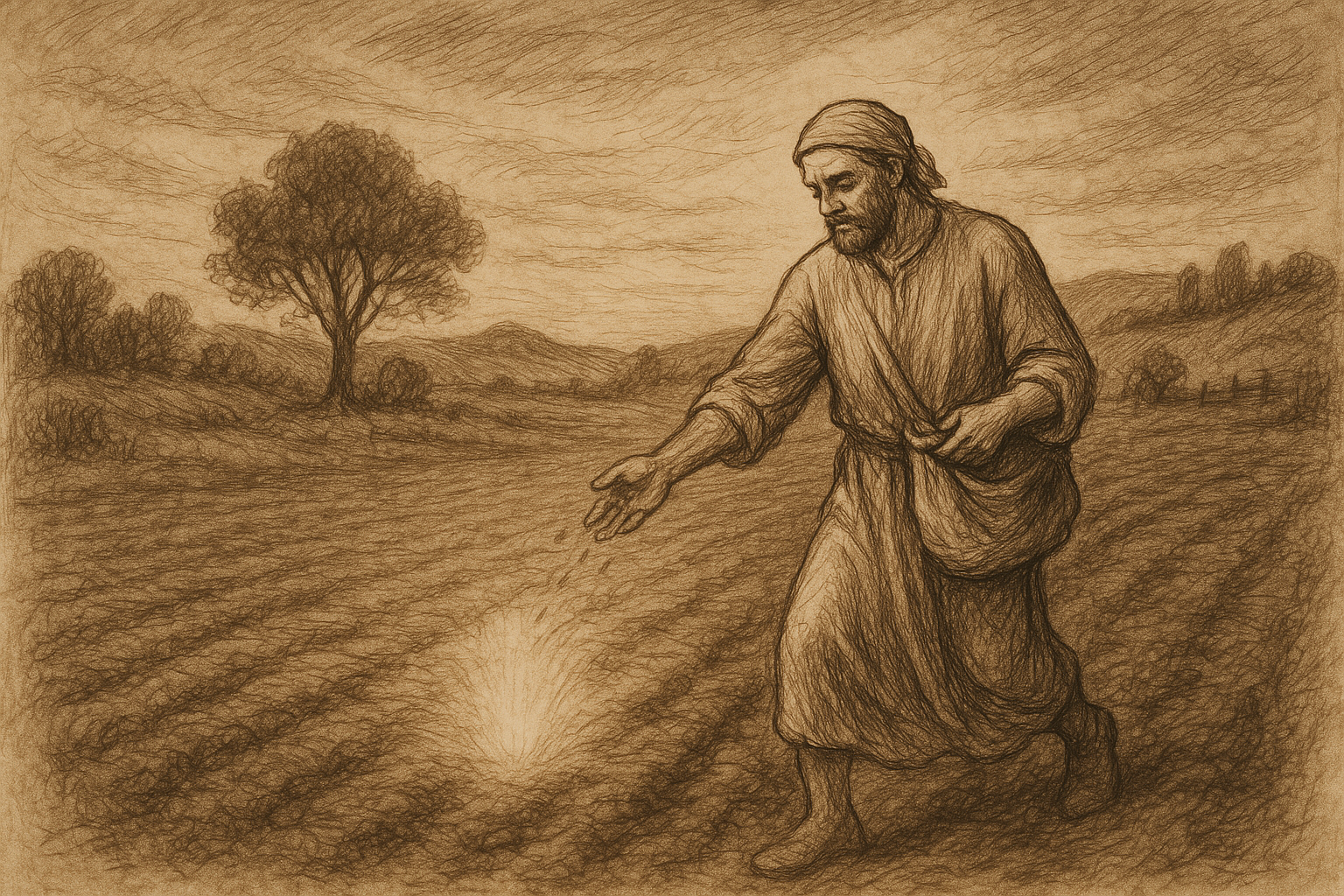
Among the parables of Jesus, few are as quiet and consoling as the seed growing secretly. Mark records it in a few short verses, yet its meaning reaches deep into the life of faith. A man scatters seed on the ground, then sleeps and rises day after day, and the seed sprouts and grows though he does not know how. The earth produces the harvest in stages until the grain is ready and the sickle is put in. Jesus concludes with a picture of the Kingdom of God that is both simple and astonishing: God is at work even when human eyes cannot trace the process.
For Catholics, the seed growing secretly Catholic meaning is tied to trust. We are invited to believe that grace is active in the hidden places of life, in prayer, in conversion, in the slow healing of habits, and in the quiet witness of ordinary faithfulness. The parable does not tell us to make ourselves grow. It tells us to cooperate with the One who gives the increase.
The parable in its biblical setting
The story appears in Mark 4:26 to 29. Jesus says, The Kingdom of God is as if a man should scatter seed upon the ground. The man sleeps and rises, and the seed grows in ways he does not understand. First the blade, then the ear, then the full grain in the ear. When the grain is ripe, the harvest comes.
This parable sits among other teaching about the Kingdom in Mark 4. Jesus has already spoken of seed falling on different kinds of soil, of the lamp set on a stand, and of the mustard seed. Taken together, these images show that the Kingdom begins in small, often hidden ways, but it is never weak or uncertain. God's reign is quietly effective.
That quietness would have mattered to the first hearers. Many expected dramatic signs, immediate political change, or visible power. Jesus gives them instead a vision of patient divine action. The Kingdom comes like growth in a field, not like a sudden performance meant to impress a crowd. It works from within, and it works according to God's time.
What Jesus reveals about the Kingdom of God
The center of the parable is not the farmer's skill but the seed's mystery. The man scatters the seed, but he cannot command it to grow. This is a fitting picture of the Kingdom. Human effort matters, but it is not the source of life. God alone gives the growth.
That is an important correction for people who are tempted to despair because they cannot see quick results. In the Church, in family life, in personal holiness, and in works of mercy, progress can seem slow. A person may pray for years before seeing a change. A parent may labor in faith while a child appears unmoved. A pastor may preach faithfully and see little visible fruit. The parable answers with calm assurance: hidden does not mean absent.
The seed also grows in stages. Jesus names the blade, the ear, and the full grain. Growth is not instant. Spiritual life often unfolds the same way. A soul learns to recognize sin, then to resist it, then to seek virtue with greater freedom. Conversion is usually gradual, and sanctification is ordinarily patient. This is not failure. It is the ordinary pace of grace.
The earth produces of itself is a striking phrase. It reminds us that the Church's work is real, but the life within the Church is God's gift.
A Catholic reading of hidden grace
The seed growing secretly Catholic meaning is especially rich when read alongside Catholic teaching on grace and cooperation. God acts first. He awakens faith, strengthens the will, and pours out charity. Yet he does not treat us as passive objects. He asks for our consent, our perseverance, and our daily yes.
This is one reason the parable speaks so well to the sacramental life. In Baptism, Confirmation, the Eucharist, Penance, and the other sacraments, grace often works beneath the surface. A person may not feel dramatic change at once, but the Lord is still feeding, cleansing, and strengthening the soul. Growth in holiness is not measured only by emotion. It is measured by the steady increase of faith, hope, and charity.
The Catechism teaches that the Holy Spirit prepares human hearts and cooperates in our sanctification. The parable harmonizes with that truth. God's action is both intimate and powerful, yet often hidden from immediate sight. We may notice the fruit before we can explain the roots.
That hiddenness can be humbling. We prefer visible control. We would like to know why a prayer was answered slowly, why a temptation remains, or why a good effort seems unproductive. Jesus does not promise complete explanation. He promises harvest. For the believer, that is enough.
Hope for the weary disciple
The parable speaks with special tenderness to anyone who feels discouraged. Some Catholics carry the burden of long spiritual dryness. Others have tried to grow in patience, chastity, forgiveness, or prayer, only to discover how little they seem to have changed. The seed growing secretly offers a holy alternative to despair: do not measure grace by visible speed.
In the life of faith, there are seasons when nothing seems to happen. Yet the earth is still working. God is still drawing life out of what has been planted. A prayer made in darkness may bear fruit years later. An act of forgiveness may soften a heart long after the moment has passed. A child's memory of a parent kneeling in prayer may become a seed of vocation or repentance. The Lord is never idle.
This is also why the parable is a rebuke to impatience. We often want results before we are ready to receive them. God, in his wisdom, gives growth in the right season. He forms not only what we do, but who we become while waiting. The hidden months matter as much as the visible harvest.
How Catholics can live this parable today
To live the seed growing secretly is to practice fidelity without vanity. It means doing the next right thing and leaving the increase to God. It means sowing in prayer, sacraments, Scripture, and charity, even when the field looks bare.
- Remain faithful in prayer. A short daily prayer, prayed honestly, may become the place where grace deepens slowly over time.
- Receive the sacraments with trust. Even when feelings are dry, the Lord is at work in the sacramental life of the Church.
- Practice ordinary obedience. Small acts of patience, honesty, and mercy often prepare the soul for larger growth.
- Accept seasons of waiting. Not every answer is immediate, and not every change is visible.
- Leave room for mystery. God is not required to explain every stage of his work in us.
There is also a missionary lesson here. Catholics sometimes fear that witness must always be loud to be effective. But the Gospel often spreads through quiet holiness. A parent teaching a child to pray, a friend who refuses gossip, a parishioner who serves without seeking notice, a sick person who suffers with faith, a confessor who listens with mercy: these are not small things. In God's hands, they are seed.
The harvest belongs to the Lord
Jesus ends with the harvest, which reminds us that history is moving toward fulfillment. The Kingdom is already present, but not yet complete. God will bring his work to completion in the end, and the final harvest belongs to him alone. This gives Christian life both realism and confidence. Realism, because we know growth takes time. Confidence, because the outcome rests in God's faithful hands.
When Catholics meditate on this parable, we are invited to release the illusion that we can force holiness, manage souls, or predict the timing of grace. We plant, we pray, we labor, and we wait. The secret work is God's, and the result is his mercy. That is why the parable is so peaceful. It frees us from anxious measurement and returns us to trust.
If your own spiritual life feels quiet, do not assume the Lord is absent. If your efforts seem small, do not call them useless. If the harvest is delayed, do not confuse delay with failure. The seed has been given. God knows the hour of fruitfulness, and his word does not return empty.
So the disciple sows again, prays again, and begins again, confident that the Kingdom of God grows in ways deeper than sight. In silence, beneath the soil, in the hidden chambers of the soul, the Lord is still making things new.
Keep Reading on Lets Read The Bible
Frequently Asked Questions
What is the seed growing secretly in the Gospel of Mark?
It is one of Jesus' parables in Mark 4:26-29. A farmer scatters seed, sleeps and rises, and the seed grows on its own until the harvest is ready. Jesus uses it to show the quiet and hidden growth of the Kingdom of God.
What does the seed growing secretly mean for Catholics?
For Catholics, it teaches trust in God's hidden grace. Spiritual growth, sacramental life, and conversion often happen slowly and without obvious signs, but God is still at work even when we cannot see immediate results.
How can I live this parable in daily life?
You can live it by staying faithful in prayer, receiving the sacraments, practicing small acts of obedience and mercy, and waiting patiently for God to bring fruit in his time.