Jesus and the Gospels
Seeds, Soil, and the Hidden Work of Grace in the Sower
Christ's parable of the sower reveals how the Word of God meets the human heart, and why receptivity matters in daily Catholic life.
Site Admin | February 26, 2026 | 108 views
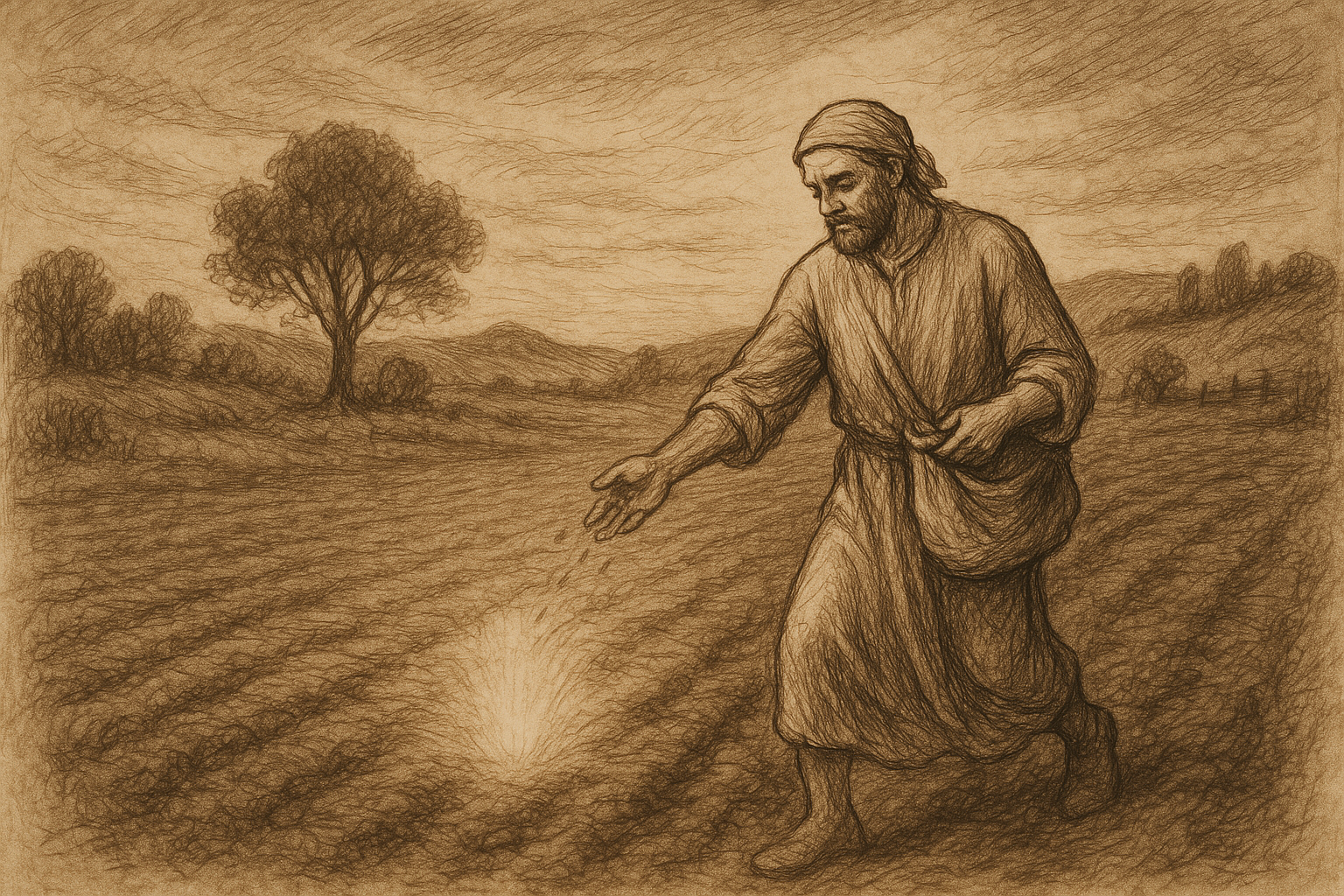
Among the parables of Jesus, few are more familiar or more quietly demanding than the parable of the sower. At first hearing, it sounds like a country image drawn from ordinary life. A farmer scatters seed. Some falls on the road, some on rocky ground, some among thorns, and some into rich soil. The image is plain, almost rustic. Yet Christ says this story is about the mystery of hearing the Word of God and receiving it well.
In the Gospels, Jesus presents the parable of the sower as a doorway into all His teaching. He is not simply giving a lesson about agriculture. He is revealing what happens when the Kingdom of God comes near and meets the human heart. The seed is good. The problem is not the seed. The question is whether the soil is ready. That makes this parable especially close to daily Catholic life, because every Mass, every reading of Scripture, every prayer, and every act of grace is a fresh encounter with the divine seed.
The biblical setting of the parable
The parable appears in the Synoptic Gospels, especially in Matthew 13:3-9, Mark 4:3-9, and Luke 8:5-8. Jesus tells it to a crowd by the sea, and later He explains its meaning privately to His disciples. That movement matters. The crowd hears an image. The disciples receive an explanation. In this, the Church has long seen a pattern of grace: Christ speaks openly, yet deeper understanding comes to those who draw near to Him in humility and trust.
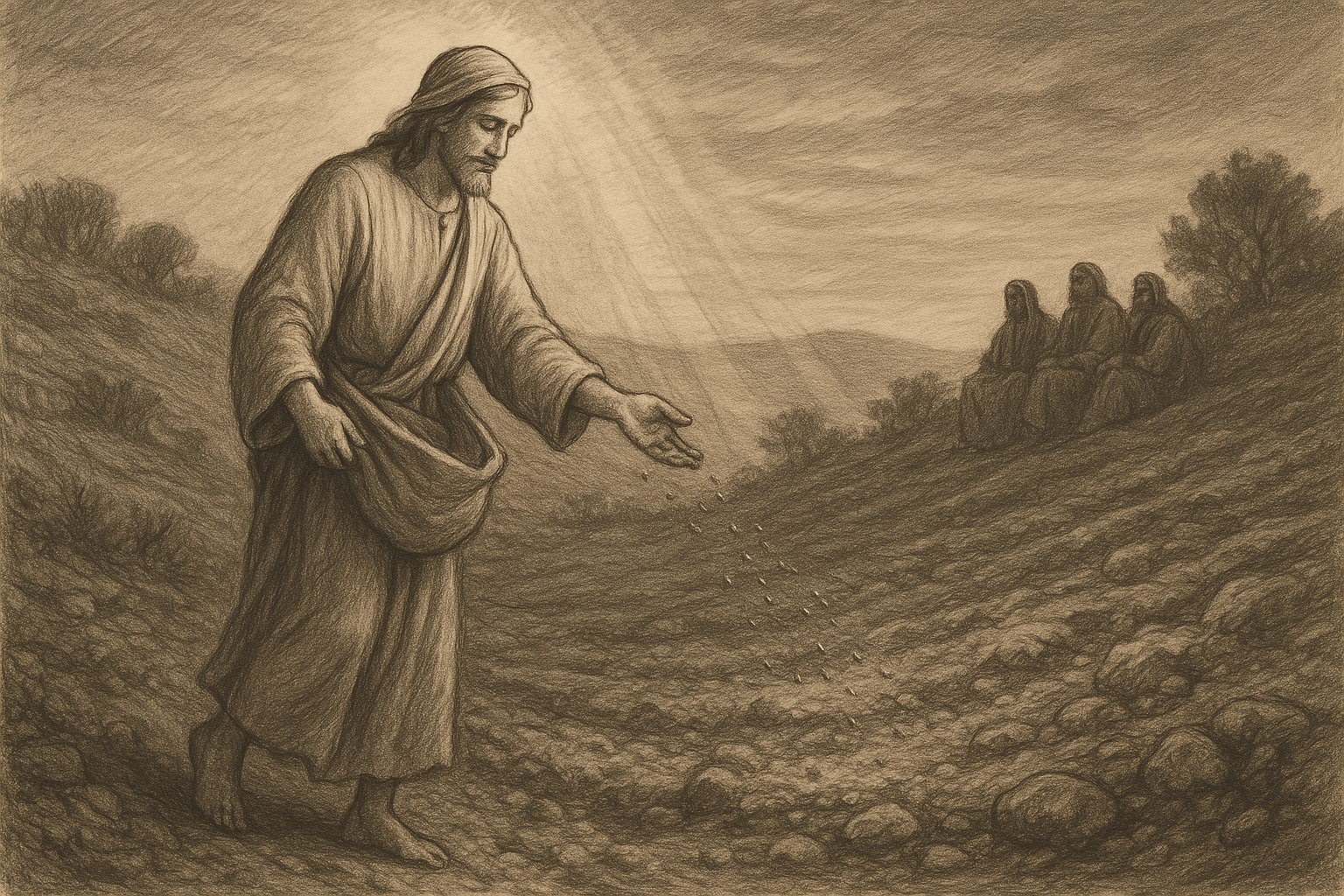
The Lord describes a sower who goes out to sow. The seed falls in several places. On the path, birds eat it quickly. On rocky ground, the plants spring up but wither because they lack roots. Among thorns, the growing seed is choked by cares, wealth, and pleasures. But in good soil, the seed bears fruit, some thirtyfold, some sixtyfold, some a hundredfold. Jesus later identifies the seed as the word of God, and the varied soils as the different conditions of the human heart [[VERSE|luke|8|11-15|Luke 8:11-15]].
This is an image of mercy and realism together. Christ does not pretend all hearers are the same. He names the resistance, fragility, distraction, and openness that shape reception of His word. Yet He also insists that fruitfulness is possible. The seed is alive. The Word is powerful. Grace can bear much fruit where it is welcomed and protected.
What Christ is teaching through the image of seed
The most important truth in the parable is that God speaks first. The sower does not wait for the field to become perfect. He sows generously. In that sense, the image is already a sign of divine generosity. The Word goes out widely. Christ does not ration truth to only a few. He preaches, calls, warns, heals, and invites. He casts the seed broadly because His desire is salvation, not limitation.
At the same time, Jesus teaches that hearing is not passive. The seed may be real, but the heart can still refuse it. Catholic faith has always held together grace and human cooperation. God gives the gift, but the person must receive it. The parable does not deny grace, and it does not flatter human independence. It shows that the human heart can become a place where God's word takes root, but it must be cultivated.
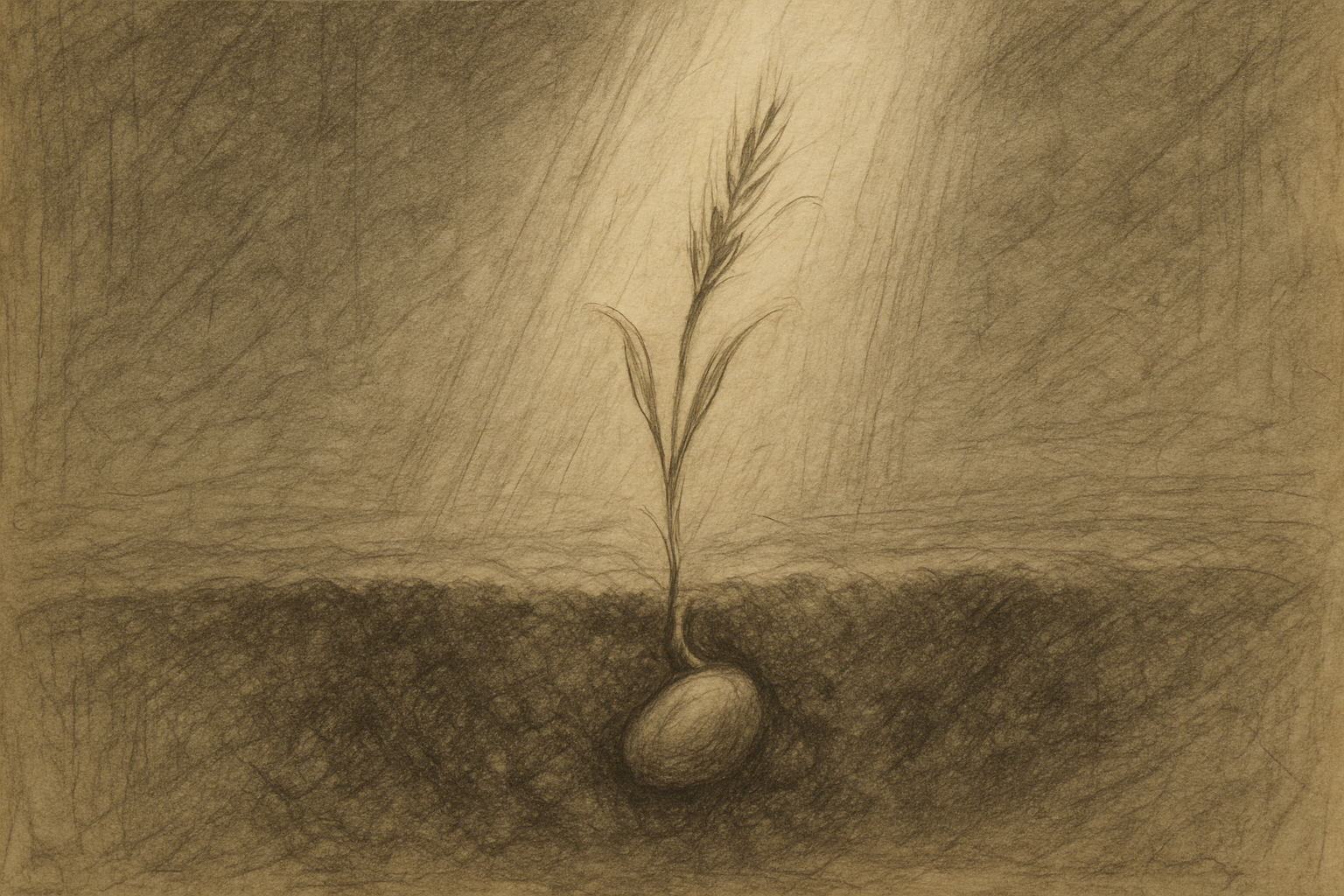
That cultivation is not merely a feeling. It is a way of life. The parable suggests that the soil of the soul is shaped by habits, desires, fears, and choices. A hardened path can become soft again. Stony ground can be deepened. Thorns can be removed. Good soil is not a natural accident. It is the result of grace welcomed over time.
"He who has ears to hear, let him hear." Matthew 13:9
With this brief saying, Jesus makes the parable personal. It is not enough to hear sounds. One must truly receive the message. The Lord is asking for interior attention, not surface familiarity.
The four soils and the life of the soul
Each kind of soil describes a spiritual danger that Catholics can recognize in ordinary life.
- The path represents a heart made hard by repeated resistance. The word is heard, but it does not enter. The enemy snatches it away before it can bear fruit.
- The rocky ground represents quick enthusiasm without depth. The word is received with joy, but when trial comes, the person falls away.
- The thorny ground represents a divided heart. The word grows, but the cares of the world, the lure of riches, and disordered desires choke it.
- The good soil represents a heart that hears, holds fast, and perseveres in fruitfulness.
These are not abstract categories. They can appear in the same person at different times. A Catholic may be receptive at one season and distracted at another. A soul may be tender in prayer, then hardened by resentment. The point is not to label others quickly, but to examine ourselves honestly before God.
Stony ground can resemble religious emotion without endurance. A person may feel moved by a retreat, a sermon, or a powerful conversion story, yet fail to endure when obedience becomes costly. Thorny ground can resemble a life crowded with good but excessive concerns, where even legitimate duties and pleasures begin to dominate the soul. The path can resemble spiritual inattentiveness, when the word is heard so often that it is no longer listened to.
Jesus names these conditions so that healing may begin. He is not shaming the listener. He is diagnosing the heart.
The parable in Catholic daily life
This parable touches Catholic life in a particularly direct way because the Church is built on hearing the word. In the liturgy, Scripture is proclaimed and Christ speaks to His people. At Mass, the Word is not merely remembered. It is living and active. Every Sunday, and indeed every day, Catholics are invited to become good soil again.
That means approaching the readings with attention. It means resisting the habit of casual hearing, where Scripture passes by without reflection. A Catholic who listens prayerfully to the word, asks what Christ is saying, and brings that word into the day is already cooperating with the growth of the seed.
It also means making room for silence. Seeds do not grow well in constant disturbance. The same can be said of the soul. When life is filled with noise, hurry, and endless distraction, the word of God struggles to sink in. Even brief periods of silence before the Lord can help the heart become more receptive. This is one reason the Church values adoration, recollection, and meditative prayer.
The sacramental life also deepens the soil. Confession clears away what chokes the soul. The Eucharist nourishes what has taken root. The grace of these sacraments does not replace human effort, but it strengthens it. A fruitful Catholic life is never self-made. It is a response to grace already at work.
There is also a moral lesson here. Thorns are not always grave sins in the dramatic sense. Sometimes they are small attachments that become large. Worry, vanity, resentment, and the quiet worship of comfort can all crowd the soul. The parable invites regular examination: What is taking up room in my heart that should belong to Christ alone?
Why the sower seems wasteful, and why that matters
Some listeners notice that the sower appears to scatter seed in places where it is unlikely to flourish. Why sow on a path or among thorns? The answer reveals something beautiful about God. The Lord is lavish. He does not sow as a miser. He offers His word generously, even where resistance seems likely. This is not foolishness. It is mercy.
The apparent wastefulness of the sower also reminds us that evangelization requires patience. Catholics sometimes want immediate results from preaching, teaching, and personal witness. But the parable teaches a more patient vision. Not every seed bears fruit at once, and not every fertile heart shows its fruit in the same way. The hidden work of grace is often slow. What seems lost today may still be worked on by God.
That should comfort those who pray for loved ones who seem far from the faith. A hardened path is not beyond the reach of divine mercy. Stony ground can change. Thorns can be cut back. The Church sows confidently because Christ is the Lord of the harvest.
The disciples receive more than the crowd
When Jesus explains the parable privately, He shows that intimate discipleship matters. The crowd hears the story, but the disciples ask for understanding. That posture is important for Catholics today. We do not merely collect religious impressions. We come to Christ to be taught.
Reading Scripture with the Church, listening to the Fathers, and praying with the liturgy all help us become better hearers. The goal is not clever interpretation for its own sake. The goal is conversion. The Word is given so that it may bear fruit in conduct, prayer, repentance, and love.
In that sense, the parable of the sower is also a call to perseverance. Fruitfulness is not measured only by emotion or immediate success. Sometimes the seed is growing in hidden ways. A person may not see the harvest right away, but faithfulness matters. God is never idle where His word has been received.
Becoming good soil
To become good soil is not to become flawless. It is to become open, receptive, and steady under grace. That happens through ordinary fidelity: prayer, Mass, confession, fasting, works of mercy, and willingness to repent. It happens when a person guards the heart from distractions that steal attention from God. It happens when one returns again and again to the word, even after failure.
The good soil in the parable is not praised because it is naturally superior. It is praised because it receives and bears fruit. That fruitfulness is the sign that the seed has done its work. A Catholic life shaped by the Word will gradually become more generous, more patient, more honest, and more anchored in hope.
Jesus offers the parable of the sower because He wants more than a hearing audience. He wants disciples. He wants hearts that welcome the word and let it grow until it becomes visible in charity and holiness. If we let Him, the divine seed will take root where once there was only dust.
So the next time this parable is read at Mass or prayed in silence, it is worth asking a simple question: what kind of soil am I today? The answer may change from day to day, but the grace of Christ remains ready, and the sower still goes out to sow.
Keep Reading on Lets Read The Bible
Frequently Asked Questions
What is the main meaning of the parable of the sower?
The main meaning is that the Word of God is received in different ways depending on the condition of the human heart. Jesus teaches that fruitfulness depends on hearing the word, accepting it, and persevering in grace.
Why does Jesus explain the parable only to the disciples?
Jesus gives a fuller explanation to the disciples because they are drawing closer to Him in humility and desire to understand. The parable invites all hearers to move beyond surface listening into discipleship.
How can Catholics live the lesson of the sower each day?
Catholics can live it by listening attentively to Scripture, guarding against distraction, receiving the sacraments, and cooperating with grace through prayer, repentance, and works of charity.