Jesus and the Gospels
A Story About a Door, a Table, and the Poor at the Gate
Jesus places a nameless beggar beside a rich man and reveals how mercy, indifference, and eternity are bound together.
Site Admin | February 24, 2026 | 88 views
The parable of the rich man and Lazarus in Luke 16:19-31 is unlike many of the Lord's other teachings. It is vivid, direct, and sober. Jesus gives the rich man a name only by his condition, while the poor man receives a name, Lazarus, which means God helps. That detail alone already begins to shape the reader's conscience. In this story, the one who appears invisible on earth is known by God, and the one who seems secure on earth discovers that earthly comfort cannot save the soul.
For Catholics, the rich man and Lazarus explanation is not merely about money. It is about the heart. It is about what happens when a person learns to step over need so often that suffering becomes part of the landscape. The sin in the parable is not that the rich man owns wealth. The tragedy is that he lives as though the beggar at his gate does not exist. The story shows how indifference can become a spiritual habit, and how that habit can harden into judgment.
The setting of the parable in Luke's Gospel
Luke's Gospel gives special attention to the poor, the humble, and those overlooked by society. From Mary's Magnificat to Jesus' preaching in Nazareth, Luke consistently shows that God overturns human assumptions. The parable of the rich man and Lazarus belongs to that pattern. It comes after Jesus has spoken about faithfulness, stewardship, and the danger of serving mammon. In Luke 16:13, Jesus says that no servant can serve two masters. The parable that follows gives that warning a face and a household.
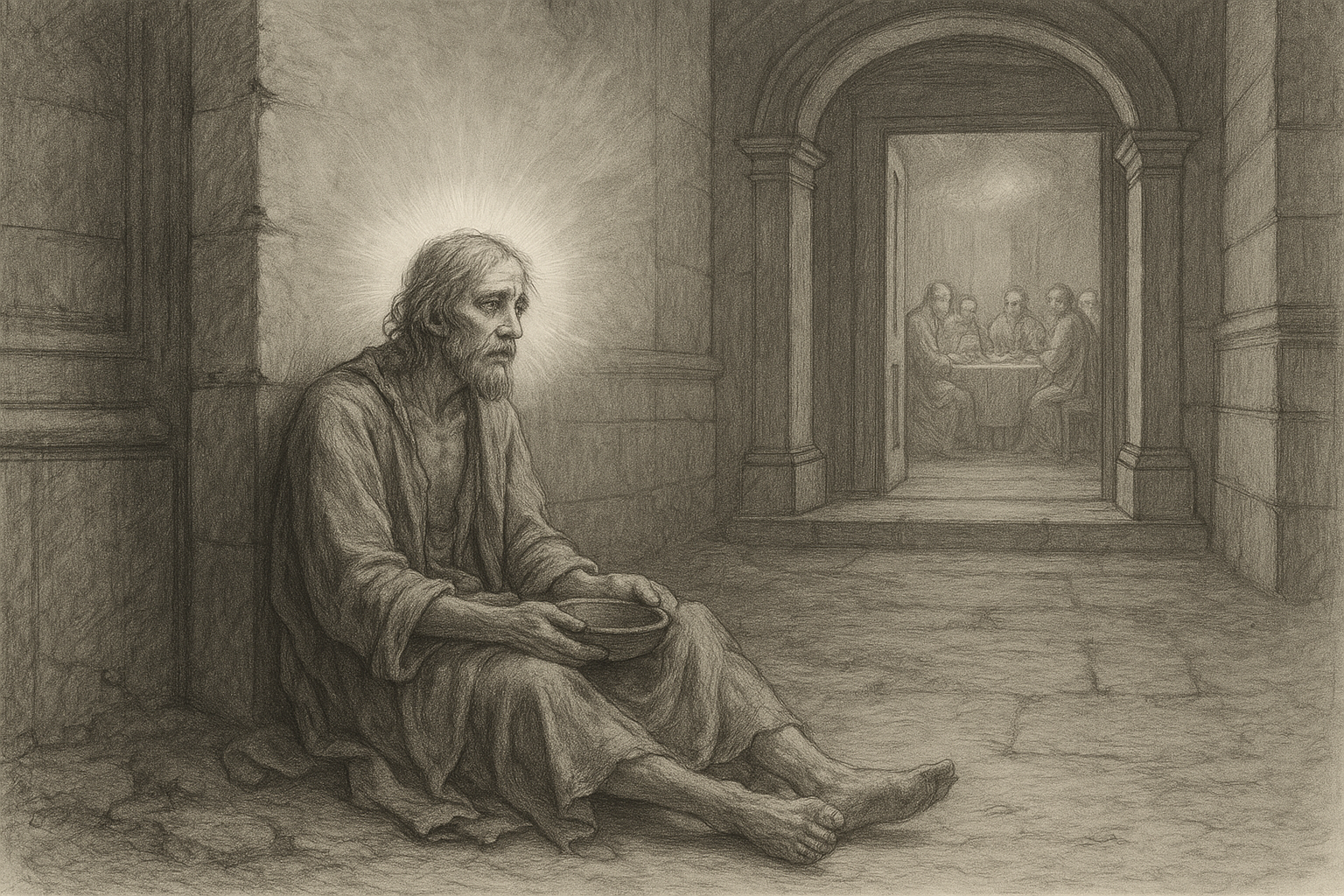
The rich man is clothed in purple and fine linen and feasts splendidly every day. Lazarus lies at his gate, covered with sores, longing to be fed with what falls from the table. Even the dogs come and lick his sores. The contrast is almost unbearable. The gate is important. It is a boundary between comfort and suffering, between what is seen and what is ignored. The rich man is not described as violent or openly cruel. That is part of the force of the story. His condemnation comes from a quiet and daily refusal to love.
Jesus often teaches by contrast, and here the contrast is extreme so that no listener can miss the point. The rich man enjoys abundance while Lazarus desires crumbs. Yet in the end their fortunes are reversed. Lazarus is carried by angels to Abraham's side, while the rich man is in torment. The parable is not a sentimental reversal of status for its own sake. It is a revelation that God sees the whole truth, including what human life hides behind luxury and neglect.
What Christ is teaching through the reversal
The first lesson is that earthly success does not measure a person's standing before God. The rich man has everything visible that the world praises, but he lacks charity. Lazarus has nothing visible that the world values, but he is received into rest. Jesus is not teaching that poverty itself automatically saves or that riches automatically condemn. Rather, He is showing that the state of the soul matters more than outward condition. If wealth is possessed without mercy, it becomes dangerous. If poverty is endured in faith, it can become a path of trust.
The second lesson concerns the permanence of choices. In the story, the rich man asks for relief after death, but the answer he receives is final. A great chasm has been fixed. This is among the most solemn parts of the parable. Catholic teaching on judgment is never meant to lead to despair, but it does insist on moral seriousness. Life is not an endless postponement of conversion. What we do with grace, how we respond to the needs placed before us, and whether we allow mercy to shape us all matter deeply.
The third lesson is about revelation and refusal. The rich man asks that Lazarus be sent to warn his brothers. Abraham replies that they have Moses and the prophets. If they do not listen to them, they will not be persuaded even if someone rises from the dead. Jesus speaks these words with terrible irony, because His own resurrection will later stand as the great sign. Yet even that sign will not force belief on a heart determined to remain closed. Faith is not merely seeing a wonder. It is being willing to hear God and obey.
The parable shows not only that the poor are remembered by God, but that the comfortable are judged by how they treated the suffering already placed before them.
A Catholic reading of mercy and justice
Catholic tradition reads this parable in light of both mercy and justice. God is merciful, but mercy is not sentimental approval of sin. The Lord desires conversion, and He gives real warnings because human choices have real consequences. The rich man is not punished for having a house or a meal. He is judged because he failed to love the neighbor at his door. That distinction matters in Catholic moral life. Possessions are gifts to be used in charity, not private monuments to self.
The Catechism teaches that the goods of creation are destined for the whole human race. That principle gives this parable a practical edge. A Catholic cannot hear Luke 16 and imagine that almsgiving is optional decoration for the spiritually advanced. Almsgiving, works of mercy, and concern for the needy belong to ordinary discipleship. The story of Lazarus presses the question home: Who lies at my gate? Who is present in my life, not as an idea, but as a person with a body, a need, and a name?
There is also a warning here about spiritual comfort. It is possible to live in a religious routine and still become blind. One may attend Mass, recite prayers, and know the language of faith while remaining unmoved by suffering. The rich man never seems to notice Lazarus while both are alive. That blindness is a form of corruption. Christian mercy begins when a person learns to see. It deepens when seeing leads to action.
Why Lazarus is named and the rich man is not
Jesus gives the beggar a name and leaves the rich man anonymous. This is not accidental. In Scripture, to be named is to be known. Lazarus is known by God even in his humiliation. The rich man, by contrast, is reduced to his social role. He is simply the rich man, defined by what he has but not by any inner life that the parable allows us to admire. The story strips away prestige.
That reversal can be unsettling because it challenges the way people naturally sort one another. We are used to noticing the impressive, the accomplished, and the influential. Jesus draws our attention in the opposite direction. The one who appears least significant is the one whose fate becomes the center of the parable. This is profoundly compatible with Catholic instinct. The Church honors the lowly, prays for the suffering, and insists that the image of God is present in every human life, especially where the world is least inclined to look.
It also means that the hidden poor are not hidden from God. A person may be dismissed by society and still be precious in heaven. A person may be admired by society and still be spiritually empty. The Gospel regularly turns on that difference. God sees beneath appearances, and the parable invites the listener to ask whether his own vision has become trained by comfort.
How this parable touches daily Catholic life
The rich man and Lazarus explanation becomes concrete when a Catholic asks how the story changes ordinary habits. It may begin with small acts. Do I notice the person who is lonely? Do I give with generosity, not only from surplus but from love? Do I speak about the poor with respect, or do I reduce them to abstractions? The parable does not ask for dramatic heroics first. It asks for attention, and attention is often where charity begins.
It also touches family life. Parents teach mercy not only by words but by example. Children learn whether the poor matter by watching how adults treat those who serve them, those who ask for help, and those who do not have much to give in return. A home formed by Catholic faith should be a place where guests are welcomed, the needy are not ignored, and gratitude replaces entitlement. The rich man had a gate. Many modern households have gates of another kind: screens, schedules, habits, and preferences that keep suffering at a distance. The Gospel asks us to open what we can.
Parish life is another place where this parable speaks. A parish can become busy without becoming merciful. It can offer many activities while still neglecting the lonely, the elderly, the unemployed, the immigrant, and the person who quietly sits at the edge. Christ's parable calls communities to examine whether they have formed beautiful plans but left Lazarus at the door. Works of charity are not an accessory to the Church's mission. They are part of her witness to the Kingdom.
The story also invites examination of conscience. Before confession, or during a quiet evening prayer, a Catholic might ask: Where have I looked away? Where have I preferred comfort to compassion? Where have I mistaken familiarity for fidelity? These are not accusations meant to crush the soul. They are the beginnings of healing. The Lord exposes hidden blindness so that He may restore sight.
Three practical takeaways from the parable
- Notice one person in need today and respond concretely, even if the act is small.
- Examine whether comfort has made you less attentive to suffering around you.
- Let Scripture and the sacramental life shape mercy, so charity becomes a habit rather than a mood.
The warning about hearing Scripture while resisting it
Near the end of the parable, Abraham's reply about Moses and the prophets reaches beyond the story itself. Jesus is teaching that revelation already given is enough to summon repentance if the heart is willing. This is a sobering word for Catholics because we have been given much. We hear the Scriptures, receive the sacraments, and are invited into a life of grace. The danger is not lack of light but refusal of light.
That is why this passage belongs in daily prayer. It does not merely tell us that judgment exists. It shows how a life can drift toward judgment through repeated neglect. The rich man likely did not wake up one morning intending to become indifferent. But indifference is rarely sudden. It is accumulated. Small refusals to love, repeated over time, create a soul that no longer recognizes its neighbor. The parable warns us before that happens to us.
At the same time, it offers hope. If the story reveals the seriousness of sin, it also reveals the tenderness of God toward the poor. Lazarus is not forgotten. The one who sat outside the gate is welcomed into peace. For anyone who has felt unseen, the parable is a quiet assurance that God remembers. For anyone tempted to self-sufficiency, it is an urgent invitation to mercy before the gate closes.
In the end, Jesus leaves the reader with a choice. Will we live as though the person in need is part of our responsibility, or will we keep building our comfort around a gate? The parable does not let that question fade. It stays with us, and if we let it, it can soften the heart into charity, which is exactly where the Lord would have us live.
Keep Reading on Lets Read The Bible
Frequently Asked Questions
Is the rich man condemned simply because he was wealthy?
No. In the parable, the rich man is judged for his indifference and lack of mercy, not for wealth itself. Catholic teaching holds that possessions are morally neutral in themselves, but they become dangerous when they are not ordered to charity.
Why does Jesus give Lazarus a name but not the rich man?
Lazarus is named to show that God knows and remembers the poor, even when the world overlooks them. The rich man remains unnamed to emphasize the emptiness of a life defined by status and comfort rather than by love.
What should Catholics take from the rich man and Lazarus today?
Catholics should hear a call to mercy, generosity, and repentance. The parable asks believers to notice suffering, use material goods for the good of others, and live in a way that prepares the soul for judgment.