Jesus and the Gospels
The Pearl Worth Everything: Jesus' Brief Parable and the Heart of Discipleship
In one short image, Jesus reveals how the Kingdom of God can reorder the entire human heart.
Site Admin | March 11, 2026 | 178 views
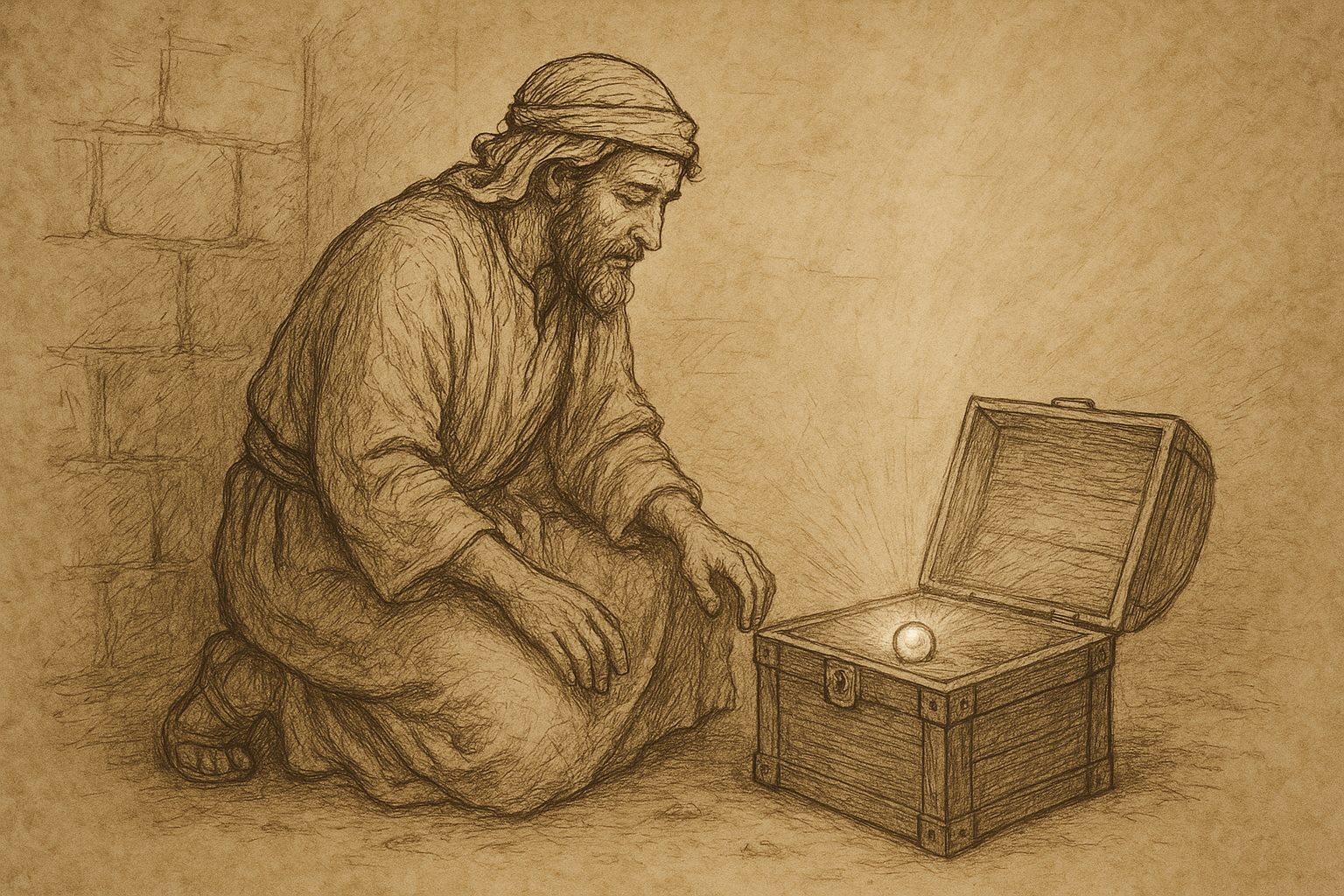
Among the parables of Jesus, few are as strikingly simple as the Pearl of Great Price. A merchant searches for fine pearls, finds one of extraordinary value, and goes to sell all he has in order to buy it. The story is brief, but it opens onto a large and beautiful question: what is a soul willing to give in order to possess the Kingdom of God?
For Catholics, the pearl is not a decorative symbol or a vague promise of self-improvement. It is a sign of the Kingdom proclaimed by Christ, the reign of God entering the world in Jesus himself. In the Gospel according to Matthew, the parable appears near the end of a sequence of Kingdom images, after the mustard seed, the treasure hidden in a field, the net cast into the sea, and other short teachings that gather the mind and heart around the same mystery Matthew 13:44.
The parable in its Gospel setting
Matthew places the Pearl of Great Price in the midst of the parables of the Kingdom. That setting matters. Jesus is not offering a general lesson about ambition or wise investing. He is teaching what the Kingdom of heaven is like, and he does so with an image drawn from ordinary commerce. A merchant is not a casual browser. He knows the market. He knows value. He knows the difference between something pleasant and something rare.
Then comes the pearl unlike any other. The merchant recognizes its worth at once, and his response is decisive: he sells all that he has to obtain it [[VERSE|matthew|13|45-46|Matthew 13:45-46]]. The point is not that the merchant regrets the cost. The emphasis falls on his glad resolve. He does not hand over everything as if crushed by duty alone. He acts because he has seen something better than all his holdings combined.
That is one reason the parable has remained so powerful in Christian memory. It asks not only whether we believe the Kingdom is true, but whether we believe it is worth everything. Jesus does not flatter half-hearted disciples. He invites men and women into a relationship with God that orders all other loves.
What the pearl reveals about the Kingdom
The pearl of great price is not merely a reward at the end of a religious life. It is the Kingdom itself, already breaking into the world through Christ. In Jesus, God is not distant. He has drawn near, and with him comes a new order of life. To receive the Kingdom is to receive Christ, and to receive Christ is to be gathered into the Father's saving will.
Catholic tradition helps us see that this Kingdom is both gift and demand. It is gift because no one can purchase grace by human effort. We are saved by God's mercy, not by spiritual bargaining. Yet the Kingdom also demands conversion. Once a person sees the treasure, ordinary priorities lose their old authority. The heart begins to change its loyalties.
This is why the parable can feel beautiful and unsettling at once. It is beautiful because Jesus offers a pearl, not a burden. It is unsettling because the price includes everything. In Catholic life, that does not mean rejecting creation or despising human goods. It means placing them in their proper order. Money, status, comfort, reputation, and even our plans for the future cannot occupy the throne that belongs to God alone.
The parable invites a question that is both simple and searching: if Christ is truly the Kingdom we have been given, what remains too valuable to surrender?
The joy hidden in surrender
It is easy to hear the command to sell all and imagine loss without consolation. But the Gospel makes clear that this surrender is not sterile. The merchant acts because he has found something of incomparable beauty. In other words, sacrifice is joined to joy.
This is an important Catholic insight. Holiness is not grim self-erasure. It is communion with God, and communion brings joy, even when it passes through renunciation. The saints did not cling to lesser goods because they understood that every created thing is meant to lead us toward the Creator. When that order is restored, the soul becomes freer, not poorer.
Jesus himself teaches this pattern again and again. Those who lose their life for his sake will find it. Those who leave houses, family ties, or possessions for the Gospel will receive far more in return, even now in the community of believers and finally in eternal life [[VERSE|matthew|16|24-25|Matthew 16:24-25]]. The pearl is costly because it is priceless. The merchant does not suffer a senseless deprivation. He enters a better possession.
Catholics can see in this the logic of Christian vocation. Marriage, priesthood, religious life, and lay discipleship each require a real surrender of self. Every vocation asks that a person consent to God's claim on the whole of life. The Pearl of Great Price is therefore not only about dramatic renunciation in rare heroic moments. It describes the daily posture of a disciple who keeps saying yes to Christ.
The merchant as a figure of the searching soul
There is another detail worth noticing. The merchant is already searching for pearls. He is not indifferent. He is not asleep. He is a man of desire, trained to look for something of value. This fits the human heart well. We are made to seek. Even before we know Christ clearly, something in us wants truth, beauty, goodness, and lasting joy.
In a Catholic reading, that searching is not a weakness to be erased. It is part of the way God has made us. Yet our desires can be scattered, confused, or too easily satisfied. We often settle for lesser goods because they are near at hand. The parable shows what happens when a rightly ordered search reaches its fulfillment. The seeker discovers that all previous treasures were only partial signs.
This may be why the story feels so intimate. Many Catholics can recognize themselves in the merchant. We have looked for peace in achievements, security, or approval, only to find that these things are fragile. Christ meets us there and reveals a greater possession. The soul begins to understand that every honest longing was pointing beyond itself.
Three spiritual lessons for daily life
- Hold possessions lightly. Stewardship is good, but possession should never become possession by our things. The Christian is a manager, not an absolute owner.
- Choose Christ before convenience. A disciple learns to ask not only what is easy, but what leads more surely toward holiness.
- Let joy accompany sacrifice. When we give up something for the Lord, we do so in hope, trusting that nothing given to God is ever truly lost.
How Catholic life embodies the parable
The Pearl of Great Price is not meant to stay in the realm of sentiment. Catholics live it in concrete ways. A parent who places the faith of a child before social approval is living this parable. A young adult who refuses a dishonest gain is living this parable. A husband or wife who forgives instead of clinging to resentment is living this parable. A person who returns to the sacraments after a long absence is living this parable.
Above all, the Eucharist gives the parable flesh and blood meaning. In the Mass, Christ gives himself entirely to his people. He is the treasure beyond price, and he also teaches us how to offer ourselves in return. Catholics do not merely admire the pearl. We receive the Lord who gives himself, and then we learn to offer our own lives as a living sacrifice of praise.
Saints have often spoken in this language of total gift. Their witness is not that holiness belongs only to unusually gifted people. It is that anyone who sees Christ clearly enough can begin to treat him as the one necessary good. Some surrender wealth. Others surrender pride, resentment, or control. The outward form differs, but the interior movement is the same: the heart lets go of what cannot last in order to hold fast to what will remain.
This also illuminates Christian repentance. To repent is not merely to feel sorry. It is to recognize that the pearl is more valuable than the sin we have been guarding. Sin survives by promising satisfaction. The Gospel breaks that illusion. It shows us that the Kingdom is more beautiful than the habits that have chained us.
When the price feels too high
Many believers know the discomfort that comes with this parable. We may ask whether Jesus is asking too much. The honest answer is that he does ask for everything. But he asks as the giver of everything. The one who bids us sell all is the same Lord who gives life, forgiveness, and eternal communion with God.
That truth matters pastorally. Catholics who struggle with attachment, fear, or indecision should not hear the parable as a threat alone. It is an invitation to trust that what Christ offers is greater than what we clutch in our hands. Grace does not destroy human freedom. It heals it, strengthens it, and leads it toward the good.
In this light, the cost of discipleship is no longer absurd. It becomes the necessary cost of love. Real love is not measured by convenience but by fidelity. The merchant sells all because he has found the treasure that justifies the sacrifice. The disciple follows Christ because Christ is not one good among many, but the source and fulfillment of all good.
The Pearl of Great Price therefore asks each generation the same quiet question. Have we found Christ to be worth more than what we fear losing? If the answer is yes, then the rest of the Christian life becomes a long, grateful yes as well, spoken in small choices, steadfast prayer, and the daily courage to seek first the Kingdom of God Matthew 6:33.
Keep Reading on Lets Read The Bible
Frequently Asked Questions
What is the Pearl of Great Price in Catholic teaching?
It is one of Jesus' parables in Matthew 13. In Catholic interpretation, the pearl represents the Kingdom of God in Christ, which is of such value that a disciple should be ready to give up all lesser goods to receive it.
Does the parable mean Catholics must give up all possessions?
Not necessarily in a literal sense for every person. The parable teaches interior detachment and the primacy of God. Some are called to radical material simplicity, while all are called to place Christ above wealth, comfort, and status.
How can Catholics live this parable today?
By choosing Christ first in daily decisions, receiving the sacraments faithfully, resisting sinful attachments, and treating every created good as a gift to be used in service of God and neighbor.