Jesus and the Gospels
The Talents and the Quiet Demand of Faithful Stewardship
Jesus' parable of the talents calls Catholics to receive, use, and return God's gifts with courage, gratitude, and fidelity.
Site Admin | March 7, 2026 | 82 views
The parable of the talents is one of the most searching and memorable of Jesus' teachings. It appears in the Gospel of Matthew, where a master entrusts his servants with resources before going away, then returns to ask for an accounting of what they have done with what was given to them Matthew 25:14 Matthew 25:15. For Catholics, the story is never only about money or business skill. It is about the soul before God, about gifts received, and about the sober joy of using them well.
The the Talents Catholic meaning is rooted in this larger biblical vision of stewardship. Everything we have comes from the Lord: life, faith, time, abilities, material goods, and opportunities to love. We are not owners in an absolute sense. We are caretakers. The parable asks whether we live as grateful servants who trust the goodness of the Master, or as fearful people who bury what has been entrusted to us.
The parable in its biblical setting
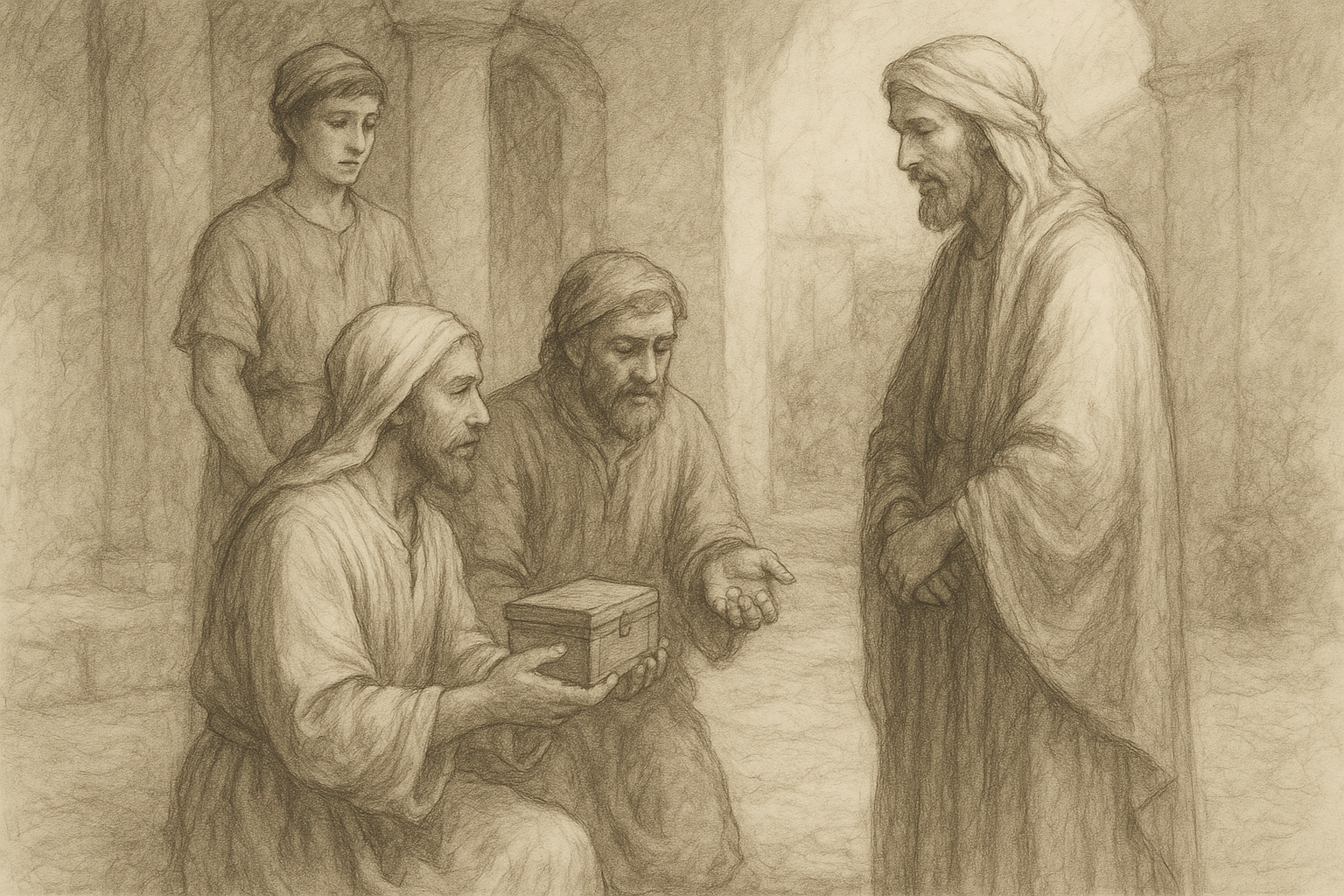
Jesus tells the parable near the end of his public ministry, in a section of Matthew's Gospel that prepares the disciples for watchfulness and judgment. The master in the story gives one servant five talents, another two, and another one, each according to his ability Matthew 25:15. The first two servants put the money to work and double what they received. The third, however, hides his talent in the ground and later returns it unchanged Matthew 25:18.
The master praises the faithful servants with the words, Well done, good and faithful servant Matthew 25:21. But the fearful servant is condemned not for losing the talent, but for failing to trust the master enough to act. The issue is not lack of perfection, but refusal of responsibility. In that way, the parable speaks deeply to the Christian life, where grace calls for a real response.
It is also important to remember what a talent was in the ancient world. A talent was a large sum of money, not a personal skill in the modern sense. Yet the word has entered ordinary speech as a name for ability, and that later meaning is not misplaced for Christian reflection. The original image and the later usage both point toward the same truth: God gives to each person something precious, and he expects fruit.
Stewardship begins with receiving
Catholic stewardship begins not with effort, but with receptivity. Before we do anything for God, we first receive from him. This is a basic Christian truth that is easy to forget. We did not create ourselves. We did not choose our family, our time in history, our intellect, or our bodily strength. Even faith itself is a gift. The Lord is generous before we are productive.
That is why the parable of the talents cannot be reduced to a moral lesson about trying harder. It is first a revelation of divine generosity. The master gives differently to each servant, and he does so knowingly, each according to his ability Matthew 25:15. This matters. God does not measure us against one another as if holiness were a competition. He knows what he has given, and he asks for faithful use, not anxious comparison.
For Catholics, this is deeply consoling. Some people receive public gifts, visible roles, or influential platforms. Others receive hidden responsibilities that seem small. A parent caring for children, a sick person offering patience, a parish volunteer serving quietly, a student striving to learn honestly, a worker practicing integrity, a widow praying faithfully, all can bear fruit in God's sight. The parable honors the ordinary places where grace is lived.
The danger of burying what God gives
The third servant is the most sobering figure in the parable. He says he was afraid, and so he hid his talent in the ground Matthew 25:25. Fear is part of the story, and this is important. Many forms of spiritual unfruitfulness begin in fear. We fear failure, embarrassment, sacrifice, or the demands that come with obedience. We fear that giving ourselves will cost too much.
But fear can become a false prudence. The servant imagines that preserving what he received is safer than risking it in service. In reality, his refusal to act reveals distrust. He sees the master as harsh, not generous Matthew 25:24. That distorted image of God leads to paralysis. When the soul no longer trusts the goodness of the Lord, it begins to bury gifts rather than offer them back.
This can happen in quiet, respectable ways. A person may know that God is calling him to pray more faithfully, but he keeps putting it off. Another may sense a call to reconciliation, but pride keeps the wound open. Someone may have a gift for teaching, listening, organizing, encouraging, or giving, yet uses it only for self-protection. The talent is still there, but it is hidden. The tragedy is not that God has given too little. The tragedy is that we often settle for too little in response.
Fruitfulness is not the same as success
The servants who invest their talents do not receive praise because they achieved worldly status. They are commended because they were faithful. This distinction is crucial in Catholic life. We are often tempted to measure fruit by visible results alone. Yet the Gospel teaches something deeper. True fruitfulness is measured by fidelity to God's will, not by appearances or immediate applause.
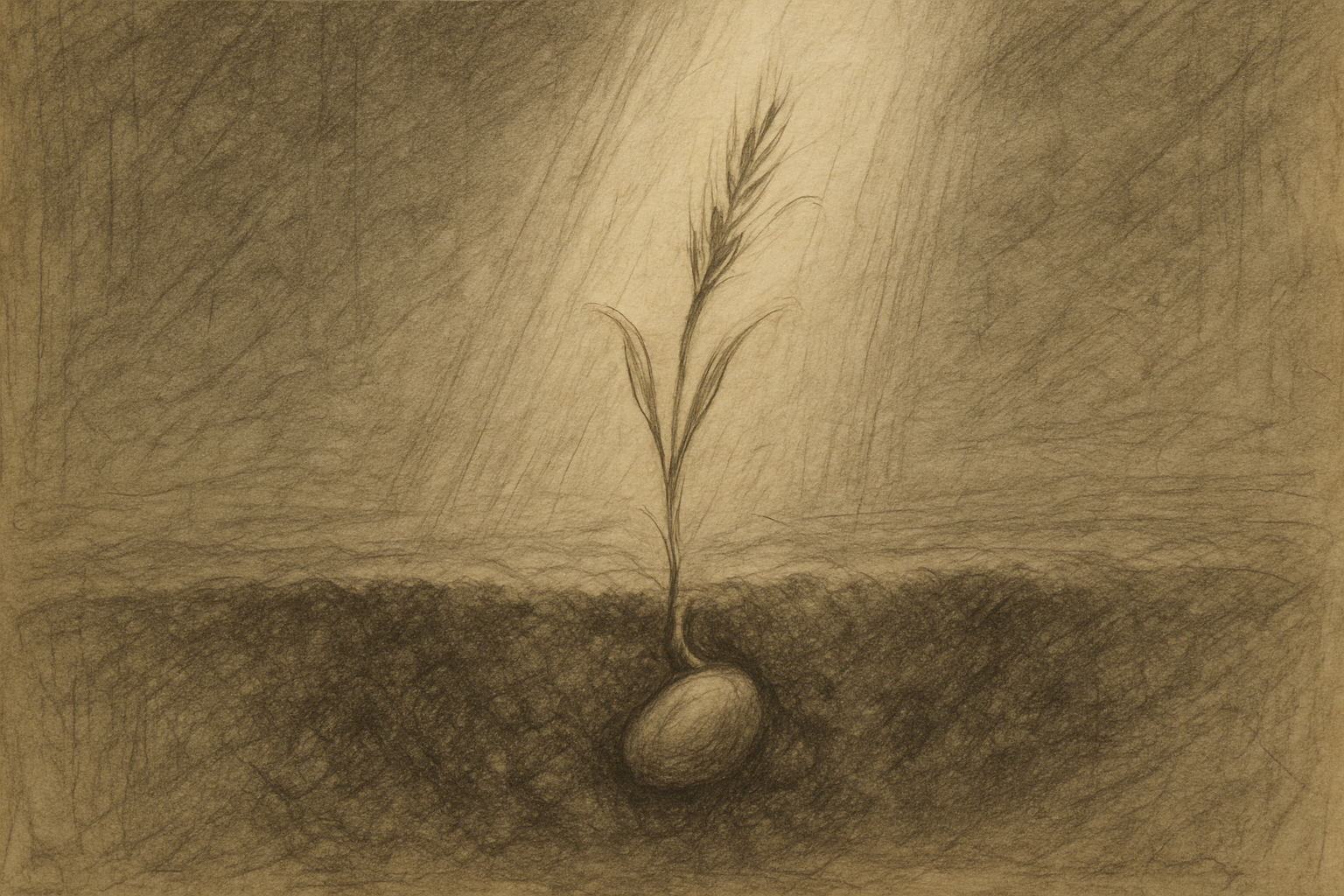
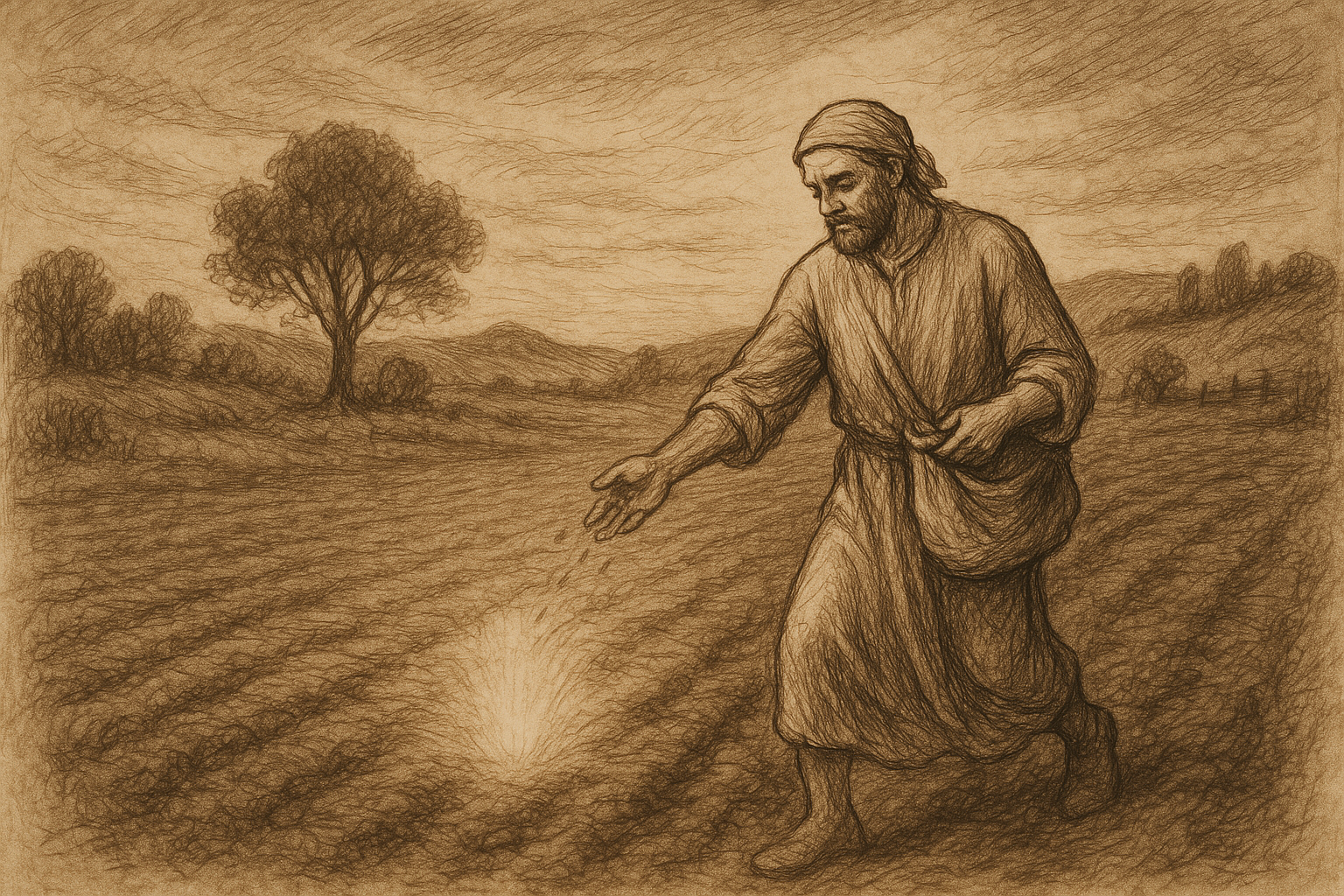
Jesus often speaks this way. A mustard seed can become a great tree Matthew 13:31 Matthew 13:32. A little leaven can transform the whole lump of dough Matthew 13:33. Seed sown in good soil bears fruit in different measures Matthew 13:8. These images remind us that God works through hidden processes, patient growth, and small beginnings. The servant who returns a doubled talent may have faced uncertainty and risk, but he acted in trust. That trust is the heart of discipleship.
Catholic life is full of such hidden fruitfulness. The daily Rosary prayed with attention, the patient silence before the Blessed Sacrament, the hour spent visiting the lonely, the work done honestly when no one notices, the alms given without advertisement, the apology offered without calculation. These are not small things in God's eyes. They are the shape of a fruitful soul.
To bury a gift is to say, in effect, that fear has the final word. To use a gift in love is to say that God's generosity is trustworthy.
The parable and the works of mercy
The talents are not only about personal ambition or self-improvement. They are about service. A Catholic reading of the parable naturally leads to the works of mercy, because the gifts God gives us are meant to flow outward. If a person has time, let him use it for others. If he has money, let him use it generously. If he has wisdom, let him counsel with humility. If he has strength, let him serve. If he has suffering, let him unite it to Christ and offer it for the good of others.
In this way, stewardship is never merely administrative. It is Eucharistic in spirit. What is received is offered back. The Christian does not cling to gifts as private possessions. He receives them in gratitude and returns them in love. This is true of material resources, but also of personality, vocation, and spiritual charisms. The Church becomes more radiant when her members understand that gifts are given for building up the whole Body of Christ.
St. Paul expresses this same logic when he teaches that each member has a different function, yet all belong to one body Romans 12:4 Romans 12:6. One person serves in one way, another in another way, but all are meant for the common good. The parable of the talents belongs to that same biblical imagination. No gift is given for private hoarding. All gifts are entrusted for love.
Judgment, mercy, and responsible freedom
The end of the parable is serious. The master returns, and there is an accounting. In the Gospel, judgment is not presented as an empty threat. It is the unveiling of truth. Each person stands before God with the life he has been given. For Catholics, this should awaken healthy reverence. Our choices matter. What we do with grace matters. How we use time matters. The Lord calls us to account because he has truly entrusted us with real freedom.
At the same time, Catholic faith does not hear this parable as a call to despair. The Judge is also the giver. The one who asks for fruit is the one who first bestows the gift. That changes everything. God is not waiting to punish our weakness with a cold heart. He desires our growth, our repentance, our conversion, and our joy. His justice is never separated from his mercy. The warning is real, but so is the invitation.
This is why the faithful servants are not praised for being extraordinary geniuses. They are praised because they trusted enough to act. The Lord asks not for a perfect life without struggle, but for a life offered back to him. That offering can begin again at any time. A neglected vocation can be renewed. A buried gift can be unearthed. A hardened heart can soften. The Gospel remains open.
Living the talents Catholic meaning today
How do Catholics live this message concretely? Start by naming the gifts God has already given. Some are obvious, and some are easily overlooked. The ability to listen well. The capacity to organize. A steady income. A love for Scripture. A talent for teaching children. A patient temperament. A strong moral conscience. Even a difficult experience, if offered to the Lord, can become a gift for others.
Then ask a simple question: where am I tempted to bury what God has given? Perhaps the answer is prayer, and the talent buried is spiritual attentiveness. Perhaps it is generosity, and the buried talent is wealth held too tightly. Perhaps it is friendship, and the buried talent is a reluctance to reach out. Perhaps it is truth, and the buried talent is silence when charity requires a word. Honest self-examination can be demanding, but it is also liberating.
Practical stewardship may take ordinary forms:
- Set aside regular time for prayer, even if it is brief and simple.
- Use money with discipline, almsgiving, and gratitude.
- Serve in parish life where your abilities can truly help.
- Practice your work as a vocation, not merely a paycheck.
- Offer patient endurance in suffering as a hidden sacrifice to God.
These acts may seem modest, but the parable teaches that modesty is not the same as insignificance. God sees what is done in faith. He is generous with those who take up their responsibilities in love.
A disciple's reward is to share the Master's joy
The most beautiful line in the parable is not about multiplication, but communion: Enter into the joy of your master Matthew 25:21. This is the goal of stewardship. God does not merely want efficient servants. He wants sons and daughters who enter into his joy. The reward for fidelity is not simply a larger task list. It is deeper participation in the life of God.
That is the final dignity of the Christian life. We are invited to serve, yes, but also to share in the joy of the One who gave everything first. The talents are a reminder that grace is never meant to remain static. It moves. It grows. It bears fruit. And when it is received with trust, it leads the soul not into exhaustion, but into communion with the Lord who calls, equips, and delights in his servants.
Keep Reading on Lets Read The Bible
Frequently Asked Questions
What is the talents Catholic meaning in Matthew 25?
In Catholic reading, the parable teaches that God entrusts each person with gifts, time, and responsibilities, then asks for faithful use of them. It is about stewardship, trust, and fruitfulness before God, not merely about money or talent in the modern sense.
Does the parable of the talents teach that Catholics must be successful?
No. It teaches fidelity, not worldly success. The servants are praised because they were faithful with what they received. In Catholic life, fruitfulness is measured by obedience, generosity, and love, even when results are hidden.
How can a Catholic avoid burying his or her talents?
By recognizing gifts as entrusted rather than owned, praying regularly, serving others concretely, practicing generosity, and asking where fear or pride is causing delay. Small acts of faithful service often open the way to greater fruitfulness.