Jesus and the Gospels
When a Seed Becomes a Kingdom: The Quiet Power of Jesus' Mustard Seed
A Catholic reading of the tiniest seed and the surprising reach of God's reign
Site Admin | February 27, 2026 | 92 views
Jesus often taught in images drawn from ordinary life, but His parables were never ordinary in meaning. In the mustard seed, He takes one of the smallest seeds a listener could imagine and uses it to reveal the hidden logic of the Kingdom of God. The parable is brief, but it is full of light. It tells us that God's reign does not begin with display or noise. It begins in what seems insignificant, and from there it grows beyond what the eye first expects.
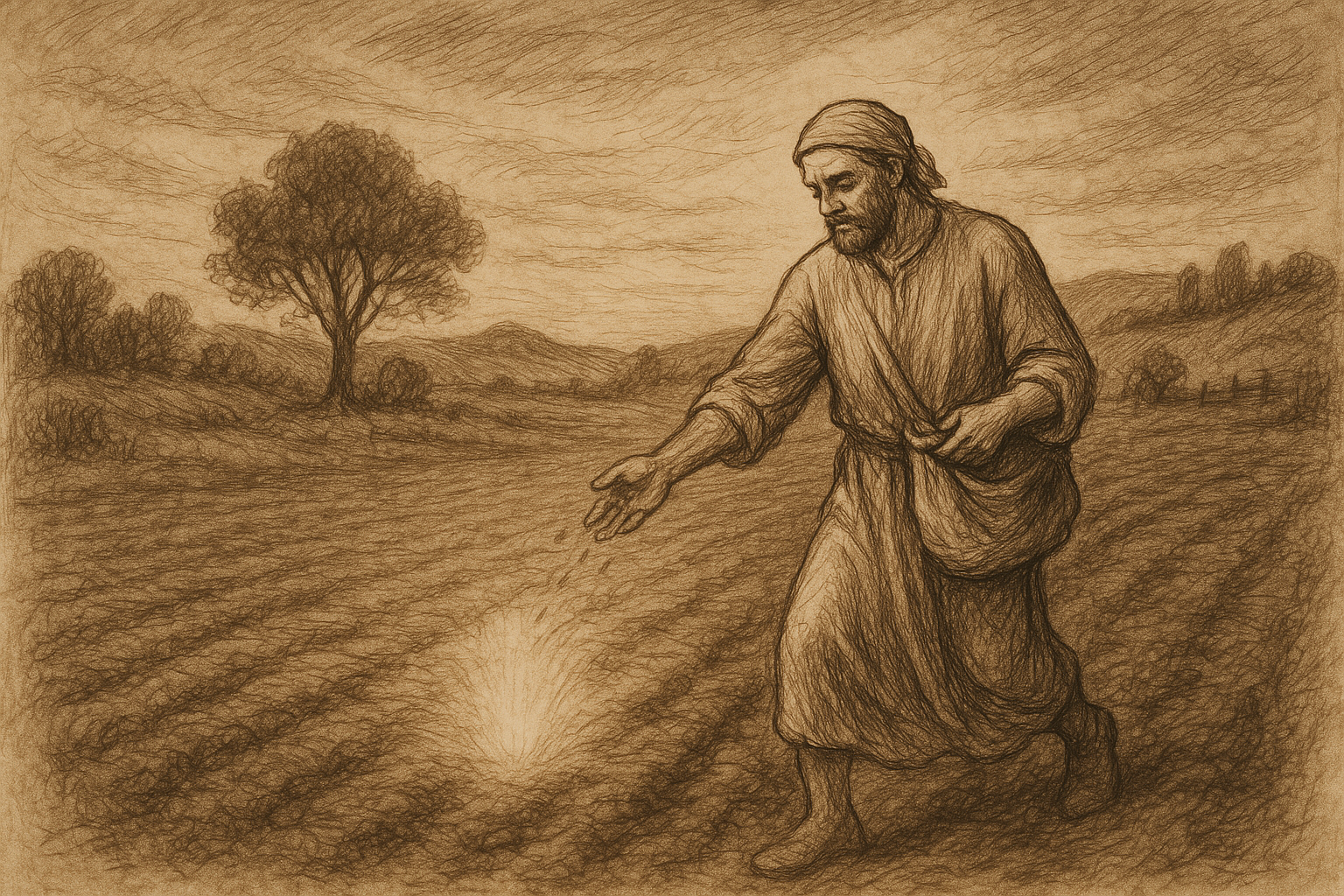
The Gospel of Matthew records Jesus saying, "The Kingdom of heaven is like a mustard seed that a person took and sowed in a field. It is the smallest of all the seeds, yet when full grown it is the largest of plants. It becomes a large bush, and the birds of the sky come and dwell in its branches" [[VERSE|matthew|13|31-32|Matthew 13:31-32]]. Mark and Luke preserve the same basic image, each emphasizing the astonishing contrast between tiny beginnings and expansive results [[VERSE|mark|4|30-32|Mark 4:30-32]] [[VERSE|luke|13|18-19|Luke 13:18-19]].
The mustard seed in its biblical setting
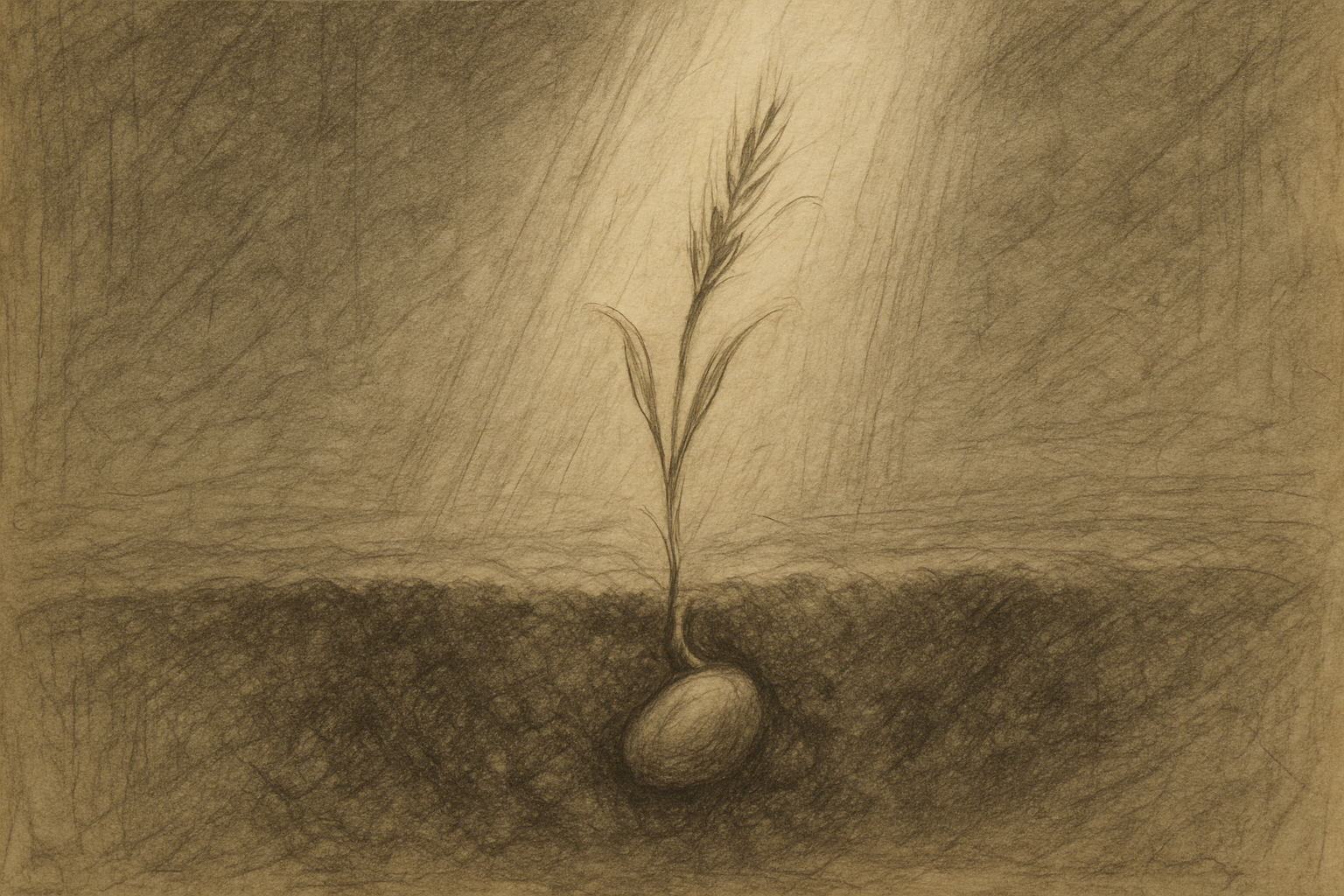
To hear the parable as Jesus' first listeners may have heard it, we should remember that He was speaking to people who knew the patience required by farming. Seeds are not magic. They must be planted, covered, left in darkness, and allowed to do their hidden work. That slow process fits the pattern of much of the Gospel. God is active where the world sees only delay.
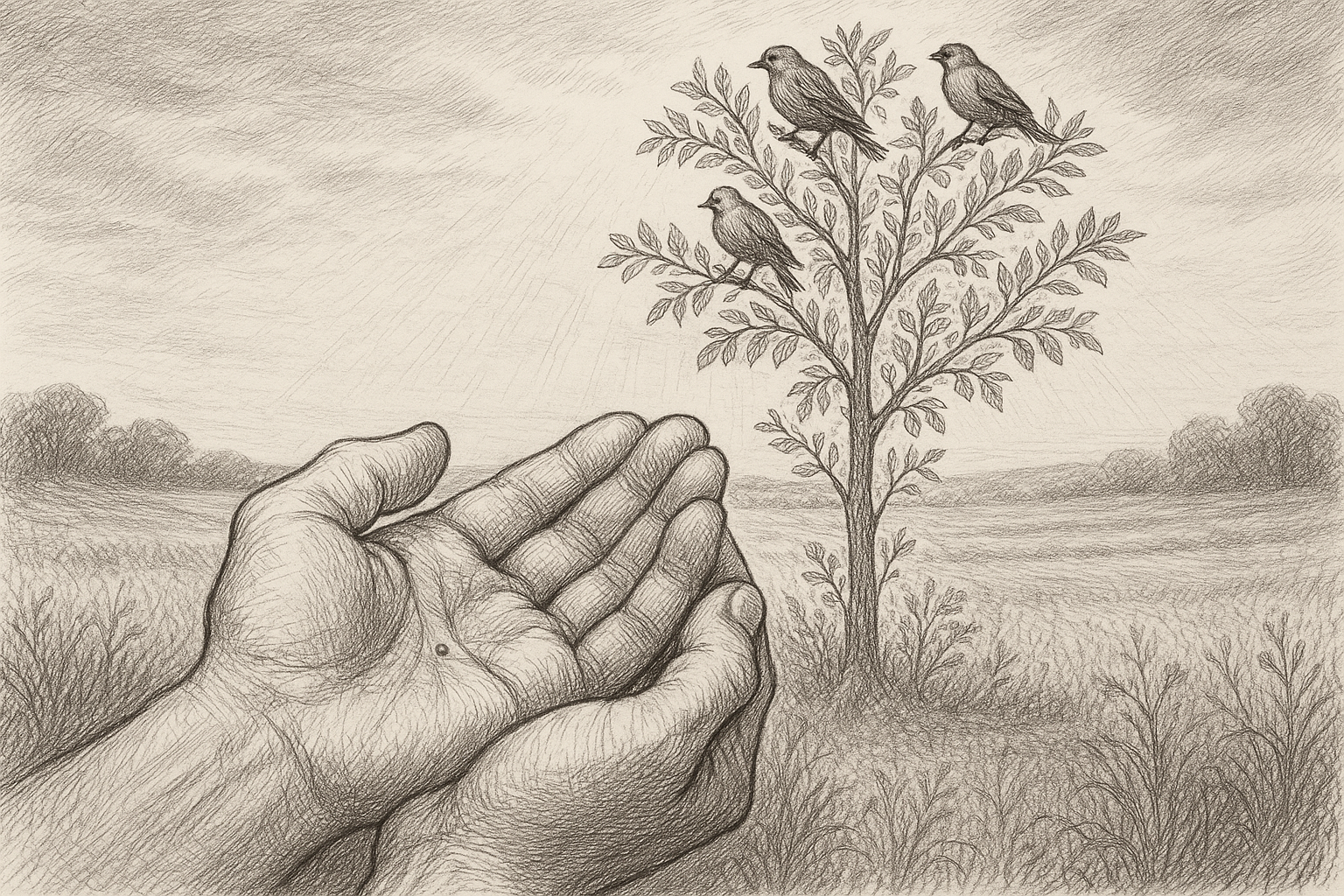
The mustard seed was a fitting image because it was small enough to seem almost laughable, yet capable of becoming a large, leafy plant. Jesus is not giving a botany lesson. He is teaching spiritual truth through a familiar and memorable example. The point is the disproportion between the beginning and the end. What starts as nearly invisible becomes a place of shelter and presence.
In Matthew's version, the image of birds nesting in the branches recalls Old Testament language in which a great tree provides refuge for many nations and peoples [[VERSE|ezekiel|17|22-24|Ezekiel 17:22-24]]. This is important for Catholic readers. The Kingdom of God is not a private spiritual project, nor a hidden club for the religiously accomplished. It is meant to gather, protect, and give life. The image stretches outward. The small seed eventually becomes a home.
A parable of beginnings that do not look impressive
One reason the mustard seed remains so striking is that it refuses our usual standards of success. Human beings tend to admire what is immediate, visible, and large. We trust numbers, influence, speed, and measurable results. Jesus turns that instinct upside down. His Kingdom often begins where no one is applauding.
This is deeply familiar in Catholic life. A child making the Sign of the Cross with sincerity, a mother teaching the Hail Mary, an elderly man praying quietly before dawn, a priest hearing confessions in the same small room week after week, a religious sister serving in obscurity, a lay person refusing bitterness in a difficult marriage. These may seem small. They are small, in the world's eyes. But in the logic of grace, they are seeds.
The spiritual life often feels this way too. A conversion may begin with one honest prayer. A habit of repentance may begin with one act of trust. A renewed desire for the sacraments may begin with a simple return after a long absence. God rarely asks us to see the whole harvest at once. He asks for faithfulness in the planting.
The mustard seed Catholic meaning, then, is not merely that big things can come from small things. It is that God delights in beginning with what is hidden so that His power, not ours, will be recognized in the growth. The seed reminds us that grace is not manufactured by spiritual ambition. It is received, nurtured, and allowed to unfold in God's time.
The Kingdom grows by grace, not by noise
Catholic tradition has always insisted that grace is real, prior, and active. We cooperate with it, but we do not create it. The mustard seed is a gentle corrective to pride in every age, especially when disciples become impatient with hiddenness. We want visible victory. Jesus gives us a deeper pattern: first the seed, then the root, then the growth, then the fruit.
That pattern is seen in the life of Christ Himself. The Incarnation begins in the silence of Nazareth and the hiddenness of Bethlehem. The cross appears like defeat before it is revealed as triumph. The Resurrection does not erase the scars; it transforms them. In the same way, the Kingdom may appear small or even weak, but it is already alive with divine power.
For Catholics, this also sheds light on the Church's sacramental life. The sacraments are often outwardly simple: water, oil, words, bread, wine, the laying on of hands. Yet these humble signs carry divine life. They work like mustard seeds in the soul, not because the materials are magical, but because Christ acts through them. The external sign is plain; the grace is vast.
Consider the Eucharist. To the eye, it appears small, almost negligible. Yet the Church confesses that the Lord of heaven and earth is truly present there. The same pattern of hidden greatness runs throughout Catholic faith. God loves to veil His glory under ordinary appearances so that faith may grow stronger than sight.
The parable and the shape of Christian discipleship
There is a moral edge to the mustard seed, and it is worth hearing clearly. Jesus is not simply comforting us with the idea that small things matter. He is also calling us to become small ourselves. The seed must be buried. It must give itself over to the earth. It does not remain separate and protected if it is to bear fruit.
This has a strong connection to Christian humility. The disciple who clings to status, comfort, or control resists the very shape of the Kingdom. Growth in holiness often includes a stripping away of false importance. God may permit us to feel little so that we will depend on Him more fully. He may ask for hidden acts of service, private fidelity, and patient endurance that no one else notices.
The saints show us this pattern again and again. Many lived without public recognition, yet their lives became vast in spiritual influence. They did not seek to dominate. They sought to love. Their greatness was not self-made. It was the fruit of grace received with trust.
That is why the parable is also a warning against discouragement. Some Catholics carry burdens that seem to make holiness impossible: repeated failure, family strain, grief, loneliness, temptation, financial pressure, illness, or spiritual dryness. The mustard seed says that the condition of the beginning is not the same as the condition of the end. God can work with what is small, fragile, and incomplete.
In fact, the Lord often begins there. A wounded heart can become a generous heart. A repentant sinner can become a faithful witness. A timid believer can become a courageous servant. The seed does not need to be large to be alive. It needs only to be planted in the right soil and given time under God's care.
The birds in the branches and the wideness of God's mercy
Jesus includes a beautiful image in the parable: birds come and nest in the branches. This is not a decorative detail. It suggests welcome, shelter, and expansion. The Kingdom is not a private refuge for the spiritually elite. It is a living reality meant to hold others.
Catholics can see here a reflection of the Church's mission. The Church is called to be a place where sinners find mercy, the burdened find rest, and the lonely find communion. She is not holy because her members are naturally perfect. She is holy because Christ sanctifies her and sends her outward with His mercy.
There is also an important missionary note. The mustard seed grows large enough for birds to rest in its branches. So too the Gospel is meant to reach beyond one household, one nation, or one preferred kind of person. The Kingdom gathered by Christ welcomes those the world may ignore. Its growth is not narrow but generous.
This matters for how Catholics view evangelization. We are not asked to force the Kingdom by human power. We are asked to bear witness so faithfully that others may find shade in what God has grown. A patient word, a consistent example, a parish that prays well, a family that forgives, a school that teaches truth with charity, a volunteer who serves without complaint: all of these can become branches of welcome.
Living the mustard seed Catholic meaning today
To live this parable well, Catholics can begin by rethinking what counts as fruitfulness. We often ask whether our efforts are visible enough, successful enough, or appreciated enough. Jesus invites a different question: Is it faithful? Is it planted in Him? Is it open to growth?
Here are a few concrete ways to live the mustard seed Catholic meaning in daily life:
- Begin with one real act of prayer. A short daily offering, a decade of the Rosary, or a few quiet minutes before the tabernacle can be the beginning of larger fidelity.
- Practice hidden charity. Do one good thing that no one can repay, praise, or publicly notice.
- Return to the sacraments consistently. Grace grows where Christ has already promised to meet His people.
- Be patient with spiritual growth. Not every season produces visible results, but hidden roots matter.
- Refuse despair. Nothing offered to God in faith is too small to matter.
These practices are not glamorous, but neither is the seed. The Christian life is often built through repetition, surrender, and quiet perseverance. Over time, small obediences become spiritual stability. Small acts of trust become habits. Habits become character. Character becomes witness.
That witness can shape a family, a parish, a school, or a community in ways we may never fully measure. The mustard seed reminds us that the Kingdom is already among us, but it often arrives in forms we do not immediately recognize.
Jesus teaches us to stop despising what is small. The Kingdom begins there, grows there, and shelters others there.
When Catholics meditate on this parable, we are invited to surrender both pride and impatience. We do not need to be the largest, loudest, or most impressive disciples in the room. We need to belong to Christ and let Him do His work. The seed will grow in His time. The branch will widen in His mercy. And what once looked too small to matter can become, by grace, a place where many may find life.
Keep Reading on Lets Read The Bible
Frequently Asked Questions
What is the mustard seed in the Bible?
The mustard seed is a small seed Jesus uses in a parable to describe the Kingdom of God. In the Gospels, He says that something so tiny can grow into a large plant, showing that God's reign begins in humble ways and then expands far beyond what people expect [[VERSE|matthew|13|31-32|Matthew 13:31-32]].
What does the mustard seed mean for Catholics?
For Catholics, the mustard seed points to grace, humility, and patient trust in God's hidden work. It teaches that small acts of faith, prayer, repentance, and charity can become great through God's power, even when they seem insignificant at first.
How can I live the mustard seed parable in daily life?
You can live it by starting small and staying faithful: pray consistently, receive the sacraments, practice hidden acts of love, and trust that God can grow holiness from ordinary beginnings. The parable encourages perseverance without anxiety over immediate results.