Doctrine and Questions
The Saints Do Not Compete with Christ
How Catholic teaching on intercession keeps prayer centered on Jesus while honoring the communion of saints
Site Admin | June 9, 2026 | 45 views
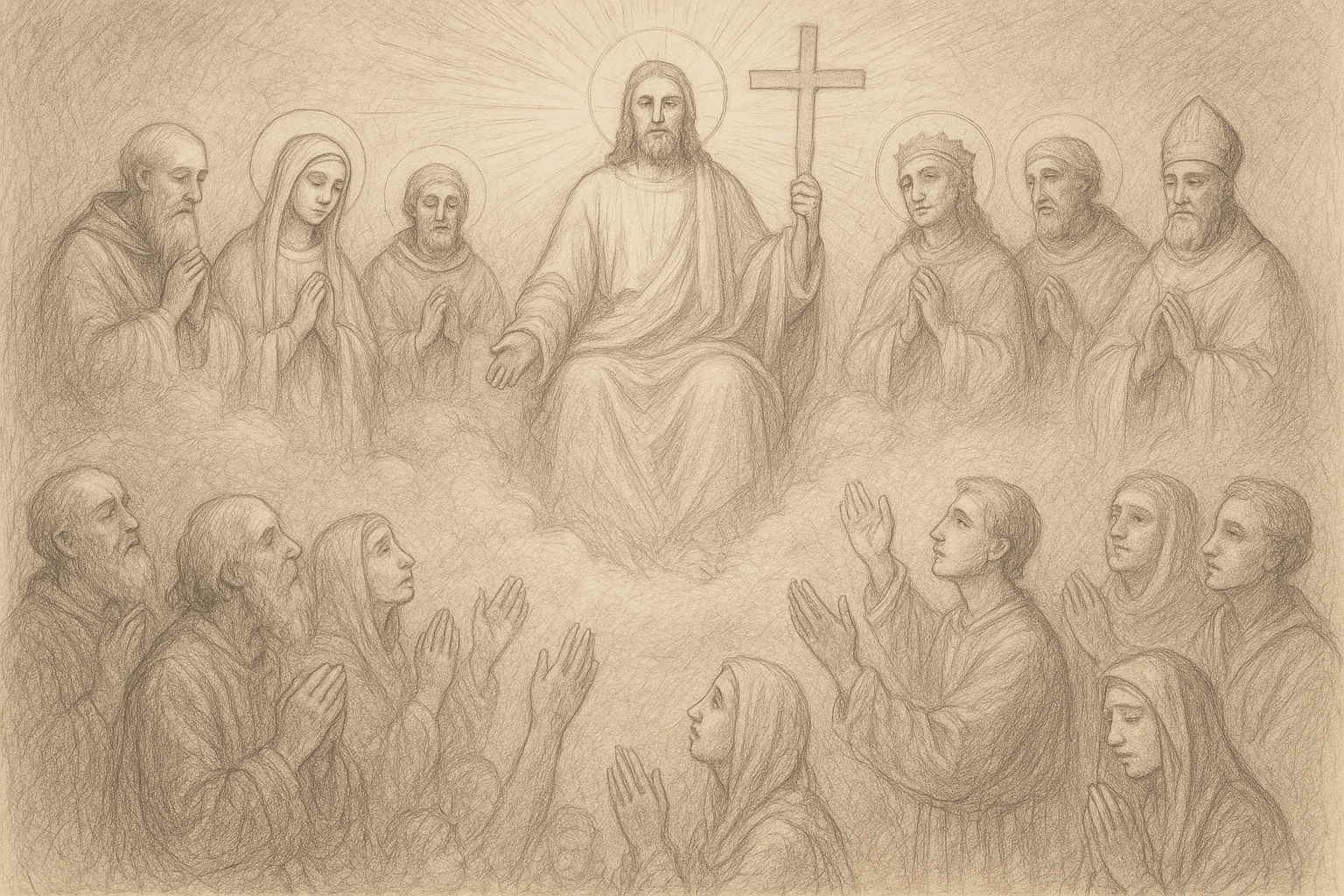
Among the doctrines most often misunderstood by non-Catholics, the intercession of the saints Catholic teaching can be one of the easiest to explain and one of the easiest to distort. At first hearing, some people assume Catholics are asking the saints to take Christ's place. In reality, the Church teaches the opposite. The saints intercede because Christ lives, reigns, and gathers his people into one family. Their prayer is not a rival to his mediation but a fruit of it.
To speak clearly about the saints, we have to begin with Jesus. Scripture says there is one mediator between God and man, Jesus Christ, who gave himself as a ransom for all [[VERSE|1-timothy|2|5-6|1 Timothy 2:5-6]]. Catholics receive that truth without hesitation. No saint, no angel, no bishop, and no believer can bridge the gulf between God and humanity by their own power. Only the Lord can save. Only his sacrifice reconciles us to the Father. Any Catholic understanding of intercession has to stand on that foundation.
At the same time, the Bible also shows that Christian prayer is meant to be shared. Saint Paul repeatedly asks fellow believers to pray for him, and he prays for them in return. He tells the Romans, strive together with me in your prayers to God on my behalf Romans 15:30. He asks the Thessalonians to pray for him 2 Thessalonians 3:1. He knows that the petitions of the faithful matter because God has chosen to work through the communion of his people. If intercession among Christians on earth is real, then death cannot break the charity of Christ, who said that he is not God of the dead but of the living Mark 12:27.
What the Church Means by Intercession
In Catholic teaching, to intercede means simply to pray for another. When a mother asks her child to pray for a sick relative, that is intercession. When a parish group prays for the conversion of a friend, that is intercession. When the saints pray for us, they do the same thing, but now in the glory of God. They are not sources of grace apart from Christ. They are members of his body, alive in him, and their prayer is effective because they are united to him perfectly.
This is why Catholics do not think of the saints as magical figures or distant demigods. The saints are believers made holy by grace. Their holiness is not self-made. It comes from the mercy of God. Their closeness to him is itself a gift. When Catholics ask a saint to pray for them, they are asking a friend in Christ to bring their needs before the Lord. The only difference is that the saint is no longer separated from God by the weakness and distraction that mark life on earth.
That distinction matters. In heaven, the saints do not become less human. They become more fully alive in the love of God. Their charity is not narrowed by death. If anything, it is purified and enlarged. A holy person on earth can pray fervently for another, but a saint in glory is not hindered by sin, fatigue, or forgetfulness. Catholics believe this makes their intercession powerful, not because they replace Christ, but because they are so deeply united to him.
Scripture Opens the Door
Some people assume the practice of asking saints for prayer must be a late invention. Yet the biblical pattern prepares for it. In the Book of Revelation, the saints in heaven are pictured offering to God the prayers of the faithful: golden bowls full of incense, which are the prayers of the saints Revelation 5:8. Later, an angel offers incense with the prayers of all the saints on the golden altar before the throne [[VERSE|revelation|8|3-4|Revelation 8:3-4]]. These are not images of isolation. They show heaven and earth united in worship.
Revelation also gives us a glimpse of the heavenly Church as active and aware. The saints are not asleep in the sense of being unconscious or cut off from the life of God. They live before the throne. They praise the Lamb. They are part of a communion that reaches beyond what our eyes can see. That vision fits naturally with Catholic prayer to the saints, because it portrays heaven as personal, liturgical, and attentive to God's people.
Another important sign comes from the doctrine of the Body of Christ. Saint Paul teaches that if one member suffers, all suffer together; if one member is honored, all rejoice together 1 Corinthians 12:26. This is not merely a poetic idea. It is a theological description of the Church. The bond of charity is stronger than death because Christ's life is stronger than death. Those who are in heaven do not stop belonging to the body. They belong more completely.
Why Catholics Ask the Saints for Prayer
Catholics ask saints to intercede for the same reason we ask a friend at Mass, a grandmother, or a pastor to pray for us. We believe prayer matters, and we believe friendship in Christ matters. The difference is that the saints are already perfected in charity and fully alive to God. When we ask Saint Peter, Saint Joseph, Saint Monica, or any other saint to pray for us, we are not bypassing Jesus. We are asking a member of his household to join us in pleading for his mercy.
This practice also reflects humility. It admits that no one stands before God as a self-sufficient believer. We need the prayers of others. We need the whole Church. The Christian life is not a private project. It is communion. Even the strongest believer benefits from the prayers of the weak, and the weak are strengthened by the prayers of the strong. The saints, who have finished the race, remain part of that living exchange of love.
It is worth saying plainly that Catholics do not believe saints hear prayers by their own natural powers. Any knowledge they have comes from God. The saints are creatures, not omniscient beings. The Church does not teach that they know everything in the way God knows everything. Rather, God can make our prayers known to them if he wills, and their union with him makes such knowledge fitting within the mystery of heaven. The point is not how God accomplishes it in every detail, but that heaven is not sealed off from the Church on earth.
Common Objections, Answered Carefully
One common objection is that asking a saint to pray is unbiblical because it seems to speak to someone other than God. But Christians speak to many people without treating them as gods. We speak to one another, ask one another for help, and seek one another's prayers. The question is not whether a request can be made to a fellow member of the Church. The question is whether the saints remain members of the Church after death. Catholic teaching says yes, because death does not sever the love of Christ.
Another objection is that prayer should be directed only to God. Catholics agree that worship belongs to God alone. Adoration is given to the Father, through the Son, in the Holy Spirit. But not every act of communication is worship. To ask a saint for prayer is not to adore the saint. It is to honor the work of God in that saint and to seek the support of a fellow servant of the Lord.
Some worry that devotion to the saints takes attention away from Jesus. In healthy Catholic life, it should do the opposite. The saints are signs of what grace can do. Their courage reflects his power. Their purity reflects his mercy. Their patience reflects his cross. The closer a saint is to Christ, the more clearly that saint points to him. Genuine devotion never ends at the saint. It ends in praise of God.
Call no man on earth your father, for you have one Father, who is in heaven Matthew 23:9.
That verse is sometimes cited against Catholic prayer to saints, but it is not a prohibition against every human use of the word father or every human relationship of spiritual guidance. Jesus is warning against false pride and the misuse of religious authority. In the same Gospel, the Apostles are sent to teach, baptize, and shepherd. Catholic prayer to the saints likewise does not deny God's unique fatherhood or Christ's unique mediation. It recognizes both while also honoring the family God has created.
The Saints Teach Us How to Pray
There is a deeper reason Catholics cherish the intercession of the saints. The saints are not only helpers. They are teachers. Their lives show us what prayer looks like when grace is allowed to shape the whole person. Mary listens and says yes. Peter falls and is restored. Francis renounces wealth. Thérèse trusts in little things. Monastic saints teach silence. Martyrs teach fidelity. Each saint reveals a different facet of Christian prayer because each saint has been transformed by the same Lord.
When Catholics ask for the intercession of the saints Catholic teaching also encourages them to imitate the saints. It is not enough to admire holiness from a distance. The point is conversion. The saints do not want devotion to stop with words. They want us to repent, receive the sacraments, forgive, persevere, and love Christ more deeply. Their intercession is ordered to our sanctification.
That is why Marian devotion and devotion to the saints remain so central in Catholic life. Mary is not a rival to her Son. She is the first and greatest disciple, and her words at Cana remain a perfect summary of Christian discipleship: Do whatever he tells you John 2:5. Every true saint says the same thing. Every true devotion should lead there.
In the end, the doctrine is simple even if its beauty takes time to absorb. The saints pray because love does not die. Christ is the one mediator because only he saves. The communion of saints exists because the Church is one in heaven and on earth. To ask for a saint's prayer is to confess that Christ has conquered death and that his body is wider than what we can see. It is a prayer of trust, not competition, and a reminder that those who belong to the Lamb are never out of reach of his mercy.
Keep Reading on Lets Read The Bible
Frequently Asked Questions
Do Catholics believe saints have power equal to God?
No. Catholics believe God alone is omnipotent and worship belongs to him alone. Saints intercede by praying for us, and any help they give comes from God's grace, not from a power that is their own.
Is asking a saint to pray the same as worshiping the saint?
No. Asking for prayer is an act of communion, not adoration. Catholic worship is directed to God alone, while requests to the saints are like asking a fellow Christian to pray, except that the saint is alive in Christ and fully united to him.
Where does Scripture point to heavenly intercession?
Key passages include Revelation 5:8 and 8:3-4, where the prayers of the saints are presented before God, and 1 Corinthians 12:26, which shows the members of Christ's body sharing in one another's life.