Catholic Living
When Hope Feels Out of Reach: Despair and the Quiet Work of Grace
A Catholic look at despair as a moral wound, and the patient path back toward trust in God.
Site Admin | August 28, 2025 | 94 views
Despair and Catholic life are not often discussed in ordinary conversation, yet the Church treats despair as something serious, tender, and deeply human. It is serious because despair can wound the soul at its root. It is tender because many people who struggle with it are not trying to reject God. They are weary, frightened, ashamed, or burdened by repeated failure. And it is deeply human because almost everyone knows what it is to feel that hope is slipping away.
In Catholic moral teaching, despair is more than sadness. It is the surrender of hope in God's mercy or in the possibility of salvation. The Catechism teaches that despair is opposed to the theological virtue of hope, by which we trust that God will give us the grace and help we need to reach eternal life. That means despair is not simply a passing mood. It can become a choice of the heart, a habit of thought, and a pattern of spiritual self-protection that quietly shuts out God.
That may sound severe, but the Church speaks this way because she believes hope is not optional. Hope is part of the Christian life itself. Without it, prayer grows thin, repentance becomes mere self-accusation, and the soul starts to live as if mercy were too small for its wounds.
What despair is, and what it is not
To understand despair well, it helps to distinguish it from other forms of suffering. A person can feel depressed, emotionally exhausted, or overwhelmed without committing the sin of despair. Mental illness, trauma, chronic stress, and grief can all make hope feel distant. Those experiences deserve compassion, patience, and proper care. The Church does not confuse every dark feeling with moral guilt.
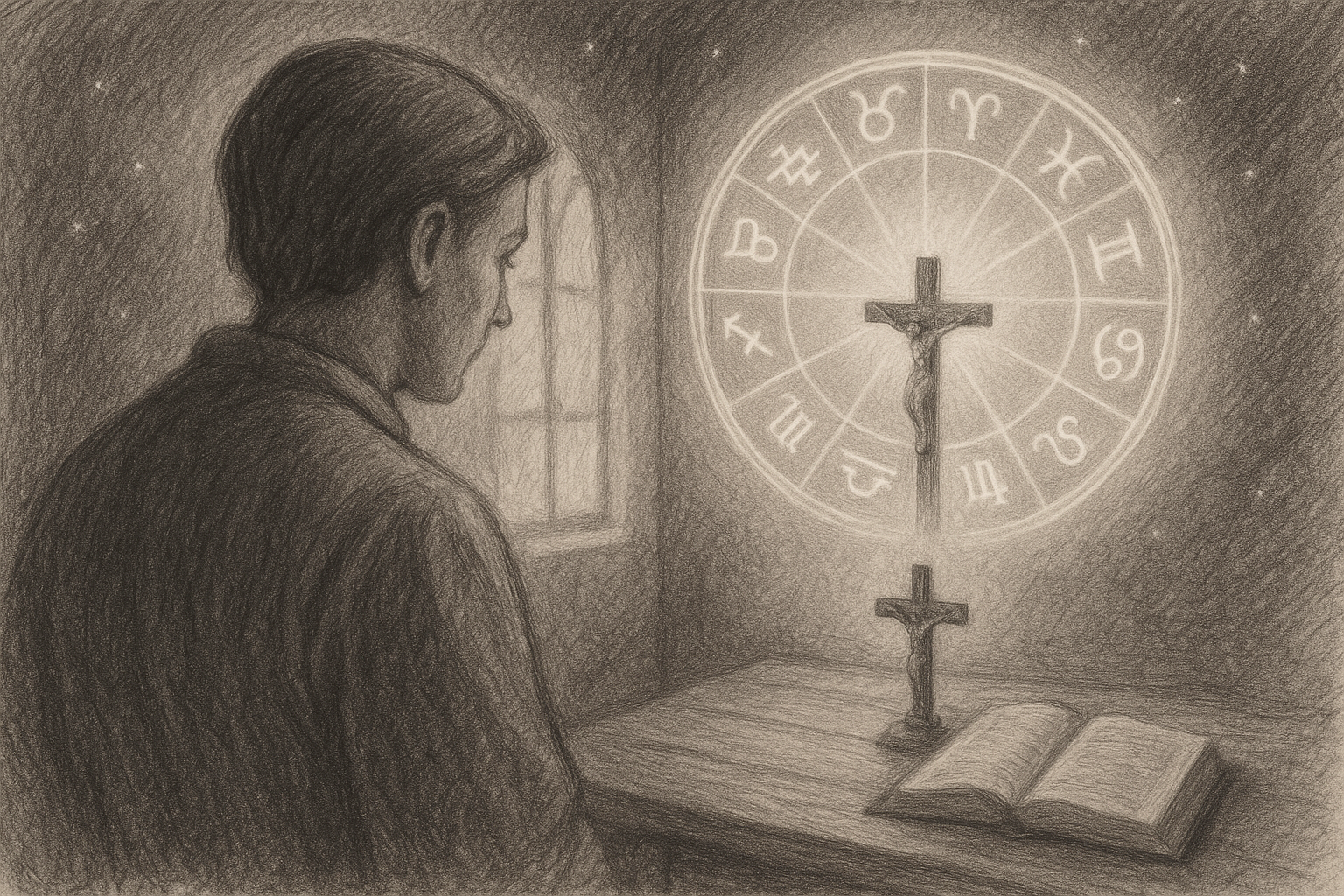
Despair, in the moral sense, is a refusal to trust that God can forgive, heal, or save. It says, in effect, that my sin is greater than his mercy, or that my future is fixed beyond redemption. Sometimes it sounds like self-hatred. Sometimes it sounds like realism. Often it is disguised as humility. A person may say, God can forgive others, but not me. That is not humility. It is a denial of the truth about God.
Scripture answers despair by showing how often God meets people in their worst hour. King David falls and repents. Peter denies Christ and weeps bitterly, yet is restored. The prodigal son comes home rehearsing his unworthiness, only to find the father already running toward him. The Gospel does not deny sin. It denies that sin gets the final word. As the psalmist cries, If you, O LORD, should mark iniquities, Lord, who could stand? and then answers his own fear with trust: But with you is forgiveness, that you may be revered.
Why despair matters in moral life
Despair matters because our moral life follows what we believe about God. If a person becomes convinced that mercy is unavailable, moral effort will eventually lose its purpose. Why pray if nothing can change? Why confess if forgiveness is impossible? Why try again if failure has already defined the self?
This is one reason despair is spiritually dangerous. It does not always lead to obvious outward acts of rebellion. Sometimes it leads to something quieter: spiritual paralysis. The person stops asking, stops hoping, stops reaching. The conscience grows dull not because it is at peace, but because it has given up. In that state, sin begins to feel inevitable, and grace begins to feel unreal.
Despair can also distort the way we see ourselves and others. A despairing person may become harsh toward the weak, because weakness in others mirrors the weakness he cannot bear in himself. Or he may become passive, accepting patterns of sin as though change were impossible. Both responses reduce moral life to survival. The Church, by contrast, calls us to conversion. Conversion assumes that the sinner is not trapped forever, and that God can do more in the soul than guilt can do alone.
The saints knew this. They did not become holy by pretending sin was harmless. They became holy by refusing to let sin define the horizon. Their lives show that repentance is not a dead end but a doorway. Even the hardest fall can become the beginning of a truer humility when it is brought into the light of mercy.
The difference between sorrow and despair
It is important to say that sorrow for sin is not the same as despair. In fact, sorrow is often the first healthy sign that the soul is awakening. A contrite heart sees the truth and grieves. That grief can be painful, but it is not hopeless. It can lead to confession, amendment of life, and renewed trust in God's help.
Despair, on the other hand, does not merely grieve sin. It concludes that sin has won. It turns inward and says that mercy cannot be trusted. The difference may be subtle in language, but it is vast in spiritual effect. One leads toward God. The other turns the heart away from him, even if the lips still speak his name.
Psalm 51 offers a more faithful path. David does not excuse himself, yet neither does he collapse into self-condemnation. He prays, A broken and contrite heart, O God, you will not spurn. That verse is not sentimental. It is a sober act of faith. David believes that God receives the penitent. That belief is the opposite of despair.
How despair is healed in ordinary Catholic life
Healing from despair is usually not dramatic. It is often slow, ordinary, and hidden. God works through small acts of fidelity that rebuild trust over time. The first step is honest prayer. A person who feels abandoned can pray exactly that: Lord, I do not know how to hope, but I want to belong to you. Such prayer is already a movement toward grace, because it stops hiding.
The second step is the sacrament of Reconciliation. Confession is not only for the morally confident. It is especially for those who fear they have gone too far. The priest does not stand in the place of a human judge who enjoys condemning. He stands as a minister of mercy, giving absolution in Christ's name. To hear the words of forgiveness spoken aloud can help a despairing soul begin to believe what faith already says is true.
The Eucharist also strengthens hope. Christ gives himself as food to the weak, not as a prize for the already perfect. A Catholic who struggles with despair should not imagine that the altar is a reward for emotional stability. It is medicine for the pilgrim. When received with proper disposition, the sacrament deepens the soul's union with the One who has conquered sin and death.
Beyond the sacraments, regular spiritual habits matter. A brief daily examination of conscience can keep guilt from turning into hopelessness. Scripture can slowly reshape the imagination, especially passages that reveal God's patience. Devotion to the Blessed Virgin Mary can also be a gentle help, because Mary stands as a mother of trust, pointing always to her Son. And for some, the most important act of faith may be asking for help from a priest, confessor, spiritual director, counselor, or trusted Catholic friend.
Small steps that can reopen the heart
- Name the lie. Say plainly, I am believing that God cannot forgive me, or I am believing that nothing can change.
- Return to prayer in short, simple words, even if the feeling of prayer is gone.
- Make a sincere confession, even if shame is present.
- Receive the Eucharist as a sign that Christ gives himself to sinners who are trying to return.
- Read a psalm of trust each day, especially Psalm 130 or Psalm 51.
- Seek human help when hopelessness is tied to depression, trauma, or persistent anxiety.
Repentance without self-destruction
One common temptation is to think that severe self-condemnation proves sincerity. It does not. Catholic repentance is truthful, but it is not self-destructive. God does not ask us to despise ourselves. He asks us to repent, believe the Gospel, and let mercy remake us. There is a difference between hating sin and hating the self beyond hope.
In practice, this means that penance should be ordered toward healing. A penance that deepens trust can be fruitful. A penance that feeds a spiral of shame may need to be reconsidered with wise guidance. The goal is not to punish the soul into goodness. The goal is to let grace restore what sin has damaged.
It is also wise to avoid isolating oneself. Despair grows in silence. It tells a person to hide from God, from the Church, and from other people. But Christ places us in a body, not a private spiritual struggle. The support of the Church matters because faith is communal. When one member is weak, another can carry the prayer for a time.
May the God of hope fill you with all joy and peace in believing. That blessing is not a denial of struggle. It is a promise that hope itself is a gift God can supply when ours is exhausted.
Learning to hope again
Hope is not always felt at once. Sometimes it begins as obedience before it becomes comfort. A person may confess without feeling relieved, pray without feeling reassured, or receive counsel without seeing immediate change. Yet each faithful act becomes a small refusal to let despair define reality. In time, those small refusals can gather into a new habit of trust.
For Catholics, this is not optimism in the shallow sense. It is theological hope, rooted in Christ's resurrection. Jesus has already entered the depth of human suffering and come out the other side. He knows guilt, grief, abandonment, and death. He has also defeated them. That is why despair and Catholic life can never truly belong together. The Christian may walk through darkness, but he does not walk alone, and he does not walk toward nothing.
If you are burdened by despair, begin where you are. Bring the truth to God. Ask for mercy. Return to the sacraments. Let the Church help carry what you cannot carry by yourself. The Lord who received Peter after his denial still receives sinners who come back with trembling hands. His mercy is not fragile, and his patience is not small.
Keep Reading on Lets Read The Bible
Frequently Asked Questions
Is despair always a mortal sin in Catholic teaching?
Despair is a grave matter because it directly opposes the theological virtue of hope. Whether it is mortal in a given case depends on full knowledge and deliberate consent. Pastoral charity is important, especially when fear, mental illness, or trauma are involved.
How can I tell the difference between despair and depression?
Depression is a mental health condition that can affect mood, thinking, and energy. Despair is a moral and spiritual refusal to trust in God's mercy. They can overlap, and one can intensify the other, so both spiritual and professional help may be needed.
What should I do if I feel God can never forgive me?
Say that fear honestly in prayer, make a sincere confession, and speak with a priest or trusted Catholic guide. If hopelessness is severe or tied to self-harm, seek immediate mental health support as well. The Church encourages both spiritual and practical care.