Jesus and the Gospels
When One Sheep Wanders: Mercy, Search, and the Heart of Christ
A close reading of Jesus' parable of the lost sheep and what it reveals about God's mercy, repentance, and everyday Catholic life.
Site Admin | February 22, 2026 | 78 views
The parable of the lost sheep is one of the most beloved scenes in the Gospels because it speaks so directly to the human heart. We know what it is to stray, to lose our way, or to feel that we have gone too far. In the lost sheep explanation, Jesus gives us more than a comforting image. He reveals the mercy of God, the seriousness of sin, and the joy of heaven when a sinner returns.
The parable appears in the Gospels of Matthew and Luke, and in both places it is tied to the same basic truth: God does not shrug when one of His children goes missing. He seeks. He calls. He rejoices when the lost are restored. For Catholics, this is not only a beautiful idea. It is a pattern that shapes the sacramental life of the Church, especially confession, conversion, and pastoral care.
The setting in the Gospel
In Matthew, Jesus speaks the parable in the middle of an instruction about little ones and the danger of causing them to sin. He asks, if a shepherd has a hundred sheep and one goes astray, will he not leave the ninety-nine and go in search of the one that is lost? The image is simple, but the conclusion is startling. The shepherd does not treat the stray sheep as disposable. He goes after it with intention and tenderness.
Luke places a similar parable in a different setting. There, Jesus is responding to criticism from the Pharisees and scribes because He welcomes sinners and eats with them. The story of the lost sheep is joined to a larger theme in Luke's Gospel: God actively seeks those who have wandered, and heaven rejoices when they repent. Jesus is not merely defending His mercy. He is showing the very heart of the Father.
That setting matters. The parable is not a vague moral lesson about persistence. It is spoken in the middle of real tension, real sin, and real religious misunderstanding. Some listeners were offended that Jesus drew near to sinners. He answers not with an argument in the abstract, but with an image that exposes the logic of divine love.
If a man has a hundred sheep and one of them goes astray
What the shepherd reveals about God
In Scripture, shepherding is more than a pastoral occupation. It is a deeply biblical image for kingship, guidance, protection, and covenant care. The Lord Himself is called Shepherd in the Psalms: The Lord is my shepherd; there is nothing I shall want The Lord is my shepherd. By using this image, Jesus places Himself inside God's own care for His people.
The lost sheep explanation, then, begins with this truth: God is not distant from human weakness. He knows how easily we wander. He knows how often we are tempted, distracted, or spiritually sleepy. His mercy is not naive approval of sin, but active love that goes looking for the sinner.
That is an important Catholic balance. Mercy is not pretending that sin does not matter. If the sheep is lost, something is wrong. If a person has strayed from grace, that separation is real. But the Shepherd's response is not resentment. He seeks restoration. He goes out to recover what is endangered.
In this way, the parable teaches us that the initiative belongs to God. Conversion is a response to grace before it is ever a human achievement. We do not climb our way back to the flock by sheer effort. We are found. Then, strengthened by grace, we learn to follow.
The one sheep and the ninety-nine
Many readers pause at the detail that the shepherd leaves the ninety-nine to search for the one. Does this mean the ninety-nine do not matter? In the logic of the parable, the answer is no. The ninety-nine matter precisely because the shepherd is responsible for the whole flock. The point is not that the majority are neglected. The point is that no single sheep is beyond care.
Jesus is teaching the value of each person before God. In a culture that can measure success by numbers, God sees the one. The overlooked, the inconsistent, the spiritually fragile, the person who has drifted far from prayer or sacrament, all remain precious in His sight.
For Catholics, this has direct implications for parish life. A healthy Church does not become comfortable with spiritual absence. It does not say, one missing soul is not worth the trouble. Instead, it learns from Christ to notice who has stopped coming, who has grown quiet, who is carrying wounds, or who feels unworthy of return.
At the same time, the parable also humbles those who remain. The ninety-nine are not self-sufficient. They are still sheep. They still need the shepherd's guidance. If we imagine ourselves secure by our own strength, we have already missed part of the lesson.
Repentance and joy in heaven
In Luke's version, Jesus makes the meaning explicit: there will be more joy in heaven over one sinner who repents than over ninety-nine righteous persons who need no repentance There will be more joy in heaven over one sinner who repents. This does not mean God despises the faithful. It means heaven rejoices when what was lost is recovered.
The word repentance should never be reduced to embarrassment or regret. In Catholic teaching, repentance is a real turning of the heart, a conversion of mind and life. The lost sheep does not merely feel sorry for wandering. It is brought back into safety. Likewise, sinners are not called only to feel guilty. They are called to return.
This is why the sacrament of Reconciliation stands so close to the parable. Confession is a concrete way the Shepherd restores the lost to communion. The Church does not invent mercy. She receives and ministers it. The priest, acting in the person of Christ, speaks the pardon that the wandering soul most needs to hear.
The joy in heaven is not sentimental decoration. It is the divine response to restoration. God's mercy is active, and it ends in communion, not mere tolerance.
How the parable speaks to daily Catholic life
The lost sheep explanation is not only for people who have been far from the Church for years. It speaks to ordinary Catholic life, where drifting can happen quietly. A person can attend Mass and still wander inwardly through resentment, secret sin, indifference, or neglect of prayer. The parable asks us to notice when we have gone astray, even in small ways.
It also shapes the way we treat others. Catholics are called to be instruments of the Shepherd's search. That means patience with those who are distant, truth spoken without cruelty, and an honest refusal to reduce people to their worst moment. If Christ does not give up on the lost, neither should His disciples.
There are practical ways this can take root in daily life:
- Make a sincere examination of conscience and ask where your heart has wandered.
- Return regularly to the sacrament of Reconciliation, not as a burden but as a grace.
- Pray for family members or friends who have become distant from the Church.
- Reach out gently to someone who may be spiritually isolated.
- Remember that mercy and truth belong together in Christian witness.
These are not dramatic gestures. They are the ordinary habits of a soul that believes the Shepherd still searches for His sheep.
Why the parable is also a warning
Although the story is full of comfort, it is not soft. To be lost is dangerous. The sheep does not flourish by wandering. In the biblical imagination, straying is tied to vulnerability, confusion, and real peril. Jesus is not minimizing that. He is warning us that spiritual distance has consequences.
This is where the parable becomes a gift to the conscience. It tells us the truth about ourselves. We are not as steady as we think. Left to our own impulses, we drift. Sin does not usually announce itself with thunder. Often it comes through small neglects, repeated compromises, and the slow cooling of love.
Yet even this warning is wrapped in mercy. Jesus exposes danger because He wants to rescue. The purpose of the warning is not despair but return.
For that reason, the parable should never be used to shame the repentant or to romanticize rebellion. The lost sheep is not the hero. The Shepherd is. The heart of the story is not our wandering genius but Christ's faithful pursuit.
Christ the Good Shepherd in Catholic memory
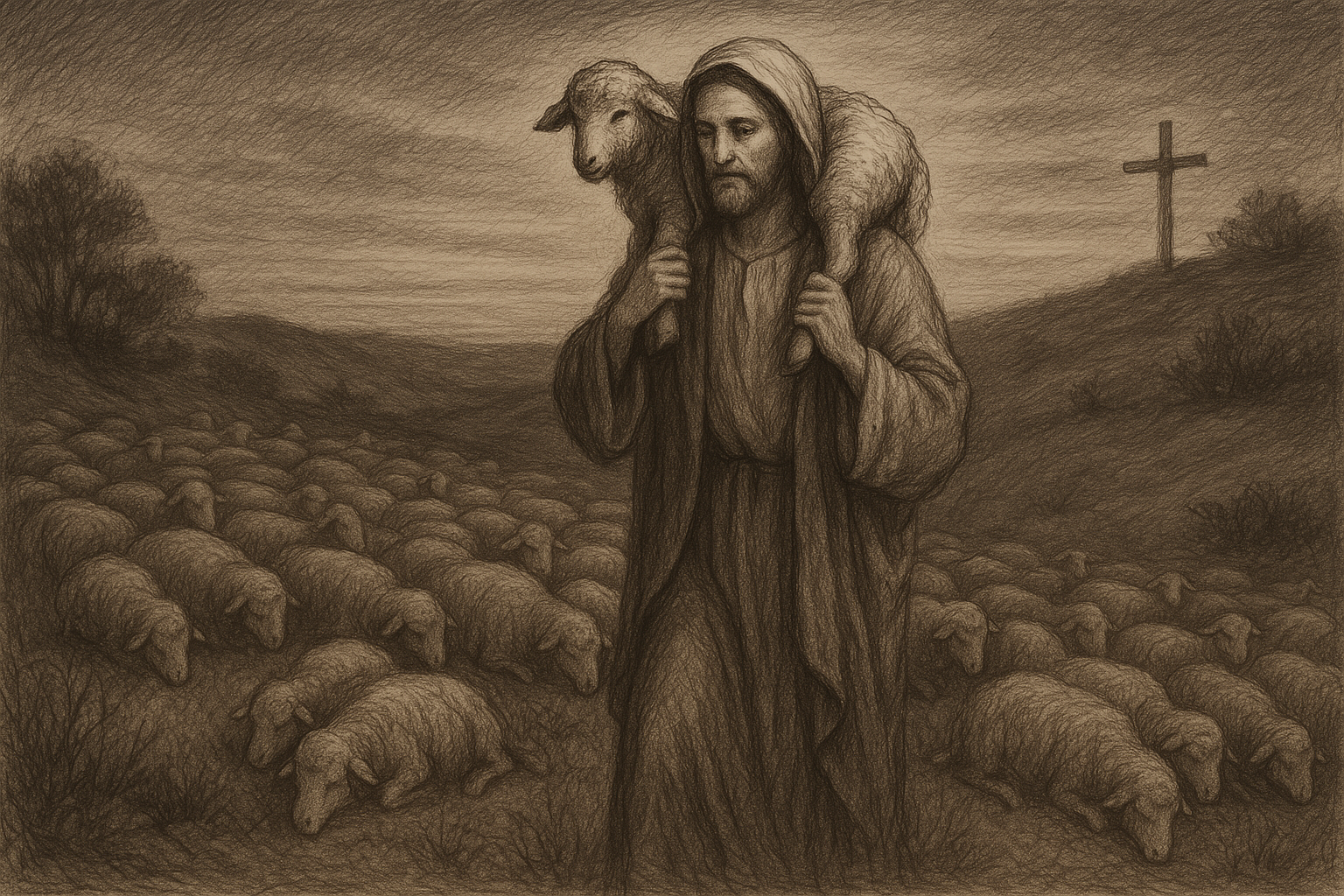
Catholics often hear the lost sheep alongside the image of Christ as the Good Shepherd. These images belong together. The Shepherd seeks, carries, protects, and leads. He does not merely point out the way from a distance. He enters the terrain of our confusion.
There is even tenderness in the detail that the shepherd places the recovered sheep on his shoulders. The scene suggests both strength and intimacy. The sheep does not boast of finding its own way home. It is borne back by the one who loves it.
That is a fitting image for grace. So much of the Christian life is being carried before it is ever about carrying others. We are upheld by Christ's fidelity. Then, once we have learned that mercy, we can become more merciful ourselves.
In this light, the parable is not only about sinners out there. It is about every baptized person who needs renewal. The Church is a flock made of forgiven people, and every Mass, every act of penance, every prayer for conversion keeps us mindful that we belong to a Shepherd who does not forget us.
The lost sheep explanation, then, is really an explanation of the heart of Christ. He is the One who seeks, the One who restores, and the One who rejoices when the lost are found. If we let that truth sink in, we begin to see both our own need and our calling more clearly: to return when we have wandered, and to reflect the Shepherd's mercy to anyone who has not yet come home.
Keep Reading on Lets Read The Bible
Frequently Asked Questions
Where does the parable of the lost sheep appear in the Bible?
It appears in Matthew 18 and Luke 15. Matthew presents it in a teaching about little ones and scandal, while Luke places it in the context of Jesus welcoming sinners.
What is the main lesson of the lost sheep?
The main lesson is that God seeks the sinner, values each person, and rejoices when the lost repent and return.
How does the lost sheep relate to Catholic confession?
The parable mirrors the sacrament of Reconciliation, where Christ restores sinners to communion through repentance and sacramental forgiveness.