Marian Devotion
Three Bells, One Mystery: Praying the Angelus with the Mind of the Church
A brief Marian prayer that keeps the Incarnation before the heart and teaches the day to turn toward Christ.
Site Admin | April 16, 2026 | 94 views
The the Angelus Catholic meaning is easy to miss if the prayer has always sounded like background music in Catholic life. Three short verses, a response, and the Lord's Prayer may seem almost too simple to carry much weight. Yet the Angelus is one of the Church's most concentrated prayers. It gathers Scripture, Marian devotion, and the mystery of the Incarnation into a few quiet moments that can be prayed at home, in a church, in the middle of work, or wherever the bell or memory calls the heart back to God.
At its center, the Angelus is a prayer about Jesus Christ. It is Marian because it remembers the Virgin Mary. It is biblical because nearly every line echoes the Gospel. And it is doctrinal because it confesses that the eternal Word truly became flesh. When Catholics pray it with attention, the Angelus becomes less a routine and more a school of faith.
What the Angelus says, and why it matters
The Angelus takes its name from the opening word, Angelus Domini, meaning the angel of the Lord. The prayer recalls the Annunciation, when the archangel Gabriel announced to Mary that she would conceive the Son of God by the Holy Spirit. The central lines come directly from Scripture: Mary's greeting in Luke's Gospel, the message of the angel, and the mystery of the Word made flesh.
The Angelus is normally prayed with three short verses and responses, followed by a concluding prayer. The pattern is rhythmic and calm. It does not rush the believer. It invites recollection. Each repetition is like a small kneeling of the soul before the mystery that God entered human history in the womb of a young Jewish woman.
This is not sentimentality. It is Christian doctrine in prayerful form. The Church teaches that the Son of God took on human nature for our salvation. The Angelus keeps that truth close to daily life. In a culture that often pulls the mind toward noise and speed, the prayer asks Catholics to remember, several times a day if possible, that everything changes because Christ has come among us.
Scripture at the heart of the prayer
The Angelus is built from the Bible, especially the Gospel of Luke and the Gospel of John. The first part recalls Gabriel's announcement to Mary: The angel of the Lord declared unto Mary, and her humble assent to God's word. The response speaks of the Son of God taking flesh in her womb: And the Word was made flesh.
That line from John is one of the great confessions of Christian faith. It is not a symbol, not a metaphor, and not a pious way of speaking about divine closeness. It means that the eternal Word truly became man. The Angelus places that truth on the lips of ordinary believers so that faith in the Incarnation is not left to theology books alone.
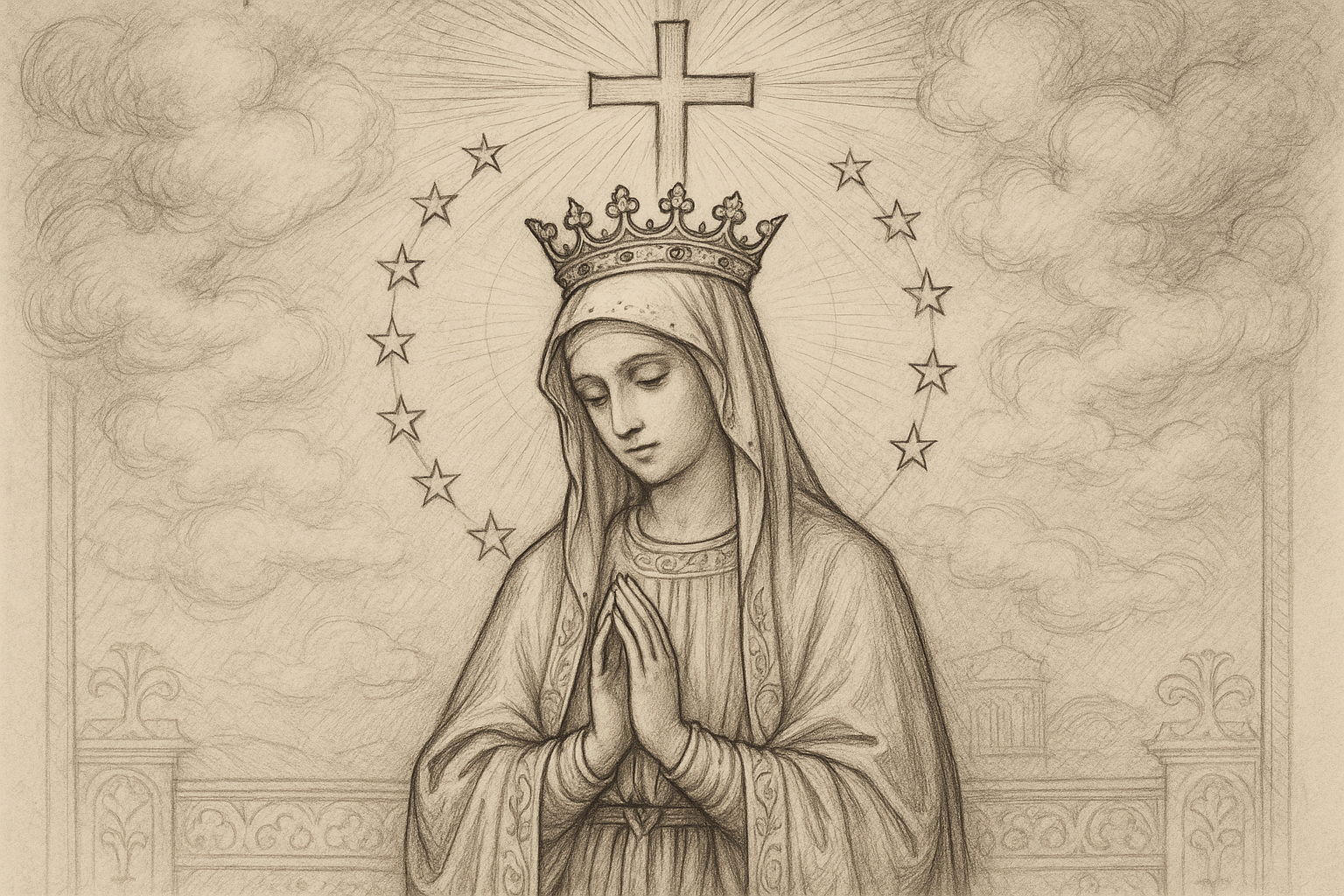
The prayer also points to Mary's place in salvation history. When Catholics say, Blessed art thou among women, they are echoing the words of Elizabeth, who recognized the blessedness of Mary and the presence of Christ in her womb. The Church has always seen Mary in relation to her Son. She is honored because God has done great things in her, and because her whole vocation leads to Jesus.
The Angelus is a prayer of remembrance, but it is also a prayer of presence. It remembers the Annunciation so that the believer can stand before the living mystery of Christ here and now.
The doctrinal center: the Incarnation
The Church does not treat the Angelus as a mere devotion added onto doctrine. Rather, it is a prayer that confesses doctrine. The Incarnation is the heart of Christian faith: the Son of God assumed our human nature without ceasing to be God. In the Angelus, Catholics repeat that truth in a way the body can feel. The bell rings. The mind pauses. The lips speak. The heart returns.
Mary's consent is not the source of salvation, but it is the humble human answer that God willed to receive. The Angelus honors her faith, her obedience, and her motherhood, while always preserving the primacy of God's grace. She is the servant of the Lord, and through her yes the Savior enters the world. That is why Marian devotion at its best never competes with Christ. It leads to Him.
This is one reason the Angelus has remained meaningful across centuries. It does not depend on changing moods or styles. It rests on the unchanging mystery that the Son of God came among us in time. Every time the prayer is said, the believer is invited to answer again: yes, the Word became flesh; yes, salvation entered history; yes, God keeps His promises.
Why the Church has cherished this prayer
For generations, the Angelus was linked to the rhythm of the day. Bells marked morning, noon, and evening, calling the faithful to pause and pray. Even where the bells are no longer heard, the prayer still carries that same rhythm of interruption and recollection. It teaches that the day belongs to God, not only to work, errands, and obligations.
There is wisdom in a prayer that interrupts the ordinary. Many Catholics know how easily the day can become fragmented. Tasks multiply. Thoughts scatter. The soul forgets its center. The Angelus answers that fragmentation with a moment of stillness. It does not remove the duties of the day. It sanctifies them by placing them under the light of the Incarnation.
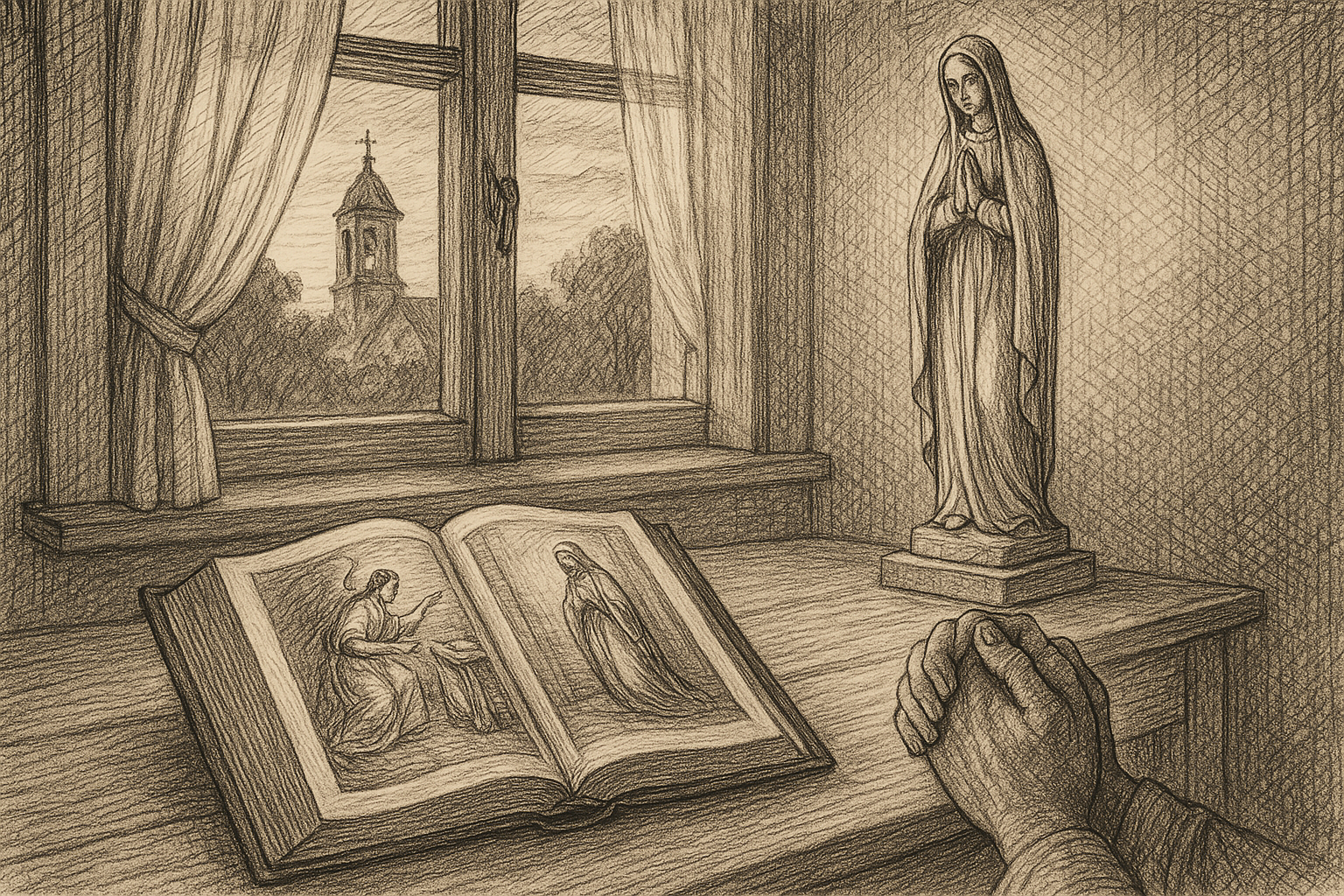
In this way, the Angelus forms attention. It teaches that holiness is not reserved for the extraordinary. A mother can pray it in the kitchen. A student can pray it between classes. A worker can pray it during a lunch break. A retired person can pray it while looking out a window or sitting in silence. The prayer is small, but its reach is wide because the mystery it names is immense.
How the Angelus deepens devotion to Jesus
Some people first approach the Angelus as a Marian prayer and later discover how thoroughly Christ-centered it is. That discovery is important. Mary never takes the place of her Son. She magnifies the Lord. The Angelus does the same. It leads the mind to the moment when the Savior entered human life and reminds the heart that every grace flows from Him.
Praying the Angelus can deepen devotion to Jesus in several ways:
- It strengthens faith in the reality of the Incarnation.
- It keeps the believer close to the Gospel story of the Annunciation.
- It teaches reverence for the humility of Christ, who entered the world through Mary's yes.
- It joins daily life to prayer without requiring long preparation.
- It helps Catholics see Mary's role as entirely ordered toward her Son.
When prayed well, the Angelus also disposes the soul toward gratitude. The believer does not merely remember that Jesus came long ago. The believer gives thanks that God chose to draw near. That gratitude can gently shape the rest of the day. Work becomes service. Silence becomes listening. Duty becomes an offering.
Praying it with Mary, not only about Mary
The Angelus is often described as Marian, but it is important to see that it is prayed with Mary, not simply about her. The prayer enters her own mystery of faith. At the Annunciation, she listens, believes, and consents. Her posture is one of receptive trust. Catholics who pray the Angelus are invited into that same posture.
This matters because authentic Marian devotion is never detached from discipleship. Mary does not draw attention to herself for her own sake. She points to Christ and receives Him in faith. When the Angelus is prayed attentively, the believer is trained to say with humility that God's word is trustworthy, even when it unsettles ordinary plans.
That is one reason the prayer is so fitting for daily use. It does not ask the soul to escape the world. It asks the soul to receive the world under God's promise. Mary's yes was given in the midst of real life, not outside it. The same is true for the believer who prays the Angelus between ordinary responsibilities.
A prayer for ordinary Catholic life
The Angelus remains beautiful because it joins heaven and earth without confusion. It is brief enough to be remembered and rich enough to be pondered for a lifetime. It asks nothing complicated of the believer except attention, faith, and a willingness to stop for a moment before God.
In that pause, the heart rediscovers what the Church never tires of proclaiming: the Son of God became man for us, and Mary, by grace, received Him in faith. That is the mystery the prayer protects. That is the mystery it hands on. And that is why the Angelus Catholic meaning is never exhausted by habit alone. It waits for each new day, ready to turn the soul again toward Christ.
Keep Reading on Lets Read The Bible
Frequently Asked Questions
What is the Angelus in Catholic prayer?
The Angelus is a traditional Catholic prayer that recalls the Annunciation and the Incarnation. It is usually prayed in the morning, at noon, and in the evening, using short biblical verses and responses that center on Christ becoming flesh in Mary.
Why is the Angelus considered a Marian devotion if it is about Jesus?
The Angelus honors Mary because her yes to God made the Incarnation possible by grace, but its purpose is to lead the faithful to Jesus. In Catholic understanding, authentic Marian devotion always points to Christ rather than away from Him.
When do Catholics pray the Angelus?
Many Catholics pray the Angelus at three set times of day, often morning, noon, and evening. In practice, it can be prayed whenever someone wants to pause and remember the mystery of the Incarnation.