Social Teaching
Where Love Gets Its First Language
The hidden work of family life forms hearts, strengthens society, and teaches us how to receive every person as a gift.
Site Admin | October 2, 2026 | 4 views
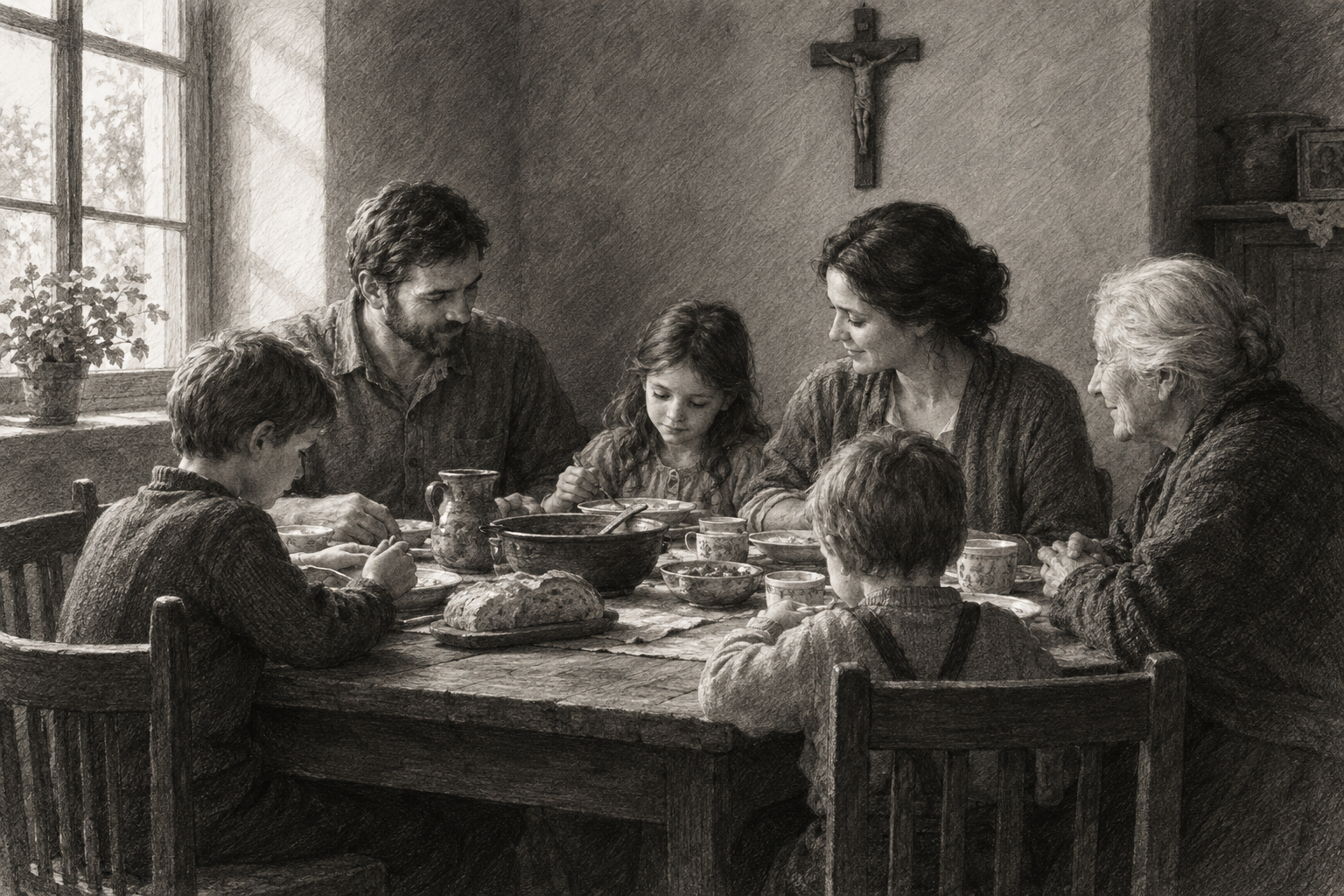
Most people learn love before they can define it. A child discovers it in the arms that provide comfort, the voice that speaks a name with tenderness, and the ordinary routines that make the world feel trustworthy. Later, love is learned through shared meals, household duties, patient correction, forgiveness after conflict, and care for relatives whose needs interrupt carefully made plans.
This is why the Church speaks of the family as the first school of love. The phrase does not mean that every household is peaceful or that every family fulfills its vocation perfectly. It means that the home is ordinarily the first place where a person learns whether others are gifts to be received or problems to be managed. The habits formed there reach far beyond the front door.
The family as the first school of love and Catholic life is therefore not a sentimental theme. It belongs to the heart of Christian discipleship and Catholic social teaching. Family life forms people who will become neighbors, workers, citizens, parishioners, caregivers, and friends. When love is practiced at close range, it prepares the heart to seek justice and the common good.
Love begins with the dignity of the person
The Christian understanding of family begins with a truth that comes before achievement, usefulness, or social status. Every person is created in the image of God. Scripture places this dignity at the beginning of the human story: Genesis 1:27.
Within a family, that truth becomes concrete. An infant cannot earn care. A sick parent may no longer be productive. A child with a disability may require sacrifices that others never see. An aging relative may repeat the same story or need help with the simplest task. Their dignity does not rise or fall with independence, health, income, intelligence, or convenience.
At its best, family life teaches us to say, You are worthy of love because you are a person, not because you are useful to me. This lesson is essential to Catholic social teaching. A society that values only the strong, efficient, attractive, or economically productive has forgotten something that a loving household understands instinctively.
This reverence for the person also shapes discipline and correction. Love does not ignore wrongdoing, but neither does it reduce anyone to a failure. Parents are called to correct without humiliation. Spouses must tell the truth without contempt. Children can learn that actions have consequences while still knowing that affection is not withdrawn as punishment.
The home is a domestic church
Catholic tradition calls the Christian family the domestic church. This does not turn the home into a miniature parish, nor does it place every family on an unrealistic pedestal. It means that the household is a real place of grace, prayer, witness, sacrifice, and growth in holiness.
The hidden life of Jesus gives dignity to ordinary family life. The Son of God entered a household, lived under the care of Mary and Joseph, and shared the rhythms of work, worship, obedience, and community. Luke tells us that Jesus returned to Nazareth with them and was obedient to them: Luke 2:51.
Most family holiness is similarly hidden. It appears in meals prepared after a tiring day, bills discussed honestly, children brought to Mass, apologies offered without excuses, and prayers whispered beside a hospital bed. These acts may seem small, but love is often made durable through repetition.
The Catechism describes the family as the original cell of social life and identifies the home as a primary place of education in Christian faith and human virtue. Parents have a distinctive responsibility for the formation of their children, though the whole household participates. Siblings teach patience. Grandparents carry memory. Children call adults beyond self-absorption. Each member can become both teacher and student.
Charity needs truth, and truth needs charity
Love in the Catholic sense is more than affection. Feelings are real and important, but they change. Christian charity seeks the genuine good of another person, even when that good requires sacrifice, courage, boundaries, or correction.
Love is patient, love is kind. 1 Corinthians 13:4
Patience does not mean pretending that harmful behavior is acceptable. Kindness does not require avoiding difficult conversations. Scripture calls Christians to speak the truth in love: Ephesians 4:15. In family life, separating truth from love causes deep harm. Truth without charity becomes harshness. Charity without truth becomes permission for destructive patterns to continue.
A family becomes a school of love when its members learn to hold these together. A parent can set a firm limit without belittling a child. A spouse can name a wound without seeking revenge. Adult siblings can address responsibilities toward an aging parent without treating one another as enemies. The aim is not victory over another person, but communion grounded in what is good and true.
Ordinary practices that teach lasting love
Families do not need to create an impressive program to begin living this vocation. Formation often happens through simple habits practiced faithfully. Different seasons of life will require different routines, but several practices can help love become visible.
- Pray in a way the household can sustain. A brief prayer before meals, a decade of the Rosary, night prayer with children, or a moment of intercession before leaving for work can establish a rhythm of dependence on God. Consistency usually forms the heart more deeply than occasional intensity.
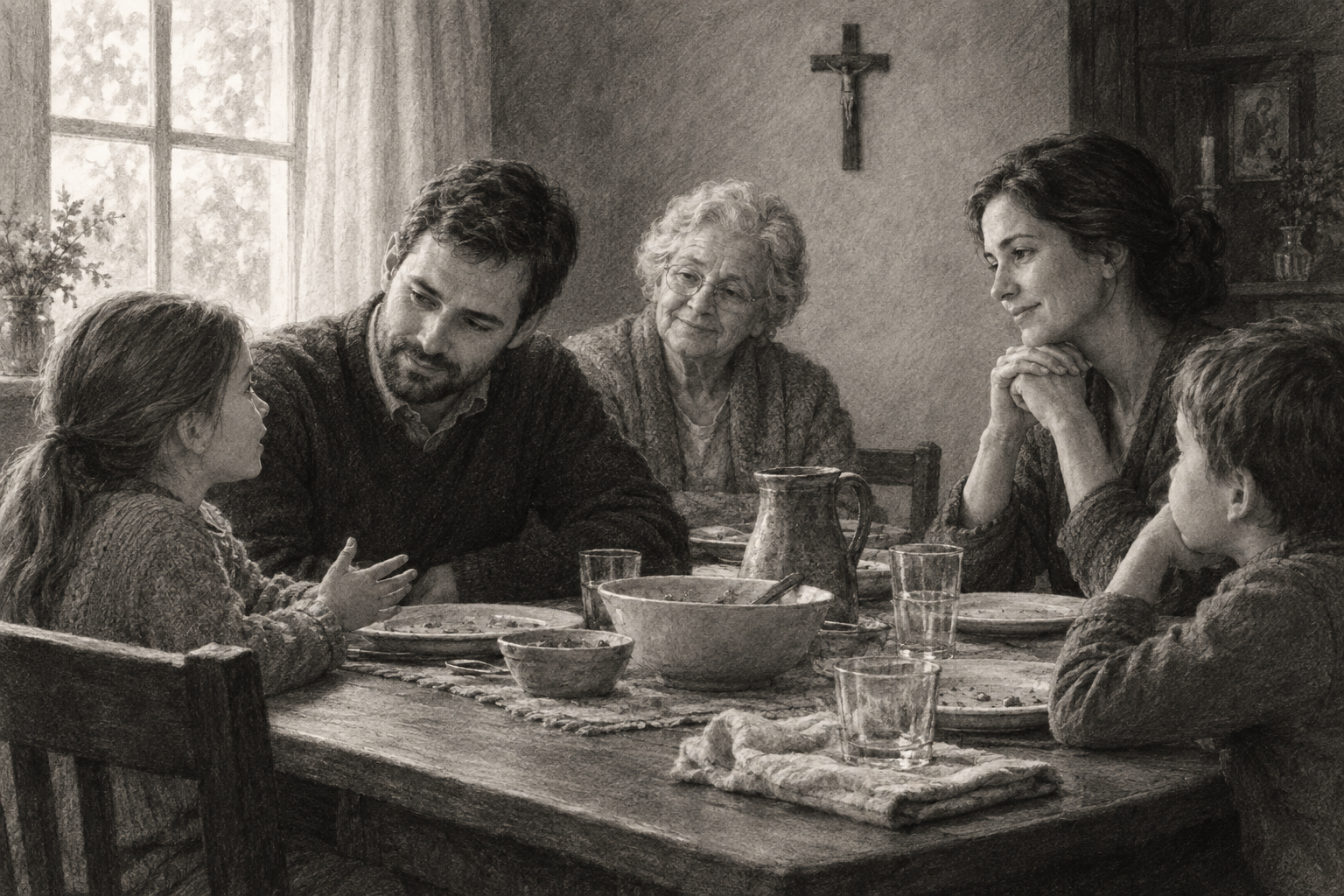
- Protect time for shared attention. A meal without phones, a weekly walk, or an unhurried conversation allows family members to be known rather than merely managed. Listening is one of the clearest ways to honor another person's dignity.
- Make apology normal. Parents should not fear that admitting fault will weaken their authority. A sincere apology teaches that authority is accountable to truth. The words I was wrong, and I am sorry can repair trust and show children how repentance works.
- Share necessary work. Cooking, cleaning, budgeting, and caring for relatives should not be treated as invisible tasks beneath notice. Age-appropriate responsibilities teach that belonging includes service and that the good of the household is a shared concern.
- Practice forgiveness without denying harm. Christians are commanded to forgive, as Colossians 3:13 teaches. Forgiveness rejects hatred and the desire for revenge. It does not eliminate consequences, erase the need for repentance, or require immediate restoration of trust.
- Make room for someone beyond the household. Hospitality toward a lonely neighbor, practical support for a new parent, attention to an elderly parishioner, or generosity toward a family in crisis helps prevent family love from becoming closed in on itself.
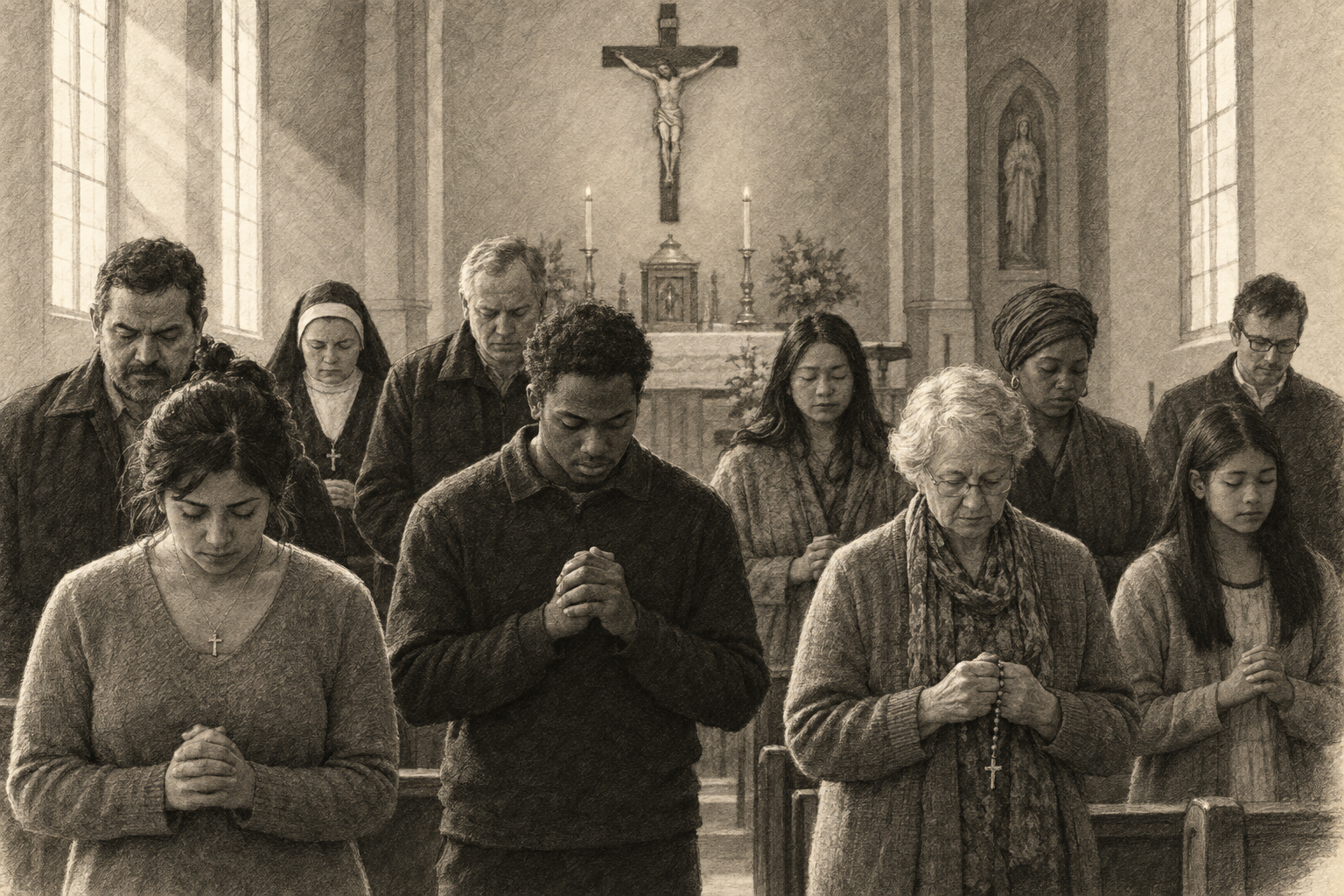
- Keep Sunday centered on God. Participation in the Eucharist gives family love its proper source. At Mass, the household receives Christ's self-giving love and is joined to a family larger than itself, the Church.
None of these practices guarantees a conflict-free home. Their purpose is not to create a polished image. They help build a culture in which gratitude, responsibility, repentance, and mercy can take root.
When family life is wounded
Any honest Catholic reflection on family must acknowledge suffering. Some people grew up amid neglect, addiction, abandonment, manipulation, or violence. Others carry grief from divorce, estrangement, infertility, miscarriage, or the death of a spouse or child. Single parents may bear responsibilities that should have been shared. Families caring for a disabled or chronically ill member may feel exhausted and unseen.
The Church's teaching about the family should never be used to shame people whose lives do not resemble an ideal picture. Christian truth names the goodness of marriage and family while also approaching wounded people with mercy and practical help. A parish that praises family life but ignores overwhelmed caregivers, isolated widows, or parents in crisis has not fully understood its own teaching.
In situations of abuse, seeking safety is not a failure of forgiveness. Protecting children, contacting appropriate authorities, obtaining professional help, and establishing firm boundaries can be morally necessary. Reconciliation cannot be forced, and restored trust requires truth, repentance, and change.
Those who did not receive a healthy school of love at home are not condemned to repeat what they suffered. Grace can heal and re-form the heart. Faithful friendships, wise pastoral care, counseling, sacramental life, and supportive parish relationships can help a person learn patterns of love that were absent in childhood.
Family love has a public horizon
The family is personal, but it is never merely private. Catholic social teaching recognizes it as a fundamental community with its own dignity and responsibilities. Families contribute to the common good by forming people capable of fidelity, cooperation, sacrifice, and concern for the vulnerable.
Society therefore has obligations toward families. Economic and political life should not treat family responsibilities as inconvenient obstacles. Stable work, just compensation, safe housing, appropriate care for children and elders, freedom in education, and time for worship and family life all affect whether households can flourish. Supporting families is not favoritism. It is an investment in a basic community upon which wider society depends.
At the same time, family loyalty must not become indifference to outsiders. Jesus expands the horizon of love. Service offered to the hungry, the stranger, the sick, and the imprisoned is service offered to him: Matthew 25:40. The strongest families are not sealed circles of comfort. They become places from which mercy moves outward.
A child who learns to share at home is being prepared for solidarity. A teenager who cares for a grandparent is learning that weakness does not cancel worth. A couple who remains faithful through hardship bears witness that promises matter. A household that welcomes a person who is lonely teaches that belonging can be offered rather than hoarded.
The next lesson is already in front of us
No family lives this calling without failure. The school of love includes repeated lessons, unfinished work, and the humility to begin again. Its strength does not come from appearing perfect but from returning to grace, truth, and mercy.
The next lesson may be very small: putting down a phone, keeping a promise, asking forgiveness, listening without interruption, praying for a difficult relative, or doing an unnoticed task. In such acts, love receives a human voice and shape. The home becomes a place where dignity is not merely discussed but practiced, and where people are prepared to recognize every neighbor as someone entrusted to their care.
Keep Reading on Lets Read The Bible
Frequently Asked Questions
Why does the Church call the family the first school of love?
The family is ordinarily the first community in which a person experiences care, responsibility, correction, forgiveness, and belonging. These daily experiences form habits that later shape relationships in the Church and society.
Does this teaching ignore broken or nontraditional family situations?
No. Catholic teaching upholds the goodness of marriage and family while recognizing that many households carry serious wounds and burdens. The Church is called to offer truth, mercy, safety, pastoral care, and practical support without reducing anyone to his or her circumstances.
How can a Catholic family become a stronger school of love?
Begin with sustainable practices such as shared prayer, Sunday Mass, attentive conversation, honest apologies, age-appropriate responsibilities, care for vulnerable relatives, and hospitality toward people beyond the household.