Church History
A Brief Pontificate with a Lasting Echo: Pope John Paul I in the Life of the Modern Church
In only 33 days, Pope John Paul I left the Church with a witness of warmth, simplicity, and trust in God that still invites reflection.
Site Admin | January 12, 2026 | 82 views
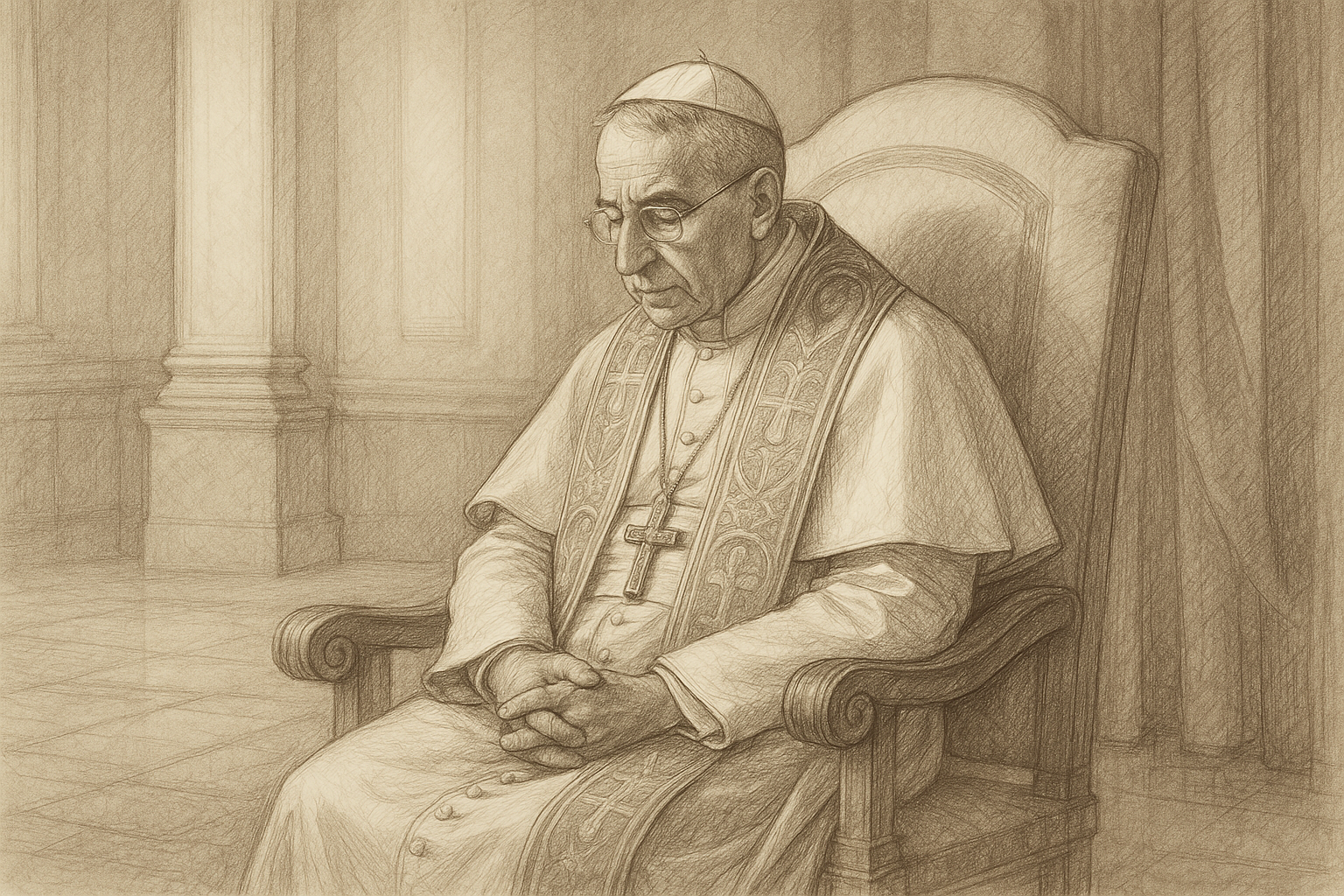
Pope John Paul I history is unlike the story of almost any other pope in the modern era. Albino Luciani was elected on August 26, 1978, and died just 33 days later on September 28. His pontificate was so brief that some people remember it only as a historical pause between two long and consequential reigns. Yet that is too small a way to see him. In a time of confusion, fatigue, and hope after the Second Vatican Council, John Paul I spoke with unusual clarity about the mercy of God, the dignity of ordinary faith, and the beauty of a shepherd who remains close to his people.
To understand his place in Church history, it helps to look at the world he inherited. The Church of the late 1970s was still living through the effects of Vatican II. The council had opened a great period of renewal, but renewal also brought tension. Catholics argued over liturgy, catechesis, authority, and the proper meaning of reform. In many places, faith seemed less settled than before. Political violence, economic strain, and the moral upheaval of the postwar decades shaped public life. The papacy itself was carrying heavy responsibilities in a world that often seemed more interested in novelty than in holiness.
A bishop formed by ordinary pastoral life
Albino Luciani was born in 1912 in the mountain village of Canale d'Agordo in northern Italy. He came from a humble family and knew the hardships of rural life. That background mattered. He never presented himself as a grand intellectual detached from the daily struggles of the faithful. His early priesthood, later service as bishop of Vittorio Veneto, and then as patriarch of Venice formed a pastor who understood people by listening to them.
His ministry gave him a reputation for simplicity, catechetical clarity, and genuine kindness. He was known for speaking plainly about the faith without reducing it. That balance would become one of his most striking qualities as pope. He was not trying to invent a new Church. He was trying to hand on the old faith with warmth and honesty.
Before his election, Luciani had also taken part in the wider life of the Church during the years after the council. He was not a man hostile to reform, but neither was he swept away by novelty. He belonged to that important group of pastors who believed the council should be received faithfully, not treated as an excuse for rupture. That position was not always easy to defend in the years after 1965.
The Church he inherited in 1978
When John Paul I became pope, the Church faced several pressing concerns. The implementation of liturgical reform was still uneven. Many Catholics were grateful for the council's reforms, while others were unsettled by abuses, confusion, or a loss of reverence in some places. Catechesis was also a major concern. Entire generations were growing up with less doctrinal formation than before. In Europe and North America especially, attendance, vocations, and confidence in Church teaching were under strain.
At the same time, the broader world was marked by ideological conflict. Marxist movements, secularization, and consumer culture all pressed hard on Christian life. Catholics were asking not only how the Church should speak, but how she should remain faithful in a noisy age. In this context, the election of a pastor like Luciani was itself meaningful. He was not known for ideological combativeness. He was known for human warmth, doctrinal fidelity, and pastoral patience.
He also became pope in the wake of the long and demanding pontificate of Paul VI. Paul VI had guided the Church through the council's aftermath, but he was often burdened by criticism from both sides. John Paul I inherited a Church still trying to understand what renewal should look like in practice. That is one reason his brief reign has such significance. It was a moment of transition, but also of possibility.
The smile that reached the world
One of the most memorable features of John Paul I history is simply his manner. He was approachable. He smiled easily. He spoke with a gentle directness that made people feel at home. Yet his friendliness was not superficial. It was rooted in a deep Christian conviction that God is not distant from human weakness.
His first public appearances quickly won affection. He chose a humble style and avoided the stiff distance that can make a pope seem inaccessible. People sensed that he was not performing a role but serving as a father. In a Church atmosphere sometimes marked by tension and abstraction, this was a quiet gift.
His charm, however, should not be mistaken for shallowness. John Paul I had a real theological and pastoral seriousness. He wanted to teach. He wanted to form consciences. He wanted Catholics to know that sanctity was possible in ordinary life. That is a deeply Catholic insight, and one that remains needed in every age.
Faith is not made more believable by severity. It often becomes more persuasive when it is embodied in humility, patience, and joy.
His first catecheses and the heart of his message
Although his pontificate was short, John Paul I began a series of Wednesday audiences that already showed the direction of his teaching. He spoke in a simple, accessible style, often drawing on familiar images to communicate doctrine. He did not treat the faith as a problem for experts alone. He wanted ordinary Catholics to grasp its center: God is Father, Christ is Savior, and Christian life is a response of trust.
One of the best known themes linked to him is mercy. He repeatedly emphasized the tenderness of God. That emphasis did not weaken moral teaching. Rather, it gave moral teaching its proper setting. The commandments, confession, conversion, and prayer all make sense because the Lord is merciful and invites sinners home.
Another major feature of his teaching was his concern for the poor and the vulnerable. He did not speak as a theorist of social life. He spoke as a shepherd attentive to human need. This was in continuity with Catholic social teaching, which insists that economic life must serve the human person and that the weak cannot be treated as disposable.
His style of catechesis matters because it showed how doctrine and pastoral care belong together. In a period when many were tempted to separate truth from kindness, or kindness from truth, John Paul I modeled both.
The question of reform without rupture
John Paul I history is also important because it came at a delicate moment for postconciliar Catholic life. Many Catholics sincerely wanted renewal, but the Church needed reform that preserved continuity with what had come before. Luciani seemed to understand this instinctively. He was neither nostalgic for the past nor eager to discard it.
That is one reason his pontificate continues to attract attention. He represented a Catholicism that is both reverent and pastoral, clear and approachable. He did not offer grand programs, because he did not have time. But the tone of his ministry suggested a path forward: faithful teaching, personal closeness, and a refusal to separate doctrine from charity.
There were also practical expectations around his early pontificate. Like any new pope, he would have had to address the Curia, appointments, and the many questions that touch the governance of the universal Church. Yet because he died so suddenly, those plans remained unrealized. The historical record is therefore marked by both what he did and what he never had the chance to do.
His sudden death and the questions it raised
John Paul I died unexpectedly on September 28, 1978. The shock was profound. The pope had appeared publicly only days earlier, and his death immediately generated grief and speculation. The confusion surrounding the event was intensified by imperfect communication from the Vatican and the simple fact that the world was not accustomed to a pope dying so suddenly after election.
In the years that followed, some rumors and theories circulated, but the historical and medical evidence has not established the dramatic claims that occasionally appeared in popular accounts. What is certain is that his death left the Church with a sense of unfinished business. The papacy had barely begun to reveal his priorities when they were interrupted.
That interruption became part of his legacy. His brief reign is remembered not because it solved every problem but because it showed, in miniature, what a more personal style of pastoral leadership could look like. He became a figure of tenderness, mystery, and unrealized promise.
What modern Catholics can learn from his witness
The first lesson is that holiness does not require spectacle. John Paul I did not reign long enough to produce a long list of initiatives, but he showed something essential about Christian leadership. A shepherd can be both strong and gentle. He can speak plainly and still be kind. He can defend the truth without losing the face of a father.
The second lesson is that the Church is renewed not only by documents and debates, but by the conversion of hearts. John Paul I reminded Catholics that mercy is not a slogan. It is the very way God draws sinners back to himself. In an age that often oscillates between harshness and sentimentality, his example remains a quiet corrective.
The third lesson is that ordinary faith matters. Luciani came from a modest background and never lost the habits of a pastor who knew his people. Modern Catholics, especially those who feel small or unseen, can take encouragement from that. The Lord does not measure greatness the way the world does.
Finally, his life reminds the Church to receive each moment as gift. We often plan our futures as if we control them. The sudden brevity of his pontificate exposes that illusion. It also calls believers back to trust. As Scripture says, Keep Reading on Lets Read The Bible
Frequently Asked Questions
Who was Pope John Paul I before becoming pope?
Albino Luciani was a priest, bishop of Vittorio Veneto, and later patriarch of Venice. He was known for pastoral simplicity, clear teaching, and a warm manner with ordinary Catholics.
Why is Pope John Paul I history important if his pontificate was so short?
His papacy matters because it came at a critical moment after Vatican II, when the Church was seeking faithful renewal. His brief reign also offered a vivid witness to mercy, humility, and approachable leadership.
What is John Paul I best remembered for?
He is best remembered for his gentle personality, his early catecheses on mercy and Christian life, and the shock of his sudden death only 33 days after his election.