Marian Devotion
A Mother Drawn Near: The Quiet Power of Our Lady of Guadalupe
A reverent look at Mary's appearance to Saint Juan Diego, the Gospel logic of her message, and the enduring Catholic meaning of Guadalupe.
Site Admin | April 9, 2026 | 79 views
Among the great Marian devotions of the Church, few are as beloved, as tender, or as closely tied to the defense of human life as Our Lady of Guadalupe. In her appearance to Saint Juan Diego in 1531, Mary did not come with worldly power or political noise. She came as a mother, speaking gently, pointing to her Son, and gathering the lowly into the mercy of God. For Catholics, Our Lady of Guadalupe explained is not merely a historical event to be memorized. It is a living sign of how heaven enters human suffering with compassion, dignity, and hope.
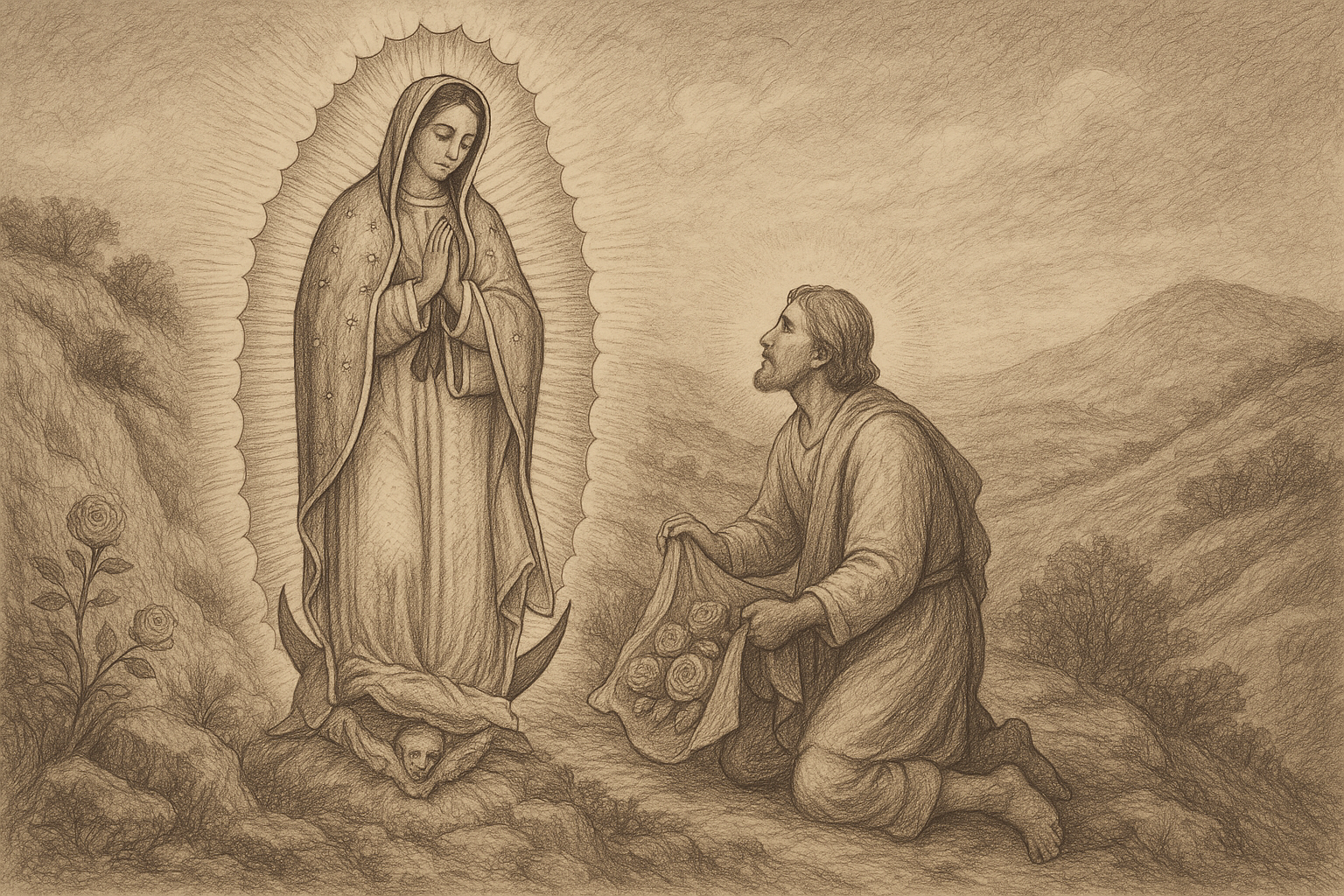
The story begins on Tepeyac Hill, where the Virgin Mary appeared to Juan Diego, a humble Indigenous convert in Mexico. She spoke to him in a way that was personal and accessible, showing that the Gospel is never reserved for the powerful. Mary asked that a temple be built there so she might show and give all her love, compassion, help, and protection to the people. That maternal language matters. It places the whole event inside the logic of Christian revelation, where God does not save from a distance but draws near in mercy.
To understand Guadalupe as Catholics do, we must first remember who Mary is. She is not the source of grace, and she does not replace Christ. She is the Mother of the Lord, the woman who said yes to the Incarnation, and the first and most faithful disciple of her Son. At Cana, she said, Do whatever he tells you. That short command captures her entire role in the Christian life. She leads attention away from herself and toward Jesus. Every authentic Marian devotion, including Guadalupe, does the same.
Marys message is always Christ centered
In Scripture, Mary appears most clearly as the one who receives the Word, bears the Word, and points others to the Word made flesh. Her Magnificat reveals the rhythm of her heart: My soul magnifies the Lord My soul magnifies the Lord. She rejoices in God her Savior, not in her own greatness. When Catholics turn to Our Lady of Guadalupe, they are not drifting from the Gospel. They are entering more deeply into the way the Gospel comes to us through humility, receptivity, and trust.
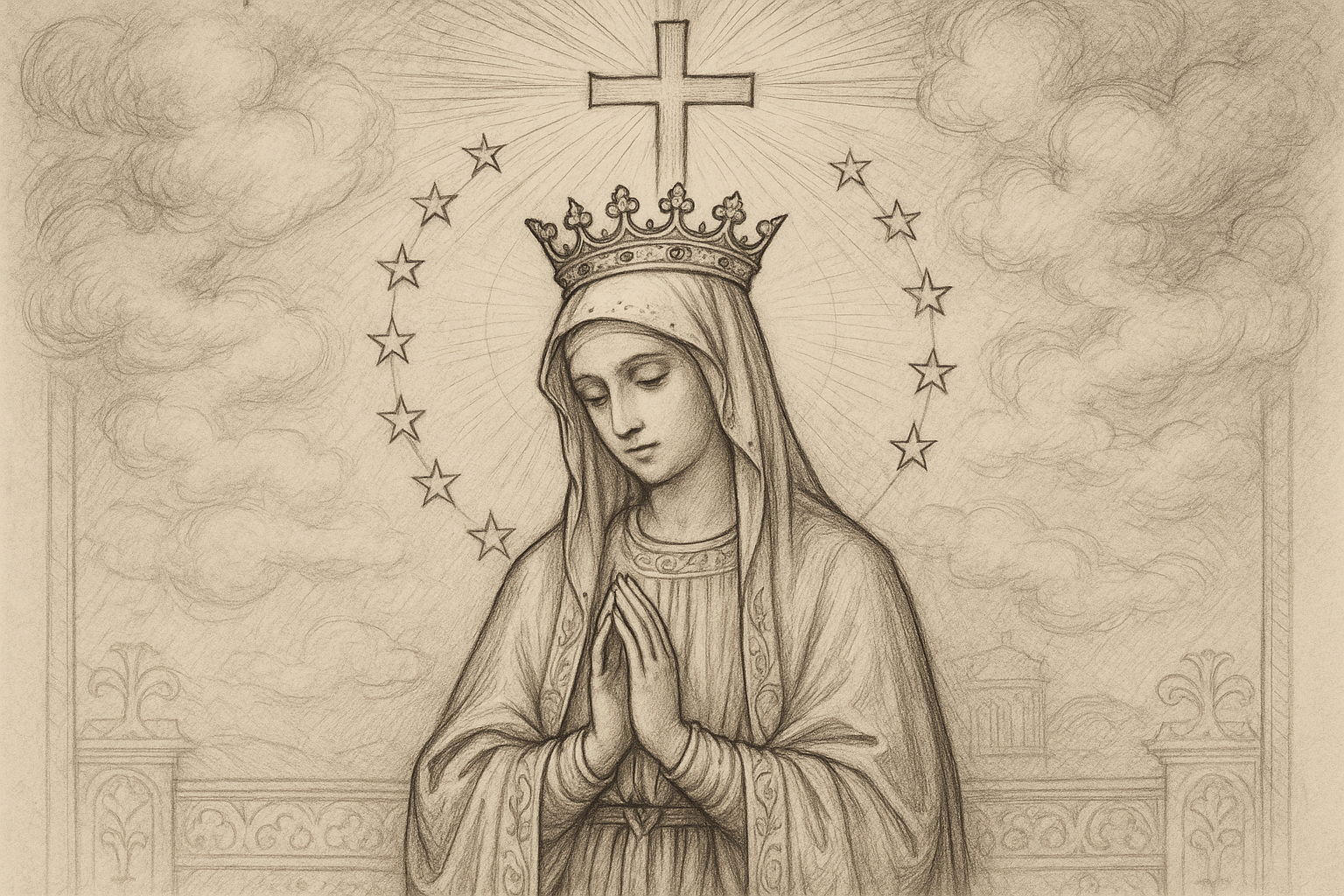
The Guadalupan image itself carries this lesson. Mary is shown as near, maternal, and radiant, standing before the sun and clothed with stars. The symbolism speaks of purity, grace, and victory over darkness. Yet the image is not triumphant in a worldly sense. Her hands are folded in prayer. Her face is peaceful. She appears as one who belongs wholly to God and who, in that belonging, becomes a refuge for His children.
This is deeply biblical. In the Book of Revelation, the Church contemplates a woman clothed with the sun A woman clothed with the sun. Catholic tradition has long seen in that woman both the people of God and a luminous figure of Mary, the mother of the Messiah. Guadalupe does not create that scriptural image, but she gives it pastoral life. Through her apparition, the Church sees again that God raises up the humble and keeps His promises in ways the world does not expect.
The tenderness of God reaches the lowly
One of the most striking parts of the Guadalupe story is the person to whom Mary appears. Juan Diego was not a bishop, a scholar, or a ruler. He was a simple man on his way to Mass instruction, burdened by sorrow and responsibility. When he spoke with the Virgin, he was treated with dignity. That is not a small detail. It reflects a central pattern of salvation history: God chooses the lowly to reveal His nearness.
Mary herself gives voice to that pattern in the Magnificat: He has put down the mighty from their thrones, and exalted those of low degree He has put down the mighty from their thrones. In Guadalupe, this biblical reversal becomes visible. Heaven comes to the poor. Mercy comes to the wounded. A mother meets her child where he is. The message is not that human weakness is unimportant. It is that weakness is precisely where God often chooses to begin His work.
That is why the devotion speaks so strongly to Catholics today. Many people carry hidden grief, family burdens, fear for children, or sorrow over a culture that often forgets the vulnerable. Our Lady of Guadalupe does not ignore those wounds. She gathers them into prayer. Her maternal presence assures the faithful that no one is beyond the reach of divine compassion. She is, in a very real sense, a sign that God has not abandoned His people.
Why Guadalupe and pro-life witness belong together
The Guadalupan message has become especially important in pro-life Catholic witness because it places the dignity of human life at the center of a mother and child relationship. Mary comes bearing Christ within her. In every Christian reflection on Guadalupe, that detail matters. The womb is not treated as incidental. It is honored as the place where the Savior entered history. Catholics therefore see in Mary a profound witness to the sacredness of life before birth.
This is not a modern invention imposed on the devotion. It follows from the Incarnation itself. When the eternal Son of God took flesh in Mary, He sanctified human life from within. The unborn Christ was not invisible to the Father. The child hidden in Mary was already the Redeemer of the world. That truth underlies Catholic respect for every unborn child, every mother in distress, and every family facing fear or pressure.
Guadalupe also speaks to the pain surrounding abortion with a uniquely maternal gentleness. The image is not accusatory. It is consoling. Mary does not come as a politician or a slogan. She comes as a mother who invites trust. That posture is important for pro-life Catholics. The defense of life must be firm, but it must also be compassionate, patient, and willing to accompany those who are suffering. Mary models a kind of courage that does not shout first. She loves first.
At the same time, love does not mean silence about truth. The Church teaches that every human life has inherent dignity from conception to natural death because each person is made in the image of God. The Guadalupe devotion supports that teaching not by replacing doctrine, but by making it memorable in the heart. It helps Catholics pray for unborn children, for mothers in crisis, for repentance where needed, and for a culture that protects the weakest members of the human family.
The Church receives Guadalupe as a gift, not a distraction
Catholic devotion to Our Lady always belongs within the larger life of the Church. The faithful honor Mary because God honored her first. In the words of the Gospel, all generations will call me blessed All generations will call me blessed. That blessing is never an end in itself. It leads us into gratitude for what God has done in her and through her.
The Church has long taught that Marian devotion is healthy when it remains ordered to Christ. The Catechism describes Mary's role as a singular cooperation in the work of salvation, always dependent on the grace of God and never equal to the saving work of her Son. This balance protects the faithful from superstition and keeps devotion rooted in the faith of the apostles. Guadalupe is a beautiful example of that balance. It is rich in affection, but not detached from doctrine.
There is also a missionary aspect to the devotion. The apparition came at a time of deep cultural upheaval, when people needed reassurance that the Gospel was not foreign to them. Mary spoke in a way that opened hearts. The result was not merely private consolation but renewed evangelization. A church was built, the faith spread, and many were drawn toward Christ. Here again, Mary does what she always does: she leads people to her Son and gathers them into His Church.
What Catholics can do with this devotion today
Devotion to Our Lady of Guadalupe should not remain at the level of sentiment alone. It can shape ordinary Catholic life in practical ways. One way is to pray the Rosary with special attention to the mysteries of the Incarnation, especially the Annunciation and the Visitation. In those mysteries, Mary appears as a woman who welcomes God's plan and bears Christ to others. Guadalupe echoes the same grace.
Another way is to pray for mothers and children by name. Many parishes, families, and ministries have people who are carrying heavy burdens in silence. A Guadalupe devotion can become a school of intercession. It teaches Catholics to notice suffering, to accompany it, and to place it before the Heart of Jesus through the prayer of His Mother.
It is also fitting to visit the Blessed Sacrament and bring the concerns of life issues, family needs, and personal conversion before the Lord. Mary never draws attention to herself apart from worship. If Guadalupe strengthens our love for the Eucharist, confession, Scripture, and charitable action, then the devotion is bearing good fruit.
For families, the feast of Our Lady of Guadalupe can be a natural time to tell the story to children, to pray for unborn babies, and to ask Mary to protect homes from fear and division. For those involved in parish ministry or pro-life work, it is a chance to remember that truth and mercy must go together. The Church serves life best when she reflects the patience, clarity, and maternal concern of the Virgin herself.
Mary's greatness is never self-assertion. It is the greatness of one who is entirely available to God and therefore wholly available for His children.
That sentence captures much of what Catholics mean when they speak of Our Lady of Guadalupe with love. She is not a decorative figure placed at the edge of the faith. She is a mother who helps the Church remember what God is like: near, faithful, humble, and stronger than despair. When we honor her rightly, we do not step away from Christ. We learn again how He comes to us, how He lifts the lowly, and how His mercy still seeks out the poor, the wounded, and the unborn.
Keep Reading on Lets Read The Bible
Frequently Asked Questions
What is the main Catholic meaning of Our Lady of Guadalupe?
The main Catholic meaning is that Mary appears as a mother who points to Christ, consoles the lowly, and reminds the Church of the dignity of every human life. Her message is always ordered to Jesus and to the call to trust God.
Why is Our Lady of Guadalupe often connected with pro-life ministry?
Because the devotion highlights Mary carrying Christ in her womb and presenting motherhood as sacred. Catholics see in Guadalupe a powerful reminder that unborn life is precious and that mothers deserve compassion, support, and practical help.
How can I pray with Our Lady of Guadalupe in a Catholic way?
Pray the Rosary, read the Gospel passages about Mary, ask her intercession for families and for unborn children, and bring those prayers before Jesus in the Eucharist. Authentic Marian devotion always leads to deeper faith in Christ.