Sacraments and Liturgy
A Friday Kept Close to the Heart of Jesus
The history, spiritual purpose, and practical observance of a beloved devotion to the Sacred Heart
Site Admin | September 7, 2026 | 76 views
For many Catholics, the first Friday of each month has a quiet significance. It may mean attending an early Mass before work, visiting a parish during lunch, going to Confession, or spending time before the Blessed Sacrament. Beneath these practices is a simple desire: to respond with love to the love of Jesus Christ.
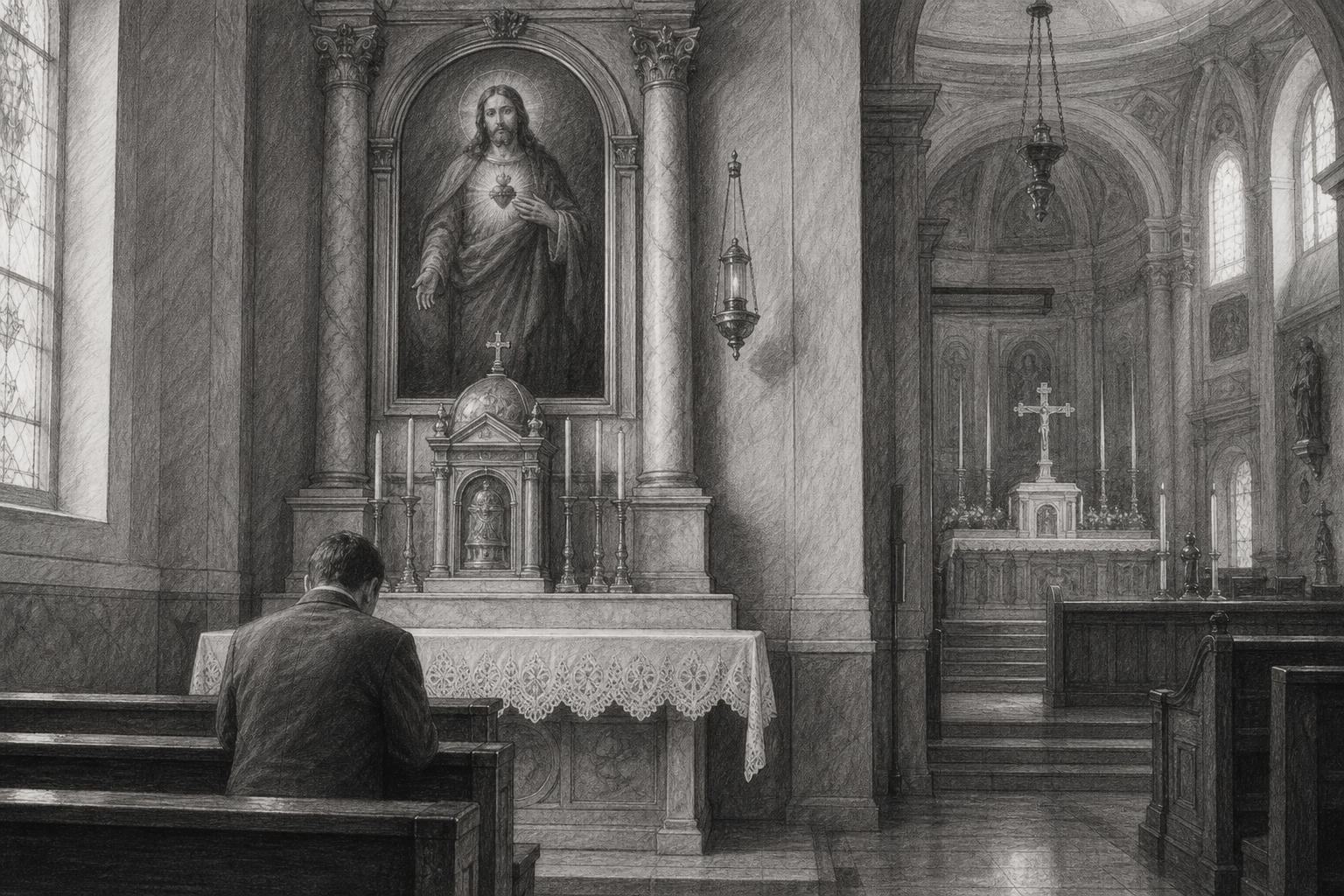
First Friday devotion is closely associated with the Sacred Heart of Jesus and with receiving Holy Communion in a spirit of reparation. It invites Catholics to contemplate the human heart of Christ as a sign of his divine and human love. It also asks us to recognize that love can be refused, neglected, or treated with indifference, including by those who profess to follow him.
A sound First Friday devotion Catholic guide must therefore begin with the Eucharist rather than with a checklist. The devotion is not a spiritual bargain or a guarantee detached from repentance. It is a monthly return to the sacramental heart of the Church, where Christ gives himself for the life of the world.
What First Friday devotion is
First Friday devotion is the Catholic practice of honoring the Sacred Heart of Jesus in a particular way on the first Friday of the month. Its most characteristic act is receiving Holy Communion worthily and offering that Communion in reparation for sin, ingratitude, and indifference toward Christ.
Many Catholics also include several related practices:
- Participating attentively in Mass.
- Receiving the Sacrament of Reconciliation when needed.
- Spending time in Eucharistic adoration.
- Praying the Litany of the Sacred Heart or another approved prayer.
- Offering sacrifices, works of mercy, or daily duties in reparation.
- Renewing a personal or family consecration to the Sacred Heart.
None of these should be treated as magic. They are outward expressions of faith, hope, repentance, and love. The value of the devotion comes from Christ and from the grace he gives through the sacraments, not from the calendar by itself.
The biblical heart of the devotion
Devotion to the Sacred Heart is not simply an interest in a religious image. In biblical language, the heart signifies the deep center of the person, including one's love, will, desires, and decisions. To contemplate the heart of Jesus is to contemplate the interior love of the incarnate Son of God.
Jesus describes himself as gentle and humble of heart when he calls the weary to come to him: Matthew 11:28 and Matthew 11:29. The Sacred Heart is therefore not an abstract symbol. It is the heart of the living Lord who welcomes sinners, bears human suffering, and teaches his disciples how to love.
The devotion also draws attention to Christ's pierced side. After Jesus dies on the cross, a soldier pierces his side, and blood and water flow out: John 19:34. Catholic tradition has long contemplated this scene in relation to the life of grace and the sacraments, especially Baptism and the Eucharist. The pierced side reveals a love that gives itself completely.
First Friday devotion is a response to the truth that Christ loved us not from a safe distance, but through his body, his sacrifice, and his self-gift.
Reparation must be understood in this light. Catholics do not imagine that Christ's saving sacrifice is incomplete. Rather, they unite their prayer, repentance, and love to his perfect offering. As Saint Paul teaches, God's love is shown in Christ's death for sinners: Romans 5:8. Reparation is our grace-filled response to a love that has already taken the first step.
How the devotion developed
Christian devotion to the love and wounded side of Christ developed over many centuries. Medieval saints and spiritual writers reflected deeply on the heart of Jesus, especially in connection with his Passion and the Eucharist. Saint Gertrude the Great and other figures helped nurture this contemplative tradition. Saint John Eudes later promoted liturgical devotion to the hearts of Jesus and Mary.
The First Friday practice is especially connected with Saint Margaret Mary Alacoque, a French Visitation nun. Beginning in 1673, she reported a series of visions of Christ at her convent in Paray-le-Monial. These revelations emphasized his burning love for humanity, the pain caused by human ingratitude, reception of Holy Communion on First Fridays, and a spirit of reparation. Saint Claude de la Colombiere, a Jesuit priest and her spiritual director, helped support and spread the devotion.
The Church's reception of the Sacred Heart devotion grew over time. The feast of the Sacred Heart was extended to the universal Church by Pope Pius IX in 1856. Today it is celebrated as a solemnity on the Friday after the second Sunday after Pentecost.
The reported revelations to Saint Margaret Mary belong to the category of private revelation. Catholics are not required to treat private revelation as part of the deposit of faith. Public revelation, given in Christ and handed on through Scripture and Tradition, is complete. An approved private revelation may help the faithful live the Gospel more deeply, but it cannot replace or correct the Gospel.
This distinction protects the true meaning of First Friday devotion. Its foundation is not curiosity about extraordinary experiences. Its foundation is Jesus Christ, his sacrificial love, and his Real Presence in the Eucharist.
The nine First Fridays
A traditional form of the devotion involves receiving Holy Communion on the first Friday of nine consecutive months. This practice is linked to promises attributed to Christ in the revelations received by Saint Margaret Mary. The best known of these concerns the grace of final repentance and the assistance needed for salvation for those who faithfully complete the devotion.
This promise should never be interpreted as automatic salvation. A person cannot deliberately persist in grave sin, reject repentance, and then presume that nine Communions will compel God to grant heaven. Such an approach would contradict the Gospel and misuse the sacraments.
The nine First Fridays are better understood as a school of perseverance. Month after month, the Catholic returns to Mass, examines his or her conscience, seeks mercy, and receives Christ. The repetition is meant to form a stable habit of conversion and trust.
The traditional conditions are straightforward:
- Receive Holy Communion on the first Friday of nine consecutive months.
- Receive Communion worthily, in a state of grace.
- Offer each Communion in honor of the Sacred Heart and in reparation.
- Approach the practice with faith, repentance, and a sincere desire to remain close to Christ.
Confession is often associated with First Friday, but it is not necessary to confess on every First Friday if a person is not conscious of mortal sin. A Catholic who is conscious of mortal sin should receive sacramental absolution before receiving Holy Communion. Regular Confession remains one of the most fruitful ways to live the devotion honestly.
How to observe First Friday in ordinary life
Prepare before the day arrives
Look at parish schedules in advance. If possible, choose a Mass that allows you to arrive without rushing. Prepare through a brief examination of conscience, prayer, and the Church's Eucharistic fast. If you need Confession, do not assume that it will always be available immediately before Mass.
A simple intention can focus the day: Jesus, I offer this Communion in reparation for sin and in gratitude for the love of your Sacred Heart. The prayer does not need to be elaborate. Sincerity and attention matter more than many words.
Participate in the whole Mass
First Friday devotion should not reduce Mass to the moment of Communion. Listen to the readings, join in the responses, offer your life with the gifts at the altar, and remain attentive during the Eucharistic Prayer. The same Jesus honored in the Sacred Heart devotion gives himself sacramentally in the Eucharist.
At the Last Supper, Christ commands his disciples to celebrate the Eucharist in remembrance of him: Luke 22:19. First Friday leads us into this memorial of his saving death and Resurrection. It is not a separate spiritual path alongside the liturgy.
Make time for thanksgiving
After Communion, resist the urge to hurry immediately into the next task. Even a few quiet minutes can become a sincere act of thanksgiving. Speak to Christ about the people who have grown cold in faith, those wounded by sin, and those who do not yet know his mercy. Pray also for your own conversion.
If your parish offers Eucharistic adoration, consider remaining for a period of silent prayer. Adoration can deepen the devotion, but it does not replace participation in Mass or worthy reception of Communion.
Let reparation become concrete
Reparation is not limited to devotional words. It can shape the rest of the day. Forgive someone who has injured you. Perform an unnoticed act of service. Fast from unnecessary entertainment. Visit someone who is lonely. Give generously to a person in need. Accept an ordinary inconvenience without complaint and offer it to Christ.
These actions do not earn God's love. They allow his love to bear fruit in us. Jesus calls his disciples to remain in the love with which he is loved by the Father: John 15:9. A heart drawn close to Christ should gradually become more patient, truthful, merciful, and generous.
When circumstances make the devotion difficult
Work schedules, illness, caregiving, transportation, and limited parish Mass times can make First Friday observance difficult. Missing a First Friday is not itself a sin, since the devotion is voluntary and not a precept of the Church.
If you are following the traditional nine consecutive First Fridays and miss one, speak with a priest if you are uncertain about how to proceed. It may be appropriate simply to begin the sequence again. This should be done peacefully, not anxiously. God is not looking for technical reasons to withhold mercy.
Someone who cannot receive Communion should not do so merely to preserve a devotional sequence. A person conscious of grave sin should seek Confession first. Someone prevented by illness or another serious circumstance can make a spiritual communion, offer the difficulty to Christ, and resume the practice when possible. A spiritual communion does not fulfill the traditional practice of sacramental reception, but it remains a real act of desire and faith.
A devotion that should change the month
The deepest test of First Friday devotion is not whether we complete a sequence, but whether we become more receptive to grace. Devotion to the Sacred Heart should increase reverence for the Eucharist, confidence in Confession, love for the Church, concern for sinners, and compassion for the suffering.
It should also guard us against discouragement. The image of the Sacred Heart presents Christ as wounded, yet still offering love. Our sins are serious, but his mercy is greater. Our response may be imperfect, but he continues to call us back.
Kept faithfully, First Friday becomes more than one appointment on a monthly calendar. It becomes a recurring invitation to rest near the heart of the Savior, to receive what we cannot give ourselves, and to carry his patient love into the ordinary places where the rest of the month will be lived.
Keep Reading on Lets Read The Bible
Frequently Asked Questions
Is Confession required for First Friday devotion?
Confession is required before Holy Communion when a Catholic is conscious of mortal sin. It is not necessary to confess every First Friday if the person remains in a state of grace, although regular Confession is strongly encouraged and fits the devotion's spirit of repentance.
What happens if I miss one of the nine First Fridays?
Missing a First Friday is not a sin because the devotion is voluntary. Since the traditional practice calls for nine consecutive First Fridays, a person may begin the sequence again. If illness or another serious obstacle caused the interruption, a priest can offer helpful pastoral guidance.
Can I practice First Friday devotion without completing the nine-month sequence?
Yes. Any Catholic may honor the Sacred Heart on First Fridays by attending Mass, receiving Communion worthily, praying in reparation, or spending time in Eucharistic adoration. The nine-month practice is a particular form of the devotion, not a requirement for honoring the Sacred Heart.