Sacraments and Liturgy
The Quiet Threshold of Mass: Entering the Church's First Prayers with Attention
A close, practical look at the Introductory Rites and how they prepare the faithful to hear, repent, and worship together.
Site Admin | August 21, 2026 | 99 views
More Than a Warm-Up
Many Catholics can move through the Introductory Rites almost on autopilot. We arrive, kneel or stand, make the Sign of the Cross, respond to the greeting, and move quickly toward the readings. Because these first moments are so familiar, it is easy to assume they are merely a polite beginning before the real heart of Mass begins.
The Church sees them differently. The Introductory Rites are not a delay before prayer. They are prayer. They gather the assembly, establish a shared act of worship, and dispose us to receive the Word of God and the Eucharist with reverence. The General Instruction of the Roman Missal describes the purpose plainly: the people are gathered together, and by this opening, they prepare themselves to listen to the Word and celebrate the Eucharist worthily.
That is why the phrase the Introductory Rites of Mass explained is not just a helpful heading for a catechetical article. It points to something practical and spiritual. These rites teach us how to arrive before God as a people, not as isolated individuals with private intentions alone.
How the Introductory Rites Took Shape
The earliest Christian liturgies did not appear fully formed in a single moment. They grew from the Church's life of worship, especially from the rhythm of synagogue prayer, the proclamation of Scripture, and the eucharistic breaking of bread among believers. Over time, as the Roman liturgy developed, the Mass came to include a recognizable opening pattern of greeting, penitence, and prayer.
Even though the exact form has changed across centuries, the basic movement has remained the same. The Church begins by assembling the faithful, confessing that worship is God's work before it is ours, and asking for mercy before we hear the Scriptures and approach the altar. This is deeply biblical. In the Old Testament, God's people are called together to hear Him speak and to respond in faith. In the New Testament, the Church gathers in the name of Jesus, who promised that where two or three are assembled in His name, He is present among them Matthew 18:20.
The Introductory Rites therefore reflect an ancient instinct of the Church. Before we do anything else, we remember who is gathering us and why. We do not come to perform a religious task by our own power. We come because Christ calls, Christ sanctifies, and Christ speaks.
The Structure of the Opening Rites
The Introductory Rites are simple, but each element has a clear purpose. They usually include the entrance, the greeting, the penitential act, the Kyrie, the Gloria on certain days, and the Collect. These are not random pieces placed together for convenience. They move the congregation from arrival into prayerful readiness.
The Entrance and Procession
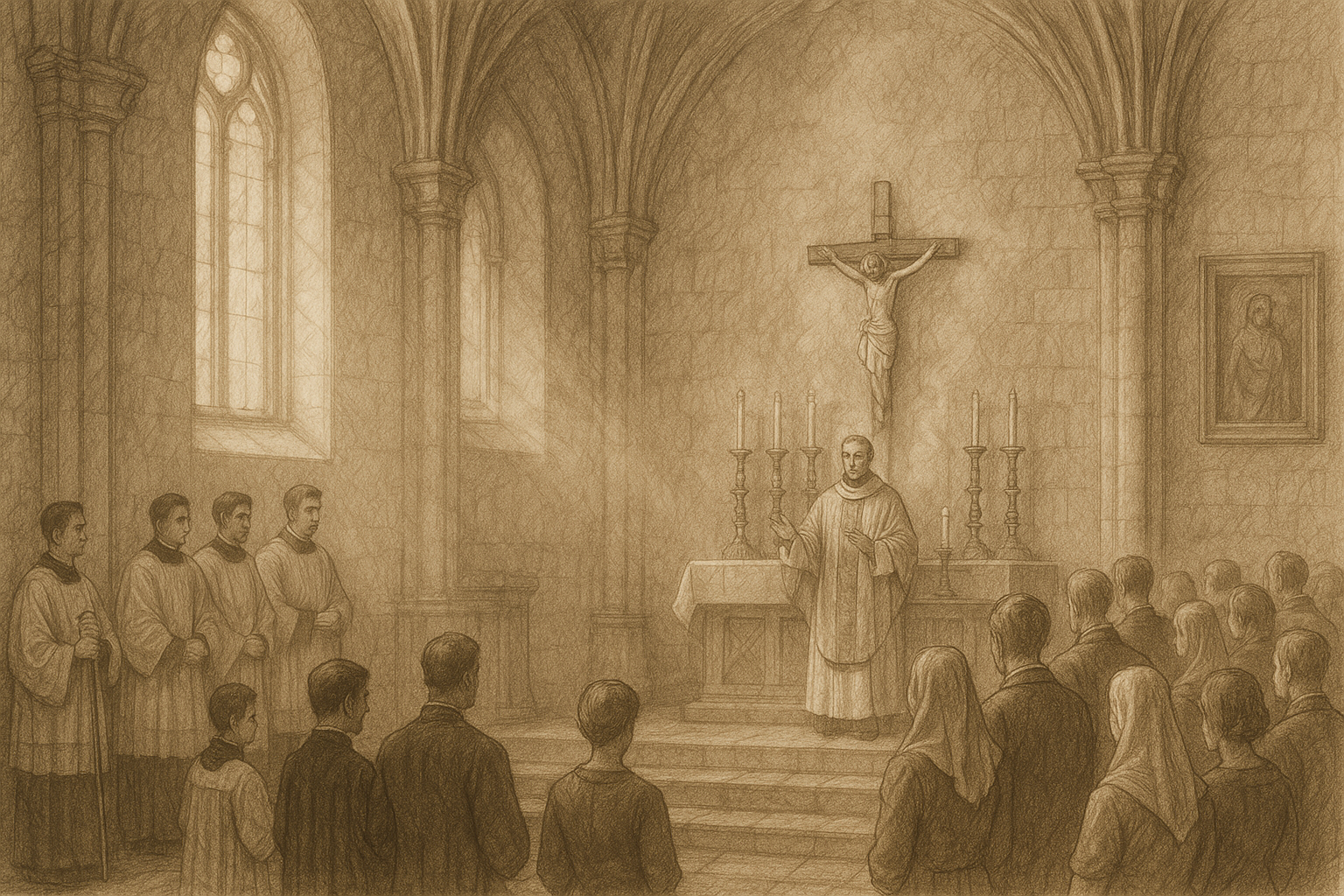
The Mass begins as the priest and ministers enter the sanctuary, often accompanied by chant or hymn. This movement is not only functional. It signals that worship is beginning and that the people are being drawn into a sacred action. The entrance chant, when used well, gives words to the Church's praise and helps settle the mind and heart.
For the faithful in the pews, this is a moment to stop treating the church like a waiting room. The habit of quiet, rising attentiveness, and interior recollection matters. When we stand or sing, we are not merely observing a ceremony. We are joining the Church's act of praise.
The Sign of the Cross and the Greeting
The first words and gesture of Mass place the Trinity at the center. When the priest says, In the name of the Father, and of the Son, and of the Holy Spirit, and the people answer, they are not beginning with themselves but with God. The Sign of the Cross is brief, but it is a confession of faith, a reminder of baptism, and a sign that the sacrifice of Christ is the shape of our worship.
The greeting that follows is more than courtesy. When the priest says, The Lord be with you, he is not offering a mere wish. He is proclaiming a liturgical truth: the Lord is with His people in this assembled act. The people's response acknowledges that the priestly ministry belongs to Christ, who works through His ordained servant for the good of the Church.
The Penitential Act
Before hearing the Scriptures or approaching the Eucharist, the Church asks her children to recognize their need for mercy. This is not because Mass is a gloomy event, but because worship in spirit and truth requires honesty before God. The penitential act helps the faithful make room for grace by confessing sinfulness without despair.
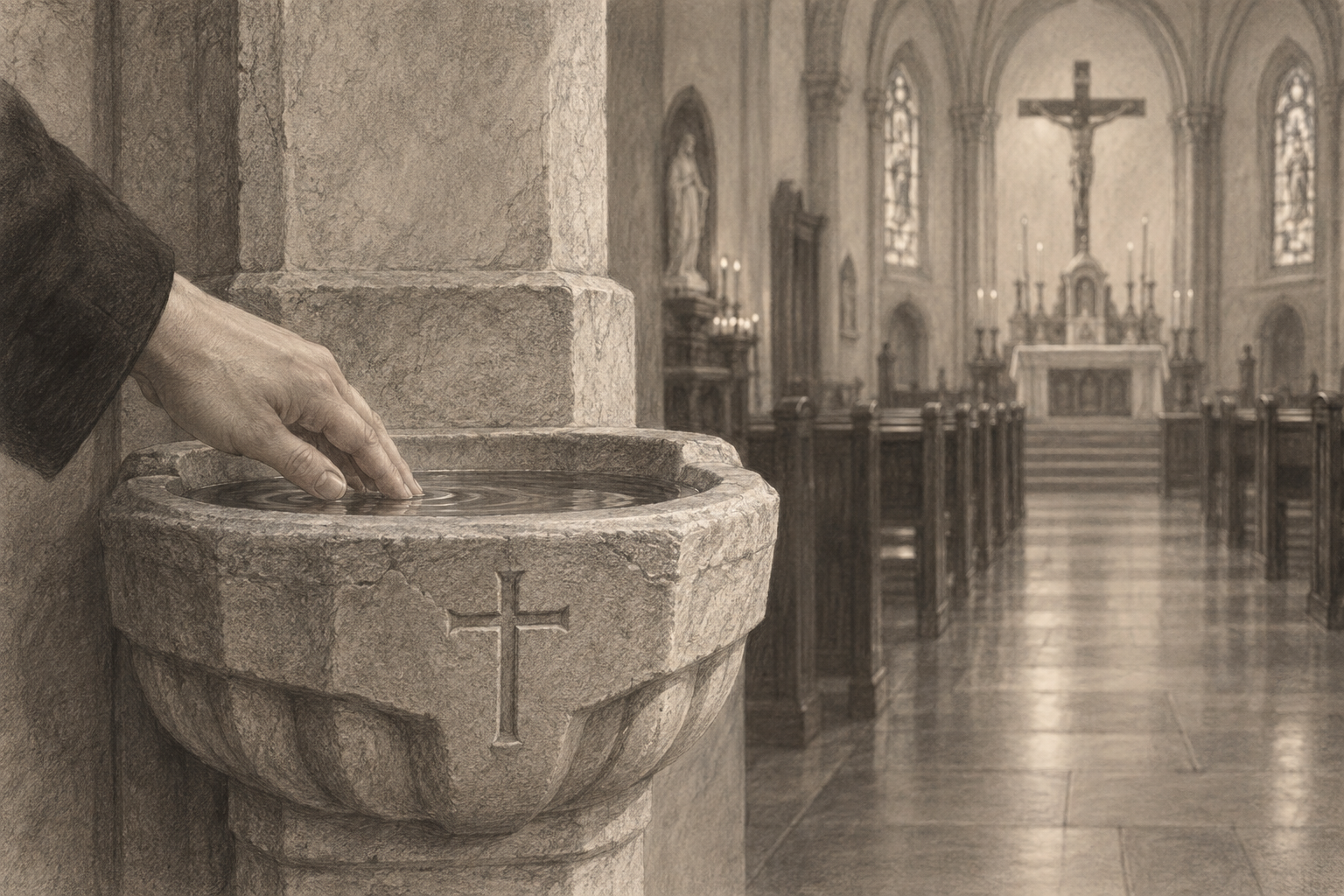
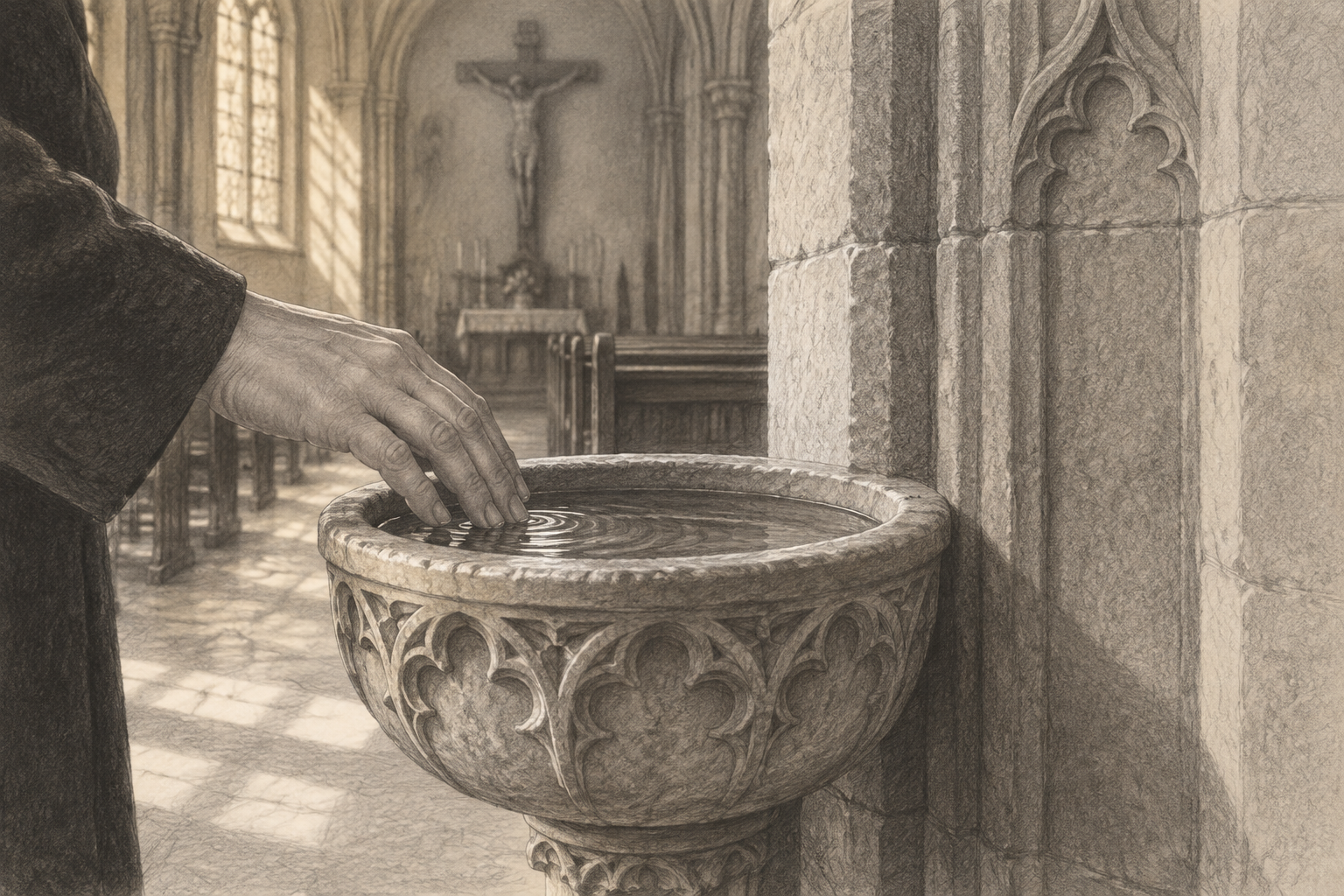
In one form, the Church prays the Confiteor: I confess to almighty God. In another, there are brief invocations asking the Lord for mercy. On more solemn occasions, sprinkling with holy water may recall Baptism. Each form says the same basic thing: we do not come before God pretending to be self-justifying. We come as needy sinners who trust in His mercy.
This is closely tied to biblical worship. Isaiah, seeing the holiness of God, cried out that he was a man of unclean lips Isaiah 6:5. Peter, when confronted by the power of Christ, fell before Him in awe Luke 5:8. The Church continues this pattern not out of habit alone, but because grace is received most fruitfully when the heart is humble.
The Kyrie and the Gloria
The Kyrie, or Lord have mercy, is one of the oldest prayers in Christian liturgy. It is short and direct, but it has a wide spiritual reach. We ask mercy not only for the faults we remember immediately, but for the deeper need that runs through every human life. The prayer is repeated, not because God is slow to hear, but because our hearts are slow to surrender.
On Sundays outside Advent and Lent, and on solemn feasts, the Gloria follows. This hymn moves the Church from repentance to praise. If the penitential act teaches us humility, the Gloria teaches us joy. The sequence matters. Mercy is not the end of worship, but its doorway. Once forgiven and gathered, the people can glorify God with a freer heart.
There is a beautiful logic here. The Church does not rush straight to celebration without truth, nor does she remain locked in self-examination without praise. She moves from confession to thanksgiving, from mercy to adoration.
The Collect
The Introductory Rites culminate in the Collect, the prayer in which the priest gathers the intentions of the whole assembly into one voice before God. The name itself suggests what happens: the people are collected, gathered, brought into unity. This is a fitting transition into the Liturgy of the Word, because the Church now stands together ready to hear the Scriptures as one body.
The Collect often has a compact beauty that can be easy to miss if one is still settling in. It names the day, invokes God's action, and directs the Church toward a specific grace. If the faithful listen carefully, they can learn to carry that prayer through the rest of Mass. The Collect is not a small bureaucratic step. It is the Church placing her desire before the Father in the Holy Spirit, through Christ our Lord.
What These Rites Do to the Soul
The Introductory Rites do not merely organize the service. They form the worshiper. They teach us how to be present, how to repent, how to wait, and how to belong. In a restless age, this is no small gift.
First, they train attention. We live amid constant distraction, and many of us arrive at Mass carrying a scatter of thoughts, tasks, and worries. The opening rites give those thoughts a place to be surrendered. The Sign of the Cross, the greeting, the penitential act, and the Collect each ask us to turn from mental noise toward communion with God.
Second, they teach ecclesial belonging. Mass is never a private devotional exercise in a crowd. It is the action of Christ and His Church. When the people respond together, they are practicing the very unity that the Eucharist will deepen. Even the small rhythm of standing, responding, and singing matters because it is a bodily way of saying,
Keep Reading on Lets Read The Bible
Frequently Asked Questions
What are the Introductory Rites of Mass?
They are the opening prayers and gestures of the Mass: the entrance, Sign of the Cross, greeting, penitential act, Kyrie, Gloria on certain days, and Collect. Their purpose is to gather the faithful and prepare them to hear the Word of God and celebrate the Eucharist.
Why does the Mass begin with a penitential act?
The penitential act helps Catholics approach God with humility and honesty. It is not meant to discourage the faithful, but to dispose hearts to receive mercy and to worship with greater reverence.
How can I participate more faithfully in the Introductory Rites?
Arrive a little early, silence distractions, listen carefully to the prayers, make the responses deliberately, and unite your own intentions to the Church's prayer. Even simple attention can make the opening rites more fruitful.