Sacraments and Liturgy
When Mass Begins, the Church Begins to Pray
A close look at the Introductory Rites and how they gather our hearts for worship
Site Admin | August 20, 2026 | 82 views
The first moments of Mass can feel ordinary if we are distracted, hurried, or used to them. We come in, find a place, stand, sing, make the Sign of the Cross, and begin. Yet the Church does not treat these moments as a throwaway preface. The Introductory Rites of Mass are a real act of worship, and they shape the whole celebration that follows.
For an ordinary Catholic, this is good news. We do not have to wait until the readings, the consecration, or Communion to start praying. The Mass begins by gathering us into one body, turning our attention toward God, and inviting us to bring our scattered lives into his presence. The Introductory Rites of Mass Catholic guide you are reading is not about mastering a rubric. It is about learning to enter the liturgy with a more alert and receptive heart.
What the Introductory Rites are meant to do
The Introductory Rites include the entrance chant or hymn, the greeting, the Penitential Act, the Kyrie when used, the Gloria on designated days, and the Collect, or opening prayer. These rites come before the Liturgy of the Word and are not separate from the Mass. They prepare the faithful to hear the Word of God and to celebrate the Eucharist with a single mind and heart.
The Church teaches that these rites are meant to make the assembled faithful into a worshipping people, ready to listen and respond. We are not merely individuals arriving at a religious service on our own terms. We are baptized members of Christ's Body, called together to pray as one.
Scripture often shows God gathering his people before he speaks to them. In the wilderness, the Lord forms a covenant people, and in the New Testament Christ calls his disciples into communion before sending them forth. The liturgy follows this same pattern of gathering, cleansing, and sending.
Where these rites come from
The Introductory Rites did not appear out of nowhere. Their roots reach deep into the worship of Israel and into the earliest Christian gatherings. The Bible is full of moments when God's people assemble, bless his name, confess sin, and prepare to hear his word. The Psalms especially teach a way of coming before God with reverence, humility, and praise.
In the early Church, Christians gathered around Word and Sacrament with a structure that made room for prayer, repentance, and the bishop or priest's prayer over the people. Over time, the Roman liturgy developed a stable beginning for Mass. What we now call the Introductory Rites took shape as the Church discerned how to order this common prayer so that hearts would be ready for the Scriptures and the Eucharist.
This matters because Catholic worship is never a private invention. It is inherited prayer, purified and handed on by the Church. The Introductory Rites are part of that living tradition, formed by Scripture, shaped by centuries of worship, and given to us as a school of reverence.
Step by step through the opening of Mass
The entrance chant or hymn
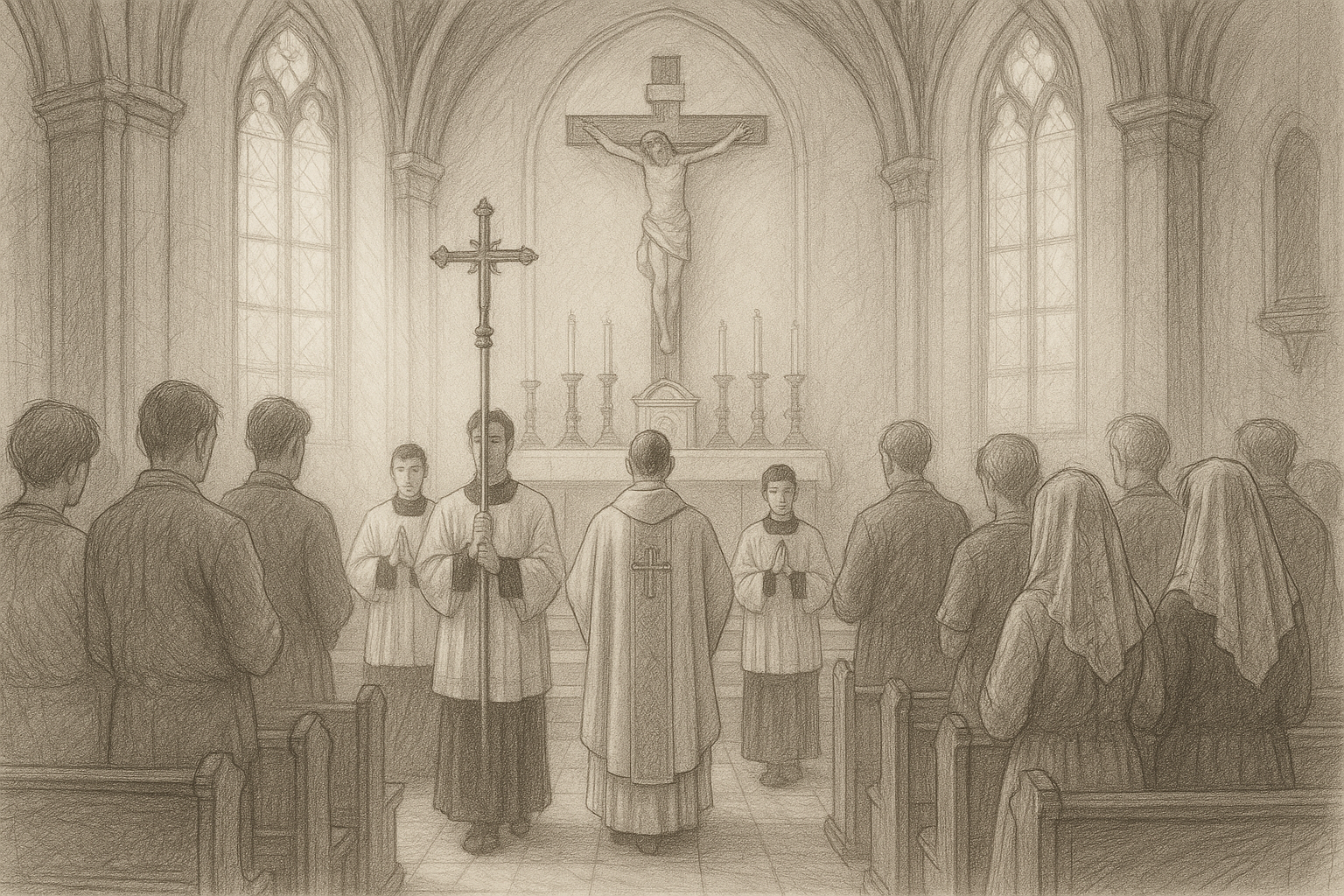
Mass begins with movement. The priest and ministers process to the altar, and the Church sings. This is not filler. The entrance chant or hymn expresses the unity of the gathered people and accompanies the action of beginning worship. It announces that the assembly is not merely social but sacrificial and sacred.
When the text of the chant is drawn from Scripture or the liturgy, it can help the faithful enter the mystery of the day. Even when a parish uses a familiar hymn, the purpose remains the same: to lift the heart and form a single voice.
The Sign of the Cross and greeting
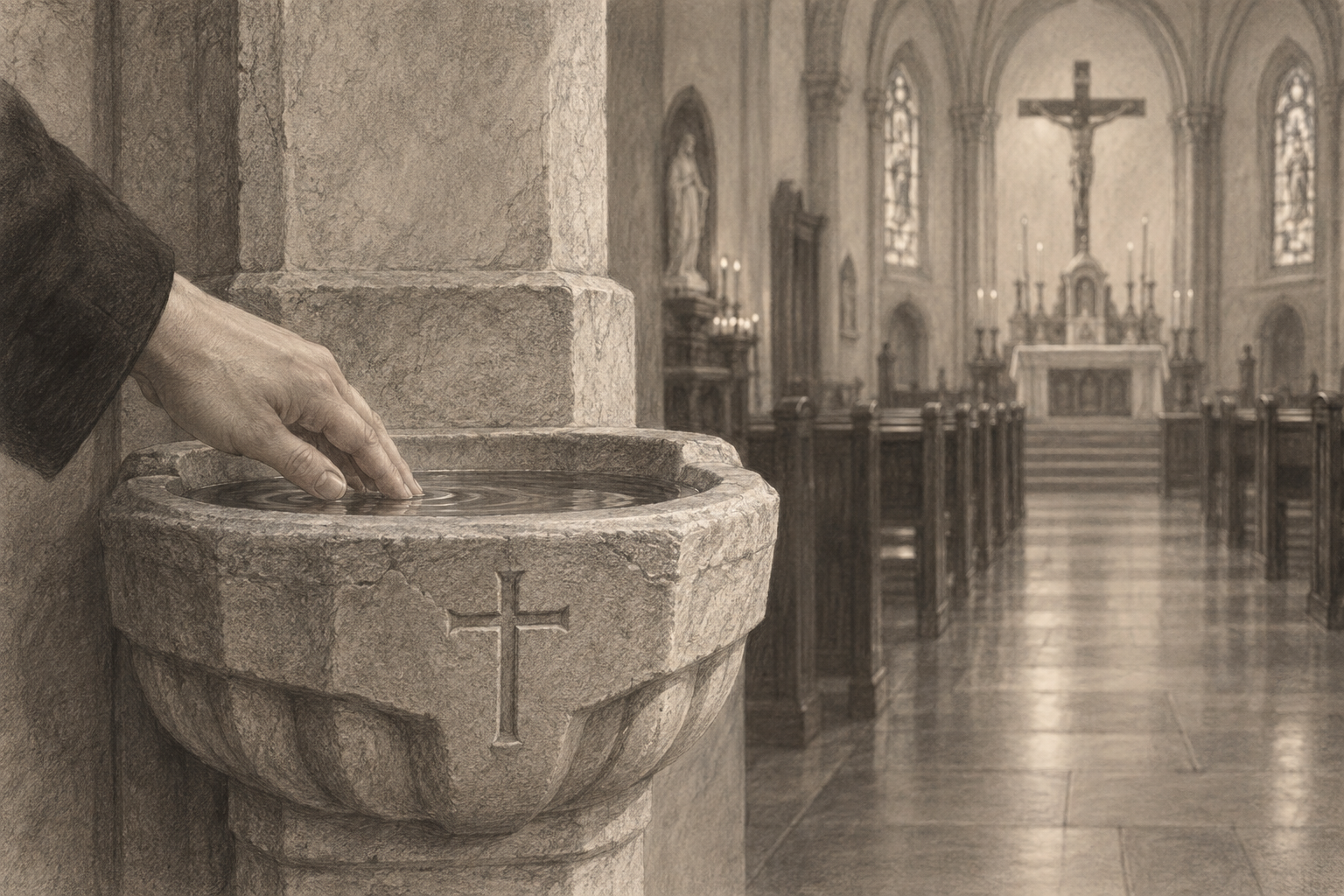
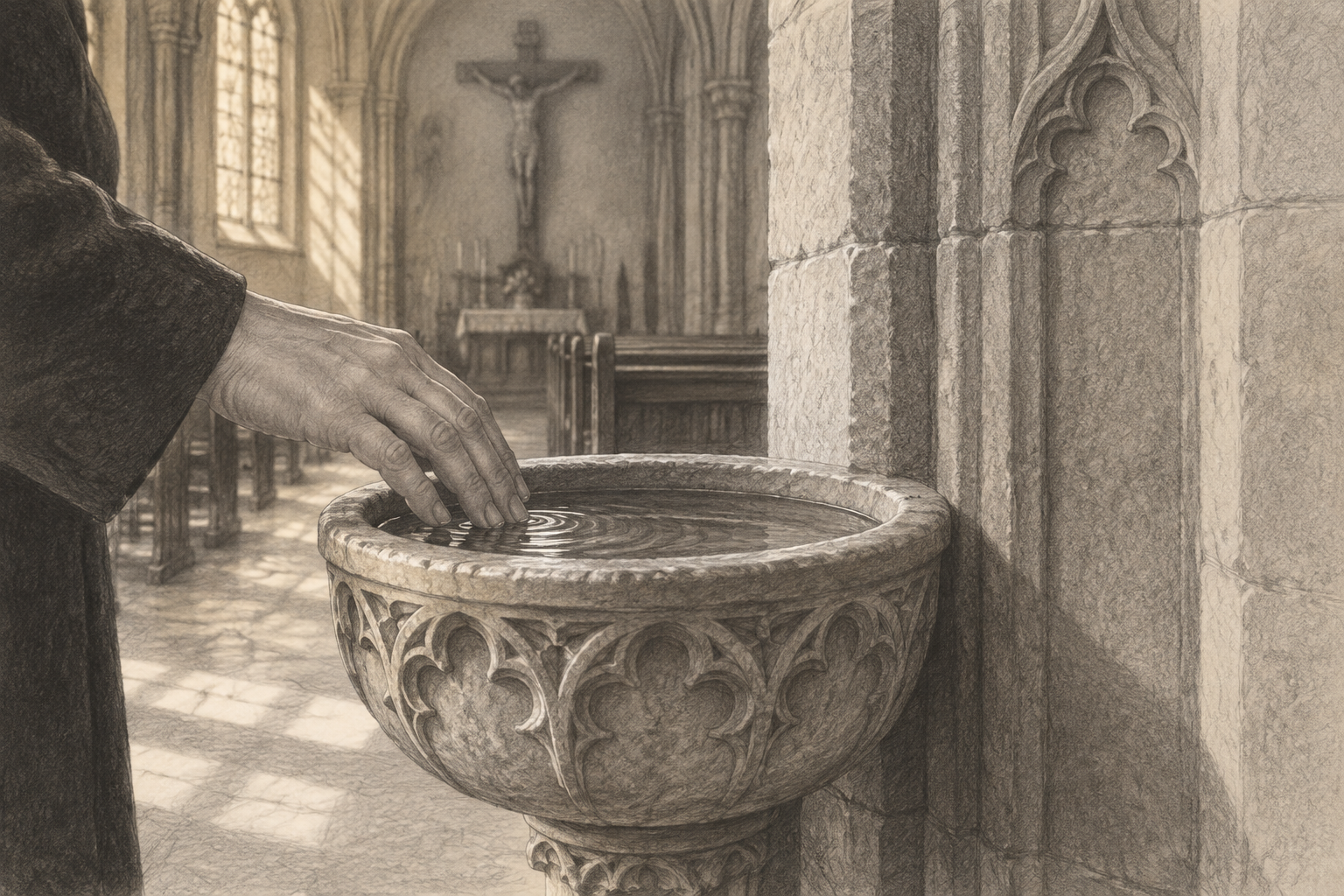
The Sign of the Cross is one of the simplest actions in Catholic life, but at Mass it has great force. We mark ourselves with the sign of the Trinity and of Christ's saving death. We do not begin in our own name but in the name of the Father, and of the Son, and of the Holy Spirit.
The priest's greeting is not a polite opening line. It invokes the Lord's presence and reminds us that grace is already at work among us. The exchange is brief, but it places the whole assembly under God's mercy and peace.
The Penitential Act and the Kyrie
Before hearing the Word and approaching the altar, we confess that we are sinners. This is not meant to humiliate us. It is meant to free us. The Penitential Act helps us tell the truth about ourselves before God, and the Kyrie, when said or sung, is an ancient cry for mercy: Lord, have mercy.
This moment should not be rushed. A well-lived Penitential Act does not replace the Sacrament of Penance, but it does prepare us to celebrate Mass honestly. Every Catholic brings weakness, distraction, regrets, and unfinished conversion to the altar. The Church knows this and gives us language for it.
The Gloria
On Sundays outside Advent and Lent, and on solemnities and feasts, the Gloria breaks forth as a hymn of praise. It is a great song of joy that lifts the assembly beyond self-examination into adoration. We praise God not because we have perfected ourselves, but because he is holy, merciful, and worthy of glory.
The Gloria has the feel of a doxology, a burst of Christian joy. It reminds us that repentance is not the end of the story. Mercy opens into praise.
The Collect
The Introductory Rites conclude with the Collect, the opening prayer that gathers the intentions of the whole Church into one petition. The name itself is fitting: God collects, or gathers, the prayers of his people. The priest prays, but the prayer belongs to the whole assembly.
The Collect often reflects the liturgical season or the feast being celebrated. It teaches us to pray with the Church rather than with our private preferences. In this way, the opening of Mass already forms us into a Catholic people, mindful that worship is received, not self-authored.
Why the opening rites matter so much
It is easy to think that the real action begins later. But the Church does not divide Mass into a useless preface and a useful center. The beginning matters because worship is ordered. We do not leap into the sacred casually. We are led there.
The Introductory Rites give us that holy transition. They quiet the noise of our weekday minds, remind us that God is present, and ask us to come as we are while not remaining as we are. They also teach us that Christian life is communal. Even if I arrived alone, I do not pray alone now.
There is a pastoral wisdom here. Many Catholics struggle to settle into Mass because they arrive distracted or late or carrying emotional burdens. The opening rites do not demand that we instantly feel devout. They simply ask us to be present. Faithfulness often begins with attention.
These rites also defend us from a common temptation: treating Mass like a program we evaluate from the outside. The liturgy is not first an event to critique. It is an act in which we participate. The Introductory Rites invite us to surrender the habit of observing and to take up the posture of prayer.
How to live the Introductory Rites more deeply
An ordinary Catholic can live these moments more deeply without doing anything dramatic. Small, deliberate acts of recollection often matter more than grand resolutions.
- Arrive a few minutes early and silence the phone before Mass begins.
- Use the entrance chant or hymn as a cue to turn inward and offer the day to God.
- Make the Sign of the Cross slowly and consciously, remembering your baptism.
- Pray the Penitential Act with sincerity, naming in your heart what needs mercy.
- Listen to the Collect as the prayer of the whole Church, not just the priest's words.
It also helps to know the liturgical season and feast day. When the Gloria is sung, let its joy be real. When it is omitted, receive that silence as part of the Church's prayer. The liturgy is full of signs, and attention to those signs deepens participation.
Parents can help children too. A child does not need a theological lecture at the pew to begin learning reverence. Quiet, consistency, and simple explanation can go a long way: now we pray together, now we ask forgiveness, now we praise God. The body learns the rhythm before the mind fully explains it.
A scriptural way of seeing the opening of Mass
The Introductory Rites make more sense when read in the light of Scripture. In the Old Testament, the people of God gather before hearing the Lord's word and before offering sacrifice. In the New Testament, Jesus himself forms a people around his teaching, his table, and his paschal mystery. The Church's liturgy continues that pattern.
Consider the pattern of reverence in the Psalms, where worship begins with praise and humility: Come, let us sing joyfully to the Lord. Or the prophet's response before God's presence: Woe is me, I am doomed, followed by cleansing and mission. In the Gospel, the Lord calls sinners not by denying their sin but by healing and sending them. The opening rites echo all of this.
They remind us that grace is not a vague feeling. It is God's action toward his people, beginning with mercy, drawing us into praise, and preparing us for the Word that instructs and the Eucharist that feeds.
Entering Mass with a more Catholic instinct
If the Introductory Rites are lived well, they become more than a habit. They become a school of conversion. Over time, the Catholic learns to associate the beginning of Mass with surrender, gratitude, and readiness. The heart becomes quicker to listen and slower to resist.
That is perhaps the deepest purpose of these rites. They teach us to arrive before God truthfully. Not polished, not pretending, not spiritually self-sufficient. Just present, baptized, and willing to be gathered.
So the next time the procession begins, try to notice what the Church is doing in those opening moments. She is not warming up. She is calling her children together. She is confessing mercy, singing praise, and asking the Father to gather every intention into Christ. By the time the Collect is spoken, the prayer of the Church is already underway, and if we have paid attention, our own prayer has begun to move with it.
Keep Reading on Lets Read The Bible
Frequently Asked Questions
What are the Introductory Rites of Mass?
The Introductory Rites are the opening prayers and actions of Mass: the entrance chant or hymn, the Sign of the Cross and greeting, the Penitential Act, the Kyrie when used, the Gloria on certain days, and the Collect. They prepare the faithful for the Liturgy of the Word and the Eucharist.
Do the Introductory Rites count as real liturgy, or are they just a prelude?
They are fully part of the liturgy. The Church includes them because Mass begins by gathering the people, turning hearts toward God, and preparing the assembly to hear the Word and celebrate the Eucharist.
How can I pay better attention during the Introductory Rites?
Arrive a little early, silence distractions, make the Sign of the Cross slowly, pray the Penitential Act sincerely, and listen to the Collect as the prayer of the whole Church. Small acts of recollection can make these moments more prayerful.