Social Teaching
The Grace of Making Room for Old Age
Care for older persons belongs at the heart of Christian discipleship, family life, and the Church's witness to human dignity.
Site Admin | October 6, 2026 | 4 views
Old age reveals something our hurried culture often tries to hide: human beings are not valuable because they are quick, independent, productive, or strong. They are valuable because they are made by God and called to communion with him. A person's dignity does not fade when memory weakens, mobility declines, or daily tasks require assistance.
For Catholics, care for the elderly is therefore more than a private kindness or a social service. It is a response to the presence of God in a neighbor. It is also a test of whether we truly believe what the Church teaches about human dignity. If dignity belongs only to the capable, it is not dignity at all. If it is a gift from God, then it remains through every season of life.
Care for the elderly and Catholic life meet in ordinary places: at the family table, in a nursing home room, during a patient phone call, beside a hospital bed, or in the quiet work of helping someone get to Mass. These actions may seem small, but love is often made visible through small acts repeated faithfully.
Age does not erase the image of God
Christian care begins with creation. Every human person is made in the image and likeness of God, as the opening chapter of Genesis teaches Genesis 1:27. This truth is not limited by age, health, intelligence, income, or social usefulness. An older person who can no longer work, drive, remember names, or live alone remains fully human and fully worthy of reverence.
This conviction challenges a culture that can measure people by efficiency. Older persons may be treated as burdens because their needs interrupt schedules, require money, or expose younger people to suffering they would rather avoid. Catholic social teaching asks a different question. Instead of asking whether a person is useful, it asks how we can honor the person whom God has placed before us.
Scripture gives direct expression to this duty: "You shall rise before the aged, and defer to the old" Leviticus 19:32. Such reverence is not sentimental. It recognizes the long history carried by an older person, including work performed, sacrifices made, losses endured, prayers offered, and wisdom gained.
The fourth commandment grows with us
The command to honor father and mother does not expire when a child becomes an adult. Its expression changes over time. Young children ordinarily honor their parents through obedience. Adult children may honor them through gratitude, attention, practical assistance, and care in illness or frailty.
Sirach speaks with particular tenderness about caring for an aging parent and remaining patient even when understanding fails Sirach 3:12. That instruction is especially important for families living with dementia, confusion, hearing loss, or personality changes associated with illness. These conditions can strain affection and exhaust caregivers. Patience does not mean pretending the strain is easy. It means refusing to reduce the suffering person to the difficulty of the moment.
Jesus also criticized attempts to use religious excuses to avoid supporting one's parents Mark 7:10. Christian devotion cannot be separated from concrete responsibility. Prayer, worship, and moral language ring hollow if they become ways of escaping the vulnerable people entrusted to us.
At the same time, honoring parents does not require tolerating abuse or ignoring serious family dysfunction. Some relationships need prudent boundaries. Care may have to be offered through safe arrangements, professional help, or another trusted family member. The duty to love remains, but love must be joined to truth and wisdom.
Older persons are members, not projects
It is possible to provide services for older people while still leaving them profoundly lonely. Food may be delivered, medicine organized, and bills paid, yet no one sits down long enough to listen. Genuine care does not treat an older person as a project to be managed. It receives him or her as a member of a family and community.
Saint Paul described the Church as one body whose members need one another 1 Corinthians 12:21. This means older Catholics are not merely recipients of ministry. They are also bearers of faith, memory, counsel, and prayer. A parish that speaks often about youth but rarely listens to its elders loses part of its own memory.
Many older people have lived through grief, economic hardship, family conflict, war, migration, illness, or long years of hidden sacrifice. Age does not automatically produce wisdom, but long experience can deepen it. Younger Catholics benefit when they ask respectful questions and listen without rushing to correct, compare, or redirect the conversation.
Older persons can also continue to serve the Church. Some can teach, volunteer, mentor, or assist with parish life. Others, limited by health, may offer a ministry of prayer and suffering united with Christ. No baptized person becomes spiritually disposable.
Loneliness is a work of mercy waiting to happen
Material needs are usually easier to notice than loneliness. A bare cupboard demands action. An empty afternoon can remain invisible. Yet chronic isolation can weigh heavily on the body and spirit, especially after the death of a spouse, the loss of driving privileges, or a move away from a familiar neighborhood.
Christ identifies himself with those who are vulnerable and overlooked: "I was sick and you took care of me" Matthew 25:36. Visiting an older person, including someone in assisted living or a nursing facility, belongs naturally to the Christian practice of mercy. The visit need not be impressive. Presence itself can be the gift.
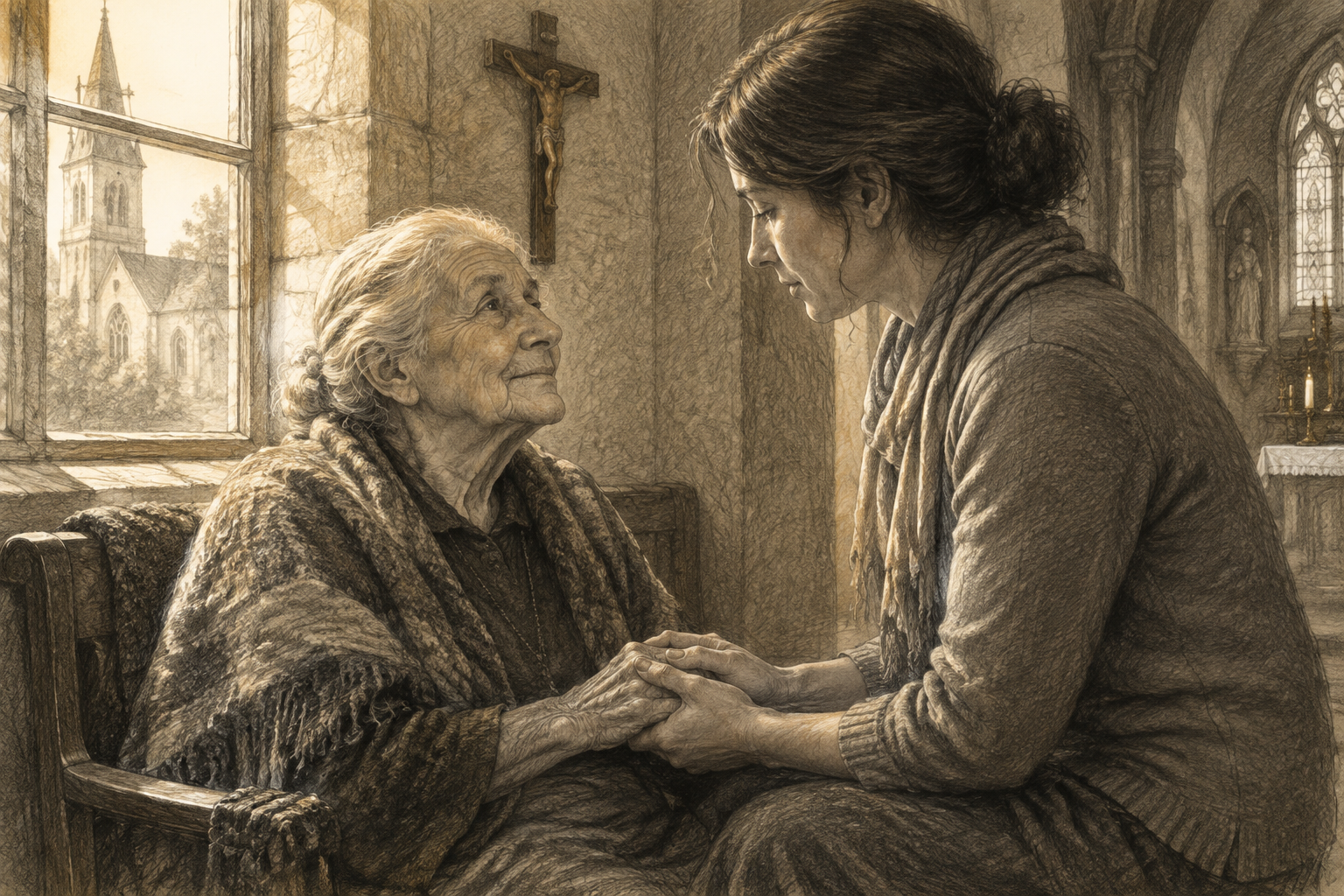
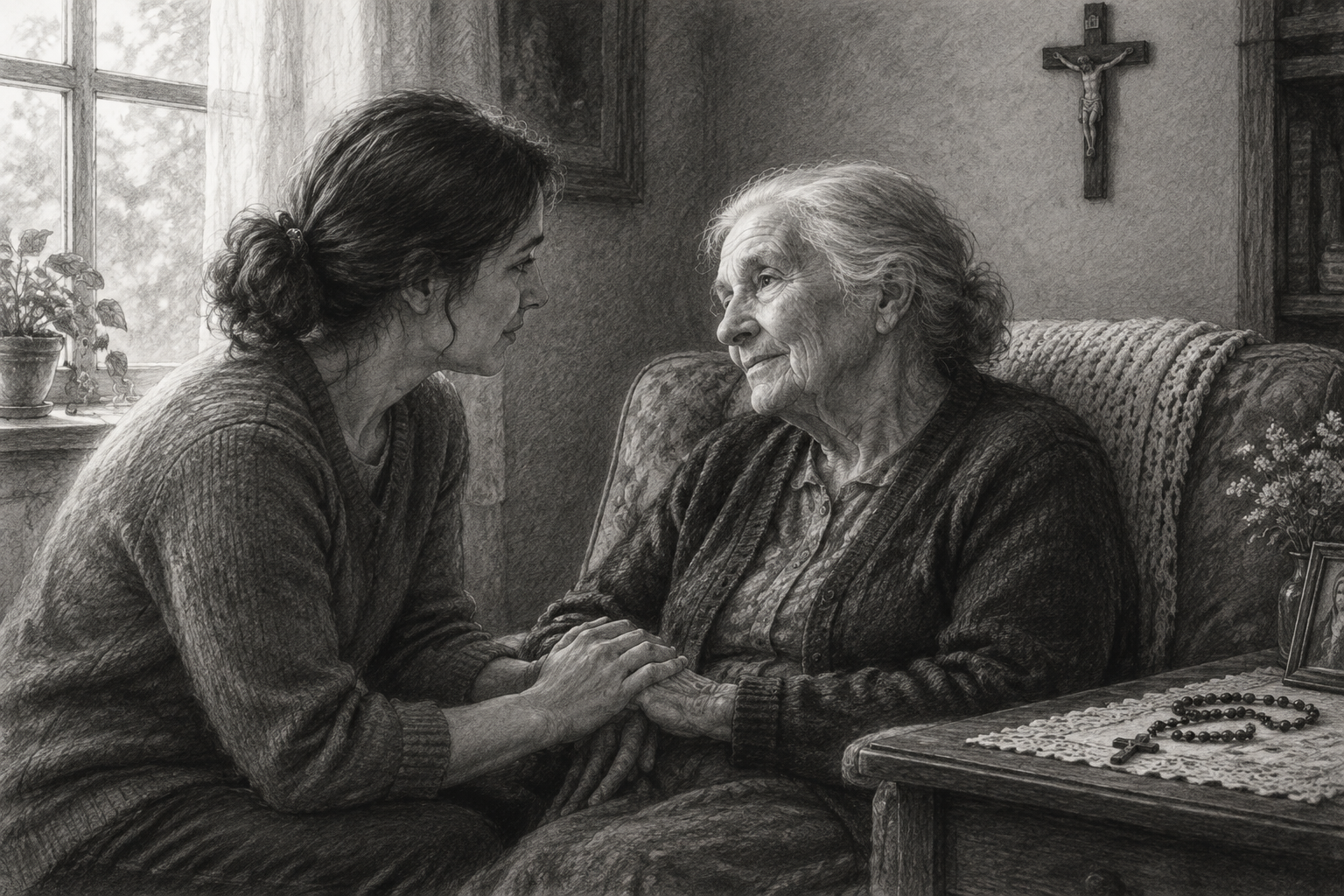
A good visit respects the person rather than filling every silence. It may include conversation, reading aloud, looking at photographs, praying a decade of the Rosary, taking a short walk, or simply sharing a cup of tea. Consistency matters more than novelty. A modest visit every week often communicates more love than a grand gesture once a year.
Parishes can make this mercy more dependable by organizing visits, rides to Mass, telephone check-ins, and access to the sacraments. Extraordinary ministers of Holy Communion, clergy, and trained volunteers can help ensure that homebound parishioners remain visibly connected to the worshiping community.
Caregivers also need care
Family caregiving can be holy work, but holiness does not eliminate fatigue. Helping an older relative with meals, hygiene, medication, appointments, finances, and nighttime needs can become physically and emotionally demanding. Caregivers may feel grief, resentment, guilt, fear, and deep affection within the same day.
Catholic communities should not praise sacrifice in ways that leave caregivers isolated. Saint Paul tells believers to bear one another's burdens Galatians 6:2. Families may need respite care, shared schedules, professional guidance, financial assistance, or help navigating local services. Accepting such help is not a failure of love. It may be what allows love to remain patient and sustainable.
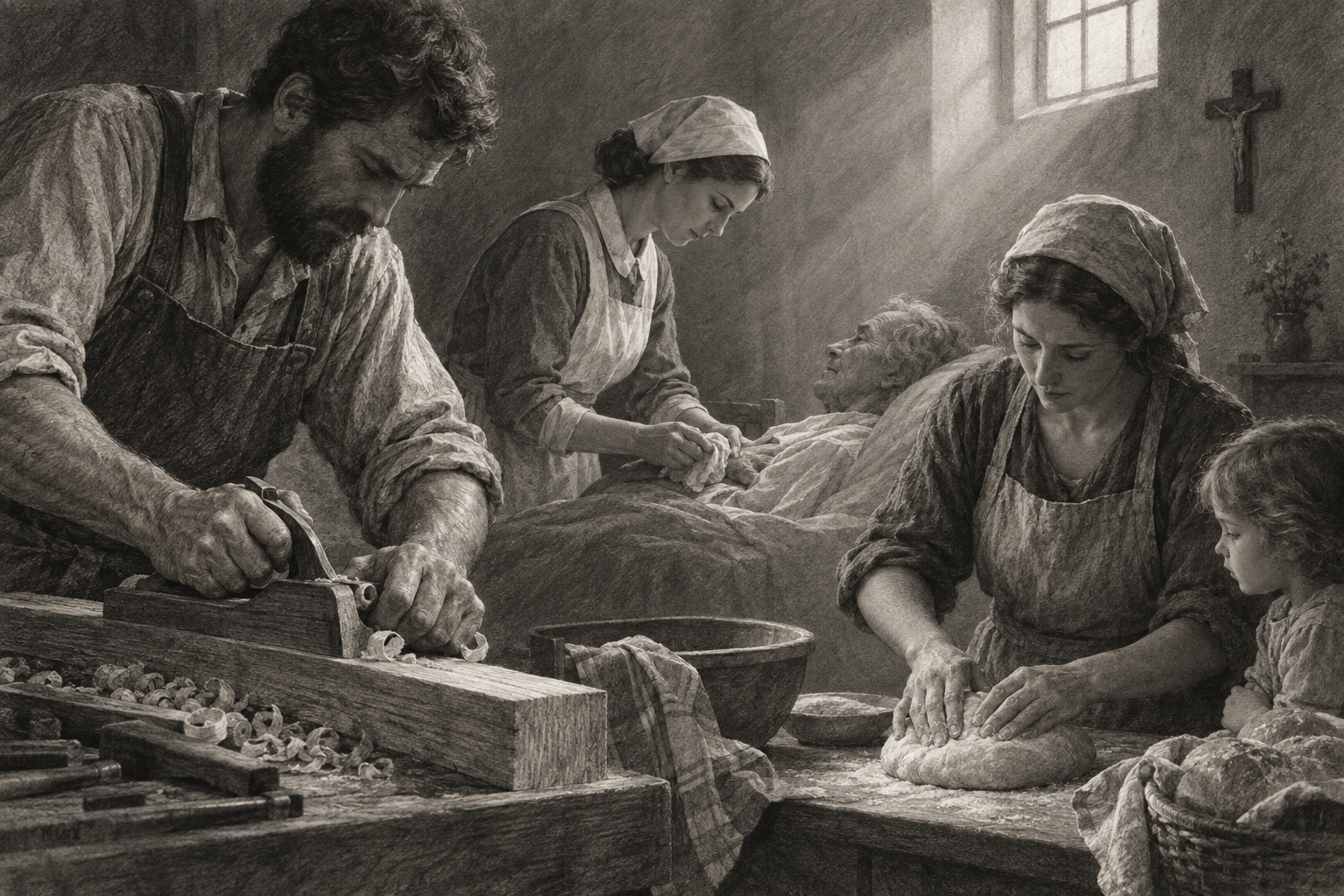
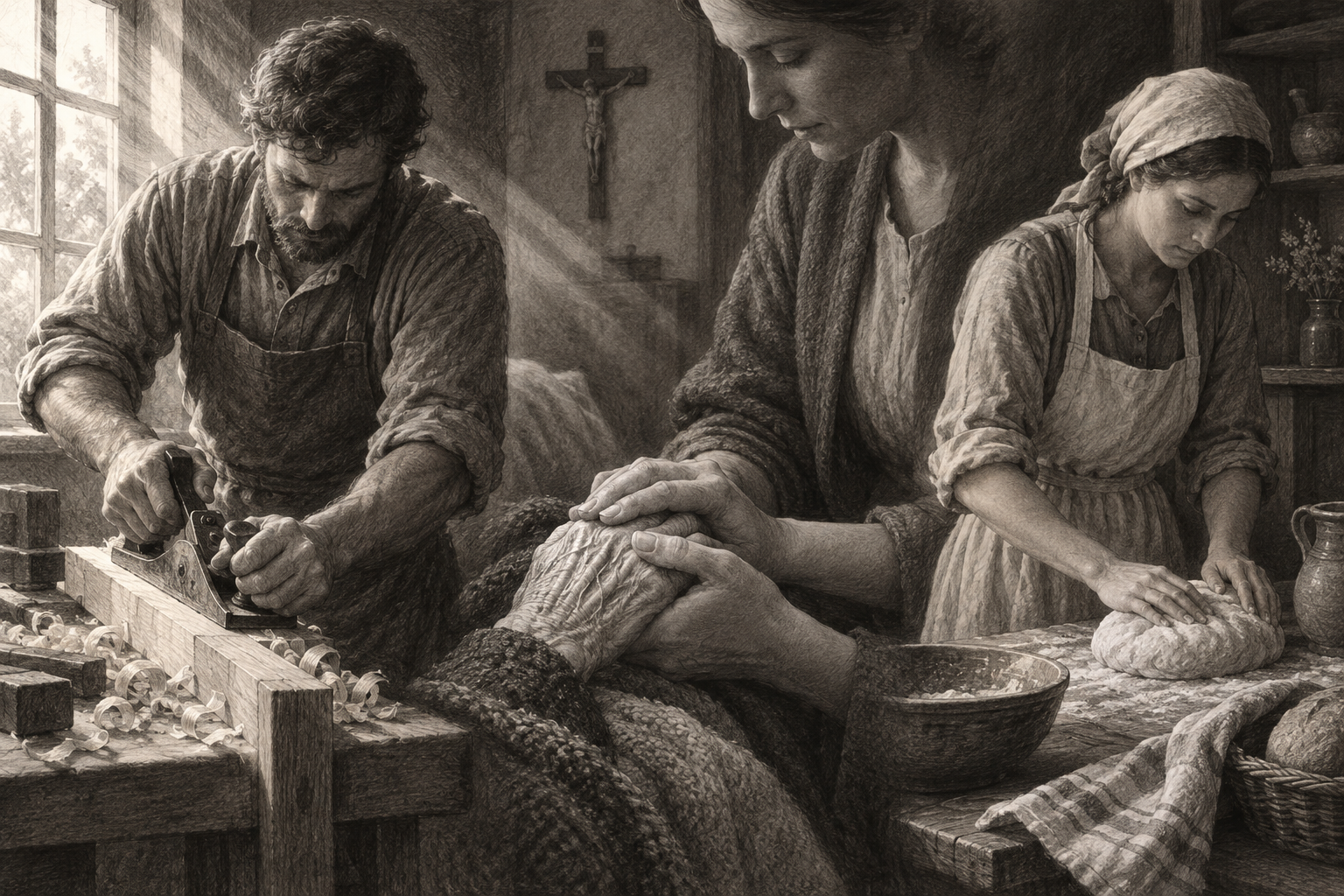
Siblings and relatives should speak honestly about responsibilities. One family member should not quietly carry everything while others assume that the situation is under control. Tasks can be divided according to ability and location. One person might handle medical communication, another finances, another weekly visits, and another meal preparation.
Caregivers also need prayer, sleep, friendship, confession, and the Eucharist. Their own human dignity matters. Rest is not selfish when it protects the caregiver's health and strengthens the quality of care being given.
Mercy and truth at the end of life
Care for the elderly sometimes brings families into difficult medical decisions. Catholic moral teaching rejects euthanasia and assisted suicide because intentionally causing death is not a proper answer to suffering. A person's life retains its value even when illness cannot be cured.
At the same time, the Church does not require the use of every possible medical treatment in every circumstance. Treatments that offer little benefit or impose excessive burdens may sometimes be declined. Allowing natural death is not the same as intending death. Patients should continue to receive compassionate nursing, appropriate pain relief, human presence, spiritual care, and ordinary forms of support suited to their condition.
These decisions should not be made from the assumption that dependence makes life unworthy. They require careful medical facts, sound moral counsel, attention to the patient's legitimate wishes, and prayer. Families can ask a priest, chaplain, or qualified Catholic ethicist for guidance before a crisis leaves little time for reflection.
The dying should not be abandoned. Even when speech is gone and recognition is uncertain, touch, prayer, familiar voices, and the sacraments can express faithful love. Jesus remained close to suffering people. His disciples are called to do the same.
Practical ways to make room
Concern becomes credible when it takes form. Catholics can begin with actions that are simple enough to sustain:
- Call an older relative or parishioner regularly, not only on holidays.
- Offer transportation to Mass, confession, medical appointments, or community events.
- Ask an older person about his or her life, work, faith, and memories, then listen attentively.
- Learn the names of homebound members of the parish and pray for them.
- Arrange respite for a family caregiver, even for a few hours.
- Help with groceries, household repairs, paperwork, or safe use of technology.
- Make parish buildings and events accessible to people with limited mobility or hearing.
- Invite older adults to contribute their gifts instead of assuming they only need assistance.
- Support ethical hospice and palliative care that neither hastens death nor abandons the patient.
- Teach children to greet, visit, and show patience toward older family members.
Not every person can do all these things. Catholic social teaching respects both personal responsibility and the role of families, parishes, charities, health professionals, and public institutions. The principle of solidarity reminds us that an older person's suffering concerns the whole community. The principle of subsidiarity encourages help at the most personal and local level capable of providing it, while recognizing that larger institutions must assist when needs exceed a family's resources.
A witness against the fear of dependence
Many people fear aging because they fear becoming dependent. That fear deserves compassion. Dependence can involve real losses, including privacy, familiar routines, and control over daily decisions. Good care should preserve as much participation and freedom as a person's condition reasonably allows. Caregivers should speak to older adults, not merely about them, and involve them in decisions whenever possible.
Yet the Gospel also exposes the illusion that any of us are entirely self-sufficient. We begin life dependent on others. We rely on farmers, workers, teachers, doctors, families, and communities throughout our lives. Above all, every person depends upon God's sustaining mercy.
Jesus told Peter that old age would bring a form of dependence he had not chosen John 21:18. Dependence is not automatically a loss of dignity or a sign of spiritual failure. It can become a painful place of trust, both for the person receiving care and for the person learning to give it.
When Catholics make room for old age, they proclaim that love is stronger than usefulness and that no season of life lies outside God's concern. A chair pulled closer, a hand held without hurry, a burden shared, and a prayer whispered beside a bed can become quiet signs of the kingdom. In honoring older persons, the Church learns again how to receive every human life as a gift.
Keep Reading on Lets Read The Bible
Frequently Asked Questions
What does the Catholic Church teach about caring for elderly parents?
The fourth commandment includes an enduring duty to honor one's parents. For adult children, this can involve gratitude, regular contact, material assistance, help with medical and practical needs, and patient care during illness or frailty. The precise form depends on circumstances, resources, safety, and the legitimate needs of everyone involved.
Is it wrong for a Catholic family to use a nursing home or professional caregiver?
No. Professional or residential care can be a responsible choice when an older person's needs exceed what a family can safely provide at home. The moral responsibility is not to perform every task personally, but to seek suitable care, remain involved, protect the person's dignity, and avoid abandonment.
How can a parish better serve elderly and homebound Catholics?
A parish can organize regular visits, transportation, telephone check-ins, accessible liturgies, and delivery of Holy Communion to the homebound. It should also help older members participate according to their gifts, support family caregivers, and make access to confession and the Anointing of the Sick readily available.