Social Teaching
The Long Faithfulness of Love: Honoring Older Persons
To honor older persons is to recognize a dignity that neither illness, dependence, nor the passing of years can diminish.
Site Admin | October 5, 2026 | 2 views
Growing old can bring blessings that are easy to overlook: deeper perspective, freedom from some earlier ambitions, gratitude for ordinary gifts, and a clearer awareness of our dependence on God. It can also bring grief. Strength diminishes. Friends and spouses die. Familiar places change. Illness may narrow a person's world, while impaired hearing, vision, or mobility can make even a crowded room feel lonely.
In this season of life, older persons need more than efficient services. They need to know that they remain members of a family and community, not burdens to be managed. Care for the elderly in Catholic teaching begins with this conviction: human dignity does not rise and fall with productivity, independence, health, memory, or social influence. It is given by God.
Dignity Does Not Expire
The Christian understanding of the human person begins with creation. Every person is made in the image of God, as proclaimed in Genesis 1:27. That truth applies without qualification to the infant, the healthy adult, the person with dementia, the hospital patient, and the frail resident of a nursing home.
Modern life can subtly train us to measure people by what they produce. Older persons may then be treated as if their value has declined because they can no longer work, drive, remember names, or care for themselves. Catholic social teaching rejects that calculation. The worth of a person is not earned by usefulness. It is received from God and remains present through every stage of life.
Respect for age also has a clear place in Scripture. Israel was commanded to show honor in the presence of the aged in Leviticus 19:32. Such honor is more than polite language. It includes patience, attention, gratitude, and the willingness to make room for those whose bodies or minds move at a slower pace.
Do not cast me off in the time of old age; forsake me not when my strength is spent. Psalm 71:9
This prayer names a fear many older people carry. They may fear pain or death, but they may also fear abandonment. The Church's response must be more than reassurance in words. Christians are called to become part of God's answer through faithful presence.
A Responsibility Shared in Love
Care for aging relatives belongs first within the bonds of family, though it cannot always be carried by family members alone. The Catechism of the Catholic Church teaches that adult children have responsibilities toward parents in old age, sickness, loneliness, or distress. This responsibility reflects gratitude for the gift of life and for sacrifices that may have been made over many years.
Scripture likewise calls descendants to return care to their parents and grandparents, describing this as pleasing to God in 1 Timothy 5:4. Yet this teaching should not become a weapon of guilt. Some families face serious limits, including poverty, distance, disability, unsafe relationships, or caregiving needs that require professional skill. Love does not always mean providing every form of care personally. It may mean finding trustworthy assistance, visiting consistently, managing finances honestly, advocating for proper treatment, or making difficult decisions with prudence.
Catholic social teaching helps place these responsibilities in a wider setting. Several principles are especially important:
- Human dignity: Every older person deserves respect, protection, and care simply because he or she is a human being created and loved by God.
- The common good: A healthy society makes it possible for vulnerable people to participate in community life and receive the support they need.
- Solidarity: The suffering of an isolated older person is not someone else's problem. We belong to one another.
- Subsidiarity: Families and local communities should be supported in their proper responsibilities, while larger institutions should provide help when needs exceed local resources.
- Special concern for the vulnerable: Poverty, illness, widowhood, disability, and social isolation can overlap in old age, creating a serious claim on Christian concern.
These principles resist two errors. One is the belief that elder care is an entirely private matter for families, regardless of their resources. The other is the assumption that professional systems can replace loving human bonds. Good care needs both competent institutions and personal fidelity.
Mercy Is Often Measured in Time
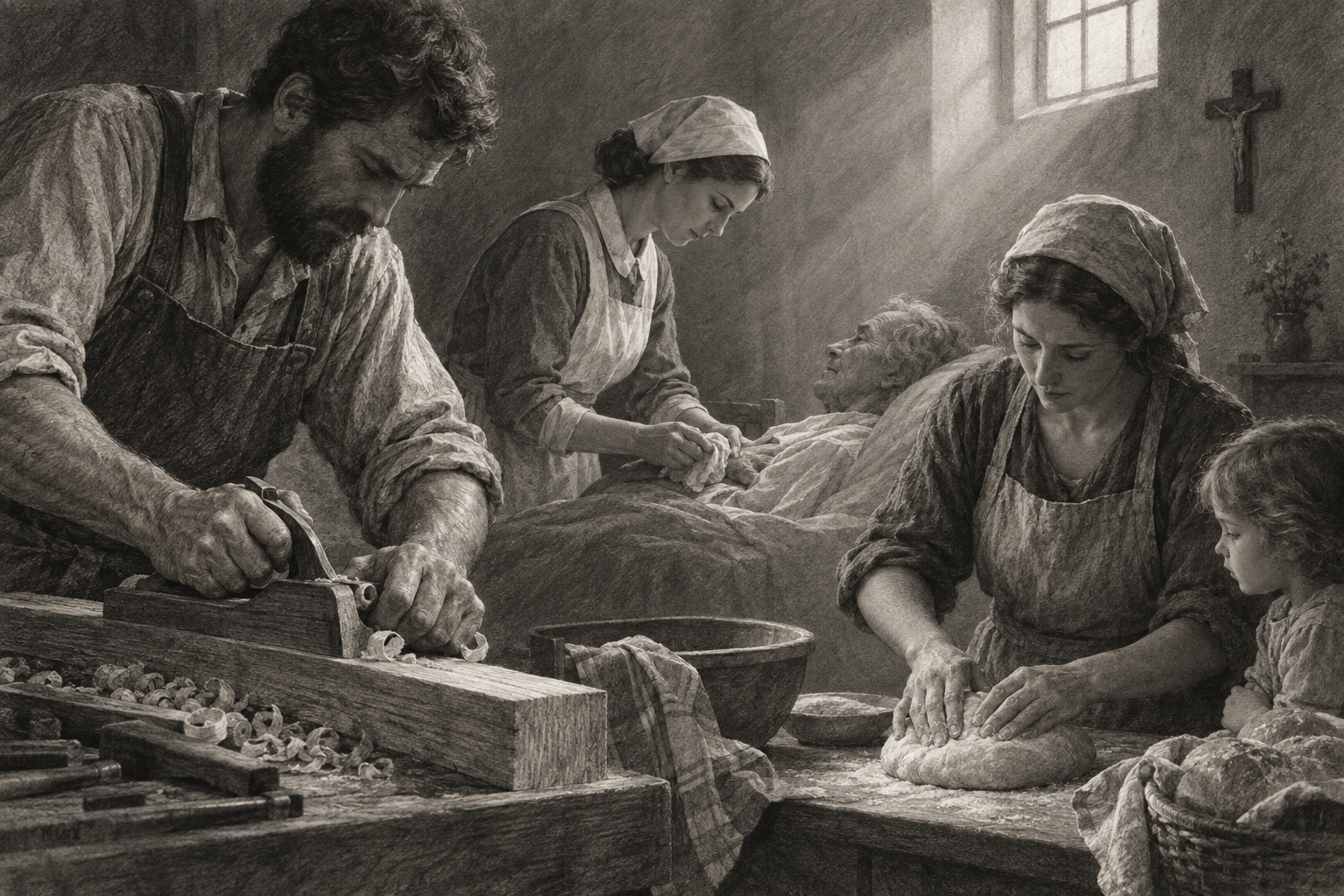
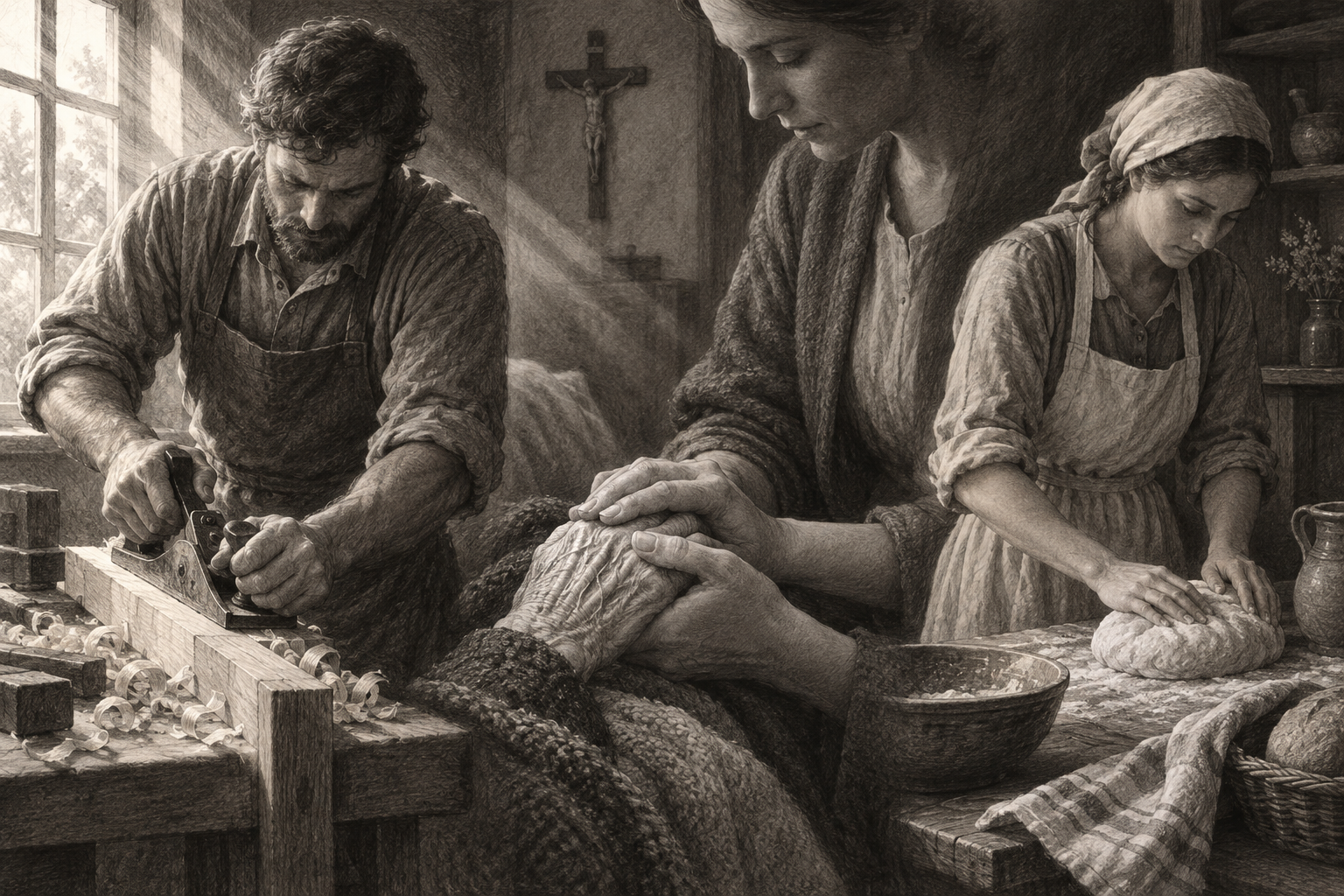
Many works of mercy are quiet. An adult daughter repeats an answer without showing irritation. A neighbor changes a light bulb and stays for tea. A parishioner brings Communion to someone who can no longer attend Mass. A caregiver learns the stories behind a confused person's repeated words. None of these acts may attract attention, but each can defend a person's dignity.
Older people frequently need practical assistance with transportation, meals, medication, household tasks, paperwork, and medical appointments. They also need friendship. A perfectly organized schedule cannot substitute for being listened to. Care becomes impersonal when every conversation is reduced to symptoms, appointments, and tasks.
Patience is especially important when illness affects memory or communication. A person with dementia may repeat a question, forget a visit, or become distressed by an unfamiliar setting. The failure to remember does not erase the need to be loved. Even when words or memories are lost, the person remains present and worthy of tenderness.
Christ identifies himself with those who are vulnerable and in need in Matthew 25:40. This does not romanticize caregiving. Care can be exhausting, monotonous, and emotionally painful. It does mean that ordinary acts offered in love have a sacred depth. Feeding, washing, accompanying, and comforting can become encounters with Christ.
Making Room in Parish Life
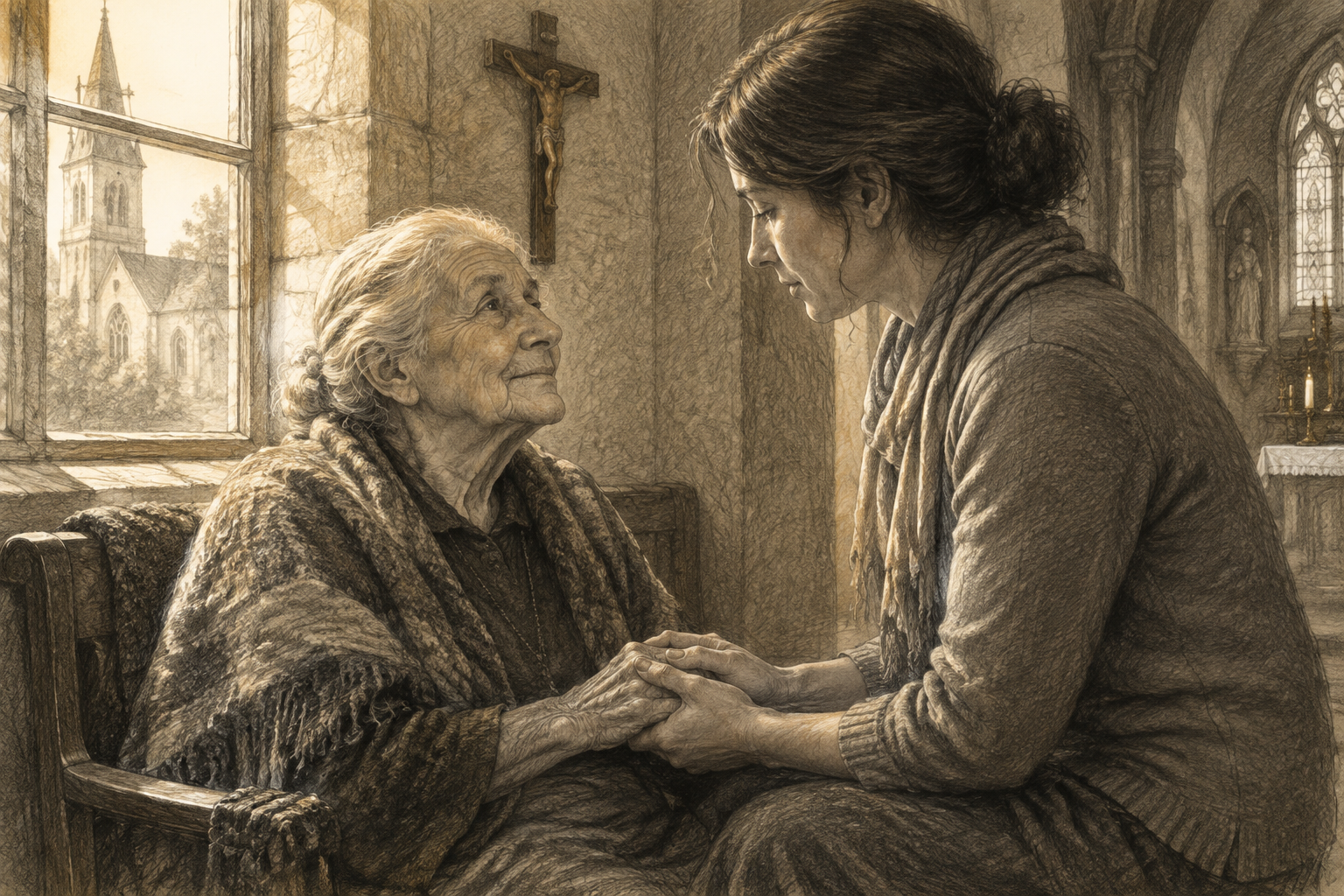
Parishes have a particular responsibility to ensure that older members do not disappear from the community when they can no longer attend regularly. Homebound parishioners are still parishioners. Their absence should be noticed, and their spiritual needs should not depend entirely on whether they are able to ask for help.
Practical parish care may include organized visits, transportation to Mass, accessible entrances and seating, large print materials, Communion for the homebound, and assistance in contacting a priest for Confession or the Anointing of the Sick. Volunteers should receive appropriate formation and follow safe parish practices, especially when visiting vulnerable adults.
Older Catholics should also be welcomed as contributors, not viewed only as recipients. Many can pray for parish intentions, mentor younger adults, assist in ministries, share skills, support families, and bear witness to fidelity through decades of joy and trial. Scripture presents the elderly Simeon and Anna as attentive servants of God who recognized the child Jesus when he was brought to the Temple in Luke 2:25 and Luke 2:36. Their age was not an obstacle to their vocation. It had become part of their readiness.
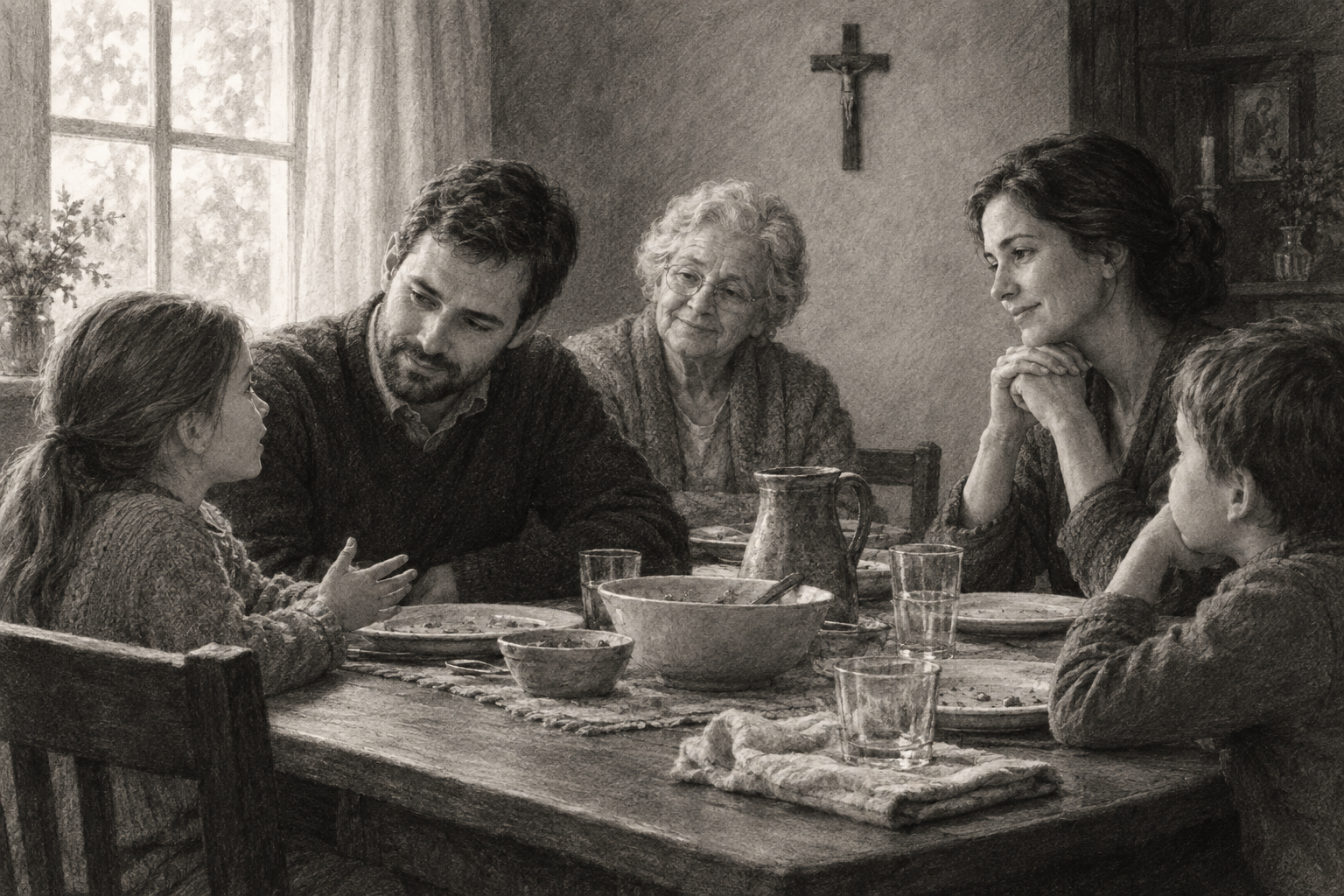
Intergenerational friendship benefits the whole Church. Children learn that aging is not something shameful. Younger adults gain wisdom and perspective. Older persons receive companionship and a renewed sense of belonging. These relationships cannot be manufactured through a single annual event. They grow through repeated contact and shared life.
Protection from Neglect and Exploitation
Mercy also requires vigilance. Older persons can be vulnerable to financial exploitation, emotional manipulation, neglect, and physical abuse. Warning signs may include unexplained injuries, sudden financial changes, poor hygiene, untreated medical needs, fear around a particular person, or abrupt withdrawal from normal relationships.
Respect for family privacy must never become an excuse to ignore credible signs of harm. Concerns should be handled carefully and through appropriate legal, medical, pastoral, or protective channels. Immediate danger requires an immediate response. A person who reports mistreatment should be heard seriously rather than dismissed because of age, disability, or confusion.
Protection also means respecting an older person's rightful participation in decisions. Assistance should not become unnecessary control. When possible, the person receiving care should be consulted about living arrangements, medical treatment, daily routines, finances, and spiritual needs. Dependence does not cancel personhood.
Care at the End of Life
Catholic care for the elderly includes a firm commitment to accompany people through serious illness and dying. The Church rejects euthanasia and assisted suicide because intentionally causing death is not a legitimate form of care. Suffering persons deserve relief, companionship, and protection, not the suggestion that their death would solve a problem.
At the same time, Catholic teaching does not require every possible medical intervention. A person may decline treatments that are excessively burdensome or offer no reasonable benefit. Decisions should be made with competent medical guidance, attention to the person's actual condition, and a well formed conscience. Ordinary and proportionate care should not be confused with aggressive treatment that merely prolongs the dying process.
Food and water, including assisted nutrition and hydration, are generally considered ordinary care when they provide nourishment and can be given without disproportionate burden. Particular medical situations can be complex, however, so families should seek sound clinical and Catholic moral guidance rather than relying on slogans.
Palliative care can be a genuine expression of mercy. It seeks to relieve pain and other distressing symptoms while supporting the patient and family. The sacraments, prayer, reconciliation, and the presence of loved ones belong alongside good medical care. The Anointing of the Sick is not reserved only for the final moments of life. Catholics should not delay requesting it when a person becomes seriously ill or weakened by old age.
Learning to Receive Care
The call to care for the elderly also speaks to those who are growing older. Receiving help can be humbling, especially for someone who has spent a lifetime serving others. Yet Christian life is never complete independence. From infancy onward, every person lives by gifts received from God and neighbor.
Accepting care does not make someone useless. An older person who receives assistance may offer patience, gratitude, prayer, humor, counsel, or an opportunity for another person to grow in charity. Even a person who can no longer speak or respond visibly remains a beloved member of the human family and the Body of Christ.
The Holiness of Staying Near
Not everyone can provide medical care, open a home, or solve the pressures facing an aging family member. Nearly everyone can resist indifference. We can call, visit, listen, bring concerns to the parish, offer respite to a caregiver, and remember those whose world has become small.
At the cross, Jesus entrusted his mother to the beloved disciple, and the disciple received her into his care in John 19:26 and John 19:27. Christian love continues in that same willingness to receive another person as our own. When strength fades and years grow heavy, the Church is called to stay near, bearing witness that no life becomes less precious with age.
Keep Reading on Lets Read The Bible
Frequently Asked Questions
What is the basis of care for the elderly in Catholic teaching?
It is rooted in the God given dignity of every human person, the commandment to honor one's parents, and the social duties of solidarity and concern for vulnerable people. Age, illness, disability, and dependence do not reduce a person's worth.
Does Catholic teaching require families to provide all elder care by themselves?
No. Families have real responsibilities, but they may need help from parishes, health professionals, community organizations, and public institutions. Seeking competent outside assistance can be a responsible expression of love, especially when medical needs or caregiver burdens exceed what a family can safely manage.
Must Catholics use every available treatment at the end of life?
No. Catholic teaching permits a person to decline treatments that are excessively burdensome or unlikely to provide reasonable benefit. It distinguishes the acceptance of natural death from euthanasia, which intentionally causes death. Sound medical advice and reliable Catholic moral guidance are important in difficult cases.