Doctrine and Questions
Indulgences and the Quiet Logic of Mercy
A careful look at a misunderstood practice rooted in repentance, communion, and the healing work of grace.
Site Admin | July 4, 2026 | 82 views
Mercy with a Face: What the Church Means by Indulgences
Few Catholic teachings are as often misunderstood as indulgences. For some, the word sounds technical or outdated. For others, it raises the memory of scandals from Church history. Yet the Church's teaching itself is not a scheme for buying forgiveness. It is a sober and hopeful expression of how grace heals the human person.
At the simplest level, indulgences explained mean this: when a person is already forgiven of sin, God can still heal the lingering disorder sin leaves behind. An indulgence is the remission before God of the temporal punishment due to sin whose guilt has already been forgiven. The Church, acting as a minister of Christ's mercy, applies the treasury of the merits of Christ and the saints to help the faithful in this healing. That is not magic. It is pastoral mercy.
The distinction matters. Sin has consequences beyond guilt alone. Even when confession restores us to grace, bad habits, wounded relationships, and disordered attachments may remain. Anyone who has ever confessed the same sin more than once knows that forgiveness is real, but growth in holiness is still needed. Indulgences belong to that ordinary struggle for conversion.
Sin Is Forgiven, Yet Healing Remains
Scripture shows that God's forgiveness and the consequences of sin are not always identical. King David is forgiven after his repentance, yet his sin still brings painful temporal consequences for his life and kingdom [[VERSE|2-samuel|12|13-14|2 Samuel 12:13-14]]. The point is not that God is unwilling to forgive. The point is that sin wounds, and wounds require healing.
The New Testament also speaks of a purifying fire that tests the work of each person [[VERSE|1-corinthians|3|12-15|1 Corinthians 3:12-15]]. Catholics have long seen here a biblical hint that God's saving work can include purification beyond the moment of pardon. Likewise, Christ gives the Apostles authority to bind and loose Matthew 16:19 and Matthew 18:18, showing that He entrusted real spiritual authority to His Church. The Church does not invent mercy. She administers it under Christ's lordship.
This is why indulgences should not be treated as a side issue or as a relic of medieval piety. They are tied to a deeply biblical vision of conversion. God forgives, Christ reconciles, and the whole person is gradually healed in the life of grace.
What an Indulgence Is Not
It is worth saying plainly what indulgences are not. They are not permission to sin. They are not a way to purchase salvation. They do not replace confession, contrition, or amendment of life. They are not a denial that forgiveness is free. In fact, indulgences only make sense because salvation is already a gift.
People sometimes imagine an indulgence as if it were a spiritual coupon, a way to bypass repentance. That is exactly wrong. An indulgence presupposes conversion. A person must be in a state of grace to receive it, at least when the indulgence is fully gained. The Church asks for prayer, sacramental life, and detachment from sin because indulgences are ordered toward holiness, not convenience.
It is also important not to confuse indulgences with the forgiveness of guilt. A sacramental confession forgives mortal sin when the penitent is truly contrite. An indulgence does something different: it addresses the lingering temporal effects of sin. The Church is careful here because mercy is not vague. It is ordered, healing, and truthful.
Why the Church Speaks of Temporal Punishment
The phrase temporal punishment can sound severe, but the idea is simple. Sin has a double consequence: guilt before God and the damage sin leaves in the soul and in the world. When guilt is forgiven, the damage may still need purification. This is not a second punishment added to forgiveness. It is part of the healing that forgiveness begins.
Think of a person recovering from a serious illness. A doctor may say the patient is no longer in danger, yet strength still needs to return. The illness has been defeated, but convalescence remains. In a spiritual way, indulgences belong to that convalescence of the soul.
Saint Paul speaks of bearing one another's burdens Galatians 6:2 and of completing what is lacking in his own sufferings for the sake of Christ's body Colossians 1:24. Catholic teaching sees in this the mystery of communion: our lives are not isolated. Grace given to one member of the Body of Christ can serve others. That is why the Church speaks of a treasury of merits. The merits belong first and fully to Christ, and the saints share in them only because they are united to Him.
The Treasury of Grace Is Christ Himself
Some people hear the phrase treasury of the Church and imagine a ledger of accumulated spiritual points. That image misses the point. The real treasure is Christ, whose sacrifice is sufficient for all. The saints do not add anything to the Cross as though Christ needed help. Rather, because they are conformed to Him, their holiness becomes fruitful for the whole Body.
This is the logic of communion. In the Church, no one is saved as an isolated individual. We are baptized into one Body, nourished by one Eucharist, and called to share in one holiness. If one member grows in charity, the whole Body is strengthened. If one member suffers, the whole Body can assist. Indulgences live inside that reality.
That is also why the Church links indulgences to works of prayer, Scripture, the Eucharist, confession, almsgiving, and acts of penance. These are not arbitrary tasks. They are concrete forms of conversion. They direct the heart back to God and make room for grace to heal what sin has bent out of shape.
How Indulgences Fit Ordinary Catholic Life
The best way to approach indulgences is not with anxiety, but with prayerful realism. Most Catholics will never spend much time calculating them. But the principle behind them can deepen daily life in a healthy way.
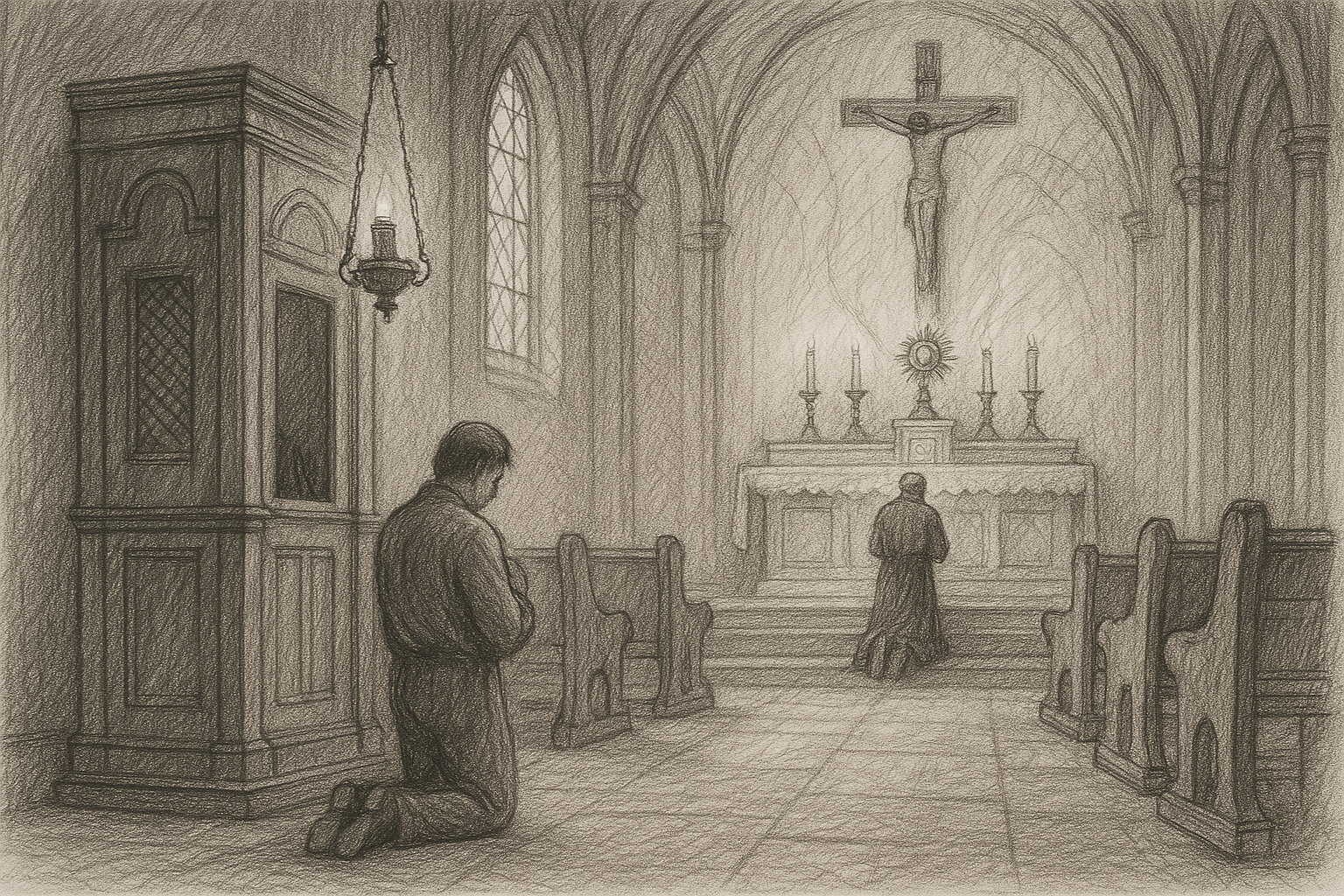
First, indulgences remind us that repentance is ongoing. Confession is not the end of conversion. It is the beginning of restored friendship with God. After confession, we still need growth in patience, humility, and freedom from sin's pull.
Second, indulgences strengthen our awareness of the communion of saints. When we pray for the dead, we are not engaging in sentiment. We are practicing charity across the boundary of death. If the Church can pray for the departed, it is fitting that she can also apply spiritual aid to them through indulgenced acts, according to her discipline.
Third, indulgences help us see that ordinary acts matter. A visit to the Blessed Sacrament, the praying of the Rosary, reading Sacred Scripture for a time, or making the Way of the Cross can become occasions of grace when done with faith. The Church's indulgences often attach to such acts because they train the soul in love.
For many Catholics, this is the practical beauty of the teaching. The Church is not asking us to invent dramatic penances. She is asking us to live more deliberately as disciples. Small acts, done in grace, become part of the healing God works in us.
Scripture, the Early Church, and the Catholic Instinct
While the term indulgence developed later, the instinct behind it is ancient. Scripture repeatedly shows that repentance can involve acts of mercy, prayer, and sacrificial offering. In the book of Jonah, the people of Nineveh repent with fasting and humility, and God relents from the disaster announced against them [[VERSE|jonah|3|5-10|Jonah 3:5-10]]. Their repentance is not merely interior. It takes visible form.
In the Gospels, Christ does not treat holiness as an invisible idea detached from practice. He calls people to prayer, fasting, almsgiving, and a new heart [[VERSE|matthew|6|1-18|Matthew 6:1-18]]. He tells Zacchaeus that conversion must show itself in restitution [[VERSE|luke|19|1-10|Luke 19:1-10]]. He teaches that mercy should shape the life of the disciple. The Catholic practice of indulgences stands in that same biblical current: grace changes us, and the change reaches into habits, actions, and relationships.
The early Church also understood that penance could be social and ecclesial, not merely private. Serious sin harmed communion, and reconciliation was a matter for the Church as a mother. Indulgences belong to that motherly care. They are not a shortcut around repentance. They are a way of applying the Church's intercession to souls already turned toward Christ.
Receiving an Indulgence with the Right Heart
Because indulgences are an exercise in mercy, the right attitude matters. A person who wants an indulgence should not approach it mechanically. The Church always assumes faith, repentance, and trust in God's goodness. It helps to think in terms of love rather than transaction.
That means a few practical habits:
- Go to confession regularly and receive the Eucharist with reverence.
- Pray for the intentions of the Holy Father as the Church asks.
- Detach yourself as fully as possible from every sin, even venial sin.
- Choose indulgenced works as acts of love, not as spiritual chores.
- Offer the fruit of the indulgence with humility, especially for the dead.
The desire to receive an indulgence should never become scrupulosity. The Church is a wise mother. She gives these practices to encourage trust, not fear. If a Catholic stumbles in the details, the deeper invitation remains the same: return to Christ, live in grace, and let mercy shape the day.
That is the quiet strength of indulgences. They teach that God's mercy does not merely cancel a debt. It renews a person. And because the Church is one body in Christ, the healing of one member can become help for another. This is one more way the Lord shows that His salvation is not cold legal pardon, but living communion.
Keep Reading on Lets Read The Bible
Frequently Asked Questions
Are indulgences the same as forgiveness of sin?
No. Forgiveness of sin removes guilt, while an indulgence addresses the temporal effects of sin that remain after guilt has been forgiven. An indulgence assumes repentance and a state of grace.
Can indulgences be bought?
No. The Church does not teach that indulgences can be purchased. They are spiritual gifts connected to prayer, sacramental life, and works of piety or charity.
Can Catholics offer indulgences for the dead?
Yes. Catholics may apply indulgences for the dead by way of suffrage, trusting God to use that prayerful assistance according to His mercy and justice.