Marian Devotion
Lourdes and the Quiet Mercy of God
In the grotto at Lourdes, the Church sees not spectacle but a gentle call to faith, repentance, and prayer.
Site Admin | April 11, 2026 | 84 views
Our Lady of Lourdes explained in Catholic life is not first a story about extraordinary events. It is a story about the mercy of God made near through the maternal care of the Blessed Virgin Mary. When Mary appeared to Saint Bernadette Soubirous in 1858, she did not offer a new doctrine or ask for admiration. She called for prayer, repentance, and humble trust. That is why Lourdes continues to speak so powerfully to Catholics: it places human suffering in the presence of Christ.
Lourdes is a reminder that the Lord is never distant from the poor, the sick, or the repentant. In Scripture, God often meets his people in places where human strength is small. He hears the cry of the afflicted, lifts up the lowly, and gives living water to those who thirst. Mary stands within that divine pattern as a mother who points beyond herself. As she said at Cana, "Do whatever he tells you" John 2:5.
The apparitions at Lourdes and the message they carried
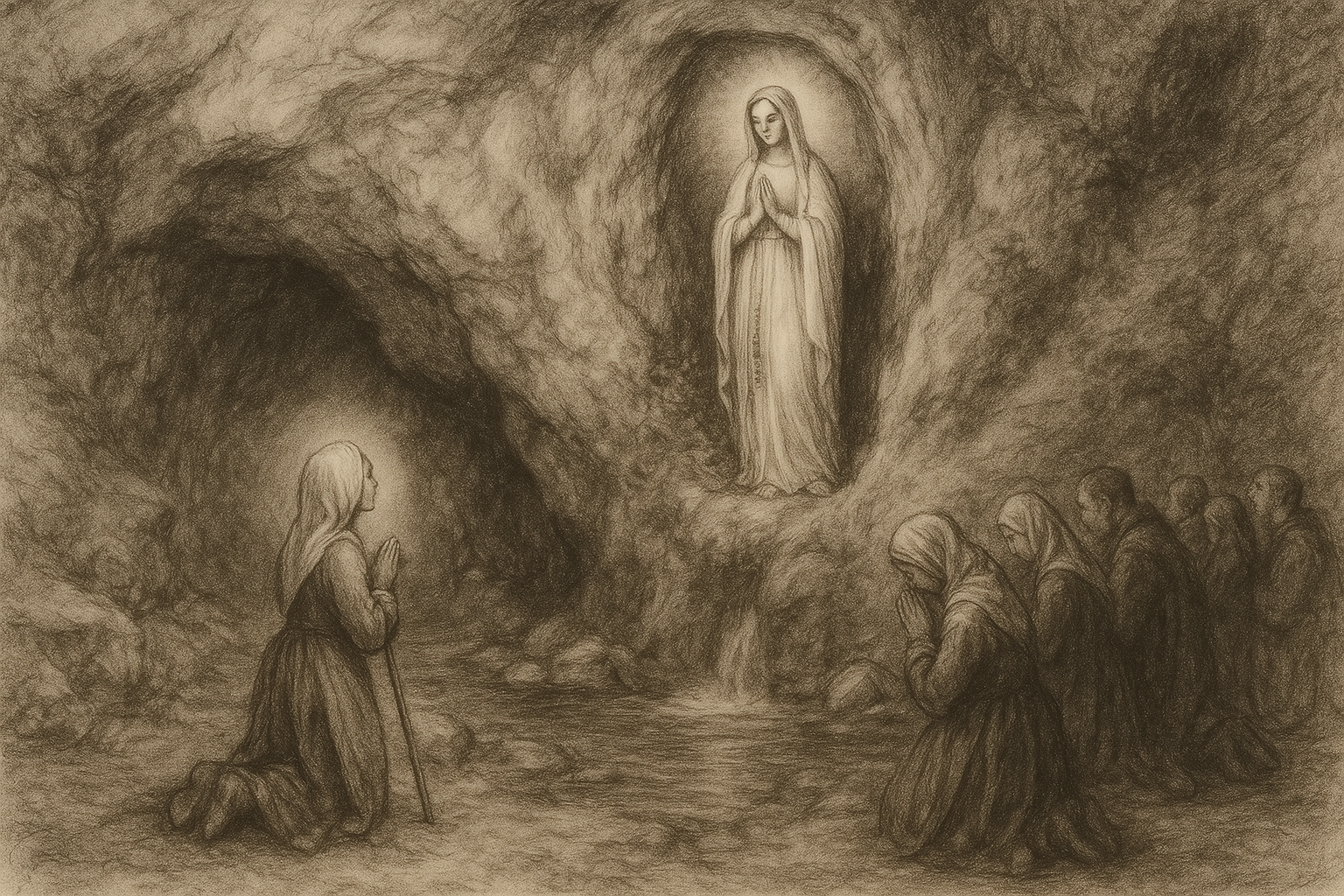
Between February and July of 1858, Saint Bernadette saw the Blessed Virgin Mary at the grotto of Massabielle near Lourdes in southern France. The appearances were simple and marked by a striking sobriety. Mary did not arrive with worldly grandeur. She came as a praying woman, a mother, and a messenger of grace. The Lourdes shrine has never been about curiosity for its own sake. It has been about listening.
The heart of the message was prayer, penance, and trust in God. Mary asked Bernadette to pray the Rosary, to do penance for sinners, and to return in faith. In one of the most memorable moments, she invited Bernadette to drink from the spring that emerged at the grotto. The Church has always understood that this spring, and the healings associated with it, are signs. They are not magic. They are signs pointing to the greater healing God gives in Christ.
In the Gospels, Christ often meets people at the edge of their need. He restores the sick, forgives sins, and calls the discouraged to peace. At Lourdes, Catholics see a Marian echo of that same mercy. Mary never replaces Jesus. She magnifies him. Her whole mission is like the prayer of her own soul: My soul magnifies the Lord Luke 1:46.
Marys role is always to lead us to Christ
Catholic devotion to Our Lady of Lourdes makes sense only when Marys place in salvation history is understood correctly. The Church honors Mary as the Mother of God because her Son is truly God and truly man. Yet her greatness is entirely ordered toward Christ. She is the first disciple, the most faithful hearer of the Word, and a mother to believers because Christ gave her to the Church.
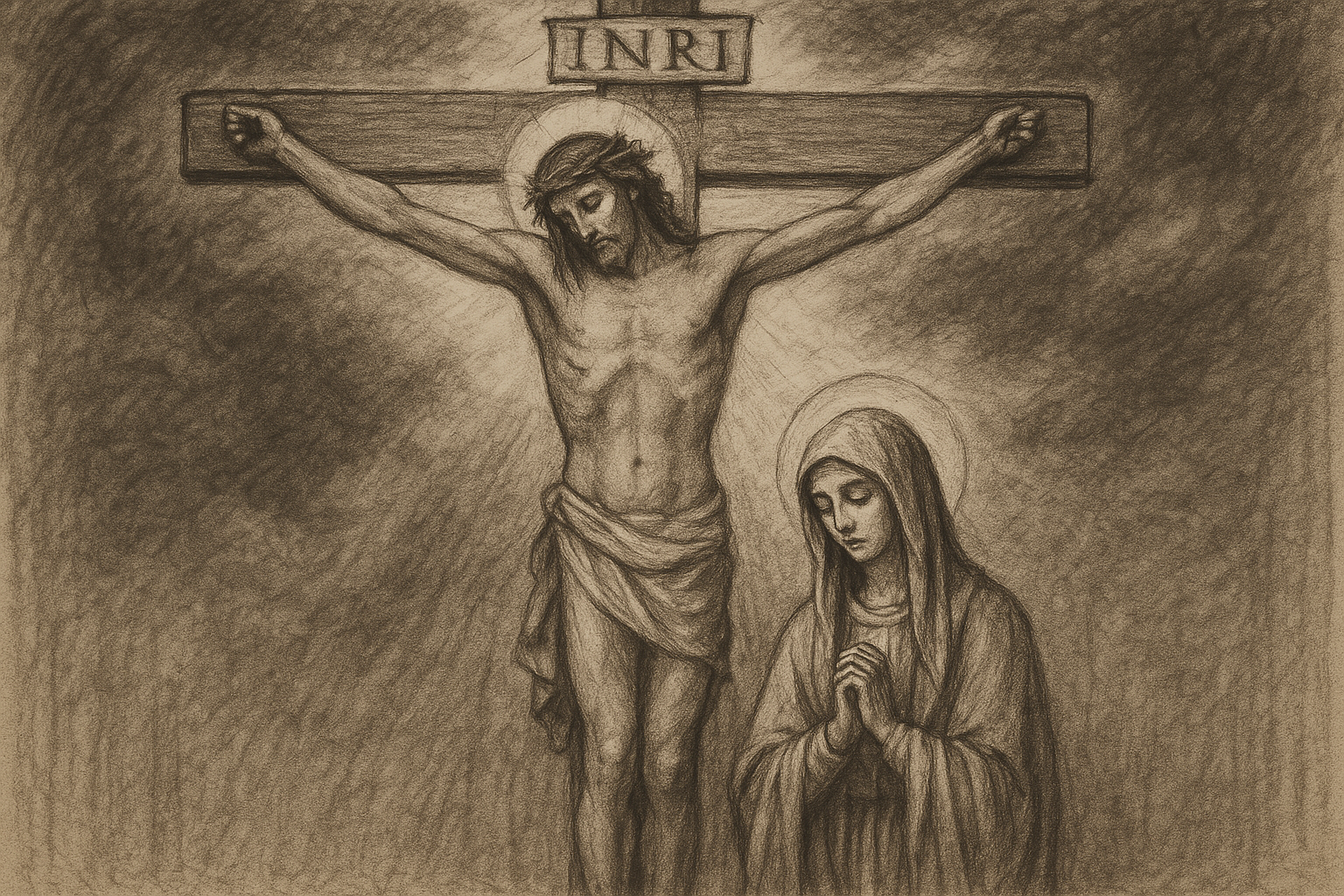
At the foot of the Cross, Jesus said to the beloved disciple, "Behold, your mother" John 19:27. Catholics read this not as a sentimental image but as a real gift. In Mary, the Church receives a mother who intercedes, consoles, and teaches us to remain close to her Son. Lourdes expresses that maternal nearness in a particular way: the sick come with wounds, the weary come with fear, and the poor come with nothing to prove. Mary receives them and directs them toward Jesus.
This is why the language of healing at Lourdes must always be kept within Catholic faith. Physical cures may happen, and when they do, the Church carefully investigates them. But the deeper healing is conversion of heart. A person may leave Lourdes still carrying illness, yet be made spiritually more alive through confession, prayer, surrender, and hope. That too is grace.
Healing at Lourdes is a sign, not a slogan
Modern readers sometimes approach Lourdes as if it were mainly a place of medical mystery. The Church, however, treats reported healings with seriousness, prudence, and discernment. This is fitting. Catholic faith never asks people to abandon reason. Instead, it asks them to recognize that God can act in ways that exceed ordinary expectation while never contradicting truth.
The healing waters of Lourdes remind Catholics of the sacramental life of the Church. Water in Scripture is often linked with cleansing, birth, passage, and life. In the Exodus, Israel passes through the sea. In baptism, the Christian passes from sin to new life. Jesus speaks of living water, and the prophet Isaiah invites the thirsty to come and drink without cost Isaiah 55:1. Lourdes does not replace these biblical realities. It points to them.
When pilgrims wash at the grotto, many do so with tears, gratitude, and quiet hope. Some seek bodily healing. Others seek the courage to endure suffering with faith. Still others arrive burdened by grief or doubt. In every case, Lourdes becomes a place where the soul can bow before God and say, with the psalmist, "As the deer longs for flowing streams, so my soul longs for you, O God" Psalm 42:1.
What Catholic devotion to Lourdes invites in daily life
Devotion to Our Lady of Lourdes should not remain only at the level of admiration. It should shape the way Catholics pray and live. Lourdes calls the faithful to a style of discipleship that is humble, penitent, and attentive to the suffering of others.
1. Pray with simple trust
Marys appearances at Lourdes were marked by simplicity. That simplicity can correct our tendency to make prayer complicated. The Rosary, the Angelus, and quiet acts of surrender are not lesser forms of prayer. They are strong forms of prayer because they keep the heart near Christ through Mary. A Catholic who prays the Rosary at Lourdes, or before an image of Our Lady of Lourdes at home, joins a long tradition of humble confidence.
2. Bring your suffering honestly before God
Lourdes is especially beloved by the sick because it does not ask them to hide their weakness. It receives them as they are. That is deeply Catholic. The Church does not deny suffering. She brings it to the altar. She unites it to the Cross. At Mass, every pain offered with faith can become prayer. At Lourdes, that truth becomes visible and tender.
3. Remember that repentance is part of healing
Marys call to penance is not harsh. It is merciful. Repentance is not humiliation for its own sake. It is the clearing away of whatever blocks grace. The soul often needs healing before the body is healed, and sometimes the body is healed in a way that draws the soul into deeper conversion. Confession, examination of conscience, and works of mercy all belong to the spirit of Lourdes.
4. Visit the sick with compassion
Lourdes also teaches the Church how to care for the suffering. Pilgrims who assist the sick at the shrine often discover that service itself becomes a grace. The Christian does not stand above the afflicted. He kneels beside them. This reflects the ministry of Christ, who touched lepers, welcomed the weak, and took suffering seriously.
"Blessed are the pure in heart, for they shall see God" Matthew 5:8.
Purity of heart is not only moral innocence. It is a single, undivided desire for God. Lourdes gently reorders desire. It teaches that healing is not only about getting what we want. It is about becoming open to what God wants most deeply for us.
Why pilgrims still go to Lourdes
People continue to travel to Lourdes because the human heart still longs for mercy. In every age, sickness, anxiety, and grief remain part of the human condition. Yet the Gospel insists that suffering is not the final word. Christ has entered death and risen from it. Mary, as his mother and disciple, stands as a sign of that victory. The faithful go to Lourdes not because they expect easy answers, but because they seek contact with hope.
Many pilgrims describe Lourdes as a place of peace. That peace is not escapism. It is the fruit of encountering God in prayer, the sacraments, and the communion of the Church. The grotto, the candles, the processions, the silence, and the water all work together as signs of a larger reality: God is near, and he does not abandon his children.
For Catholics who have never visited Lourdes, devotion can still be lived at home. A small image of Our Lady of Lourdes, a candle, a decade of the Rosary, or a prayer for the sick can make the shrine spiritually present in daily life. The point is not to recreate the geography of Lourdes. The point is to enter its spirit of faith.
Saint Bernadette herself remains an important witness. She was not powerful, educated, or influential. She was a poor girl whose credibility rested in her humility and fidelity. That is often how God works. He entrusts his signs to the little ones so that faith rests on grace, not prestige. As Scripture says, "God chose what is weak in the world to shame the strong" 1 Corinthians 1:27.
Our Lady of Lourdes explained in Catholic devotion is ultimately a lesson in the tenderness of God. Mary does not ask us to stare at the wound forever. She asks us to come to the place where Christ heals, forgives, and renews. Lourdes is a shrine of hope because it is a school of trust. There, the sick, the sorrowful, and the searching learn again that the Lord sees them, that his mother prays with them, and that mercy is stronger than despair.
Keep Reading on Lets Read The Bible
Frequently Asked Questions
What does Our Lady of Lourdes ask Catholics to do?
She calls the faithful to prayer, penance, trust in God, and care for the suffering. The message of Lourdes is not self-focus but conversion and hope.
Does the Catholic Church say every healing at Lourdes is miraculous?
No. The Church is careful and discerning. Some healings are recognized as medically unexplained after investigation, but not every reported cure is declared miraculous.
How can I pray to Our Lady of Lourdes at home?
You can pray the Rosary, ask Mary to intercede for someone who is ill, and offer a simple prayer for healing, patience, and trust in Christ. A candle or image of Our Lady of Lourdes can also help keep the devotion present.