Marian Devotion
Mary in Glory, and the Hope Set Before the Church
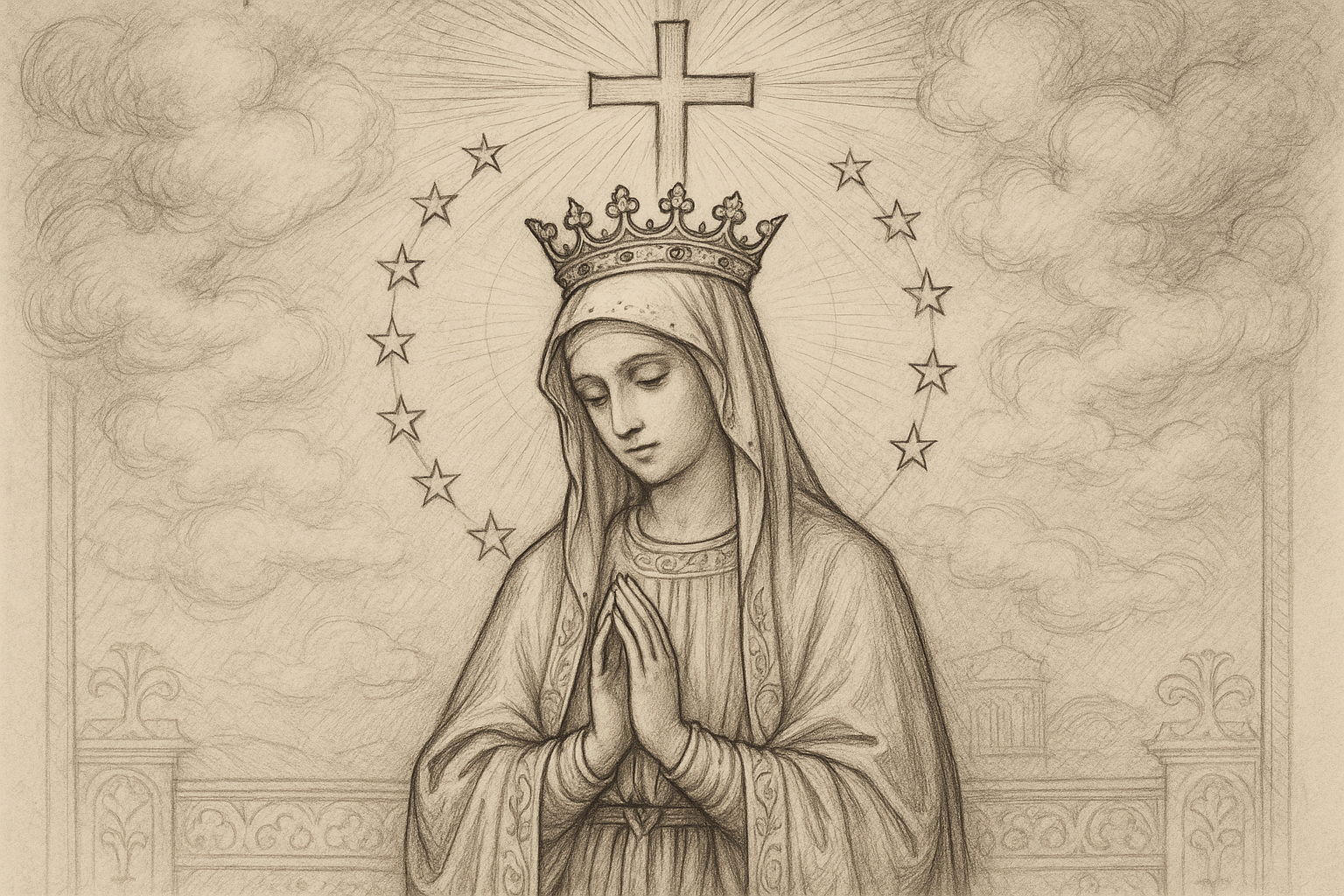
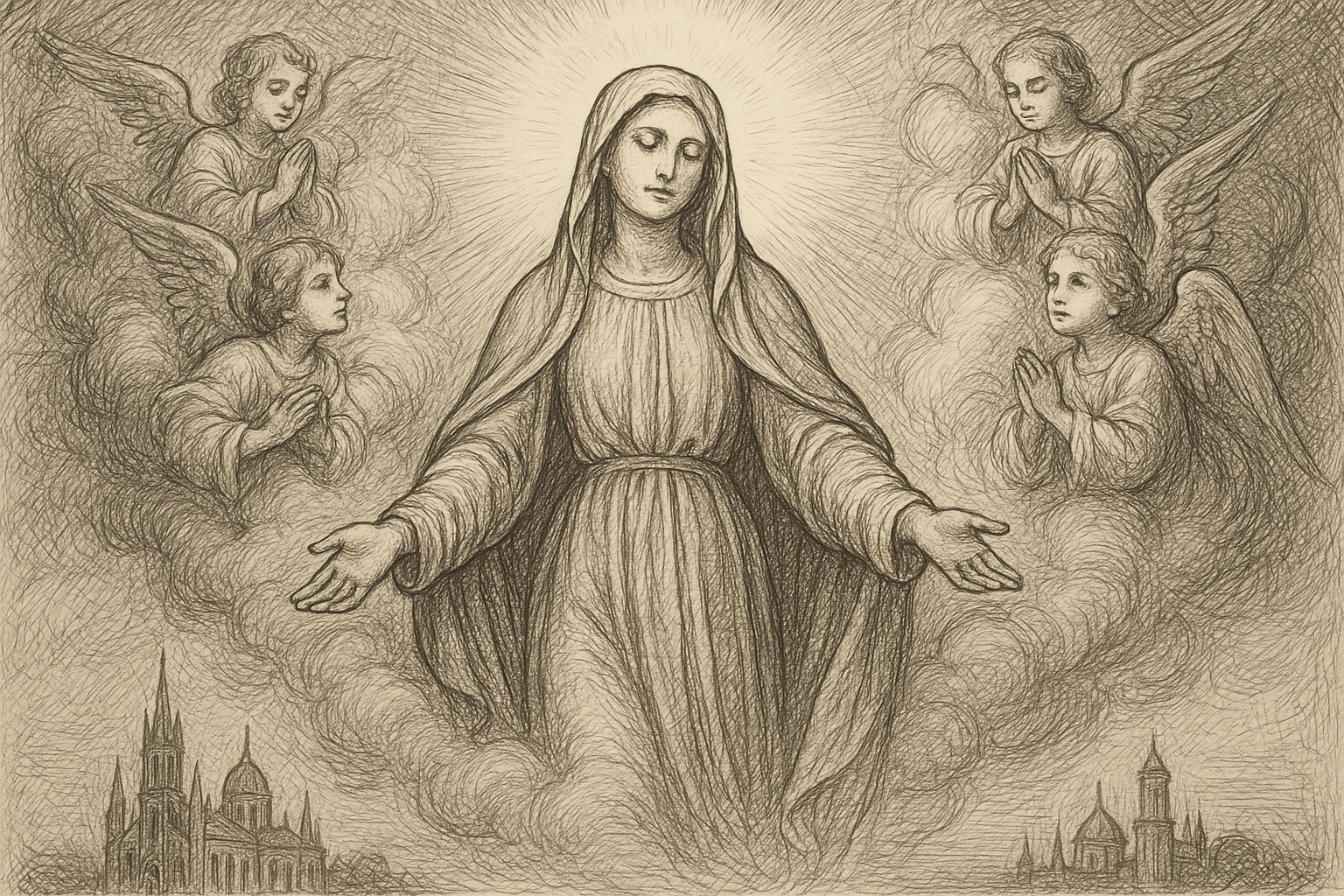
The Assumption shows how the Church reads Mary's final glory as a sign of Christ's victory and a promise for the redeemed.
Site Admin | April 4, 2026 | 65 views
Marys glory is never separate from Christ
The Assumption is one of those Marian truths that can seem distant at first, as if it belongs to a realm of pious legend rather than ordinary Catholic life. Yet the Church teaches it precisely because it is so closely tied to the heart of the Gospel. When Catholics speak of the Assumption Catholic meaning, they are not talking about Mary apart from Jesus. They are talking about what God has done in her because of Jesus, for the sake of Jesus, and as a sign of what Jesus intends for the whole redeemed family of God.
The dogma teaches that the Blessed Virgin Mary, at the end of her earthly life, was assumed body and soul into heavenly glory. The Church does not define the exact manner of her passing from this life. What she does proclaim is Marys final exaltation as a gift of grace. In Catholic faith, Mary is never an alternative to Christ. She is the first and most transparent disciple, the one who heard the word of God and kept it, the mother who gave the Savior his human flesh, and the woman whom God preserved for a singular role in salvation history.
This is why the Assumption is not mainly a sentimental image of Mary being rewarded. It is a doctrinal statement about God, Christ, the resurrection, and the destiny of those who belong to him.
What the Church actually teaches
Pope Pius XII defined the dogma of the Assumption in 1950 in Munificentissimus Deus. The Church teaches that the Immaculate Mother of God, the ever Virgin Mary, having completed the course of her earthly life, was assumed body and soul into heavenly glory. Catholics are free to discuss the details of how this happened, but the substance of the teaching is firm.
It is helpful to notice what this claim does and does not say. It does say that Mary shares already in the glory promised to the saints. It does say that her body, which bore the Word made flesh, was not left to the corruption of the tomb. It does say that her life ends in a victorious union with God. It does not say that Mary became divine. It does not say that her holiness came from herself. It does not say that Christians should place their hope in Mary instead of in Christ. Rather, it shows what grace can do in a human person perfectly surrendered to God.
The Church has long celebrated this mystery in her liturgy before defining it as dogma. That matters, because Catholic doctrine grows from the Churchs prayer, preaching, and worship. The feast is not an afterthought. It belongs to the Churchs living memory of who Mary is in relation to her Son.
Scripture and the pattern of biblical hope
The Assumption is not spelled out in one sentence of Scripture, but Catholic faith does not require every doctrine to appear as a direct proof text. The Church reads Scripture as a whole, in light of the apostolic faith, and sees in Mary a pattern that points toward her exaltation.
At the Annunciation, Mary receives the Word in faith and says yes to God with full surrender: Let it be done to me according to your word. At the Visitation, Elizabeth blesses her as the mother of the Lord and calls her blessed for believing: Blessed are you among women and Blessed is she who believed. At the Magnificat, Mary herself praises the God who exalts the lowly and fills the hungry with good things: [[VERSE|luke|1|46-55|My soul magnifies the Lord]].
These scenes do not prove the Assumption in a narrow logical sense, but they reveal the shape of Marys life. She is the woman who belongs wholly to Gods promise. Her body and soul are ordered toward the Incarnation she welcomed. Her destiny fits the logic of divine mercy, not human merit.
Another important scriptural horizon is the resurrection of the body. Saint Paul teaches that Christ will transform our lowly bodies to conform them to his glorious body: [[VERSE|philippians|3|20-21|He will change our lowly body to be like his glorious body]]. He also writes that the last enemy to be destroyed is death: The last enemy to be destroyed is death. The Assumption is best understood against this promise. Mary already shares, by grace, in what all the faithful await at the end of time. She is not an exception that cancels Christian hope. She is a sign that confirms it.
Some Catholics also see the woman clothed with the sun in Revelation as echoing both Mary and the people of God: A woman clothed with the sun. The Church has never reduced that passage to Mary alone, but it has often recognized in it a Marian resonance. That is fitting, because Mary gathers in herself the promises of Israel and the hope of the Church.
Why the Assumption points to Jesus, not away from him
The deepest misunderstanding of Marian devotion is the fear that honoring Mary must somehow compete with honoring Christ. Catholic teaching rejects that false choice. Mary is honored because God has honored her. Her greatness is entirely derivative. Every grace in her life comes from Christ, the one Savior of the world.
The Assumption highlights three truths about Jesus.
- His victory is real. If death does not have the last word over Mary, it is because Christ has conquered death.
- His Incarnation is real. Marys body mattered because the Son of God truly took flesh from her.
- His redemption reaches the whole person. Salvation is not escape from the body, but the glorification of the whole human person.
Marys assumption into heaven, then, is not a distraction from the Lord. It is a living proclamation that the redemption accomplished by Christ can fully renew human nature. In Mary we see what grace looks like when it meets perfect receptivity. She is not the source of salvation, but she is a radiant witness to it.
The Assumption and the Christian view of the body
Modern life often treats the body as either a tool to be used or a shell to be discarded. Catholic faith says something very different. The body is part of the person, created good by God and destined for resurrection. The Assumption gives this truth a luminous Marian expression.
Marys body was not meaningless to God. It was the body through which the eternal Son entered human history. It carried him, nourished him, and stood near him in the mystery of his saving work. The Church therefore sees in the Assumption a quiet but strong defense of bodily dignity. If a human body can be taken into heavenly glory, then matter itself is not beneath divine concern.
This has practical force for Catholic spirituality. It reminds us that holiness is not only interior sentiment. It involves the body: kneeling, fasting, serving, keeping custody of the senses, reverencing life, and receiving the sacraments. Marys glorification is a promise that our embodied lives matter to God from beginning to end.
How Marian devotion becomes deeper through the Assumption
Authentic Marian devotion always leads to greater love for Christ. The Assumption deepens that devotion by showing where Mary now stands: fully alive in God, wholly united to her Son, still a mother to the Church in the order of grace.
For Catholics, this means several things.
- We can pray with confidence. Marys glorification is not a reason to place her on a pedestal beyond reach. It is a reason to ask for her intercession as a saint who already shares in the fullness of what we seek.
- We can imitate her faith. Her life was marked by listening, trust, obedience, and contemplation. The Assumption confirms that such hidden fidelity is never wasted.
- We can hope with greater steadiness. When suffering, aging, or grief make earthly life feel fragile, Marys destiny reminds us that God does not abandon what he has made.
Marian devotion sometimes becomes sentimental when separated from doctrine. The Assumption corrects that by giving devotion a strong theological center. It says that Marys greatness is grounded in Gods action, not human idealization. She is the woman redeemed most fully by Christ, and therefore the woman who shows Christ most clearly.
Why this feast belongs in ordinary Catholic life
The Assumption is celebrated on August 15, but it should not remain a seasonal idea. It belongs in the daily life of prayer because it offers a stable Christian vision of destiny. The saints are not ghosts of the past. They are living members of the Body of Christ. Mary, taken into heavenly glory, stands as the brightest sign among them.
In times of fatigue, the feast reminds the Church that holiness has an end. In times of sorrow, it reminds the Church that death is not final. In times of confusion, it reminds the Church that the body, history, and grace all matter to God. And in times when devotion to Mary is misunderstood, it quietly teaches that true Marian love is always Christ-centered.
To honor Marys Assumption is to confess that the Lord keeps his promises. It is to believe that the one who raised his mother to glory will also raise his people. It is to look at Mary and see, not an endpoint apart from the Gospel, but a living preview of the kingdom her Son has won.
That is the heart of the Assumption Catholic meaning: not escape from the world, but the transfiguration of a human life completely given to God.
Keep Reading on Lets Read The Bible
Frequently Asked Questions
What does the Catholic Church mean by the Assumption of Mary?
The Church teaches that Mary, having completed the course of her earthly life, was assumed body and soul into heavenly glory. This is a dogma of the Church and a sign of the resurrection promised to all the faithful.
Is the Assumption the same as the Ascension of Jesus?
No. Jesus ascended into heaven by his own divine power. Mary was assumed by Gods grace. The two mysteries are related, but they are not the same.
Does belief in the Assumption come from Scripture?
The Assumption is not stated in one explicit biblical verse, but Catholics see it as consistent with Scripture, especially the Gospel accounts of Mary, the resurrection of the body, and the final victory of Christ over death.