Jesus and the Gospels
Oil in the Lamp: Reading the Wise and Foolish Virgins with Catholic Eyes
Jesus' parable in Matthew 25 calls the Church to watchfulness, readiness, and a faith that does not run dry.
Site Admin | March 5, 2026 | 76 views
The parable that arrives like a midnight knock
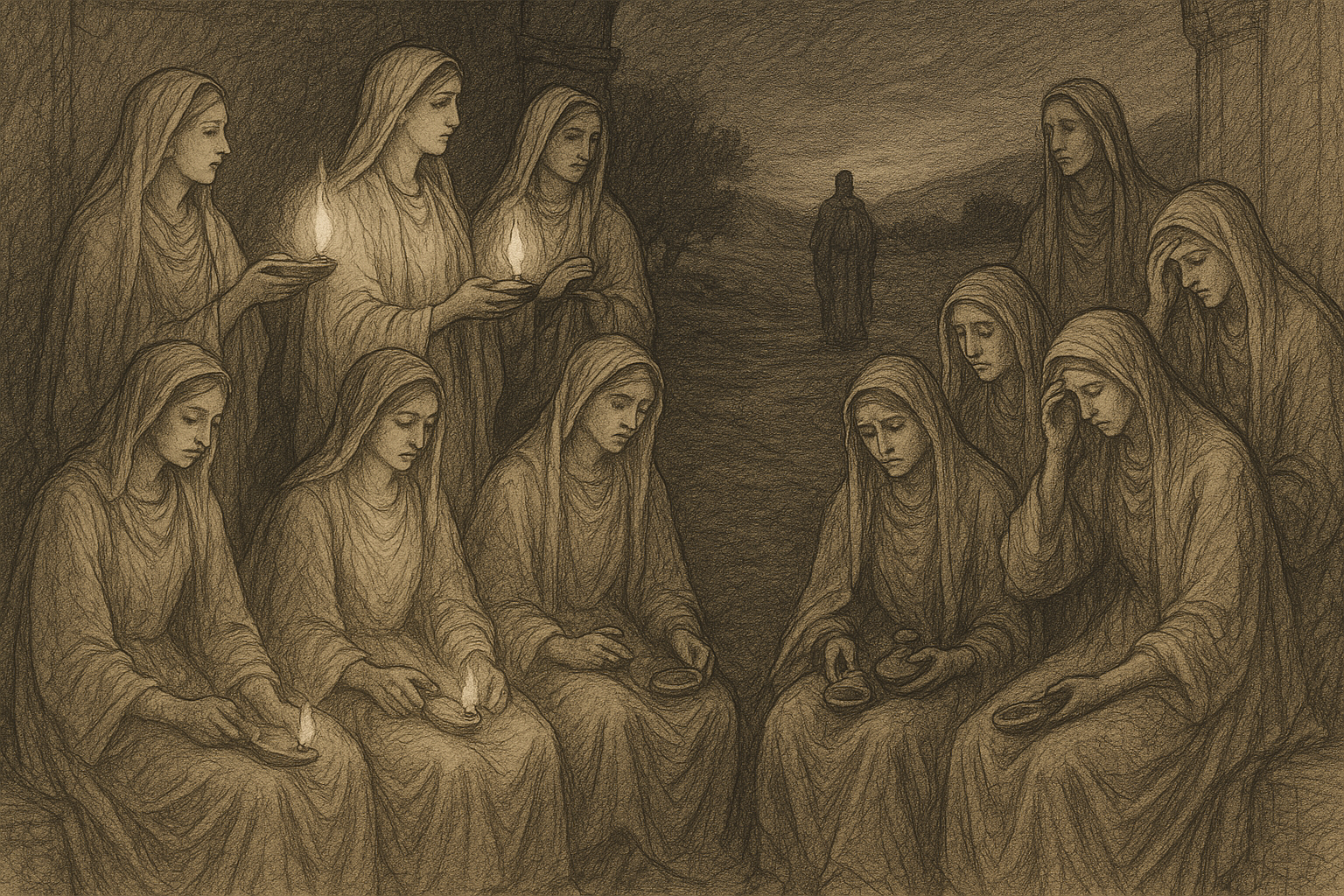
Few passages in the Gospels feel as urgent as the parable of the Wise and Foolish Virgins in Matthew 25. Jesus tells of ten virgins who take their lamps and go out to meet the bridegroom. Five are wise because they bring flasks of oil with their lamps. Five are foolish because they do not. When the bridegroom is delayed, all become drowsy and sleep. Then comes the cry at midnight: the bridegroom is here. The foolish virgins hurry away to buy oil, and when they return, the door is shut. The bridegroom replies, "Amen, I say to you, I do not know you" I do not know you.
This is not a gentle moral tale with an easy ending. It is a sober warning from the Lord himself. Yet it is also deeply hopeful, because Jesus tells it before the Cross and Resurrection, before Pentecost, and before the Church's long life in history. The parable is meant to awaken us. It is meant to form a people who are not only interested in Christ, but ready for him.
The scene in its biblical setting
The image comes from a wedding procession, a familiar scene in the world of Jesus. The bridegroom's arrival marks the joyful climax of the celebration. The key issue in the parable is not whether the virgins are invited. They all are. They all go out with lamps. They all wait. The difference appears in what they have prepared beforehand.
That detail matters. The foolish virgins are not condemned because they fell asleep, since all ten slept. They are judged because they lacked the oil needed when the decisive hour came. In biblical language, waiting is never passive. Waiting for God means living in such a way that the heart is ready when he arrives.
Matthew places this parable in the midst of Jesus' teaching about watchfulness. It belongs to a larger discourse about the coming of the Son of Man and the final judgment Stay awake, You know neither the day nor the hour. The point is not to encourage speculation about dates. It is to press the disciple into vigilance.
What the oil suggests
Christ does not explicitly define the oil, and that restraint is important. Catholic interpreters have often seen the oil as a sign of interior readiness, the life of grace, and the habits that keep faith alive. It can point to charity, prayer, obedience, perseverance, and the steady practice of conversion. In other words, the oil is not a decorative detail. It represents a life that has been nourished over time.
The wise virgins cannot share their oil at the last minute, not because charity is absent, but because some realities cannot be transferred on demand. No one can lend another person a lifetime of repentance, a formed conscience, or a heart made ready through fidelity. Each soul must answer the Lord personally.
This is one reason the parable speaks so forcefully to Catholic life. Grace is always gift, never self-made achievement. Yet grace is not magic. It requires cooperation. A lamp is meant to burn. A baptized life is meant to be sustained. The sacraments, prayer, and works of mercy are not accessories. They are the ordinary ways Christ keeps the flame alive.
Watchfulness is more than fear
It is easy to hear this parable as a threat alone, but that would flatten it. Jesus is not trying to produce panic. He is teaching spiritual alertness. Watchfulness in Scripture is not anxious guessing. It is faithful attention to God in the present moment.
The Christian who watches is the one who prays even when prayer feels dry, confesses sin without delay, receives the Eucharist with reverence, and tries again after failure. Vigilance is not a dramatic mood. It is a habit of love.
"Therefore, stay awake, for you know neither the day nor the hour" Stay awake
Those words are not meant to trap the disciple in dread. They are meant to rescue us from spiritual delay. The great temptation in Christian life is to assume there will always be more time. More time to repent. More time to pray seriously. More time to forgive. More time to become holy. The parable says that time is a gift, but not a guarantee.
The delay of the bridegroom and the mystery of waiting
The bridegroom is delayed, and that delay is part of the story. Jesus prepares his disciples for the period between his Ascension and his return in glory. The Church lives in this in-between time. We know Christ has come. We believe he will come again. But we do not know when. This creates the Christian form of waiting: confident, alert, and patient.
For Catholics, this waiting is lived in the rhythm of the liturgical year, in the Sunday Eucharist, and in the daily pattern of prayer. Advent especially echoes the spirit of this parable. But the message is not limited to one season. Every day can become a small vigil. Every Mass can become a rehearsal for the final meeting. Every act of fidelity keeps the lamp burning.
The delay also tests the heart. Many people begin with energy and then grow spiritually sleepy. That is not always dramatic rebellion. Often it is simple neglect. Prayer becomes irregular. Sin is excused. The soul drifts. The parable gently but firmly says that delay reveals what has been prepared in secret.
How Catholics can receive the warning honestly
The first response is humility. The wise virgins are not wiser because they boast. They are wiser because they are prepared. Catholic life should make room for holy humility, the kind that admits our weakness and asks for help before the crisis comes.
That means making ordinary readiness part of the Christian life:
- regular confession, so sin is not left to harden into habit
- frequent participation in the Eucharist, where Christ strengthens what we cannot sustain alone
- daily prayer, even when brief, so the soul stays turned toward God
- Scripture meditation, so the mind is formed by the Lord's voice
- works of mercy, which keep faith from becoming inward and sterile
None of these practices earn salvation as though grace were a wage. But they do dispose the heart to receive what God freely gives. The oil in the lamp is not something we manufacture apart from grace. It is the fruit of grace welcomed and guarded.
The second response is perseverance. Many Catholics know the difference between a sincere beginning and a faithful ending. A person may begin well and later grow careless. Another may begin with weakness and, through grace, endure to the end. The parable honors the hidden, unglamorous work of staying close to Christ over time.
Not all waiting looks impressive
Some of the most important spiritual preparation does not look dramatic. A parent praying before sleep. A worker refusing dishonest shortcuts. A sick person offering pain to God. A young adult resisting corruption. An older Catholic returning to confession after years away. These are small acts, but they fill the lamp.
In that sense, the wise virgins are not extraordinary in a worldly way. They are simply ready. They have enough oil because they knew the night might be long. Christian maturity often means learning to live with that same realism. We do not know how long the trial will last, how long the waiting will continue, or when the Lord will call us. So we live prepared.
The foolish virgins represent a tragic kind of spiritual imprudence. They had the right invitation, the right place, and the right moment, but they did not take seriously the need for endurance. Their failure was not lack of access. It was lack of preparation.
The closed door and the mercy of now
The shut door in the parable is severe, and we should not soften it. Jesus speaks this way because judgment is real. Our choices matter. The response to grace matters. At the same time, the warning itself is mercy. Christ tells the story now so that no one need hear the final refusal later.
That is why the parable should never lead a Catholic into despair. It should lead us to conversion. The door is closed at the end of the story, but it is open in the present moment. If we hear the Lord's voice today, we can still return. We can still repent. We can still ask for the oil we lack.
The Gospel does not ask us to invent readiness from nothing. It asks us to come to Jesus. He is the Bridegroom. He is also the one who gives what his call requires. The point is not to stare at our lamps in anxiety. The point is to let him light them and keep them burning.
A parable for the Church in every age
The Wise and Foolish Virgins is not only about the end of the world. It is about the shape of a Christian life. Every age of the Church needs the reminder that love must be sustained, not assumed. Every generation needs to hear that the Lord comes, that he comes at an hour we do not expect, and that blessed are those found ready.
For Catholics, that readiness is formed in the Church. It grows where Christ is worshiped, where sin is confessed, where Scripture is heard, and where charity is practiced. The parable therefore becomes less like a distant warning and more like a daily invitation: keep watch, keep praying, keep repenting, keep the flame alive.
When the Bridegroom comes, the soul that has been living in grace will not be surprised by his nearness. It will recognize the One for whom it has been waiting all along.
Keep Reading on Lets Read The Bible
Frequently Asked Questions
What is the Wise and Foolish Virgins Catholic meaning?
In Catholic reading, the parable is a warning about spiritual readiness for Christ's return and for the hour of our own death. The oil often symbolizes a life sustained by grace, prayer, repentance, and charity. The lesson is that disciples must not delay conversion or presume on future time.
What does the oil in the lamps represent?
Scripture does not define the oil directly, so Catholics read it as a sign of interior readiness. It can suggest sanctifying grace, faith working through love, and the habits that keep a Christian vigilant. The point is that readiness cannot be borrowed at the last moment.
How can Catholics live this parable today?
By living in a state of grace and remaining spiritually alert through confession, the Eucharist, daily prayer, Scripture, and works of mercy. The parable calls Catholics to steady perseverance rather than last-minute spiritual planning.