Prayer and Devotion
Praying the Chaplet in an Anxious Age
How the Divine Mercy Chaplet draws Catholics back to trust, repentance, and peace
Site Admin | December 2, 2025 | 66 views
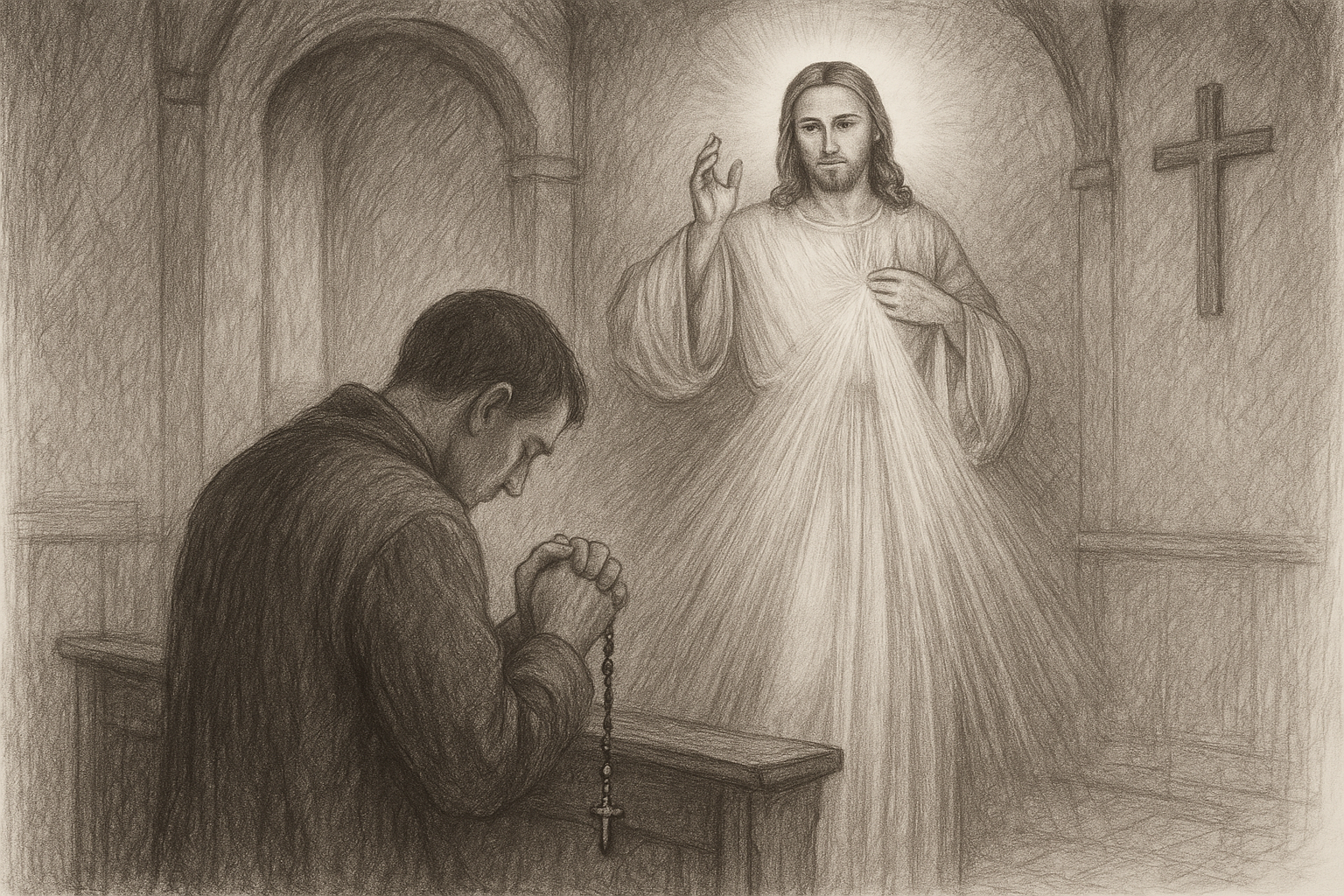
The Divine Mercy Chaplet explained simply is a prayer of trust. It asks us to place the world, our loved ones, our sins, and our fears into the merciful hands of Christ. In a time when many Catholics feel spiritually distracted or overwhelmed, the chaplet offers a steady rhythm: prayer, surrender, and confidence in the mercy that flows from the Heart of Jesus.
It is not a complicated devotion, and that is part of its beauty. The chaplet can be prayed quietly at home, in a church, in a hospital room, on a commute, or beside a bed at the end of life. Its words are gentle but direct. Again and again, the soul returns to the same petition: for the sake of His sorrowful Passion, have mercy on us and on the whole world.
Where the chaplet comes from
The Divine Mercy Chaplet is associated with the spiritual experiences of St. Faustina Kowalska, a Polish nun of the 20th century who recorded her interior life in her Diary. Through her witness, the Church came to know a strong emphasis on confidence in Christ's mercy, especially for sinners and the suffering. Catholic devotion to Divine Mercy grew steadily from that witness and has remained deeply rooted in the sacramental life of the Church.
At its center is the Gospel truth that Jesus came not only to teach, but to save. The Lord does not wait for us to become impressive before He draws near. He meets the wounded, the weary, the ashamed, and the afraid. Scripture already prepares us for this. Christ tells us, whoever comes to me I will never cast out, and that promise gives the chaplet its emotional and theological force.
Devotion to Divine Mercy does not replace the Mass, the sacraments, or daily conversion. Rather, it supports them. It reminds the believer that confession, contrition, and trust belong together. The chaplet is one more way to answer Christ's invitation to come close without fear.
Why the prayer continues to speak to Catholics today
Many Catholics live with a constant background noise of anxiety. Some carry family burdens. Some are weighed down by guilt. Others are trying to pray faithfully while managing illness, grief, work, or uncertainty about the future. The chaplet speaks into that condition because it does not begin with our strength. It begins with mercy.
That matters spiritually. When people think of prayer only as performance, they often become discouraged. They assume that prayer must sound polished, feel intense, or produce immediate consolations. The Divine Mercy Chaplet gently corrects that habit. It teaches the soul to rely on Christ's merit rather than its own. The repeated plea for mercy is not empty repetition. It is an act of humility. It admits what is true: we need help, and God is willing to give it.
This is one reason the chaplet is especially fitting for daily life. It can be prayed when thoughts are scattered. It can be prayed when words are hard to find. It can be prayed in faith before feelings catch up. In that sense, it becomes a school of trust. The heart learns to say, again and again, that Christ is enough.
The shape of the prayer and what it teaches
The chaplet is usually prayed on ordinary rosary beads, though it has its own wording. The structure is simple: it opens with prayers such as the Our Father, Hail Mary, and the Apostles' Creed, then turns to the repeated invocation based on the Lord's Passion. On each decade, the petitioner offers the Father the Body and Blood, Soul and Divinity of Jesus Christ in atonement for sins and for the whole world.
That language is rich in Catholic meaning. It points to the sacrificial heart of the Mass, where Christ's saving work is made present sacramentally. It also places mercy in a universal frame. The prayer is not only for personal comfort. It is an intercession for the world. In that way, the chaplet expands the horizon of the believer's concern.
At the same time, the prayer is profoundly personal. It asks me to name my sins and my needs before God. It asks me to pray not only for those I love but also for those who are far from Him. A Catholic who prays the chaplet regularly begins to think less narrowly. Mercy makes the heart larger.
Mercy is not a soft word that ignores sin. It is God's holy love reaching toward sinners so they can be healed.
The chaplet and the Gospel of repentance
Some people speak about mercy as if it meant that sin no longer matters. Catholic teaching does not allow that confusion. Mercy presupposes the reality of sin. We ask for mercy because we are in need of forgiveness. The chaplet, rightly prayed, never excuses evil. It leads the soul to repentance and hope at the same time.
That balance is deeply biblical. The tax collector in Jesus' parable does not boast. He simply prays, God, be merciful to me, a sinner. The chaplet echoes that same posture of heart. It keeps us from despair on one side and presumption on the other. If I despair, I forget God's willingness to save. If I presume, I forget my need to change. The prayer of mercy keeps both truths in view.
For this reason, the chaplet fits naturally alongside examination of conscience and sacramental confession. Many Catholics find that praying it prepares the heart for a good confession. Others pray it after confession as a way of thanking God for forgiveness. Either way, the devotion becomes more than a private comfort. It becomes part of conversion.
Praying the chaplet for the suffering and the dying
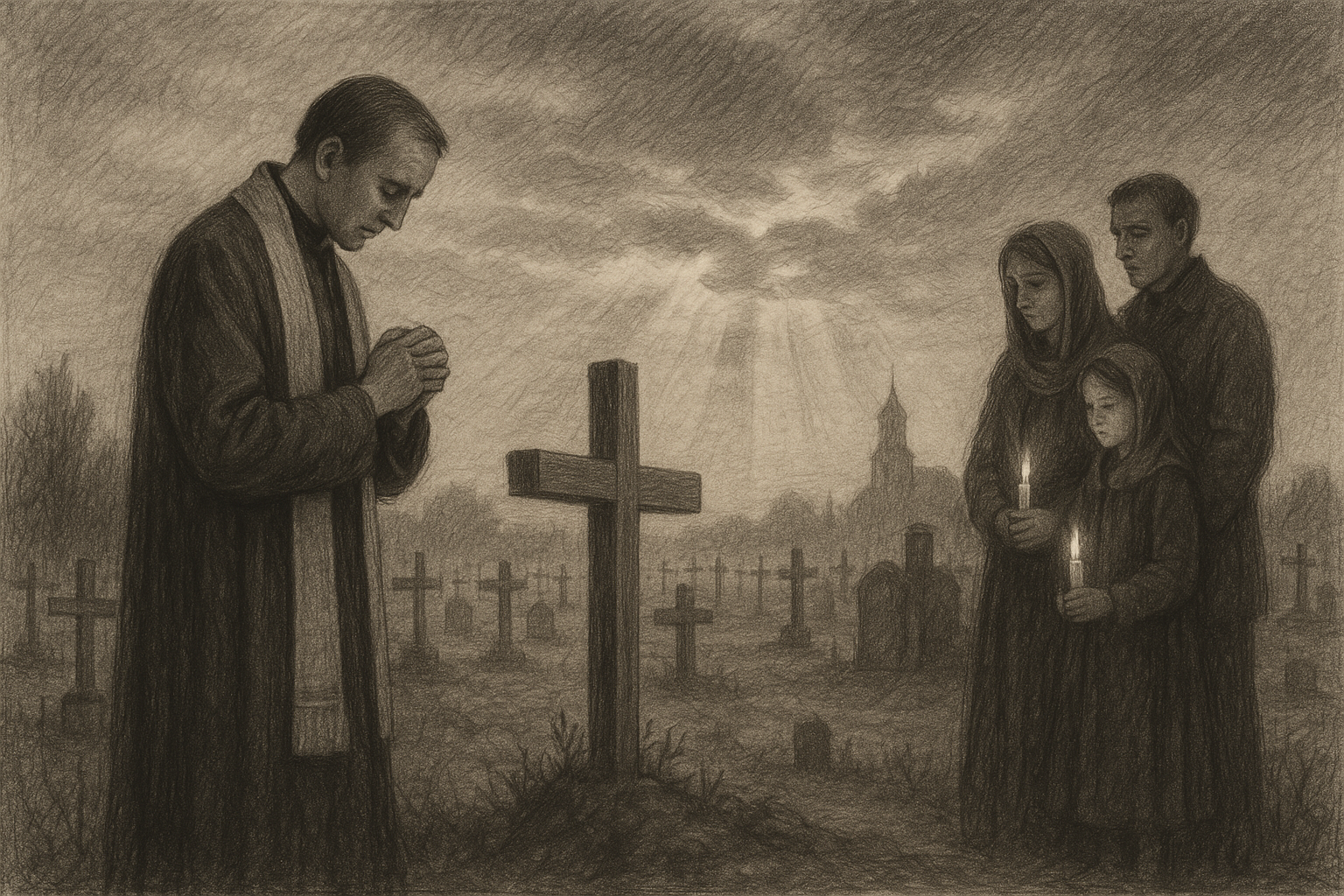
One of the most moving uses of the Divine Mercy Chaplet is praying for those who are suffering, especially the dying. The Church has long encouraged prayers for the dead and for those approaching death, and the chaplet fits beautifully into that merciful work. In moments when medical language can no longer heal, prayer still can intercede.
Families often discover that the chaplet offers them something both simple and profound. They may not know what to say at a hospital bedside. They may be exhausted, frightened, or numb. The repeated prayers give them a way to stand in faith together. Even when a person cannot speak, the Church can pray on that person's behalf.
There is also something profoundly Christian about bringing suffering before Christ without trying to explain it away. The chaplet does not deny pain. It places pain into the Passion of Jesus. That is why the prayer can feel so fitting for illness, grief, and the end of life. It joins human weakness to the Cross and asks that mercy would have the final word.
How to make it part of ordinary Catholic life
The chaplet becomes most fruitful when it is prayed simply and consistently. A Catholic does not need to wait for a special mood. A stable habit matters more than emotional intensity. If the prayer is new to you, begin with a small, realistic commitment.
- Pray it once a week at a fixed time, then increase gradually.
- Attach it to a daily anchor, such as morning coffee, an evening walk, or the drive home.
- Offer one chaplet intentionally for a family member, a parish need, or a person who has drifted from the faith.
- Pray it slowly enough to mean the words.
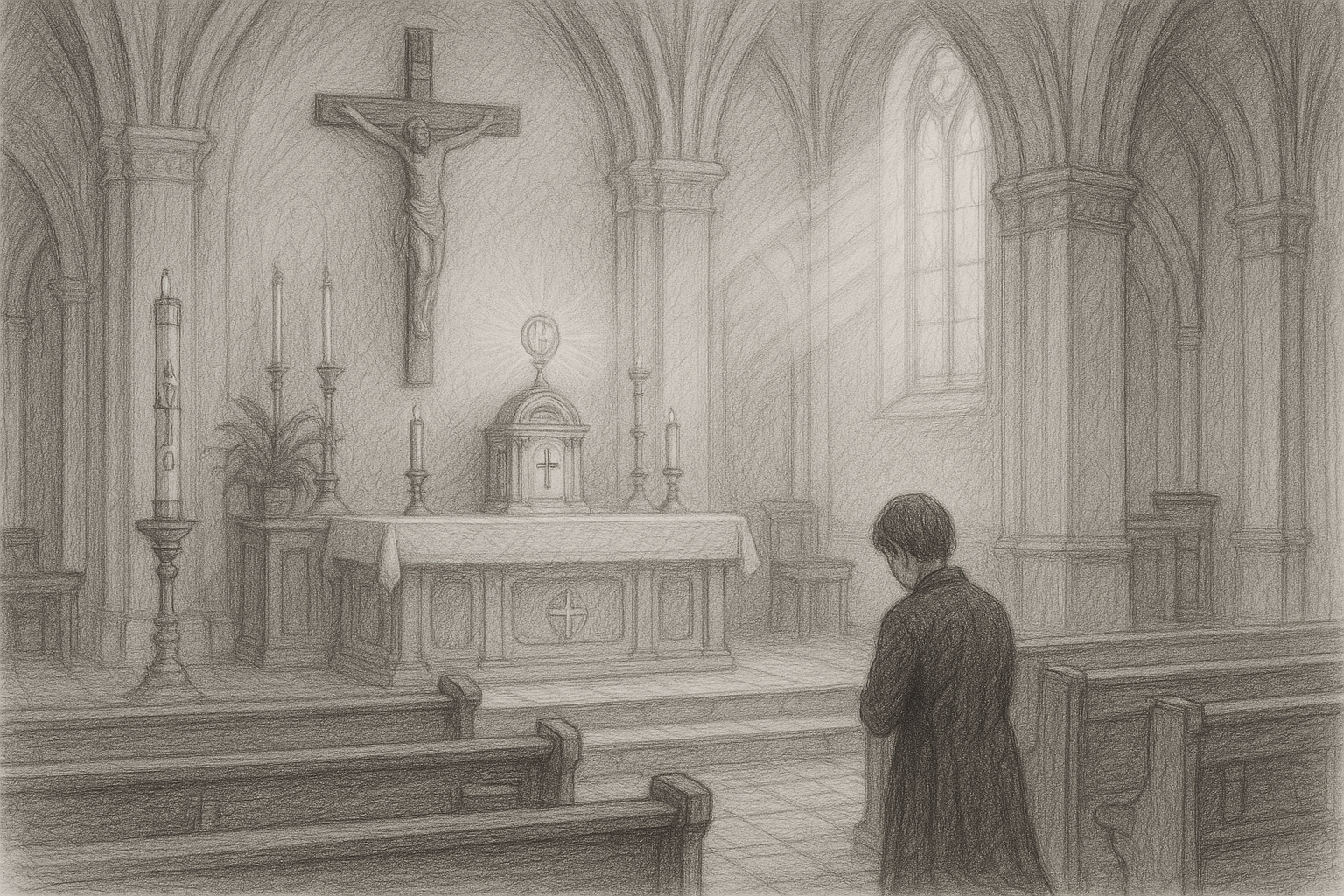
It can also be helpful to connect the chaplet with the Church's liturgical life. Many Catholics pray it at 3 p.m., the traditional Hour of Mercy, remembering the Lord's death on the Cross. Others pray it on Fridays, or after the Rosary, or before Eucharistic Adoration. These patterns are not required, but they can deepen devotion by linking it to the rhythm of Catholic worship.
What matters most is attention. The chaplet is not meant to be rushed as if the words themselves were magical. It is meant to be prayed as a loving appeal to Jesus. If distractions come, return gently to the line of prayer and continue. Mercy is patient with weak attention.
A prayer for those who feel far from God
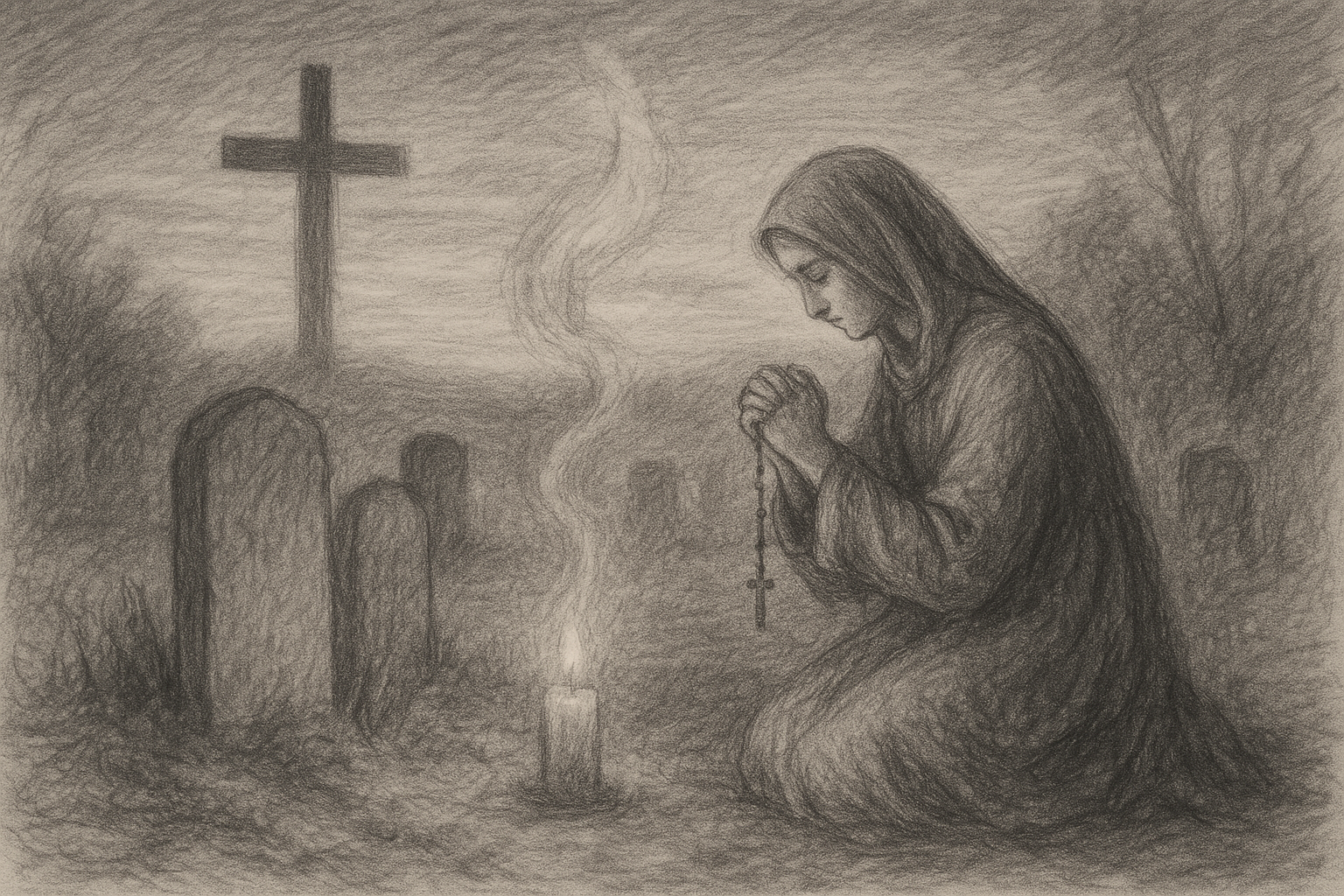
The chaplet is especially precious to people who feel spiritually dry or distant from God. Some Catholics carry the memory of past sins so heavily that they struggle to believe they are still welcome in prayer. Others are simply tired. Life has worn them down, and they no longer know how to begin.
For such souls, the Divine Mercy Chaplet is a wise beginning because it does not require spiritual sophistication. It asks only for honesty. It says, in effect, that Christ already knows our need and invites us to come anyway. The heart may not be fiery. The mind may be distracted. But the act of turning toward Jesus is itself a grace.
That is why this devotion continues to matter. It keeps the door open. It reminds the Church that no one is beyond prayer, no one is beyond hope, and no sinner is more powerful than the mercy of God. When prayed faithfully, the chaplet becomes a daily way of returning to the center of the Gospel: Christ died and rose for us, and His mercy is greater than our fear.
Living the chaplet beyond the beads
The deepest fruit of the chaplet is not only that it is prayed, but that it shapes the person who prays. A merciful prayer should make us more merciful. It should soften harsh judgments, quicken compassion, and make us slower to despair over others. It should also make us more willing to receive mercy ourselves, including the mercy that comes through repentance, forgiveness, and renewed trust.
If the Divine Mercy Chaplet explained anything clearly, it is that prayer can be both brief and transformative. A few minutes with the beads can reorient the whole day. The prayer does not remove responsibility. It strengthens it. It teaches the Catholic to look at the world through the wounds of Christ, and to see in those wounds not defeat, but love.
That is why this devotion remains so fitting for the present age. It answers fear with trust, isolation with intercession, and guilt with hope. It does not ask us to pretend that life is easy. It asks us to believe that Jesus is merciful, and that His mercy is enough for the living, the dying, and the whole world.
Keep Reading on Lets Read The Bible
Frequently Asked Questions
What is the Divine Mercy Chaplet meant to do spiritually?
It is a prayer of trust, repentance, and intercession. Catholics use it to ask for mercy for themselves, for others, and for the whole world, while uniting their prayer to the Passion of Christ.
When is the best time to pray the chaplet?
Many Catholics pray it at 3 p.m., the Hour of Mercy, but it can be prayed at any time. What matters most is regularity and sincere faith.
Can the Divine Mercy Chaplet be prayed with the Rosary?
Yes. It is often prayed on ordinary Rosary beads, though it is a distinct devotion with its own prayers and structure.