Prayer and Devotion
Mercy That Reaches Beyond the Grave
A Catholic look at prayer for the dead, the communion of saints, and the hope that death does not sever love.
Site Admin | December 18, 2025 | 100 views
Praying for the dead is one of the most tender and revealing customs in Catholic life. It reminds us that death is real, but it is not the final word. When we pray for those who have died, we profess that the Church is larger than what we can see, that mercy still matters after the last breath, and that the bonds formed in Christ are not cut by the grave.
For many Catholics, this practice is deeply familiar. We offer Masses, light candles, visit cemeteries, remember names in family prayers, and ask God to have mercy on the departed. Yet the reasons behind these gestures are worth pondering anew. With praying for the dead explained in its proper light, the practice appears not as a pious add on, but as a beautiful expression of Catholic faith, hope, and charity.
Why Catholics Pray for the Dead
The simplest answer is that we pray for the dead because we love them, and because we trust God's mercy. Catholic teaching holds that some who die in God's friendship still need final purification before entering the fullness of heaven. This is what the Church calls purgatory, a state of purification, not a second chance and not a punishment apart from mercy. It is the last cleansing of a soul already turned toward God.
Scripture gives hints of this hope. In the Old Testament, Judas Maccabeus is praised for making atonement for the dead, so that they might be freed from sin: It is a holy and wholesome thought to pray for the dead. The New Testament does not set aside this instinct of mercy. Instead, it places death within the saving power of Christ, whose death and resurrection embrace the living and the dead alike.
Catholics also pray for the dead because the Church is one body in Christ. If one member suffers, all suffer together; if one member is honored, all rejoice together. Death does not dissolve that communion. Those who have died in God's grace remain part of the Church, though in a different state from us. We help them by prayer, and we trust they can also help us by their intercession once purified and with God.
Scripture, Memory, and the Mercy of God
Jesus speaks often of mercy, judgment, and eternal life, and He never treats death as a trivial boundary. He weeps at the tomb of Lazarus, showing that sorrow over death is not unworthy of faith. At the same time, He calls Lazarus out of the grave, revealing His authority over death itself: Lazarus, come out. This is important for Christian prayer for the dead. We pray not because we despair, but because Christ is Lord of the living and the dead.
Saint Paul also speaks in a way that has long supported Catholic reflection. He prays that the Lord grant mercy to Onesiphorus on the day of judgment: May the Lord grant him to find mercy from the Lord on that day. Paul does not treat prayer for the departed as strange. He assumes that mercy can still be asked for those who have gone before us, especially in view of the final judgment.
Another key text appears in the first letter to the Corinthians, where Paul describes a person being saved, though only as through fire: He will be saved, but only as through fire. Catholics have long understood this verse as compatible with purification after death. The exact imagery remains mysterious, but the direction is clear: God's saving work can continue to cleanse and perfect a soul.
Love does not stop at the threshold of death. In Christ, prayer can still cross that threshold.
A Practice Older Than Modern Skepticism
Praying for the dead is not a late medieval invention. From the earliest centuries of Christian history, believers remembered the departed in prayer and at the Eucharist. Ancient inscriptions, liturgical texts, and patristic writings all witness to the same instinct: Christians asked God to show mercy to those who had died in the faith.
This should not surprise us. The early Church lived close to death. Families knew grief intimately. Martyrs were honored, the dead were commended to God, and the Eucharist was offered as the center of Christian hope. The faithful believed that the sacrifice of Christ, made present in the Mass, was not only for the living who came forward in person, but also for those who had died in friendship with God and still awaited complete purification.
Over time, the Church expressed this conviction more precisely, but the heart of the practice remained the same. To pray for the dead is to entrust them to the One who died and rose again. It is to say, with confidence, that God's mercy is greater than our uncertainty.
What the Practice Means Spiritually
Prayer for the dead changes the way we think about death, judgment, and time. It teaches humility, because we recognize that we do not see the whole condition of a soul. Even when a person dies with signs of faith, we do not presume to know the final state of purification before God. That restraint is itself an act of charity. We do not place ourselves on the throne of judgment.
It also deepens our hope. The world often speaks as if death merely ends a story. Catholic prayer says something different: death opens into God's hands. If a loved one has died imperfectly, with unfinished repentance or lingering attachment to sin, our prayers are not wasted. They become an offering of love made effective by Christ.
At the same time, the practice forms us in detachment. When we remember the dead, we are reminded that our own lives are passing. We cannot carry wealth, status, or earthly success across the grave. What endures is grace, charity, and the mercy of God. Prayer for the dead gently corrects our forgetfulness and brings us back to what matters most.
There is also a hidden mercy for the living. People who pray for the dead often discover that their grief becomes more prayerful and less solitary. Instead of clinging only to memory or regret, they offer love to God. The relationship changes, but it does not vanish. It enters a purified form, marked by trust and intercession.
How Catholics Can Pray for the Dead Today
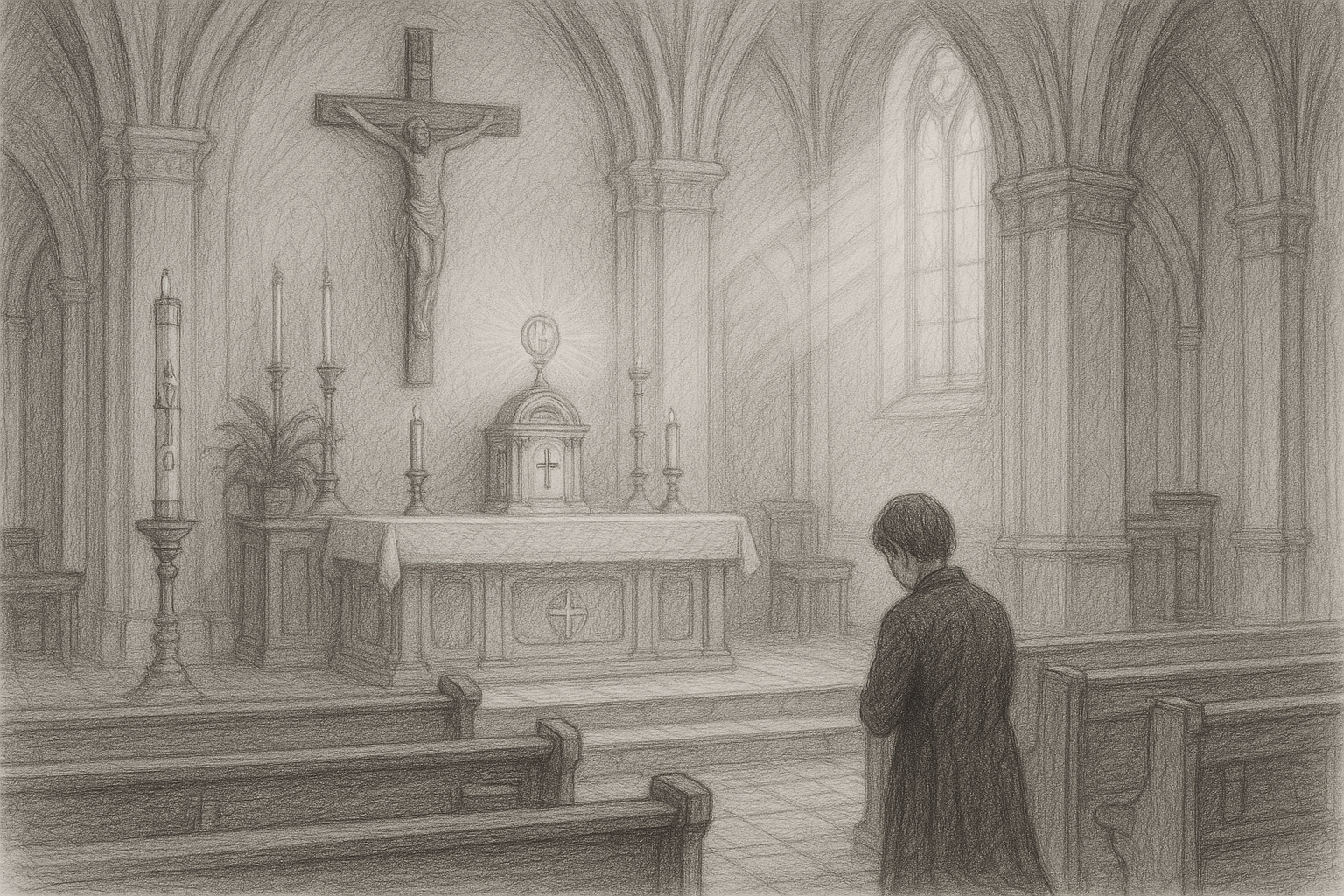
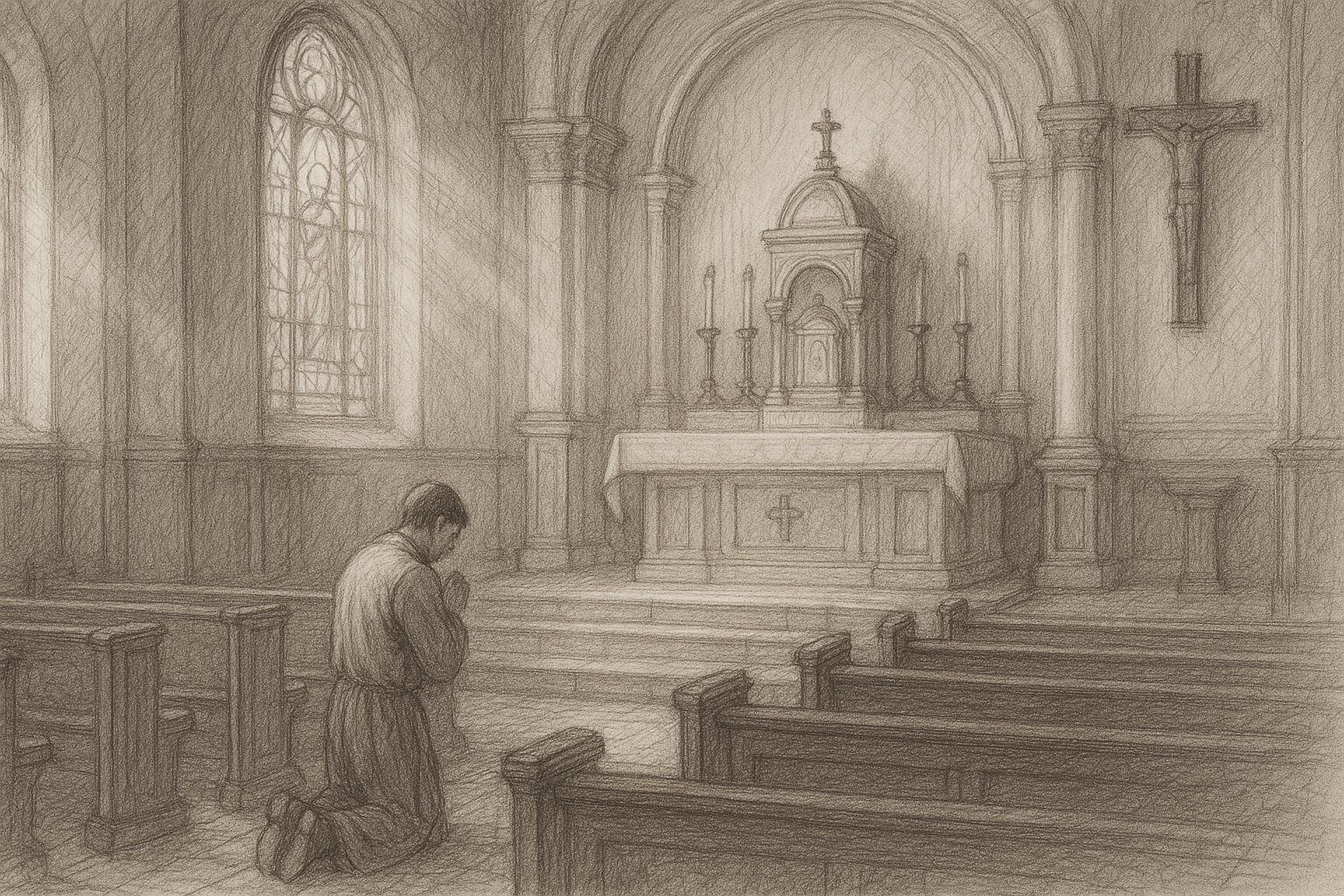
The Church does not ask for complicated methods. Simple, faithful prayer is enough. The most powerful prayer for the dead is the Holy Sacrifice of the Mass. When possible, ask that a Mass be offered for a deceased family member or friend. This is a profound act of charity, because it joins the departed to the prayer of Christ Himself.
Daily prayer can also include a short remembrance of the dead by name. Many Catholics pray one or more of the following each day:
- The eternal rest prayer
- Psalm verses or short Scripture petitions
- An Our Father offered for a departed loved one
- The Rosary with a special intention for the dead
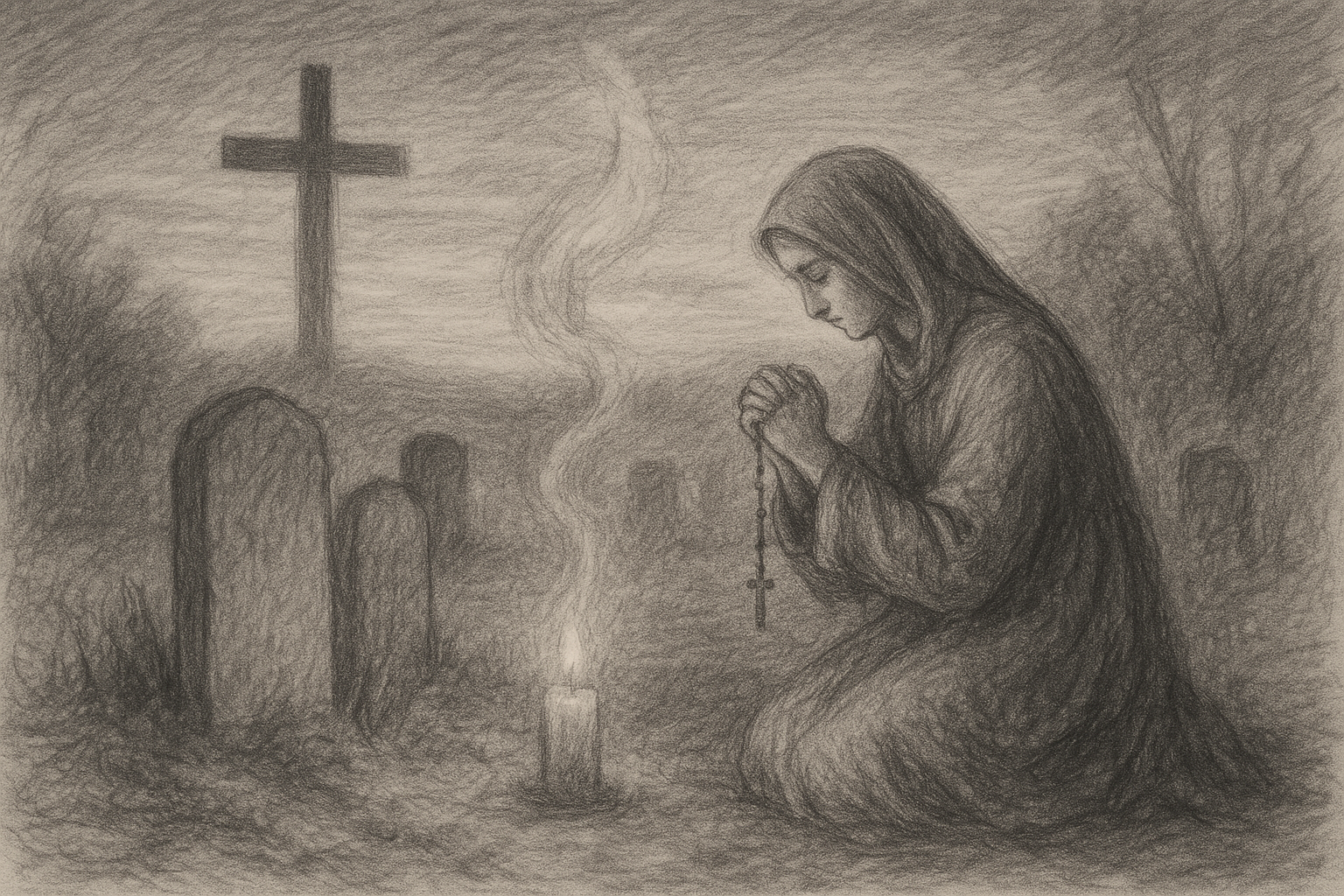
- Visiting a cemetery and praying quietly there
It is often helpful to keep a small list of the deceased whom you want to remember. This may include relatives, friends, parishioners, clergy, victims of tragedy, or even forgotten souls with no one to pray for them. In Catholic prayer, love is never wasted. A brief remembrance offered faithfully over time is not small in God's sight.
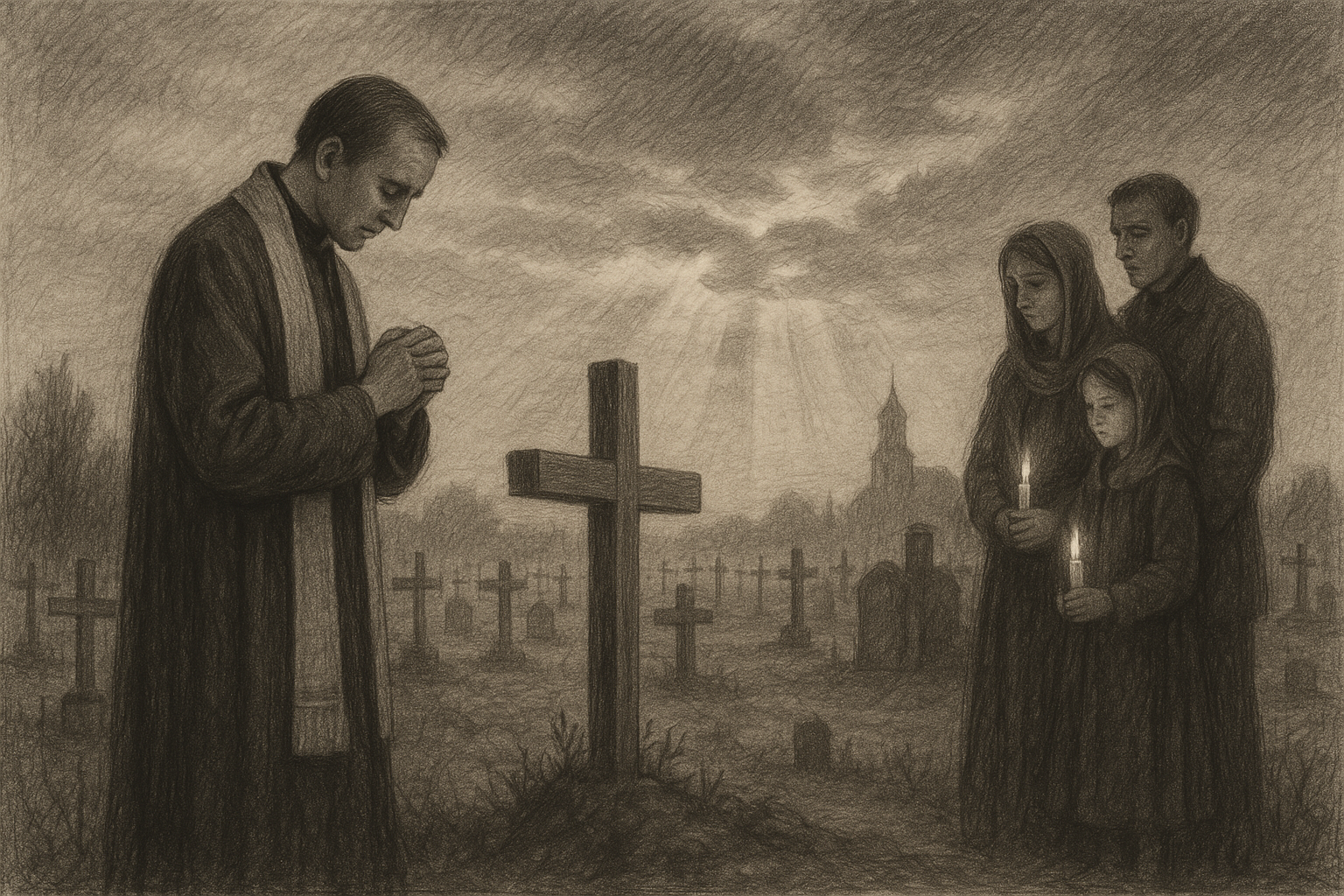
Families can make this part of ordinary life. On anniversaries of death, at All Souls' Day, after funerals, or during times of quiet evening prayer, mention the names of the dead aloud. Children can be taught that remembering the departed is a work of mercy. In this way, prayer for the dead becomes part of the household faith, not only a funeral custom.
Common Misunderstandings
Some Christians object to praying for the dead because they fear it weakens confidence in Christ's saving death. In fact, the opposite is true. Prayer for the dead depends entirely on Christ. If the Lord is able to save, purify, and perfect, then our prayers for the departed are simply one way of participating in His work of mercy.
Others think Catholics pray for the dead because they do not trust God's justice. But Catholic teaching does not oppose justice and mercy. It joins them. God's justice does not crush the soul; it heals what sin has damaged. Prayer for the dead acknowledges that love and holiness must meet fully before God, and that this meeting may involve purification.
A third misunderstanding is more practical: people imagine that the dead need only to be remembered, not prayed for. Memory is good, but prayer is better. Memory honors the past; prayer asks God to act. The Church does both, but prayer is the stronger act of charity because it places the departed directly before the Lord.
Living With the Dead in a Catholic Key
Catholic life is not split between the living and the dead. We belong to one communion, one family, one Body in Christ. That means the dead are not merely gone. They are entrusted, remembered, and prayed for. We speak their names before God because we believe God hears.
To pray for the dead is to refuse spiritual indifference. It is to stand at the border of life and death with faith instead of fear. It is to trust that the soul of a parent, spouse, child, friend, or parishioner is not beyond the reach of mercy. And it is to ask that, when our own hour comes, others will do the same for us.
In the end, this practice is not only about the dead. It shapes the living into people who understand that every human person is meant for God. We are all walking toward judgment, but we do not walk alone. Christ goes before us, and His Church follows with prayer. That is why praying for the dead remains an act of love, a work of mercy, and a witness to hope that even death cannot silence.
So when you remember the dead, do not let the memory remain merely private or sentimental. Turn it into prayer. Offer their names to God. Ask for mercy. Trust the Lord who hears beyond the grave.
Keep Reading on Lets Read The Bible
Frequently Asked Questions
Does the Bible support praying for the dead?
Catholics point especially to 2 Maccabees 12:46, where prayer for the dead is described as a holy and wholesome thought, along with New Testament passages that suggest purification after death and prayer for the departed.
What is the difference between praying for the dead and praying to the saints?
Praying for the dead asks God to purify and mercyfully receive those who have died and still need cleansing. Praying to the saints asks those already with God to intercede for us. Both rest on the communion of saints.
How often should Catholics pray for the dead?
There is no strict minimum. Catholics may pray for the dead daily, at Mass, on anniversaries, during the month of November, or whenever a loved one comes to mind. Even a short prayer offered faithfully is valuable.