Prayer and Devotion
Praying for the Dead: A Mercy Rooted in Hope
A practical Catholic look at interceding for the faithful departed, from Scripture and tradition to simple ways anyone can begin today.
Site Admin | December 17, 2025 | 93 views
Prayer that reaches beyond the grave
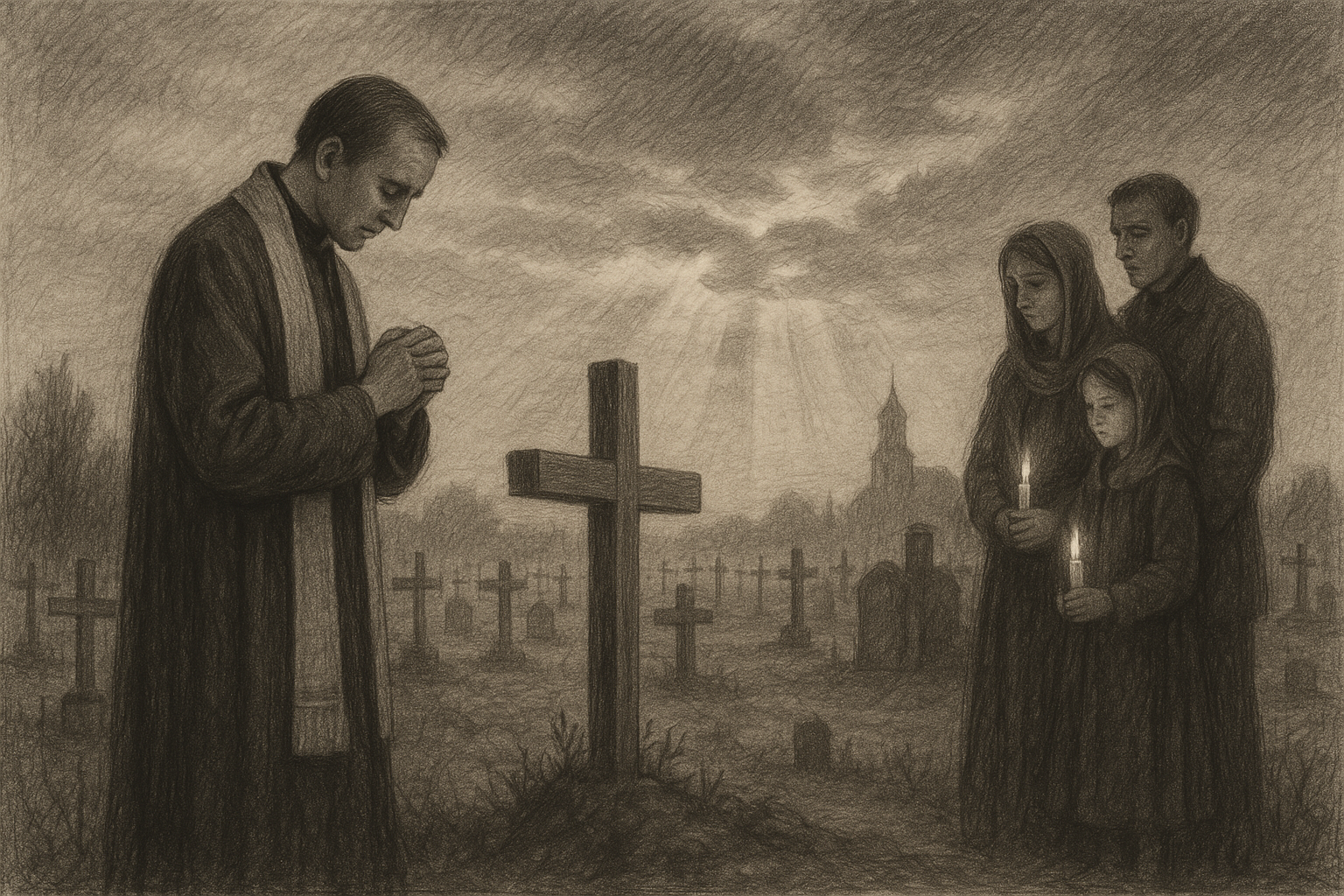
Among the Catholic works of mercy, praying for the dead is one of the quietest and most moving. It asks us to believe that death does not cut off love, and that our prayers, joined to Christ, can still serve those who have gone before us. For many people, this practice first becomes real in grief. We stand at a funeral, visit a grave, or remember an anniversary, and we feel the limits of what we can do. We cannot change the past, and we cannot see what lies beyond death. Yet we can pray. That act of prayer is not symbolic only. It is a true work of charity.
The phrase praying for the dead Catholic guide may sound practical, but the practice itself is deeply spiritual. Catholics pray for the dead because we believe in the communion of saints, the mercy of God, and the need for final purification before entering heaven. This is not a gloomy devotion. It is an act of hope. It says that the dead are not lost to God, and that divine mercy is greater than sin, weakness, and unfinished holiness.
What Catholics mean when they pray for the dead
When Catholics pray for the dead, they are entrusting the departed to God's mercy. We do not pray as if we can force God's hand. Rather, we intercede, asking the Lord to purify, heal, and bring the soul of the departed into the fullness of heaven. This flows naturally from the Catholic understanding of the Church as one body in Christ. Those on earth, those being purified, and those in glory are not strangers to one another. We remain united in Christ's love.
Scripture gives several foundations for this practice. In the Old Testament, Judas Maccabeus offers prayer and sacrifice for fallen soldiers, a sign that it is good and holy to pray for the dead: 2 Maccabees 12:46. In the New Testament, we hear of prayer for the household of Onesiphorus: [[VERSE|2-timothy|1|16-18|2 Timothy 1:16-18]]. Catholics also see in the Gospel a serious teaching about God's purifying judgment and the need to be made ready for heaven. Jesus speaks of forgiveness in the age to come: Matthew 12:32.
The Church has long taught that some who die in God's friendship still need purification before entering heaven. This is often called purgatory, but it is important to remember what that means. Purgatory is not a second chance, and it is not a punishment that competes with Christ's saving work. It is the merciful final cleansing of those already saved by grace. Praying for the dead is therefore an act of faith in God's sanctifying love.
Why this practice matters spiritually
Praying for the dead changes the heart of the one who prays. It trains us to love beyond appearances and to think in the light of eternity. Modern life often encourages us to move quickly past death. We speak of closure, but grief does not always move in neat steps. Catholic prayer resists that haste. It keeps memory alive, but not as a prison. It turns memory into intercession.
It also purifies our love for the dead. We may remember the departed with gratitude, regret, or even unresolved sorrow. Prayer gives all of that to God. Instead of clinging to control, we choose trust. Instead of assuming that our loved one is already beyond any need, we ask mercy upon mercy. This is a humble act, and humility is always fruitful in prayer.
There is also a beautiful reciprocity in this devotion. When we pray for the dead, we are reminded that one day others will pray for us. The practice keeps us spiritually honest. It teaches us to prepare for our own death by living in friendship with God now. If we truly believe that prayer can help the departed, then our daily life begins to matter in a more serious and more hopeful way.
How Scripture and the Church support the practice
The Bible does not use the modern word purgatory, but the Catholic pattern of praying for the dead arises from the full witness of Scripture and the life of the Church. Paul speaks of a saving work that passes through fire: [[VERSE|1-corinthians|3|13-15|1 Corinthians 3:13-15]]. The image suggests a purification that is distinct from condemnation. In the Book of Revelation, the prayers of the holy ones rise before God like incense: Revelation 5:8. This image is not limited by death. It shows the heavenly liturgy surrounding God's people with prayer.
The Church's liturgical life also bears witness. From the earliest centuries, Christians offered prayers and Masses for the dead. That practice did not arise from sentiment alone. It arose from belief that the Eucharistic sacrifice unites the living and the dead in Christ. When the Church commemorates the departed at Mass, she is doing something profoundly ancient and profoundly Christian. She is speaking to God on behalf of those who can no longer merit for themselves, trusting that mercy is never wasted.
Give them, O Lord, eternal rest, and let perpetual light shine upon them.
That simple prayer has accompanied countless Catholics at funerals, grave sites, and bedside vigils. Its beauty lies in its confidence. It does not deny death. It places death inside the mercy of God.
Simple ways to begin praying for the dead
You do not need an elaborate plan to begin. A good Catholic prayer life grows through regular, sincere acts of love. If you are new to this devotion, start small and let it become part of ordinary life. Here are a few practical ways to begin:
- Offer an Our Father, Hail Mary, and Eternal Rest prayer when you hear of a death.
- Pray for family members and friends on the anniversary of their death.
- Have Mass offered for the deceased when possible, especially at important dates.
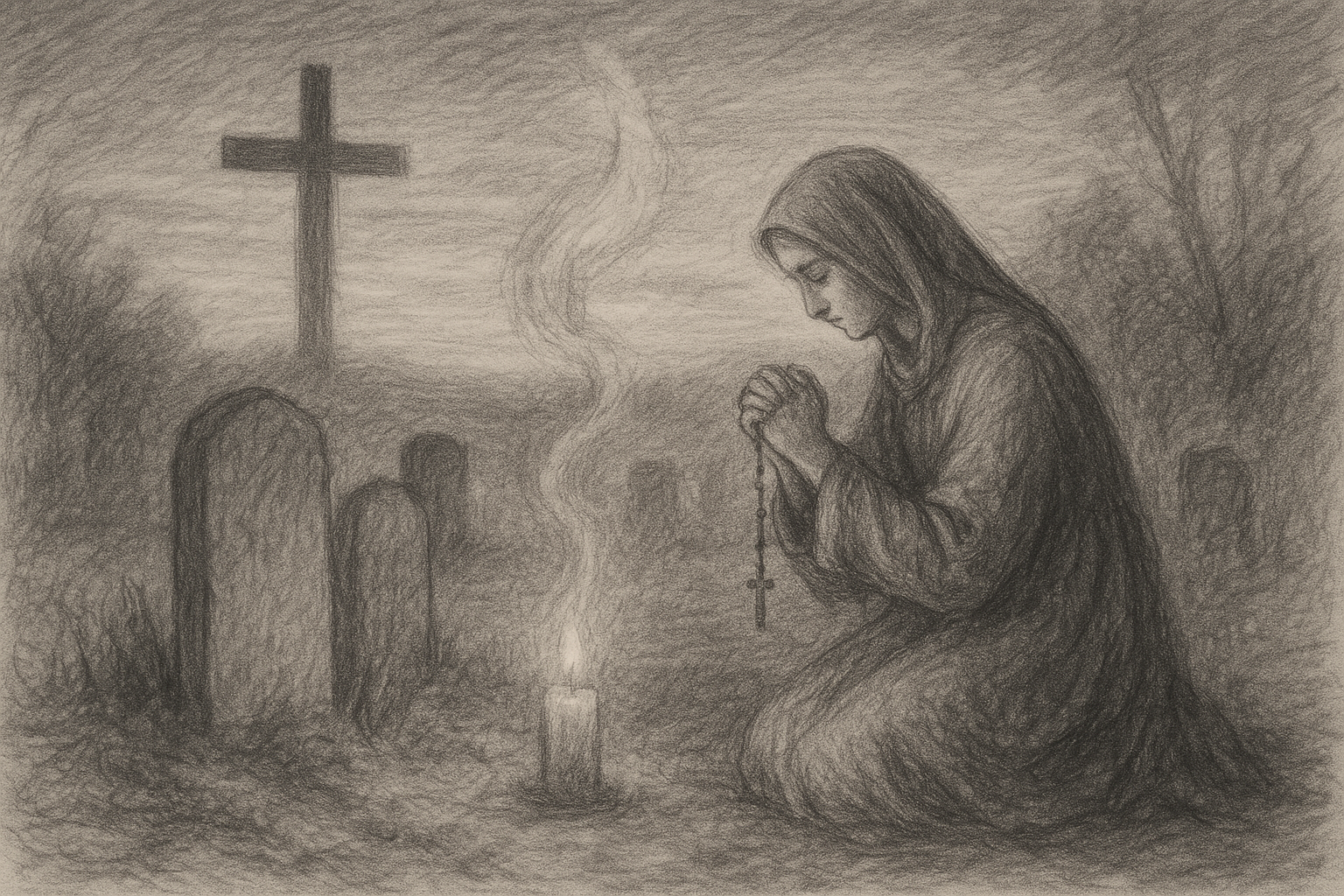
- Visit a cemetery and pray quietly for those buried there.
- Include the dead in your evening examen or bedtime prayers.
- Remember the deceased during November, especially around All Souls' Day.
These practices do not need to be long to be meaningful. In fact, short prayers repeated faithfully can shape the soul more deeply than occasional moments of intensity. A simple habit, prayed with attention, can become a lasting work of mercy.
Some Catholics also keep a list of the names of the departed. This can be especially helpful when grief is fresh or when many loved ones have died over time. Writing down names helps us remember that prayer for the dead is personal, not abstract. We are not praying for an idea. We are praying for a mother, father, child, friend, priest, neighbor, or stranger whose life is known fully to God.
How to pray when grief is still raw
There are moments when praying for the dead feels difficult. If the person died suddenly, the heart may be full of shock. If the relationship was complicated, prayer may stir up mixed emotions. If the death was recent, even the simplest prayer can feel heavy. In such moments, honesty matters more than polish. Say what you can. Ask God for mercy. Tell the Lord that you do not know how to pray well, and then offer the departed into His care.
The Psalms can help when words are hard to find. The Church has always turned to them because they give voice to sorrow, trust, and hope all at once. A psalm of lament can be offered for the dead as easily as a more formal prayer. The important thing is to pray within faith, not merely from habit. Love is enough to begin.
It can also help to unite your prayer to the Mass. The Eucharist is the highest prayer of the Church, and it naturally embraces the living and the dead. When you attend Mass for someone who has died, or quietly remember them during the Eucharistic Prayer, you are joining your grief to Christ's sacrifice. This is one of the most consoling truths of Catholic life: no one is prayed for alone.
Praying for the dead as an act of mercy
Mercy is not sentimental. It is love that enters another person's need. Praying for the dead is mercy because it looks beyond what we can see and asks God to complete what is unfinished. It refuses to reduce a human life to the moment of death. It honors the person's dignity, the seriousness of sin, and the greater seriousness of grace.
This devotion also guards us against two temptations. The first is despair, which says death ends everything and prayer changes nothing. The second is presumption, which assumes everyone is automatically fine and that our intercession is unnecessary. Catholic prayer for the dead avoids both errors. It trusts God's justice and mercy together. It believes that our prayers matter precisely because God has chosen to make His children participants in His love.
For families, this can become a steady source of comfort. Children can be taught to pray for grandparents and relatives who have died. Adults can remember friends, spouses, and even those whose names are no longer spoken often. Over time, the practice makes the Church feel more like the family she truly is. The dead are not forgotten. They are remembered before the Father.
If you want to deepen the habit, choose one fixed prayer and one regular time. You might pray for the dead each night before bed, or after the rosary, or whenever you pass a cemetery. You might dedicate the first Friday of the month to the departed, or keep a November intention book for their names. The exact form matters less than the fidelity. What matters is that your prayer becomes a steady offering of love.
To pray for the dead is to stand in the middle of Christian hope. It acknowledges the pain of separation, but it also proclaims that Christ is Lord of the living and the dead. In every name remembered, every Mass offered, and every quiet plea for mercy, the Church answers death with prayer and entrusts her beloved departed to the God who never forgets.
Keep Reading on Lets Read The Bible
Frequently Asked Questions
Why do Catholics pray for the dead?
Catholics pray for the dead because we believe in the communion of saints and in God's mercy. The Church teaches that some who die in friendship with God may still need purification before entering heaven, so we ask the Lord to bring them to full holiness.
Is praying for the dead supported by Scripture?
Yes. Catholics point especially to [[VERSE|2-maccabees|12|46|2 Maccabees 12:46]], [[VERSE|1-corinthians|3|13-15|1 Corinthians 3:13-15]], and [[VERSE|2-timothy|1|16-18|2 Timothy 1:16-18]] as important biblical foundations for this practice.
What is a simple prayer I can use for someone who has died?
A common Catholic prayer is: Eternal rest grant unto them, O Lord, and let perpetual light shine upon them. May their souls and the souls of all the faithful departed, through the mercy of God, rest in peace. Amen.