Prayer and Devotion
Praying with Mercy: A Simple Path into the Divine Mercy Chaplet
A gentle Catholic introduction to a beloved prayer of trust, repentance, and mercy
Site Admin | December 1, 2025 | 82 views
The Divine Mercy Chaplet has a way of meeting people exactly where they are. Some come to it in grief, some in guilt, some in gratitude, and some simply because they have heard that it is a prayer of hope. In every case, it turns the heart toward Jesus Christ and the overflowing mercy that flows from His Passion, Death, and Resurrection.
For Catholics, the chaplet is not a magical formula or a private invention detached from the Church. It is a Christ-centered devotion rooted in the Church's life of prayer and in the witness of St. Faustina Kowalska, whose diary helped bring renewed attention to the Lord's merciful love. Prayed slowly with faith, the chaplet becomes a school of trust. It teaches the soul to look at God first, not at its own weakness, fear, or burden.
What the Divine Mercy Chaplet is
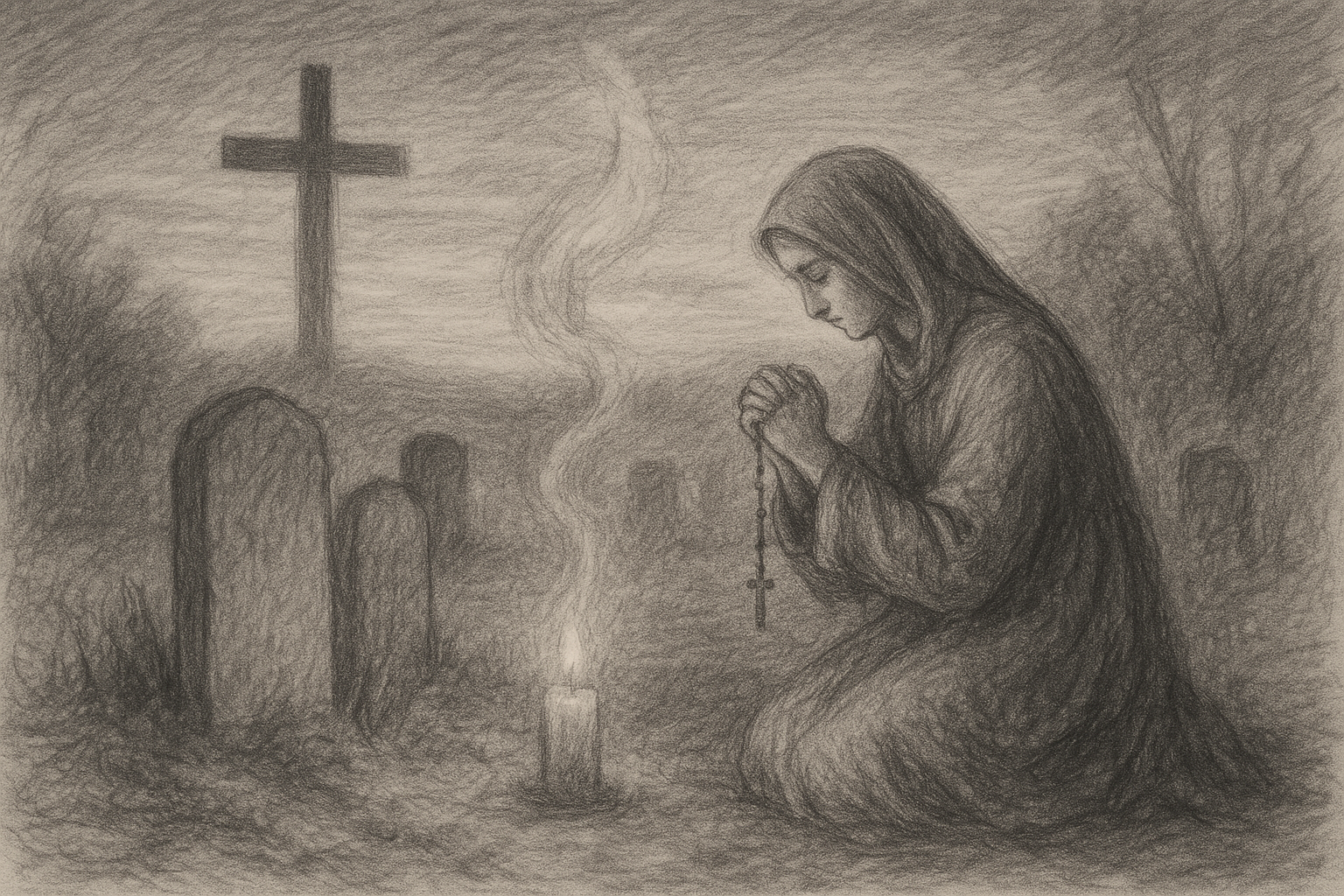
The chaplet is a short prayer said with beads, often on a rosary. It begins with the Sign of the Cross, then the optional opening prayers, followed by one Our Father, one Hail Mary, and the Apostles' Creed. On each large bead, the prayer is offered: Eternal Father, I offer You the Body and Blood, Soul and Divinity of Your dearly beloved Son, our Lord Jesus Christ, in atonement for our sins and those of the whole world. On the small beads, the repeated prayer is: For the sake of His sorrowful Passion, have mercy on us and on the whole world.
The chaplet ends with a concluding prayer, usually with a final invocation such as Holy God, Holy Mighty One, Holy Immortal One, have mercy on us and on the whole world. Its structure is simple, but its theology is rich. It unites personal prayer with the saving work of Christ and places human need before the mercy of God.
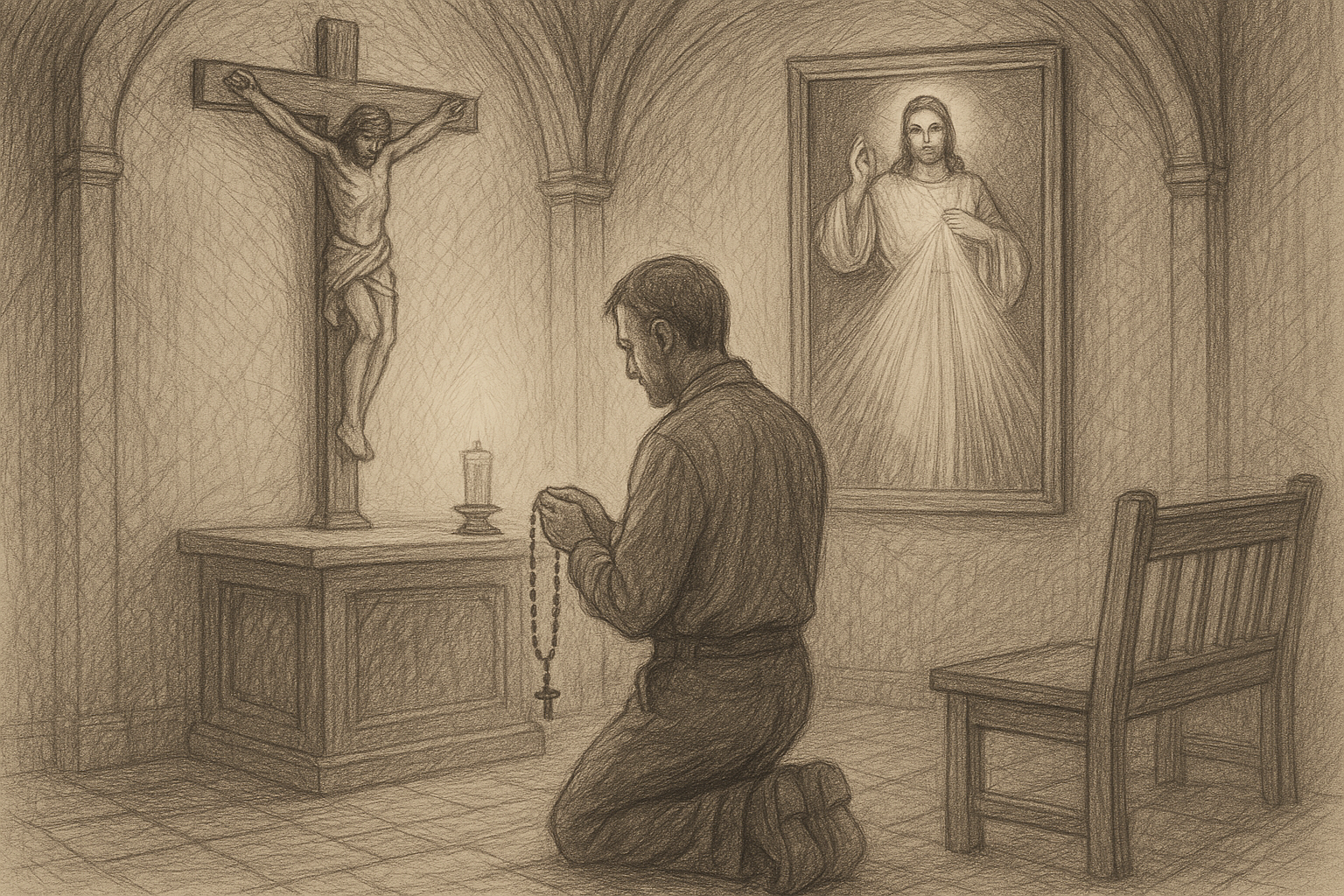
The devotion is also linked to the image and message of Divine Mercy associated with St. Faustina, especially the call to trust in Jesus. That trust is not vague optimism. It is the Christian confidence that God's mercy is greater than sin, greater than fear, and greater than the soul's inability to heal itself.
Why this prayer matters spiritually
At the heart of the chaplet is an act of offering. The prayer does not ask us to present our own merits to God, as though we could bargain with Him. Instead, it asks us to place before the Father the Passion of His Son. That is a deeply Catholic instinct. We pray through Christ, with Christ, and in Christ.
The chaplet also trains the soul in humility. To pray for mercy is to admit that mercy is needed. That is not a sign of despair. It is a sign of truth. The Gospel is full of people who came to Jesus in need and found that He did not turn them away. The tax collector who prayed, God, be merciful to me, a sinner Luke 18:13, stands close to the spirit of this devotion.
The chaplet is especially beautiful because it keeps both sorrow and hope together. Catholics do not deny sin, suffering, or judgment. We bring them into the light of Christ. The prayer asks mercy for the whole world, which means it stretches beyond private concern. It teaches intercession. It makes the soul think not only of its own life but of the needs of others, the dying, the wounded, and even those far from God.
There is also a strong biblical rhythm to the chaplet. Scripture repeatedly reveals God's mercy as steadfast, patient, and life-giving. Psalm 103 praises the Lord who is merciful and gracious, slow to anger and abounding in steadfast love Psalm 103:8. The Divine Mercy Chaplet gathers that biblical conviction into a repeated prayer of confidence.
How to begin praying it
If you are new to the chaplet, begin simply. You do not need perfect concentration or emotional intensity. You need willingness. Like many Catholic devotions, the chaplet grows through steady repetition more than through dramatic feeling.
1. Learn the basic sequence
Use a rosary or another set of beads if that helps, though the chaplet can be prayed without one. The familiar rhythm is:
- Sign of the Cross
- Optional opening prayers
- Our Father
- Hail Mary
- Apostles' Creed
- On each large bead, pray the offering to the Eternal Father
- On each set of small beads, pray, For the sake of His sorrowful Passion, have mercy on us and on the whole world
- Concluding prayers
Many people find it helpful to keep a printed guide nearby at first. That is perfectly fine. Prayer is not a performance. It is a conversation of faith.
2. Choose a regular time
Some pray the chaplet after the Rosary. Others pray it in the afternoon, especially at 3 p.m., the traditional Hour of Mercy. Still others make it part of morning prayer or evening recollection. The best time is the one you can keep consistently. A prayer becomes fruitful when it becomes familiar.
If life is crowded, begin with just one decade or one short daily offering before growing into the full chaplet. What matters most at the beginning is fidelity, not speed.
3. Pray with intention
The chaplet can be prayed for a personal need, for a loved one, for the dying, for the Church, or for the world. It can also be offered simply as an act of love. To name an intention before you begin helps the prayer become more concrete. For example, you might pray for conversion, peace in a family, healing after loss, or perseverance in temptation.
Because the chaplet is intercessory, it can carry the burdens of others without making them yours alone. That is a mercy in itself. We are invited to bring real needs to God, trusting that He hears every sincere petition.
How the chaplet forms the interior life
One of the hidden gifts of the Divine Mercy Chaplet is that it slows the soul down. In a restless age, repeated prayer can feel countercultural. Yet that repetition is part of its strength. The heart needs words that return again and again to the same truth: Jesus, we trust in You.
This trust is not shallow. It is formed through repentance, surrender, and hope. When a person keeps praying for mercy, especially in dry or distracted moments, the act itself becomes an offering of humility. The soul learns to remain before God even when feelings are absent.
Trust in Divine Mercy does not mean ignoring sin or suffering. It means bringing both honestly before Christ and allowing His mercy to have the final word.
The chaplet also complements the sacramental life. It does not replace Confession, the Eucharist, or Sunday Mass. Rather, it disposes the heart to receive them more fruitfully. A person who prays for mercy often finds a renewed desire for reconciliation with God and neighbor.
That relationship between mercy and conversion is deeply Christian. In the Gospel, mercy is never a permission slip to remain unchanged. It is the grace that makes change possible. Jesus tells the woman caught in adultery, Neither do I condemn you; go, and do not sin again John 8:11. Mercy does not deny the call to holiness. It strengthens it.
When the chaplet is especially fitting
The chaplet is often prayed in moments of suffering, and rightly so. It belongs naturally to times of illness, fear, uncertainty, and sorrow. It can be prayed at a bedside, before a difficult conversation, during an anxious commute, or in the quiet after receiving troubling news. Because it is brief, it can be brought into ordinary life without much preparation.
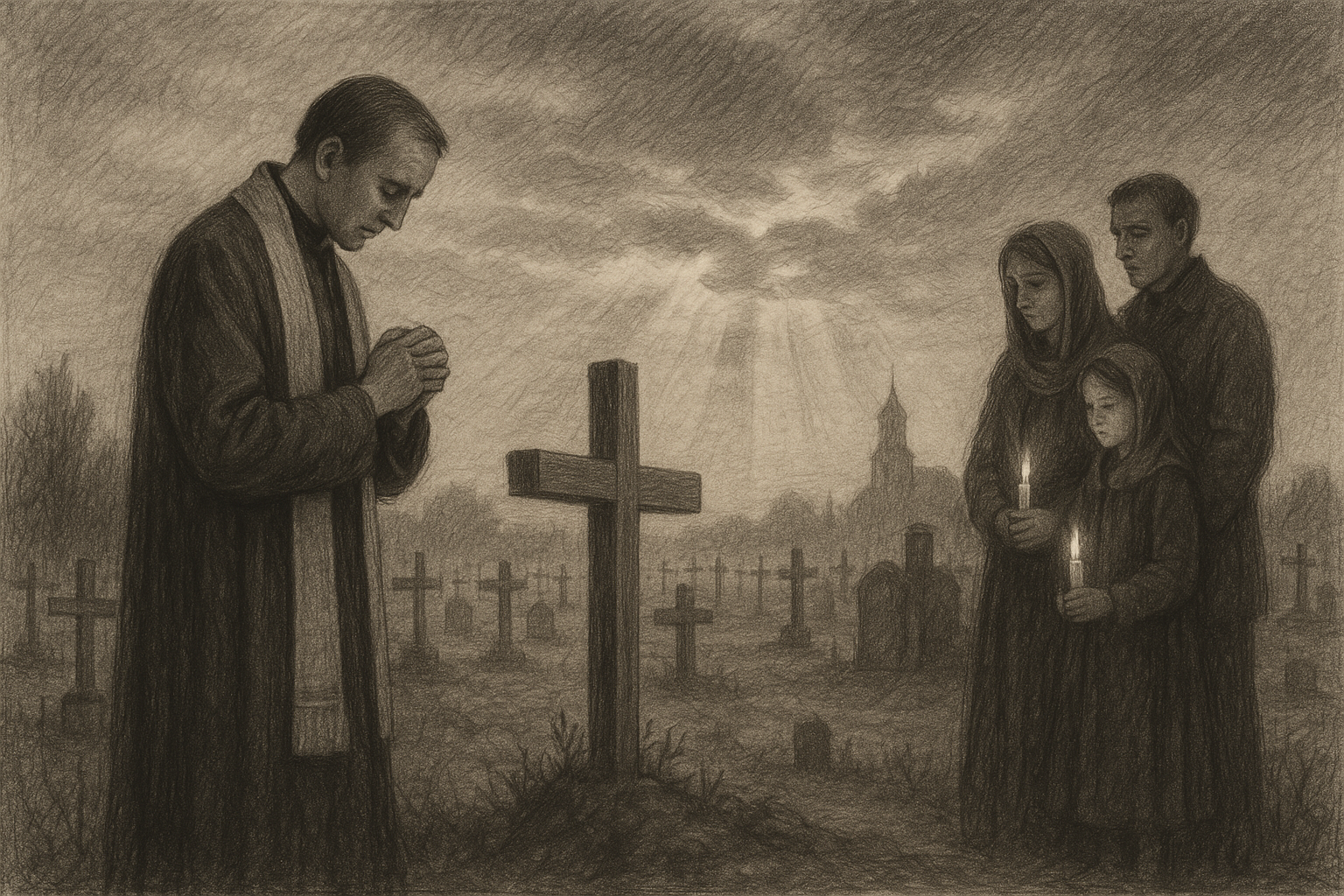
It is also fitting for the dying and for those who care for them. The Church has long encouraged prayer at the hour of death, and the chaplet offers a beautiful way to commend a soul to God's mercy. Families often discover that the chaplet gives them words when their own words are few.
But the prayer is not only for crisis. It also belongs to times of gratitude. Mercy is not merely for the broken moment. It is the atmosphere of the Christian life. To pray the chaplet on a peaceful day is to acknowledge that every good gift is already mercy.
Common mistakes to avoid
Like any devotion, the chaplet can be misunderstood. A few simple cautions help keep it in its proper place.
- Do not treat it as a substitute for the sacraments. The chaplet is a devotion, not a replacement for Mass, Confession, or prayerful participation in the Church's liturgical life.
- Do not rush through the words. The prayer works best when prayed attentively and reverently, even if slowly.
- Do not reduce it to a feeling. Some days the prayer will feel warm and consoling. Other days it will feel dry. Both are acceptable.
- Do not make it self-centered. The chaplet opens the heart to the whole world, not only to private concerns.
These cautions are not meant to discourage but to protect the prayer from becoming thin or mechanical. The chaplet remains fruitful when it is kept within a life of faith, repentance, and sacramental grace.
Making it part of daily Catholic life
For someone who wants to deepen this devotion, the goal is not complexity. It is constancy. A brief daily chaplet prayed with attention is more valuable than a rare, hurried attempt to do more than the soul can carry.
You might keep the beads near your Bible or prayer corner. You might pray it after the Rosary, during lunch break, or before bed. You might pray it with your family once a week. If children are learning it, let them grow into it gradually. The prayer is simple enough to be shared across generations.
It can also help to pair the chaplet with a short act of spiritual reflection. Before beginning, ask: Where do I need mercy today? For whom am I asking mercy? How can I extend mercy in return? Those questions keep the devotion from becoming routine in a harmful way. They help the prayer touch conscience and charity.
Above all, pray it with trust. The words are built around the saving Passion of Christ, and that is where Christian hope begins. The crucified and risen Lord is not distant from human weakness. He has entered it, borne it, and redeemed it. The chaplet gives us a way to return to that truth every day, one bead at a time.
If you are just beginning, start quietly. If you have prayed it for years, pray it again with fresh faith. The Divine Mercy Chaplet remains a prayer for sinners, for sufferers, for the Church, and for the world. It invites the heart to stand before Jesus and say, with confidence and need, have mercy on us and on the whole world.
Keep Reading on Lets Read The Bible
Frequently Asked Questions
What is the Divine Mercy Chaplet in Catholic prayer?
The Divine Mercy Chaplet is a Catholic devotion prayed on beads, asking the Father to have mercy on us and on the whole world through the Passion of Jesus Christ. It is a short, Christ-centered prayer that emphasizes trust in Divine Mercy.
When is the best time to pray the Divine Mercy Chaplet?
Many Catholics pray it at 3 p.m., the traditional Hour of Mercy, but it can be prayed at any time. The best time is the one you can keep regularly and pray with attention.
Do I need a rosary to pray the Divine Mercy Chaplet?
No. A rosary is helpful because the chaplet uses bead structure, but it is not required. You can pray the chaplet with your fingers, another set of beads, or from a printed guide.