Prayer and Devotion
Morning Prayer at Dawn: Starting the Day in God's Presence
A Catholic reflection on the 오래-standing habit of beginning the day with prayer, and how it quietly shapes faith, attention, and peace.
Site Admin | November 26, 2025 | 91 views
The first minutes of the day matter more than they seem
Many Catholics know the experience of starting the day already behind. The mind turns quickly to messages, schedules, burdens, and unfinished tasks. Before long, the soul has been pulled into motion before it has even remembered God. That is one reason morning prayer explained simply can sound almost too ordinary at first. It is not flashy. It is not complicated. Yet it places the heart where it belongs before the rest of the day begins.
Morning prayer is not mainly about saying a large number of words. It is about offering the first trust of the day to the Lord. In the Psalms, we find a repeated desire to meet God at the break of day: In the morning, Lord, you hear my voice. That line captures something essential. The prayer of the morning is a response to a God who hears before we have sorted out our own thoughts.
For Catholics, this habit is more than a personal wellness practice. It is an act of worship, a small but real form of discipleship, and a way to remember that each new day is a gift.
A prayer habit with deep biblical roots
Christian morning prayer did not appear as a late devotional trend. It belongs to the very pattern of biblical faith. Scripture often shows people seeking God early, before the noise of the day takes over. The psalmist says, O God, you are my God whom I seek; for you my flesh pines and my soul thirsts, a verse that has long nourished those who pray at dawn. The prophet Isaiah also speaks of a disciple awakened by God each morning to listen like one taught by the Lord, and that image has shaped Christian prayer from the earliest centuries.
In the New Testament, Jesus himself often withdrew to pray in quiet places, and the Gospels show him rising early to be with the Father. The Church has always seen in that rhythm a pattern worth imitating. Morning prayer therefore stands within a larger Christian instinct: before action, there is listening; before work, there is worship; before speech, there is surrender.
This is why the Church's prayer life includes morning and evening as natural bookends to the day. The Liturgy of the Hours, which sanctifies the hours through psalms, scripture, and intercession, gives a formal expression to this instinct. Even for Catholics who do not pray the full office each morning, the same spiritual logic remains. Morning is a threshold, and thresholds call for attention.
What morning prayer does in the soul
Morning prayer explained at its deepest level is about orientation. Human beings are always being oriented toward something. We wake to duties, worries, desires, and distractions. If we do not choose our first attention, something else will choose it for us. Morning prayer gives the heart a deliberate beginning.
First, it teaches gratitude. Before asking for anything, the Christian can simply acknowledge that life itself is received. Breath, time, family, work, and even the chance to begin again are gifts. Gratitude makes the soul less grasping and more peaceable.
Second, morning prayer trains surrender. The day may hold joy or sorrow, success or inconvenience, but all of it can be placed into God's hands. A short offering can be enough: Lord, I give you this day. I give you my work, my thoughts, my sufferings, and the people I will meet.
Third, it strengthens vigilance. Temptation often does not arrive with dramatic force. More often it comes through distraction, impatience, resentment, or small compromises. A prayerful morning is not a guarantee against weakness, but it does sharpen the soul's awareness of God's presence. The believer begins the day less alone.
Finally, morning prayer cultivates hope. The Christian does not pray because the future is secure in human terms. He prays because the future belongs to God. St. Paul writes, Have no anxiety at all, but in everything, by prayer and petition, with thanksgiving, make your requests known to God. That counsel is not a demand to feel cheerful. It is an invitation to hand over the day's unknowns before they harden into fear.
Why the Church has always valued a holy beginning
Across Catholic tradition, the start of the day has been treated as spiritually significant. Monastic life made this especially visible. Monks and nuns rose for prayer before the day settled into labor because they understood something many modern people have forgotten: work is healthiest when it flows from worship. Prayer is not an interruption of life. It is the source from which Christian life rightly flows.
This pattern is not limited to religious communities. The laity have always been invited to sanctify ordinary time. Parents, workers, students, caregivers, and the retired all need the grace of a morning heart. The prayer may be brief, but its meaning is large. It says, in effect, that the Christian life is not divided into sacred and secular compartments. God claims the whole day.
There is also a pastoral wisdom here. Morning prayer helps resist the illusion that everything depends on us. It returns the believer to creatureliness. We are not the authors of time, and we do not control the events that will unfold. But we can choose to begin under God's gaze. That choice gently frees the heart.
Simple ways to practice morning prayer faithfully
Many Catholics want a prayer life but feel that their mornings are too crowded for one more obligation. The answer is not usually to add something elaborate. It is to begin with something small and steady. Consistency matters more than length.
A few practical habits can help:
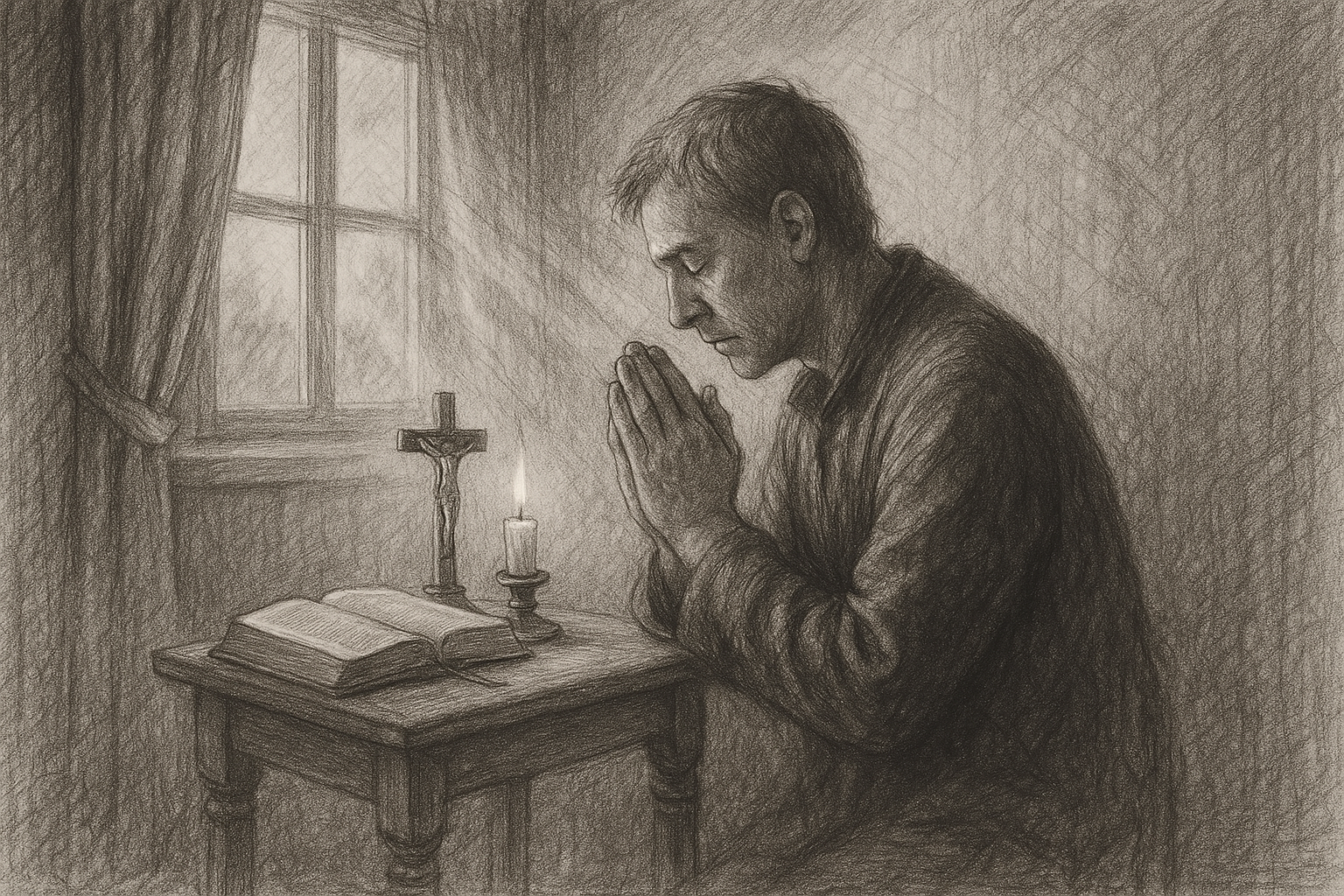
- Keep a crucifix, Bible, or prayer card near the bed so the day begins with a visible reminder of God.
- Pray before checking the phone, even if only for one minute.
- Offer the day in your own words, naming work, family, suffering, and decisions.
- Use a fixed prayer such as the Our Father, the Morning Offering, or a psalm.
- Read one short Scripture passage and let one phrase stay with you.
For many people, the hardest part is not the prayer itself but the transition into it. One useful approach is to attach prayer to an existing habit. For example, pray after turning off the alarm, after washing your face, or while waiting for the coffee to brew. The goal is to make prayer part of the first movement of the day rather than a leftover task.
Parents may pray while still half-dressed and trying to gather children. Workers may pray during a commute. A student may pray before opening a laptop. The circumstances differ, but the heart of morning prayer remains the same: God comes first.
A simple morning pattern
If you need a structure, keep it brief and repeatable:
- Make the Sign of the Cross slowly.
- Thank God for the new day.
- Offer your work, relationships, and suffering to him.
- Ask for wisdom, purity, and patience.
- Pray for one person who will need help today.
- End with the Our Father, the Hail Mary, or a short act of trust.
This kind of prayer is not meant to impress anyone, including yourself. It is meant to form the soul through repetition. Over time, those few minutes become a spiritual habit that steadies the rest of the day.
Morning prayer in seasons of dryness
There are mornings when prayer feels warm and clear, and there are many mornings when it feels flat, distracted, or hurried. Catholics should not be surprised by this. Fidelity matters more than emotion. The value of morning prayer does not depend on a strong feeling of devotion. It depends on love offered in faith.
In dry seasons, it can help to pray very simply. A person may say, Lord, I am here. Or, Jesus, I trust you with this day. Or, Come, Holy Spirit. Such small prayers are not second-rate. They are often the most honest. God is not asking for performance. He is asking for the heart.
Dryness can also reveal what morning prayer is not. It is not a technique for controlling outcomes. It is not a way to guarantee success. It is communion. Even when the mind wanders, returning to God matters. The repeated return itself is part of the offering.
Many saints valued this quiet perseverance. The Church remembers the saintly persistence of ordinary prayer because holiness is usually built through small daily acts. Morning prayer belongs to that hidden architecture of grace.
How morning prayer shapes the rest of the day
A day begun with prayer often changes in ways that are not dramatic but are deeply real. The same responsibilities remain, but they are carried differently. Interruptions become less unbearable. Difficult people are met with a little more patience. A setback is less likely to become a crisis of identity. The soul has remembered, even briefly, that it belongs to God.
Morning prayer also influences conscience. When a person starts the day by placing himself before God, it becomes harder to live as though faith is merely private or decorative. Prayer presses gently toward action. It leads toward honesty, charity, purity, and forgiveness. It reminds us that today's choices matter because they are made before the face of God.
And if the day unfolds beautifully, morning prayer keeps the heart humble. Success is received as gift, not entitlement. If the day turns hard, prayer gives language for endurance. Either way, the Christian is not abandoned to chance.
That is one reason morning prayer remains so important. It does not remove the burdens of life, but it changes the way we carry them. It begins with God, and that beginning shapes everything that follows.
The steadfast love of the Lord never ceases, his mercies never come to an end
To pray in the morning is to step into those mercies while the day is still young. It is a quiet act, but a mighty one. And for the Catholic who learns to begin there, morning prayer becomes less a duty than a doorway into peace.
Keep Reading on Lets Read The Bible
Frequently Asked Questions
How long should morning prayer be for a Catholic?
It can be as short as one or two minutes if that is what you can do faithfully. What matters most is beginning the day with God and keeping the habit steady.
What is a simple morning prayer to say every day?
A simple offering is enough, such as: Lord, I give you this day, my work, my joys, and my sorrows. Guide my thoughts, words, and actions.
Is morning prayer the same as the Church's Morning Prayer in the Liturgy of the Hours?
Not exactly. Morning Prayer in the Liturgy of the Hours is a formal part of the Church's liturgical prayer, while personal morning prayer can be any sincere prayer offered at the start of the day. They are related and can complement one another.