Family and Vocation
Fatherhood as a Daily Act of Faith
Scripture, the Church, and the ordinary love that shapes a home
Site Admin | November 18, 2025 | 93 views
Fatherhood begins in gift, not control
In a Catholic view of life, fatherhood is never just a social role or a private arrangement. It is a vocation, a calling to receive a child as a gift and to answer that gift with faithful love. A father does not create life from himself. He receives it from God, and with that reception comes responsibility. This is one reason a fatherhood reflection often begins not with technique, but with gratitude.
The modern world can make fatherhood seem like a matter of performance. A good father is supposed to be successful, disciplined, present, emotionally intelligent, financially stable, and endlessly patient. Those things matter, but they are not the heart of the matter. The heart of fatherhood is fidelity. A father is called to be someone a child can trust, someone who stays, protects, teaches, corrects, and blesses.
That word, blesses, is important. Scripture shows that a father is not only a provider of material goods. He is meant to speak life into his family. In the Old Testament, blessing is not sentimental speech. It is a real transmission of hope and identity. The father helps a child know who he is before God.
That is a heavy calling, but it is also a hopeful one. Fatherhood is not built on perfection. It is built on daily acts of faith, repeated with humility.
Scripture places fatherhood under the care of God
When Catholics think about fatherhood, Scripture gives both realism and encouragement. Earthly fathers can be strong, weak, faithful, absent, tender, or wounded. The Bible does not idealize them. Instead, it places them under the mercy of God.
One of the clearest lines comes from the Psalms: As a father has compassion on his children, so the Lord has compassion on those who fear him. This verse does not simply say that God is like a human father. It also suggests that human fatherhood should reflect something of God's compassion. A father is called to be firm without harshness, protective without domination, authoritative without pride.
Another passage shows how seriously fathers are entrusted with the faith of their children: These words that I command you today shall be on your heart. The verses that follow call parents to teach God's commandments diligently, talking of them at home and on the road, at rest and at work. Fatherhood, then, is not only about earning a living or fixing what breaks. It is about forming a household where God's word is remembered and lived.
In the New Testament, St. Paul writes with striking balance: Fathers, do not provoke your children to anger, but bring them up in the discipline and instruction of the Lord. This is a sobering command. It warns fathers against using authority carelessly. Discipline matters, but it must be joined to instruction, patience, and self-control. A father who rules by fear may get obedience for a moment, but he will not easily win the heart.
Jesus Himself reveals the deepest truth about fatherhood by teaching us to pray, Our Father who art in heaven. Every earthly father stands in relation to that greater Fatherhood. He is not the source of love, but a sign of it. He is not the measure of goodness, but a servant of it.
Catholic teaching sees fatherhood as service
The Church speaks of the family as a domestic church, the first place where faith is learned and love is practiced. Within that small church, the father has a distinctive role. He is called to serve, not dominate. He is called to lead, but by self-gift.
This is not weakness. Christian fatherhood requires real strength, but strength purified by charity. It means showing up when it is inconvenient. It means carrying burdens that are often invisible. It means choosing what is good for wife and children even when no one applauds. It means being willing to apologize when wrong, because authority without humility becomes brittle and unbelieving.
At times, the deepest work of fatherhood is hidden. A father may spend years doing the same ordinary things: waking early, driving, repairing, working, praying, teaching, listening, repeating rules, and beginning again after failures. These tasks can seem unremarkable. Yet in Catholic faith, the ordinary becomes a place of grace. God loves to work through the hidden and the steady.
The example of St. Joseph is especially precious here. He is not remembered for long speeches or public accomplishments. He is remembered for obedience, care, and quiet courage. He protects Mary and Jesus. He accepts responsibility. He does what is needed without drawing attention to himself. In that sense, St. Joseph helps us see that fatherhood is often most powerful when it is least dramatic.
Many fathers are carrying burdens that no one else sees. They worry about money, safety, children who are drifting, marriages under stress, or their own shortcomings. Catholic faith does not deny these burdens. It brings them to God. A father is not saved by pretending to be invulnerable. He is strengthened by prayer, confession, and the grace of the sacraments.
Ordinary habits shape a father more than occasional heroics
People often imagine fatherhood in terms of milestones: the first steps, the school play, the graduation, the advice before adulthood. Those moments matter, but most of fatherhood is made of repetition. The daily pattern matters more than the rare speech. Children remember whether a father listened, whether he kept his word, whether he was calm under pressure, and whether he made room for God in the home.
Here are a few ordinary habits that quietly form fatherhood:
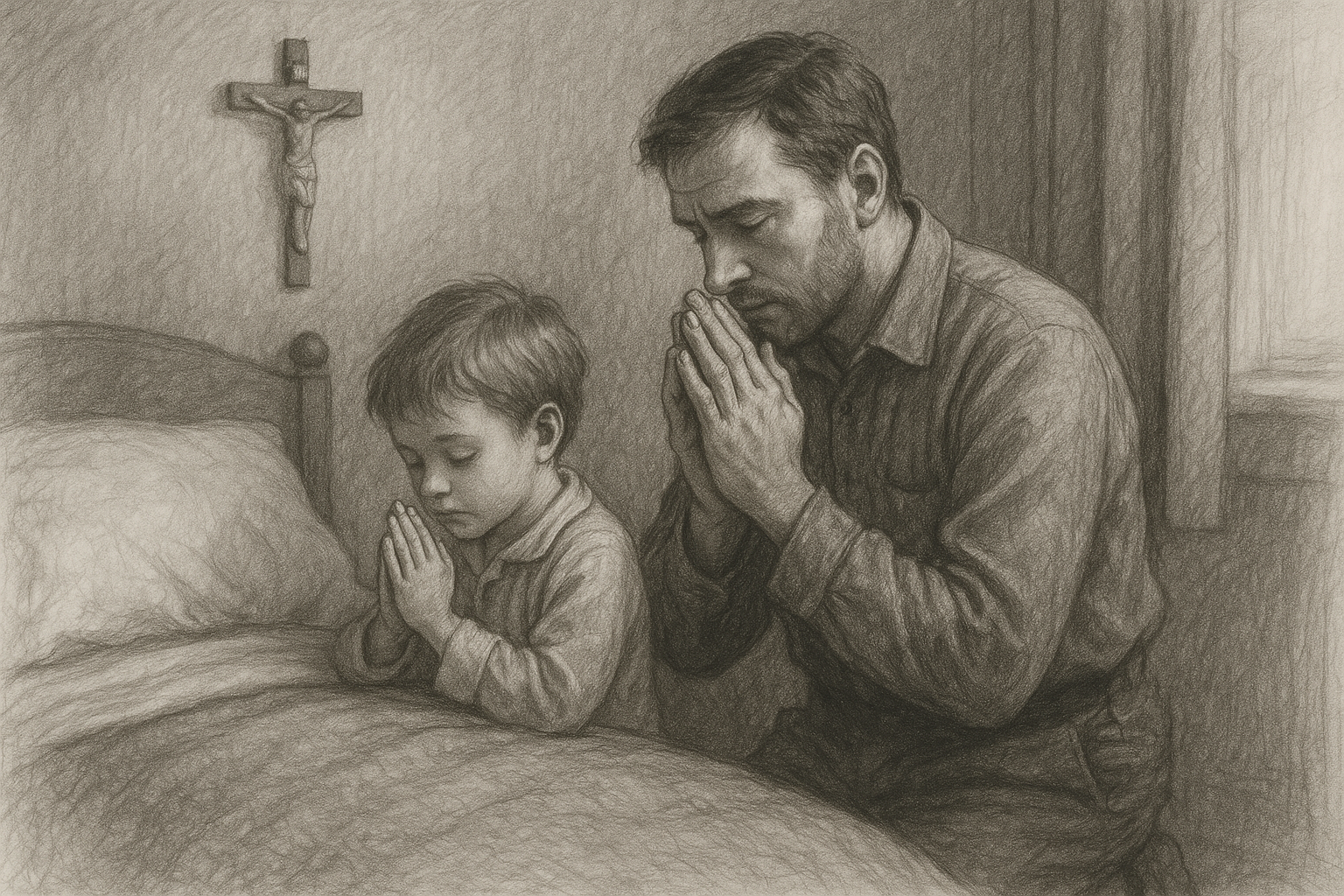
- Pray in front of your children, even if the prayers are simple. A father who prays teaches that God is real and near.
- Keep your promises. Small acts of reliability build a child's trust in ways words alone cannot.
- Correct with restraint. Discipline should aim at formation, not venting frustration.
- Listen carefully. Children need more than direction. They need to be known.
- Guard the atmosphere of the home. A father's tone often sets the emotional weather of a household.
These habits are not glamorous, but they are powerful. They make a home stable. They teach that love is more than feeling. They help children understand that faith touches ordinary life, not just Sunday worship.
Fatherhood also asks for patience with growth. Children do not mature in straight lines, and neither do fathers. There are seasons of joy and seasons of confusion. There are moments when a father feels wise and moments when he feels unprepared. Catholic wisdom allows room for that struggle. God is not surprised by human weakness. He works through it.
A father needs mercy as much as his family does
One of the hardest parts of fatherhood is admitting failure. Some fathers fear that any sign of weakness will undermine their authority. But the opposite is often true. A father who can ask forgiveness teaches his children that truth matters more than pride. He shows them that holiness is not pretending to be untouched by sin. It is turning back to God.
This is especially important because many adults carry wounds from their own fathers. Some know what it is like to have a father who was distant, harsh, or absent. Others were loved well but still saw human limits. Catholic reflection on fatherhood must be honest about these wounds. Grace does not erase them instantly, but it can heal them. In prayer, a man can begin to become the father he did not receive, or to refine what he did receive into something more faithful.
The sacrament of reconciliation is a great help here. A father who returns regularly to confession learns to live in truth. He sees his sins without despair and his responsibilities without illusion. He learns that authority is purified by repentance. A humble father is not a lesser father. He is often a truer one.
It is also worth saying that fatherhood includes emotional presence. Children are not formed only by rules and provisions. They need affection, attention, and words that name their dignity. A child who hears,
Keep Reading on Lets Read The Bible
Frequently Asked Questions
What does the Church teach about fatherhood?
The Church teaches that fatherhood is a vocation of service, protection, instruction, and self-giving love within the family. A father is called to help form his children in faith, virtue, and trust in God.
How can a Catholic father grow in his vocation?
By prayer, regular participation in the sacraments, steady presence at home, honest self-examination, and simple daily habits of love and discipline. Growth in fatherhood is usually gradual and shaped by grace.
Why is St. Joseph important for fathers?
St. Joseph is a model of quiet strength, obedience, and faithful protection. His hidden life shows that fatherhood is often expressed through humble service rather than public recognition.