Prayer and Devotion
A Prayer You Can Hold: Walking With the Rosary in Ordinary Life
The Rosary is not a formula for perfection. It is a steady school of prayer that draws the heart toward Christ with the help of Mary.
Site Admin | November 29, 2025 | 86 views
The Rosary has a way of meeting people where they are. Some first learn it from a parent or grandparent, with fingers tracing beads in a quiet room. Others discover it later, during a season of worry, illness, or longing for prayer that feels more grounded than words alone. However one begins, the Rosary remains one of the most beloved devotions in the Catholic life because it leads the heart again and again to Christ.
For anyone looking for the Rosary Catholic guide in a practical, faithful way, it helps to begin with a simple truth: the Rosary is not magic, and it is not a performance. It is a prayer of contemplation, repetition, Scripture, and trust. It places us with Mary as she leads us to her Son, Jesus, and it teaches us to stay with the mysteries of his life, death, and resurrection long enough for them to shape our own.
What the Rosary is and how it works
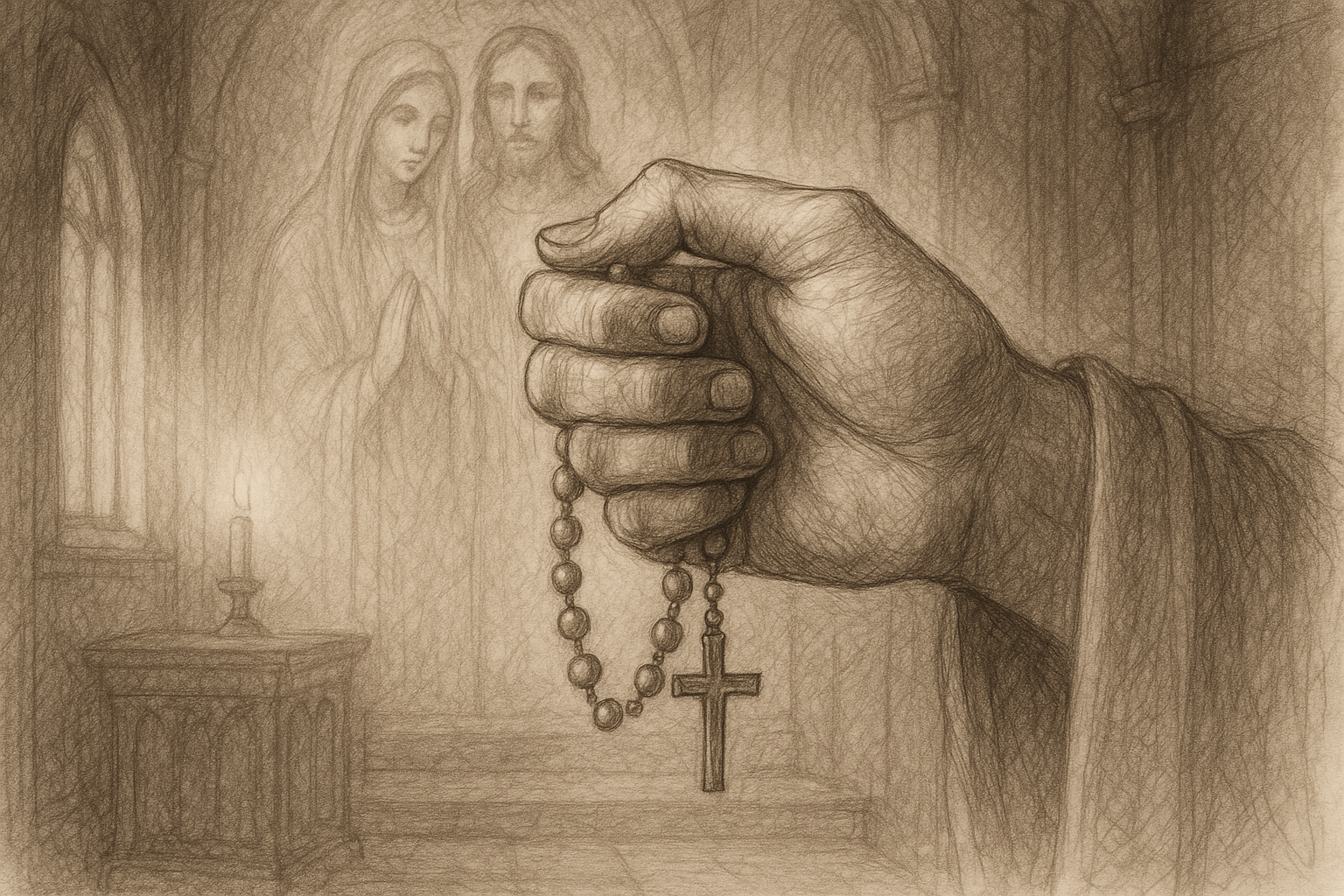
The Rosary is a vocal and meditative prayer centered on the life of Christ. It uses a string of beads to help the person praying keep count while moving through a set pattern of prayers. The usual structure includes the Apostles' Creed, the Our Father, the Hail Mary, the Glory Be, and, in many versions, the Fatima Prayer. These prayers are joined to meditation on the mysteries of salvation.
The Rosary is divided into decades, and each decade is associated with one mystery from the life of Jesus and Mary. Traditionally, Catholics contemplate four sets of mysteries: Joyful, Sorrowful, Glorious, and Luminous. The Church has long encouraged this form of prayer because it joins the mind, the lips, and the heart. The beads are not the point in themselves, but they are a helpful instrument for steady prayer.
At its best, the Rosary is beautifully simple. It allows a person to pray even when tired, distracted, or unable to find many words. The rhythm can steady the soul. The repeated Hail Marys do not replace meditation; they create a kind of gentle frame around it, like a lamp surrounding a sacred image.
"Blessed is she who believed that there would be a fulfillment of what was spoken to her from the Lord" Luke 1:45.
That line from the Visitation gives a clue to the spirit of the Rosary. Mary believes, receives, and keeps the word of God in her heart. The Rosary invites the same posture from us.
Why Catholics treasure this devotion
The Rosary endures because it is both tender and demanding. It is tender because it places us under the care of Mary, who never draws attention to herself apart from Christ. It is demanding because it asks for attention, patience, and regularity. In a distracted age, that combination is a gift.
The Rosary matters spiritually for several reasons. First, it keeps Christ at the center. Each mystery is an episode in the Gospel, and the prayer invites us to linger there. We do not simply recite facts about Jesus. We accompany him. We consider his birth, his hidden life, his preaching, his suffering, his death, and his triumph. In this way, the Rosary becomes a school of the Gospel.
Second, the Rosary teaches Christian memory. Human beings forget what they need to remember most. We forget mercy when we feel ashamed. We forget hope when prayer feels dry. We forget that God entered real human life with real sorrow and real joy. The Rosary keeps returning us to those saving truths.
Third, it forms the virtues that Catholics most need in daily life. The Joyful Mysteries invite humility and docility. The Sorrowful Mysteries teach endurance and compassion. The Glorious Mysteries strengthen hope. The Luminous Mysteries illuminate discipleship, obedience, and mission. Over time, a person praying the Rosary is slowly being shaped by the life of Christ himself.
Finally, the Rosary is communal even when prayed alone. Catholics pray it in families, parishes, hospitals, and homes. It belongs to the whole Church. In times of anxiety or grief, that shared prayer can be a quiet reminder that no one suffers in isolation.
How Mary belongs in Catholic prayer
Some people hesitate before the Rosary because they worry that devotion to Mary might distract from Jesus. In Catholic life, it is actually the opposite. Mary always points beyond herself. At Cana she says, "Do whatever he tells you" John 2:5. That is the heart of her role.
The Church honors Mary as the mother of the Lord and a model of discipleship. When Catholics pray the Hail Mary, they are not worshiping her. They are asking for her intercession and reflecting on the mystery that God chose to work through her yes. Her closeness to Christ makes her a trustworthy companion in prayer. She shows what it means to receive the Word of God in faith.
The Rosary also helps us understand that holiness is not abstract. Mary lived the hidden life of Nazareth, the confusion of Bethlehem, the sorrow of Calvary, and the astonishment of Easter faith. She knows ordinary human life from the inside. For many Catholics, that makes the Rosary feel personal and near.
Beginning the Rosary without feeling overwhelmed
If the Rosary seems intimidating at first, the best approach is to begin simply. Nobody becomes a seasoned person of prayer overnight. A faithful start matters more than a perfect one.
Here is a gentle way to begin:
- Choose a quiet place and a time you can keep regularly, even if only for a few minutes.
- Hold the beads slowly and make the Sign of the Cross.
- Pray the Creed, then an Our Father, three Hail Marys, and a Glory Be.
- Announce the first mystery and spend a moment considering it before continuing.
- Pray each decade with attention to the mystery, even if your mind wanders and returns many times.
- End with the Hail, Holy Queen or another simple prayer of thanksgiving.
At first, it is perfectly normal to use a guide or pray with an audio version. Many Catholics learn by imitation. What matters is not fluency but devotion. A person can pause, repeat, or simplify as needed. If one decade is all that can be prayed well, that is still a real offering.
Some find it helpful to pair each mystery with a short Scripture passage. Others prefer to name the mystery and quietly picture the scene. There is no single emotional style required. The Rosary welcomes both the disciplined and the distracted, both the thoughtful and the weary.
Small habits that make the prayer sustainable
People often imagine that prayer grows only through intensity, but the Rosary usually deepens through consistency. A few habits help it become steady:
- Pray at the same time each day, if possible.
- Keep a Rosary where it is easy to reach, such as near the bedside or desk.
- Link it to another habit, such as after morning prayer or before bed.
- Start with one decade a day if a full Rosary feels too ambitious.
- Pray slowly enough to think, but not so slowly that discouragement takes over.
The aim is not to impress anyone, including yourself. The aim is to remain with Christ in faith. Even when prayer feels dry, the Rosary can become an act of fidelity. In that sense, it resembles much of Christian life: less about spiritual spectacle and more about loving return.
Praying the mysteries with the whole heart
The mysteries are the heart of the Rosary. They are not side notes attached to the prayers. They are the lens through which the prayers become contemplative.
The Joyful Mysteries open onto the hidden and humble beginnings of salvation. The Annunciation, Visitation, Nativity, Presentation, and Finding in the Temple show God's work unfolding quietly. The Sorrowful Mysteries lead us into the Passion, where Jesus enters the full weight of human suffering out of love. The Glorious Mysteries turn the soul toward victory, resurrection, and the hope of heaven. The Luminous Mysteries reveal the public ministry of Christ, where the Father's voice, the Kingdom, the Eucharist, and the call to conversion all appear in light.
When prayed attentively, these mysteries do more than remind us of events. They reveal a pattern for Christian living. God works through humility. Love passes through sacrifice. Faith waits in hope. Glory often comes after sorrow. The Rosary gives these truths a place in the imagination so that they can shape choices, endurance, and trust.
The words of Scripture fit naturally here, because the Rosary is deeply biblical in spirit. Again and again it returns the mind to the Gospel, where the saving deeds of Christ are remembered and adored. Mary, too, is portrayed as one who keeps and ponders. "But Mary kept all these things, pondering them in her heart" Luke 2:19. That interior keeping is a model for Rosary prayer itself.
When the Rosary feels dry or difficult
Many faithful Catholics know the experience of praying the Rosary while feeling distracted, tired, or emotionally flat. This does not mean the prayer has failed. Dryness is part of ordinary spiritual life. The value of the Rosary does not depend on vivid feelings.
In those moments, it can help to simplify. Hold the mystery more than the words. Pray with deliberate slowness. Let one phrase, such as "pray for us sinners," become an honest plea. Offer the prayer for someone else if personal devotion feels hard. Some days the Rosary is less like a mountain top and more like walking with a lamp through a dim corridor. It still matters.
There are also seasons when the Rosary becomes a shelter. Parents pray it for children. The sick pray it for peace. Those carrying grief pray it for the dead. Those seeking conversion pray it with tears. In every case, the prayer remains spacious enough to hold human need before the mercy of God.
For Catholics who want to deepen the practice, the most important step is not to add complexity but to increase recollection. A short pause before each decade, a brief glance at the corresponding Gospel scene, or a sincere intention at the start can renew the whole prayer.
A prayer that becomes a way of life
The Rosary is not meant to stay on the beads alone. It is meant to move outward into daily life. A person who prays it regularly may begin to notice a quieter patience, a deeper tenderness for suffering, and a stronger instinct to turn toward Christ in confusion. The devotion does not erase hardship, but it changes the way hardship is carried.
That is one reason the Rosary has remained so beloved across generations. It is simple enough for children and deep enough for saints. It can be prayed in a chapel, in a kitchen, during a walk, or beside a hospital bed. It asks for very little and gives much. In a world of restless speech, it offers measured words. In a world of scattered attention, it gathers the soul. In a world that often forgets Christ, it remembers him with love.
To pray the Rosary is to keep company with Mary while contemplating the face of her Son. It is a habit worth returning to, whether for the first time or the thousandth, because the mysteries it holds are the mysteries by which we are saved.
Keep Reading on Lets Read The Bible
Frequently Asked Questions
How long does it take to pray the Rosary?
A full Rosary usually takes about 15 to 20 minutes, depending on pace and pauses for meditation. Many Catholics pray one decade when time is short.
Do I need Rosary beads to pray the Rosary?
No. Beads are helpful for keeping count, but they are not required. The prayer can be prayed with fingers, by memory, or with a printed guide.
What should I do if I keep getting distracted while praying the Rosary?
Distraction is common and does not mean the prayer is ineffective. Gently return to the mystery, pray more slowly, and continue with patience. Fidelity matters more than perfect focus.