Prayer and Devotion
Holding the Mysteries Close: The Rosary as a School of Prayer
A quiet look at the history, meaning, and daily strength found in the Rosary
Site Admin | November 30, 2025 | 89 views
The Rosary has endured because it answers a very human need. Many believers want a prayer that is simple enough to pray in the middle of ordinary life, yet rich enough to carry the mind and heart into the mysteries of Christ. The Rosary does both. It gives words to the lips, beads to the fingers, and sacred events to the imagination. Over time, it becomes less like a task and more like a way of walking with Jesus.
For Catholics, the Rosary is not a magical formula and not a substitute for the liturgy, Scripture, or the sacraments. It is a devotion, which means it serves the life of faith by nurturing meditation, reverence, and perseverance. In a distracted age, that alone makes it precious. The Rosary explained simply is this: a repeated prayer that helps the Christian contemplate the saving work of Christ with Mary as a faithful companion.
A prayer shaped by the Gospel
The Rosary is rooted in the Gospel itself. Its central prayers are drawn from Scripture, especially the Our Father and the angelic greeting to Mary in Hail, favored one, together with Elizabeth's blessing in Blessed are you among women. The repeated prayers do not replace Scripture. They echo it. They create a rhythm in which the believer can linger over the events of salvation rather than hurry past them.
This is one reason the Rosary has remained so beloved among the faithful. Human beings remember through repetition. We learn by returning. We love by revisiting what matters most. The Rosary gathers these ordinary habits of the mind and places them at the service of prayer.
Mary treasured all these things and pondered them in her heart. Mary pondered in her heart
That line from the Gospel of Luke offers a quiet key to the Rosary's spirit. To pray the Rosary is, in a small but sincere way, to imitate Mary's pondering. It is to receive the mysteries of Christ not as abstractions, but as living truths that can shape the soul.
How the Rosary took shape
The history of the Rosary is gradual, not abrupt. Christians long prayed the Psalms and other repeated prayers. Over time, those who could not pray the full Psalter often used simpler devotions with beads or knots to keep count. The familiar form of the Rosary developed slowly in the life of the Church as a way of joining vocal prayer to meditation on the life of Christ.
By the Middle Ages, the practice of reciting Hail Marys in groups of ten had become widespread. The structure we now know took shape through the devotion of the faithful and the guidance of pastors. What matters most is not a single moment of invention, but the Church's patient discovery that this form of prayer could support deep contemplation for ordinary Christians.
The result is a devotion that is both accessible and profound. A child can learn it. An elderly person can pray it. A person burdened with grief can hold onto it when other prayers feel difficult. Its very simplicity is part of its strength.
Why repetition is not empty
Some people worry that repeated prayers become mechanical. That danger is real if the mind drifts entirely away from the words. But repetition itself is not the problem. In Scripture, repetition often serves love, memory, and perseverance. The Psalms repeat refrains. Jesus teaches persistent prayer. The saints return again and again to the same petitions because the heart needs shaping.
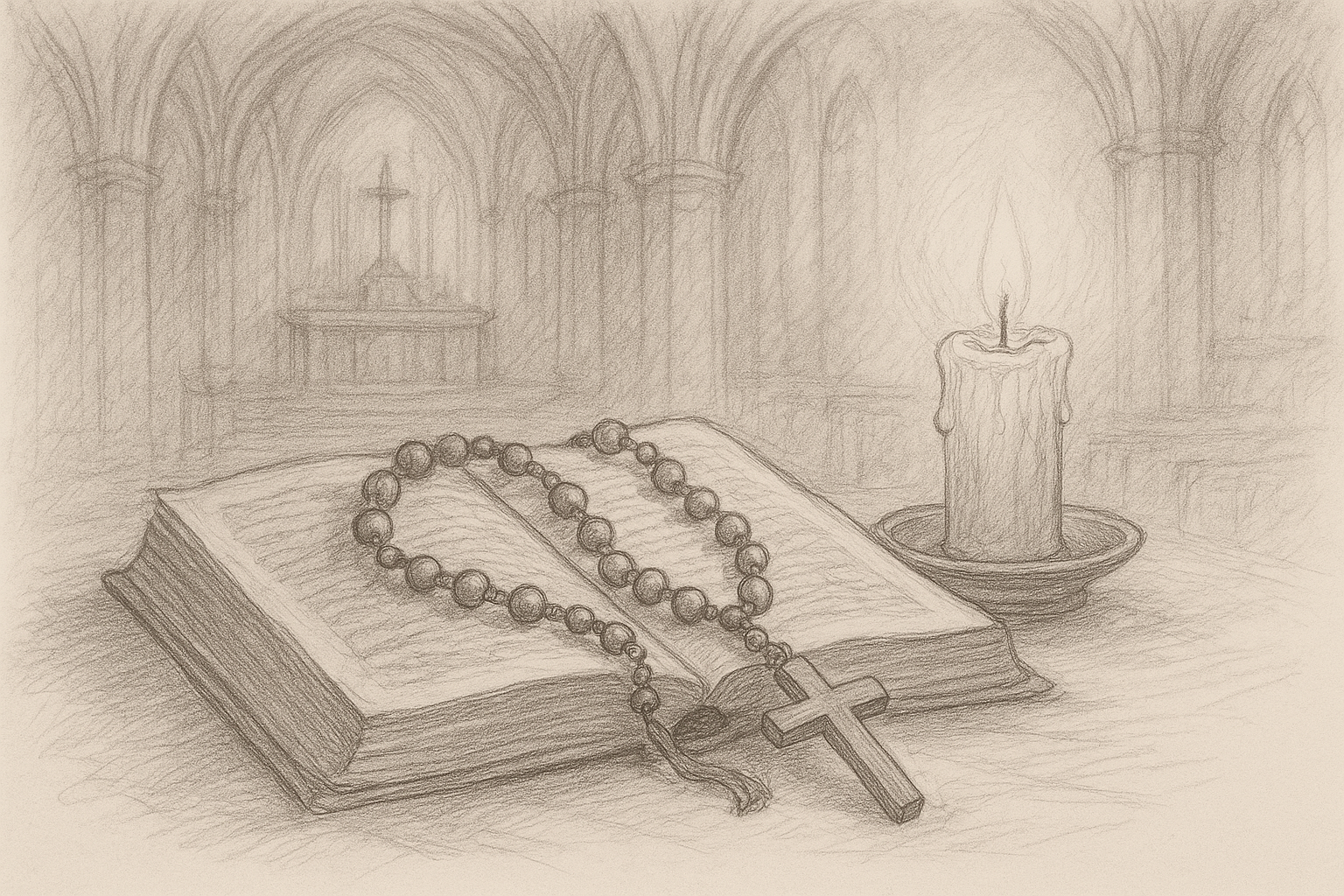
The Rosary is meant to be prayed with attention, not merely counted. The repeated prayers provide a gentle background while the mind rests on one mystery at a time. This combination matters. It keeps the prayer from becoming scattered, and it keeps meditation from becoming vague. The body prays through the beads while the soul contemplates the life of Christ.
In practice, many Catholics find that the Rosary helps them stay with prayer longer than they otherwise could. A person who struggles with silence may discover that the Rosary eases them into silence. A person who feels anxious may find that the steady rhythm calms the heart enough to listen. A person who is spiritually dry may find that the discipline itself carries them through a dry season with fidelity.
The mysteries at the center
The heart of the Rosary is not the beads, but the mysteries. These sacred events from the lives of Jesus and Mary are the true content of the prayer. As the believer moves through them, the Rosary becomes a kind of Gospel journey, beginning with the joys of the Incarnation and moving through the sorrow of the Passion to the glory of the Resurrection.
The mysteries invite more than memory. They invite participation. When we pray the Rosary, we do not stand far from the Gospel scenes as distant observers. We ask for grace to enter them. We ask to know Christ more deeply, to love what He loves, to bear what He bears, and to hope as He teaches us to hope.
- The Joyful Mysteries teach humility, readiness, and the hidden life of grace.
- The Sorrowful Mysteries teach endurance, repentance, and union with Christ in suffering.
- The Glorious Mysteries teach hope, resurrection, and the destiny promised to the faithful.
- The Luminous Mysteries, added by St. John Paul II, meditate on moments of Christ's public ministry and reveal His light more fully.
Each set of mysteries addresses a different season of the soul. In joy, the Rosary reminds us to give thanks. In sorrow, it teaches us to remain near the Cross. In temptation, it strengthens us. In hope, it lifts our eyes toward eternity.
Mary's place in the prayer
The Rosary is unmistakably Marian, but it is Marian in an evangelical way. Mary is not the end of the prayer. She is the one who leads us to Jesus. At Cana, she says, Do whatever he tells you, and that line could serve as a motto for the Rosary itself.
To pray with Mary is to learn her receptive faith. She listens. She trusts. She carries the Word made flesh. Catholics honor her because God honored her first, filling her with grace and choosing her for the mystery of the Incarnation. Her closeness to Christ does not compete with His unique role. It witnesses to it.
The Rosary also reflects the communion of the Church. Christians are not isolated souls trying to reach God on private terms. We belong to a people, a family of faith. When Catholics pray the Rosary, they join millions of believers across centuries who have turned to the same prayer in homes, churches, hospital rooms, and places of need.
How the Rosary helps daily life
The Rosary endures because it is suited to ordinary life. It can be prayed while walking, commuting, waiting, or sitting quietly before work. It asks for time, but not for perfect conditions. It asks for attention, but not for advanced knowledge. It fits into the moments when life feels too full for elaborate devotions and too noisy for silence alone.
For many Catholics, the Rosary becomes especially meaningful in particular circumstances:
- When family life feels rushed, it offers a shared spiritual rhythm.
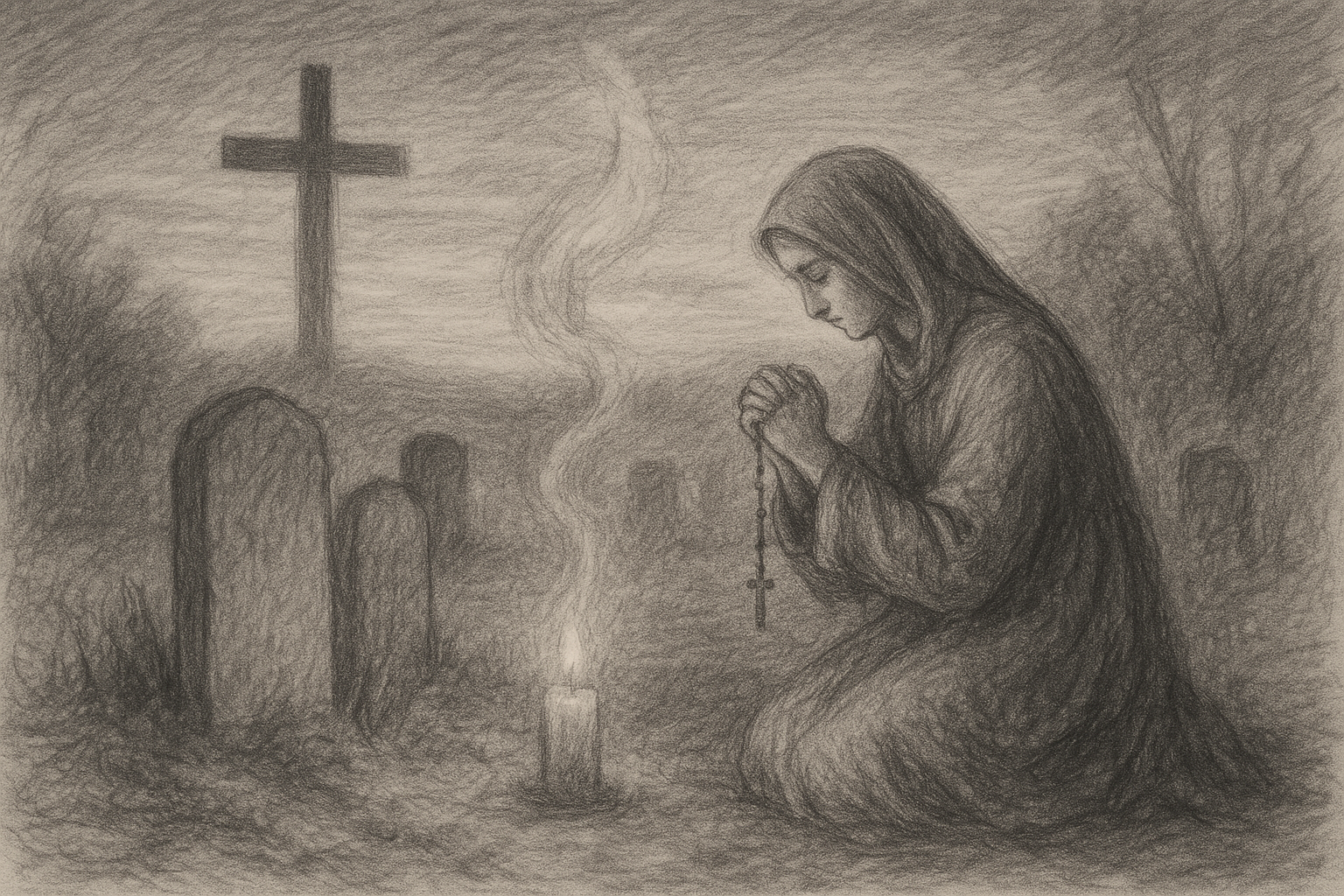
- When grief weighs heavily, it gives words to sorrow and hope.
- When temptation is strong, it re-centers the soul on Christ.
- When prayer feels dry, it provides a faithful structure.
There is also something deeply human about praying with one's hands. The beads help the body participate. They remind us that faith is not only interior but embodied. We are not angels. We are people of flesh and memory. The Rosary respects that fact and turns it into a gift.
Praying it well without overcomplicating it
Many people hesitate to begin because they think they must pray the Rosary perfectly. That is not true. A sincere, humble Rosary is better than a polished one prayed without attention. It is enough to begin with reverence and a willingness to stay present.
Here are a few simple habits that can help:
- Pray slowly enough to notice the words.
- Choose one mystery and stay with it before each decade.
- Ask for one grace, such as patience, trust, or purity of heart.
- Do not be discouraged by distraction; gently return to the mystery.
- Pray at a consistent time if possible, even for a short period.
The Rosary is often most fruitful when it is not rushed. A hurried Rosary may still be valid and sincere, but the devotion bears more fruit when the heart is given space. Even a few minutes of true attention can become a daily anchor.
Some Catholics pray the Rosary in the morning to place the day under God's care. Others pray it in the evening to review the day in light of Christ. Still others pray it during difficult moments, especially when the heart needs steadying. There is no single ideal pattern. The important thing is to let the prayer become a real meeting with the Lord.
A devotion for a distracted age
In a culture of constant noise, the Rosary offers a rare gift: sustained attention to the things that save. It slows us down enough to remember that salvation is not built by our effort alone. It came to us through the humility of Mary, the obedience of Christ, the power of the Cross, and the mercy of God. The beads simply help us hold onto that truth a little longer.
That is why the Rosary still matters. It does not compete with the central life of the Church. It supports it. It does not ask for sophisticated arguments. It asks for fidelity. And in a faith where love is often proven by return, that fidelity becomes a form of praise.
For the Catholic who is tired, distracted, or unsure where to begin, the Rosary remains one of the simplest ways to come back to Christ. It can be prayed imperfectly and still bear fruit. It can be prayed alone or with others. It can accompany joy, sorrow, longing, and gratitude. Most of all, it keeps the mysteries of Jesus close enough to touch, one prayer at a time.
Keep Reading on Lets Read The Bible
Frequently Asked Questions
What is the Rosary in Catholic life?
The Rosary is a Catholic devotional prayer that combines repeated vocal prayer with meditation on the mysteries of Christ's life, death, and resurrection, with Mary as a guide to deeper contemplation.
Is it a problem if my mind wanders during the Rosary?
No. Distraction is common in prayer. The goal is not flawless focus but faithful return. When you notice your mind has wandered, gently come back to the words and the mystery.
How often should a Catholic pray the Rosary?
There is no strict minimum for devotion. Many Catholics pray it daily, while others pray it several times a week or in particular seasons of need. Consistency matters more than quantity.